• 13 AVRIL 2023

  • Les couteaux forgés, célèbres pour leur tranchant et leur durabilité exceptionnels, incarnent le summum de la fabrication de couteaux traditionnels, offrant un aperçu du processus artisanal derrière leur création.

  • 1. What Is Forging in Japanese Knife Making? 

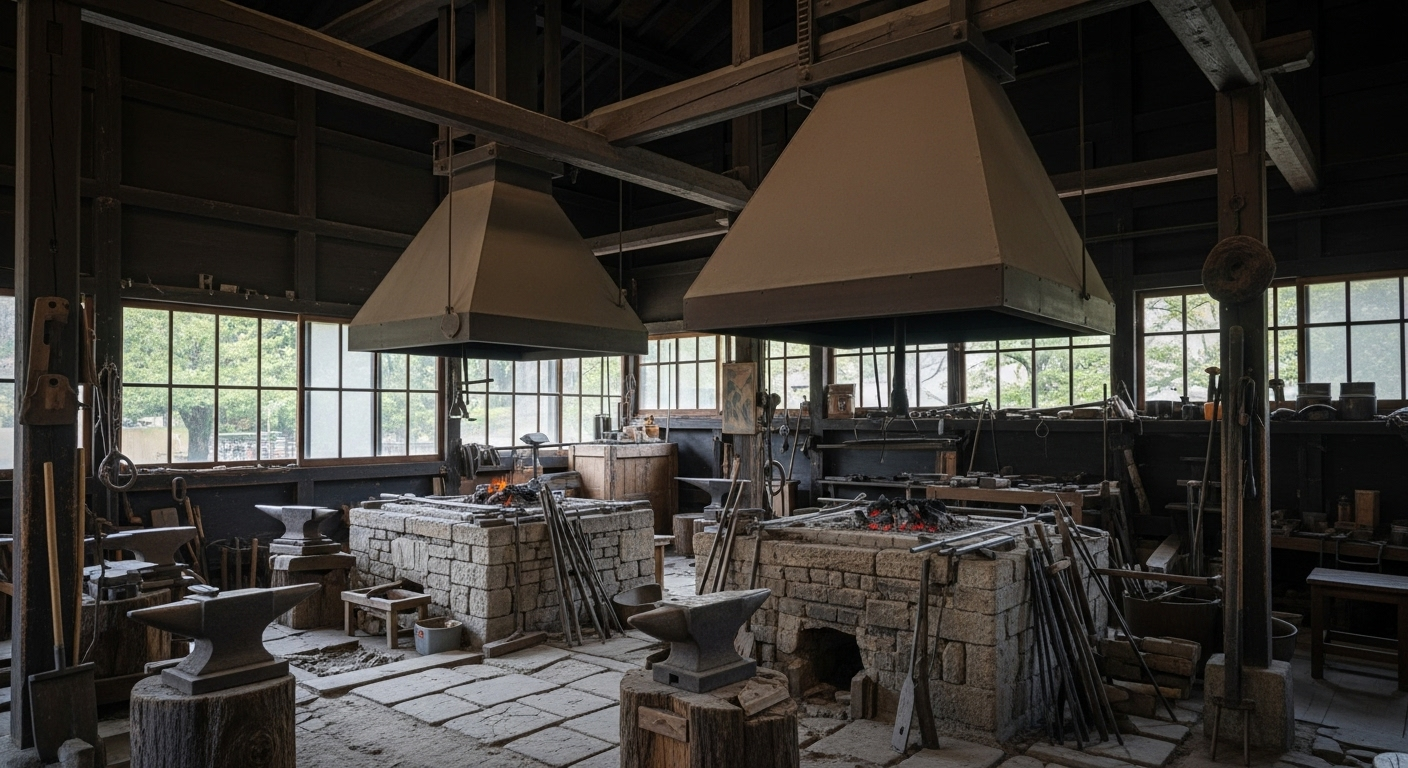
    Forging, known as tanzō (鍛造) in Japanese, is a metalworking process in which heated steel is shaped through controlled deformation, often using hammers or presses.

    In traditional Japanese knife making, a blacksmith heats the material and works it into the approximate form of a blade.

    Depending on the knife's construction, the process may involve a single type of blade steel or a combination of different metals.

    For example, an Awase knife commonly uses a hard cutting steel joined to softer cladding material.

    The blacksmith must understand how these materials behave during heating and shaping.

    Temperature is particularly important.

    Steel becomes easier to deform when heated, but excessive temperatures or inappropriate handling can damage its properties.

    The blacksmith therefore works within a suitable temperature range, repeatedly checking the shape and condition of the material.

    Forging is not simply about applying force.

    It is about shaping metal while managing the conditions that influence the finished blade.

  • 2. What Happens to Steel During Forging? 

    One of the most common claims about forged knives is that hammering makes the steel denser and automatically produces a sharper blade.

    The reality is more complex.

    Modern knife steels are generally produced through controlled industrial processes before reaching the blacksmith.

    They are not usually full of impurities that must be hammered out by hand.

    During hot forging, deformation and temperature can influence the steel's internal microstructure.

    Processes such as recrystallization and grain growth may occur depending on the material and working conditions.

    Careful temperature control and subsequent heat treatment are essential to achieving the desired properties.

    Simply striking steel more times does not guarantee a better knife.

    Excessive heat or improper forging can even harm the material.

    Likewise, forging alone does not determine sharpness.

    A knife's cutting performance depends on its steel, heat treatment, blade geometry, sharpening, and intended use.

    The blacksmith's skill lies in understanding how these factors work together, rather than relying on hammering as a guarantee of quality.

  • Colonne

    Forgeage ou moulage : un contraste de techniques

  • Colonne

    Le prestige des couteaux japonais forgés

  • Colonne

    Caractéristiques des couteaux forgés

  • 6. Why Heat Treatment Matters as Much as Forging 

    Forging gives the steel its initial blade shape, but heat treatment plays a critical role in determining how the finished knife behaves.

    After shaping, the steel may undergo carefully controlled heating and cooling processes.

    Hardening changes the steel's microstructure to achieve the desired hardness and other mechanical properties.

    Tempering, where appropriate, helps adjust the balance between hardness and toughness.

    These processes require an understanding of the specific steel being used.

    Different steels respond differently to heat, cooling rates, and treatment conditions.

    If heat treatment is poorly controlled, a blade may become too brittle, insufficiently hard, distorted, or otherwise unsuitable for its intended use.

    This is why the value of a forged Japanese knife cannot be explained by hammering alone.

    The blacksmith must make informed decisions throughout the process, from initial shaping to final heat treatment.

    The quality of those decisions can have a lasting influence on the knife.

  • 7. The Blacksmith and Sharpener: Two Essential Skills 

    One of the distinctive features of traditional Sakai knife making is the division of work among specialized craftspeople.

    The blacksmith is responsible for forging and heat treatment.

    The sharpener develops the blade's cutting geometry, refines its surfaces, and establishes the cutting edge.

    These roles require different forms of knowledge.

    A blacksmith must understand the behaviour of steel under heat and deformation.

    A sharpener must understand how blade thickness, bevel geometry, surface finish, and edge preparation affect cutting performance.

    The handle also contributes to the finished knife's balance and comfort, with handle making and fitting forming another important part of production.

    A beautifully forged blade is not necessarily a beautifully finished knife.

    Its final quality depends on the work carried out after forging as well.

    At KIREAJI, we believe recognizing these different skills is essential to understanding the craftsmanship behind Sakai Japanese knives.

    The finished tool reflects the contributions of more than one specialist.

  • 8. What Makes a Well-Forged Japanese Knife Worth Appreciating? 

    A well-forged knife is not defined only by visible hammer marks or the fact that it was made by hand.

    Some forged knives have polished surfaces that reveal little about their production.

    Others retain marks that reflect aspects of the forging and finishing process.

    Neither appearance alone establishes quality.

    What matters is whether the maker has successfully controlled the material and produced a blade suited to its intended purpose.

    Material selection: The steel must be appropriate for the knife's intended use and construction.

    Forging control: Temperature and deformation must be managed to establish the desired form without unnecessary damage to the material.

    Heat treatment: The steel must be hardened and, where appropriate, tempered to achieve suitable properties.

    Blade geometry: The finished shape and cutting edge must support the intended cutting tasks.

    Finishing and assembly: Grinding, sharpening, surface finishing, and handle fitting must come together in a practical, well-balanced tool.

    These qualities are not always immediately visible.

    They are revealed through the knife's construction, the information provided by its maker, and how it performs in use.

  • Colonne

    Conclusion : Célébrer la lame forgée

  • Le forgeage japonais est un artisanat méticuleux et ancestral qui transforme l'acier en une lame d'une qualité exceptionnelle.
    Par des cycles répétés de chauffage, de martelage et de trempe, la structure de l'acier est affinée , créant ainsi un couteau d' une netteté, d'une solidité et d'une valeur culturelle exceptionnelles .
    Les lames forgées sont plus que de simples outils : elles sont l'expression d'un savoir-faire et d'un héritage .

La fabrication des couteaux japonais

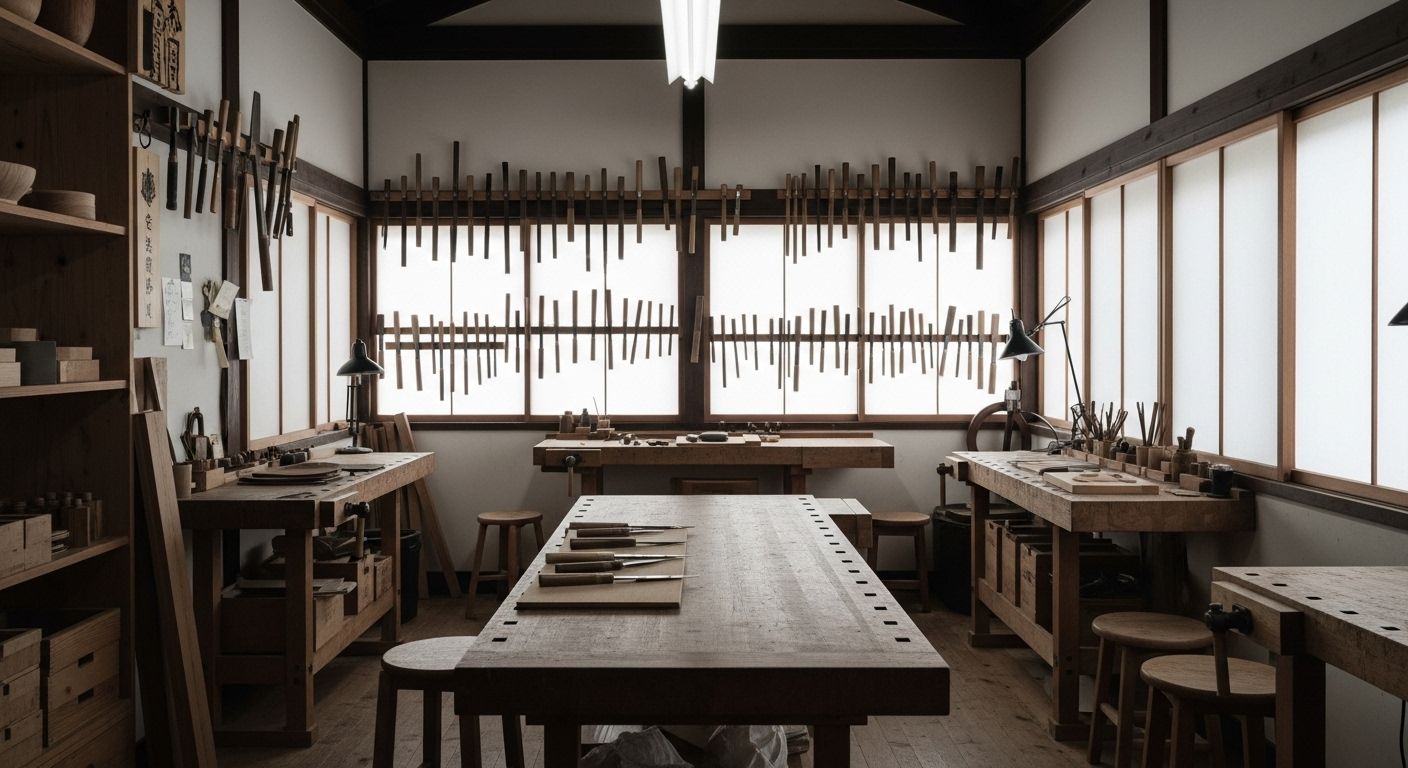
Les couteaux de cuisine japonais sont fabriqués en chauffant et en forgeant le métal , puis en collant la lame sur le revêtement en fer plus doux. Au cours du processus d'affûtage , la lame est d'abord grossièrement meulée, puis affinée avec des pierres plus fines et enfin polie avec une pierre de finition. Dans le processus de construction du manche , la soie est insérée dans le manche et le nom de la marque est gravé avant que le couteau ne soit emballé. Ceci décrit le processus de fabrication d'un couteau de cuisine japonais.
La fabrication des couteaux japonais
  • Le moment où le vent traverse le cœur

    Travailler comme artisan traditionnel de couteaux japonais, c'est comme se regarder dans un miroir qui reflète sa véritable personnalité. Dans ma quête incessante de la perfection, j'ai souvent eu du mal à pardonner mes propres défauts et échecs. Mais un jour, j'ai réalisé quelque chose de profond : accepter même les parties imparfaites de moi-même telles qu'elles sont est essentiel.

  • Les petites rayures sur une lame, les subtiles irrégularités dans l'affûtage (les regarder en face, les ajuster si nécessaire et parfois les laisser telles quelles) m'ont appris une leçon importante. C'est dans ces imperfections que j'ai commencé à sentir un vent tranquille traverser mon cœur.

  • Les faiblesses et les erreurs ne sont pas des choses à cacher, elles font partie du caractère de l'artisanat. Tout comme un couteau, une personne n'a pas besoin d'être parfaite. Ce sont l'individualité, les imperfections, qui permettent à un outil de s'adapter aux mains de quelqu'un ou de résonner dans son cœur.

  • Quand je me suis enfin dit : « Je peux être simplement moi-même », la tension s’est dissipée et un nouveau sentiment de fluidité s’est emparé de mon travail. À tous les lecteurs, je vous encourage à être doux avec vous-mêmes. Laissez le vent traverser votre cœur et vous découvrirez peut-être quelque chose de beau dans la vie et dans l’artisanat.