The Chef’s Code: Professionalism and Daily Practice
-
Greatness is not in a single act, but in the discipline of daily practice—quiet, steady, unshakable.
Professionalism isn’t about flashy skills or grand titles—it’s about what you choose to do every day.
In this video, we’ll explore how discipline, consistency, and pride in the smallest tasks shape the true identity of a chef. -
-
A true professional is not defined by rare talent or occasional brilliance—
but by the discipline of what they do every single day. -
From my time in sushi school to countless hours in working kitchens, I’ve come to realize that professionalism begins long before the food reaches the plate. It lives in clean hands and tidy uniforms, in tools cared for with respect, in executing the basics with quiet precision, and in carrying pride for every role, no matter how small.
Above all, it lives in the spirit: a passion that refuses to fade, the resilience to withstand pressure, and the curiosity to keep learning.
This chapter is about those daily habits and mindsets—the foundation on which every great chef is built.
-
1. Maintain a Clean and Professional Appearance
The kitchen is a place where hygiene and safety always come first.
That’s why it is absolutely essential for chefs to maintain a clean and tidy appearance.Attention to detail matters—from your clothing to your hair, hands, and nails.
This careful grooming builds trust and confidence for those who enjoy your food.A clean appearance is also a reflection of pride in oneself.
It is an important daily habit that keeps a chef’s professional mindset sharp. -
No matter how skilled you are, if your appearance is untidy,
it can cause unease for your customers and diminish the value of your dishes.This is a universal, fundamental rule for chefs everywhere.
Maintaining a clean and professional appearance is the first step to becoming a true professional. -
2. Treat Your Cooking Tools with Care
For a chef, tools are important partners—an extension of your own skills.
Carefully handling each tool, from knives and cutting boards to pots, is fundamental to elevating the quality of your cooking.After use, clean and maintain your tools immediately to prevent rust and wear.
When your tools are in excellent condition, you can achieve consistent sharpness and heat control, delivering reliable dishes every time. -
The way you treat your tools also reflects your pride and sense of responsibility as a chef.
Neglecting them can affect not only your work’s quality but also your mindset.This attitude is shared among top chefs around the world.
Treating your cooking tools with respect is the first step toward becoming a true professional. -
3. Execute the Basics with Absolute Precision
In the culinary world, flashy techniques and grand presentations can be impressive,
but nothing is more important than thoroughly mastering the basics.No matter how small the task, never cut corners—pay close attention to every detail and perform each step with consistent reliability.
This dedication to fundamentals is what defines a great chef.Daily tasks like cleaning, organizing, managing ingredients, and maintaining hygiene may seem minor,
but they are essential to ensuring the safety and quality of every dish.By thoroughly executing the basics, you prevent unnecessary mistakes and kitchen troubles,
while improving overall efficiency.This habit naturally builds your confidence and the trust others place in you.
-
True culinary skill is revealed through these invisible daily efforts.
That is why, no matter how small, it is vital to execute the basics with absolute precision. -
4.Have Passion and Strong Mental Resilience for Cooking
The path of a chef is never easy.
The journey to success is filled with challenges and failures, and overcoming them requires unwavering passion and strong mental resilience.Passion is the source of curiosity and creativity in cooking,
and it fuels the daily effort and drive to take on new challenges. -
At the same time, mental resilience is essential to withstand adversity and pressure,
and to maintain unwavering focus.Only with both can one continue to grow in the demanding world of the kitchen.
Having passion and mental strength is not only key to becoming a great chef but also essential for personal growth as a human being.
Holding onto sincere enthusiasm and believing in yourself no matter the circumstances forms the foundation for creating your best dishes. -
5.Become a Chef with Professional Awareness and Pride
Being a chef isn’t just about cooking—it means understanding that every ingredient you handle and every dish you serve is connected to someone’s health and well-being.
A “professional” isn’t simply someone with skills, but someone who takes full responsibility for their work.
No matter how busy it gets, you must never cut corners, and remain committed to careful, consistent execution.
True professionalism lies in the details that no one sees. -
Pride, as a chef, means having respect and confidence in your craft.
Your sincere attitude toward every single plate you serve is what earns the trust of your guests.Standing in the kitchen means proving your professionalism every day through your actions and mindset.
That steady dedication is what ultimately shapes you into a true chef. -
6. If You Want to Grow, Nurture Your Curiosity
The world of cooking is vast and deep.
Beyond technique and knowledge, there’s always more to learn—about culture, history, ingredients, and the stories behind each dish.
At the heart of that growth lies one thing: a constant curiosity that keeps asking “why?”Never settle for what you already know.
Ask yourself, “How can I make this even better?” or “Why does this ingredient respond well to that heat?”
These small, daily questions are the spark that fuels continuous improvement. -
It’s also important to stay open—observe other chefs, try unfamiliar ingredients, and welcome new perspectives.
A mindset that finds joy in discovery will always lead you forward.Curiosity is the greatest tool of any chef who refuses to stop growing.
Keep that flame alive, and it will light your path toward mastery. -
7. No Task Is Beneath You in the Kitchen
In a professional kitchen, every task has value, and no role is more important than another.
Peeling vegetables, filleting fish, wiping plates—all of it contributes to one shared goal: serving great food.Thinking that “prep work is menial” or “plating is glamorous” misses the point of being a true chef.
In fact, it’s your attitude toward every task—done with care and pride—that defines your professionalism.Being new doesn’t make your work less meaningful.
Being experienced doesn’t give you permission to cut corners.
Treat every job you're given with the same respect and commitment, and you’ll earn the trust of others—and grow as a chef. -
Every action in the kitchen is part of the larger dish.
Mastery is built by honoring the small things, one task at a time. -
8. Safety and Trust Must Always Come First
No matter how delicious a dish may be, if it isn’t safe, it has no value.
A chef’s first responsibility is to protect the health and well-being of those who eat their food.
That means taking hygiene, temperature control, and cross-contamination prevention seriously and consistently.The way you handle a knife, how often you wash your hands—every small action contributes to someone’s peace of mind.
This mindset isn’t optional; it’s the foundation of trust and the minimum standard of professionalism in any kitchen. -
True flavor can only exist when safety is guaranteed.
Never forget that—and carry it with you every time you step into the kitchen. -
9. Consistency Is What Makes a True Professional
Mastery doesn’t happen overnight.
It’s not about doing something extraordinary once—it’s about doing the ordinary things with extraordinary consistency.Sharpening your knife. Handling ingredients with care. Keeping your station clean.
These aren’t glamorous tasks, but the chef who never neglects them builds quiet, undeniable strength.Respect your routines. Hold yourself to a high standard.
What you do well today, do even better tomorrow.
That discipline becomes trust—and eventually, confidence. -
Consistency beats talent.
Steady, unwavering repetition of the fundamentals is what separates the professional from the amateur. -
10. Always Leave Your Workspace Cleaner Than You Found It
Keeping the kitchen clean is a fundamental responsibility of every chef.
When your work is done, always leave your workspace in a condition that is cleaner than before you started. This is the mark of a true professional.Cleaning is not just tidying up—
it’s an act of care for the next person and a critical step in ensuring food safety.
By paying attention to every small crumb and spill, you create a clean environment that forms the foundation for great cooking. -
Don’t think “someone else will do it.”
Take ownership and approach cleaning with a proactive mindset.
This attitude builds trust within the team, improves efficiency, and elevates the entire kitchen’s quality.Leave the space you used better than you found it.
These small habits are what build professional pride over time.
"Greatness is not in a single act, but in the discipline of daily practice—quiet, steady, unshakable."
Character and Attitude
This chapter centers on one guiding belief:
“Before you can be a great chef, you must first be someone others naturally respect.”
Here, I explore the essential qualities that come before skill—like integrity, emotional control, humility, and the power of your words.
Skill and the Attitude Toward Mastery
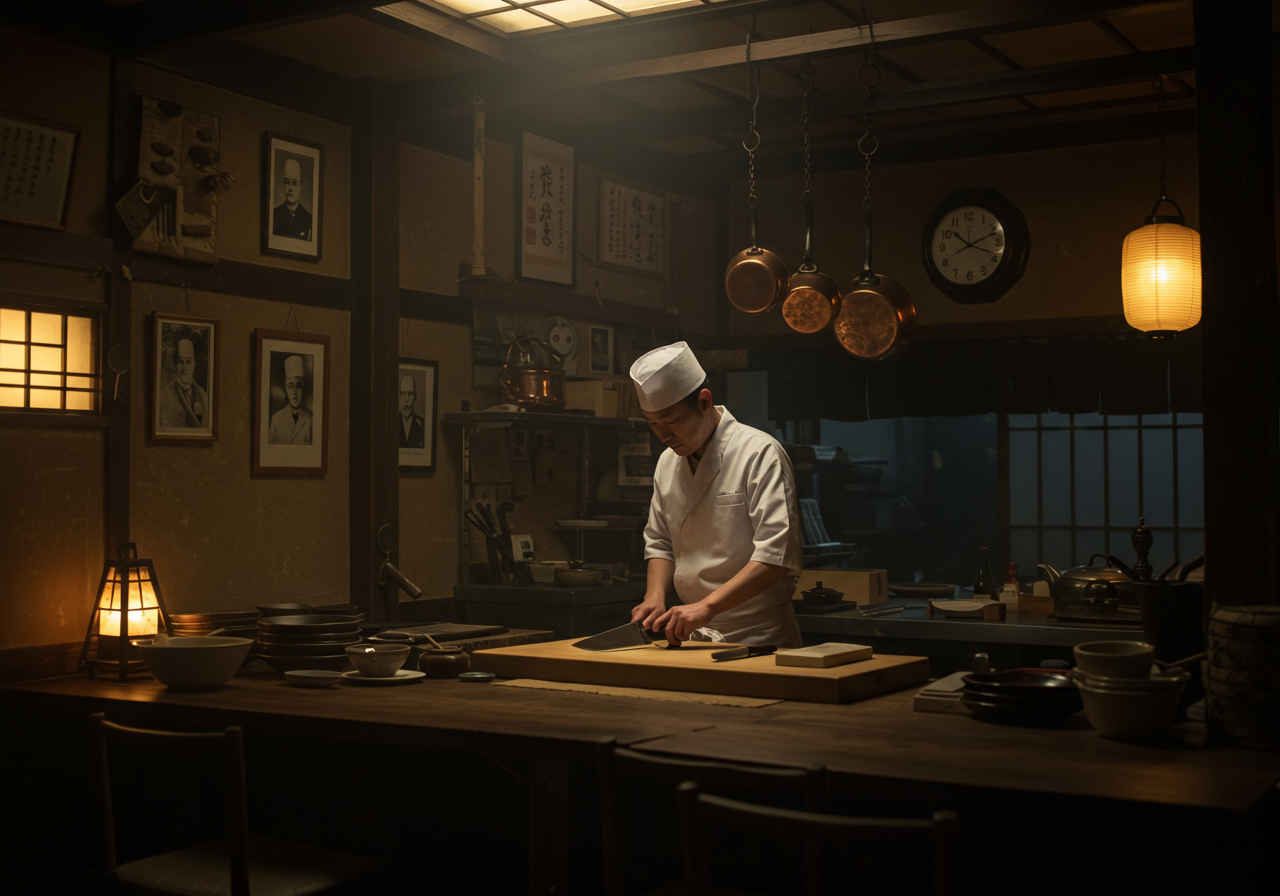
In this chapter, we dive into how to develop and refine your technical ability as a chef—from the fundamentals of katsuramuki and tsuma-uchi, to the importance of planning, preparation, and proper whetstone care.
It’s not just about how to move your hands—it’s about how to build a mindset that respects every step of the craft.
Knowledge and Understanding
In this chapter, we explore what it means to become a thinking chef:
from understanding seasonality and flavor science, to supporting the restaurant’s success, to the simple power of taking notes and staying humble.
Devotion to Flavor and the Five Senses
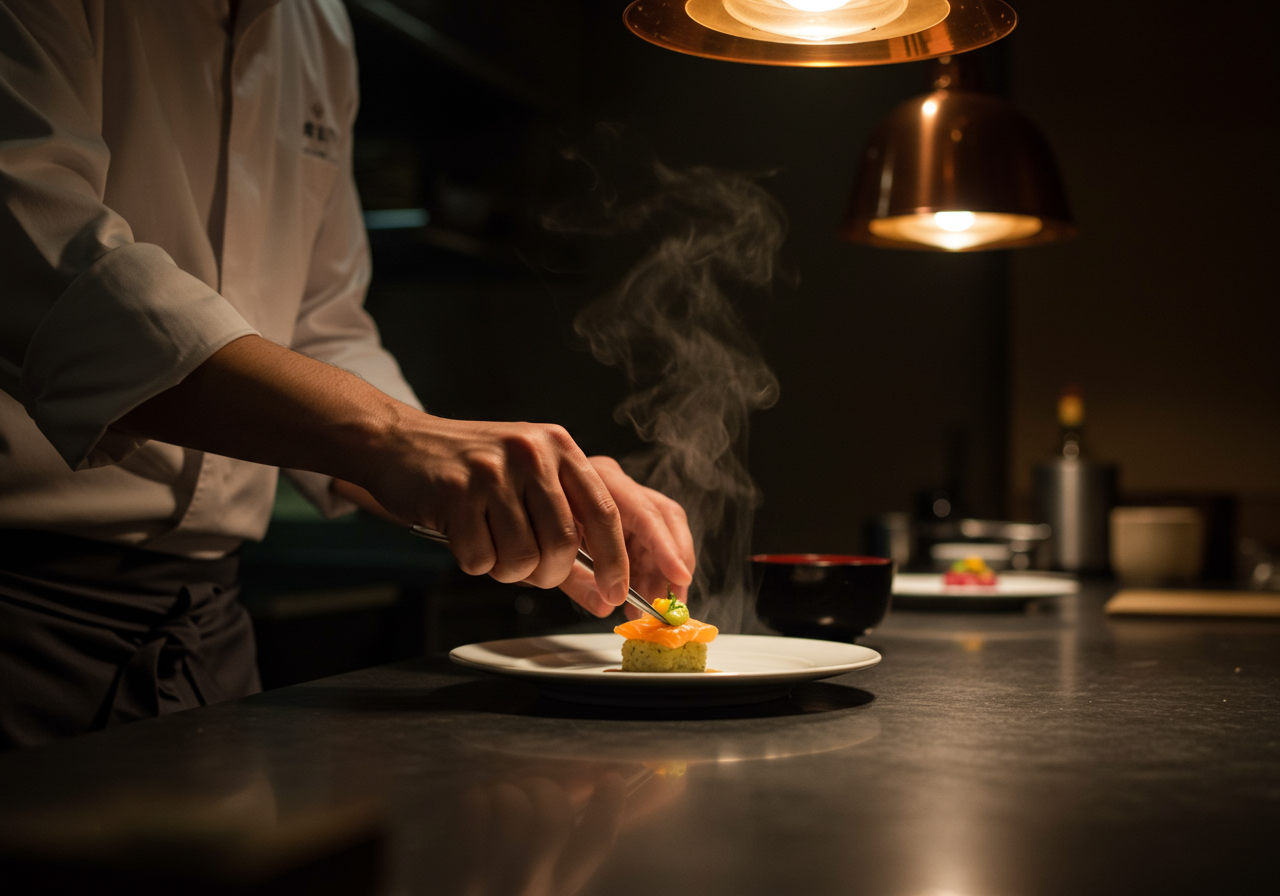
This chapter explores the art of sharpening your senses, valuing even humble staff meals, mastering balance, respecting quality ingredients,
and the deeper essence of what it means to create dishes that truly delight.
Our Story
-
Tradition of Sakai, in Your Hands
"Where can I find a truly great knife?"
We started KIREAJI to answer that question. While the number of skilled craftsmen is declining in Japan, many people overseas are seeking authentic blades. With that in mind, we carefully deliver each knife—bridging tradition and kitchens around the world. -