• From Craft to Practice — Sharpen Your Skills, Refine Your Spirit

    The journey of learning does not end with knowledge — it begins when you bring that knowledge to life.
    In Vol.1 – Blades of Tradition, you discovered the stories and spirit behind Japanese knives.
    Now, in Vol.2 – Blades of Mastery, you step forward: to practice, to feel, and to share what you’ve learned.

    True mastery grows not only through repetition and discipline, but through the willingness to pass on what has moved you — to inspire others as you yourself were inspired.

  • Here, you’ll explore the artistry of forging, sharpening, cutting, and caring — but beyond technique, you’ll find a rhythm of respect, patience, and harmony that defines Japanese craftsmanship.

    Each question in this challenge is a spark — a moment to refine both your skill and your spirit.
    And when you share those realizations with others,the circle of Wa continues to expand, one blade, one heart at a time.

Crafting Process (Q20)

  • Where Fire, Steel, and Spirit Become One

    Every Japanese knife begins not as a tool, but as a promise — forged through flame, hammered with intention, and shaped by the hands of those who see steel as something alive.

    The crafting process is more than technique. It is a dialogue between heat and patience, precision and intuition.
    Each strike of the hammer, each degree of temperature, each stroke on the whetstone reveals the maker’s philosophy — a pursuit of balance between strength and beauty.

    In this section, you’ll explore how every stage — forging, heat treatment, quenching, tempering, and sharpening — determines not only performance, but soul.
    And as you study these processes, remember: mastery is born not from perfection, but from harmony — between steel, craftsman, and purpose.

Types of Knives: Traditional Japanese Knives (Q20)

  • Where Purpose Shapes Perfection

    Every Japanese knife tells a story — of balance, precision, and intent.
    Unlike Western knives built for versatility, traditional Japanese blades are born from specialization.
    Each has a purpose as clear as its edge: the Yanagiba glides through raw fish like silk, the Deba breaks down fish with decisive strength, and the Usuba turns vegetables into art.

    In Japanese cuisine, cutting is not just preparation — it is expression.
    The craftsman forges the knife; the chef completes its meaning through use.
    Together, they form a silent dialogue of skill, respect, and harmony.

    This section invites you to rediscover how form follows function in its purest form, and how each blade embodies centuries of devotion — a living reflection of Japan’s pursuit of perfection through purpose.

Types of Knives: Modern & Versatile Knives (Q19)

  • Tradition Evolved for the Modern Kitchen

    Japanese knife-making is not bound by time — it evolves with the way we cook, eat, and live.
    From the all-purpose Gyuto, to the compact Santoku, to the nimble Petty, these modern blades reflect how centuries of craftsmanship adapt gracefully to today’s kitchens around the world.

    Each of these knives carries the same soul as their traditional ancestors — the same pursuit of balance, sharpness, and respect for ingredients — yet with a new purpose: versatility.

    The Gyuto combines Western form with Japanese spirit.
    The Santoku brings professional precision into daily life.
    The Petty proves that even the smallest blade can hold the essence of mastery.

    In this section, you’ll discover how Japanese knives continue to evolve —
    not by abandoning tradition, but by refining it for the hands and rhythms of the modern cook.

Blade Finishes (Q20)

  • Where Craft Becomes Reflection

    A Japanese knife’s finish is more than its surface — it is its soul revealed.
    Every shine, every line, every trace of polish tells a story of patience, precision, and pride.

    From the calm depth of Kasumi to the luminous brilliance of Mirror Polish,
    each finish transforms steel into an expression of artistry and spirit.
    Even the slightest variation of pressure or moisture can change everything —for here, perfection is not mechanical, but human.

    In this section, you will explore how polish shapes not only appearance but also performance — how the Ura guides every cut, how Honbazuke defines a true edge, and how mirror finishes turn a blade into a reflection of its maker’s devotion.

    To master blade finishes is to understand that beauty in Japanese craftsmanship is not added — it is revealed, through touch, rhythm, and respect for the steel.

Usage & Care: Knife Usage & Daily Care (Q17)

  • Where Respect Meets Practice

    A Japanese knife is more than a tool — it is a living partner in your craft.
    Its edge responds to your touch, its balance mirrors your movement, and its longevity depends on your care.

    True mastery is not proven by how sharp your knife cuts, but by how well you honor it after every use.

    Wash gently. Dry completely. Store with respect.
    These small rituals are not chores — they are expressions of gratitude.

    In Japanese craftsmanship, maintenance is a continuation of creation.
    By caring for your knife, you preserve not only its edge but also the spirit of its maker.
    Each act of cleaning, drying, and storing becomes part of the same artistry that forged the blade itself.

    So, treat your knife not as a possession, but as a companion — a reflection of your rhythm, patience, and respect for the craft.

Usage & Care: Cutting Boards & Whetstones (Q20)

  • The Quiet Guardians of Sharpness

    The sharpness of a Japanese knife doesn’t end at the edge — it lives through your hands.
    Every surface it touches, from the board beneath it to the stone that restores it, either protects or diminishes the soul of the blade.

    A good cutting board cushions each impact, preserving the edge’s harmony.
    A well-maintained whetstone restores sharpness with respect, not haste.
    Together, they form a cycle — cut, care, restore — the rhythm of a craftsman’s life.

    Mastery is not only in cutting precisely, but in knowing when to sharpen, how to protect, and how to listen to your knife.
    The board and the stone are your silent partners — guardians of sharpness, teachers of patience, and mirrors of your discipline.

  • Epilogue: Where Skill Becomes Art

    Mastery is not a destination — it is a rhythm, repeated with care and humility.
    Each time you sharpen, each time you cook, each time you pause to clean your blade, you continue the story that began centuries ago in the forges of Sakai. 

    The knowledge you’ve gained is no longer just memory — it has become motion.
    Through your hands, the edge learns, evolves, and lives.

    True mastery is not loud.
    It lives in quiet discipline, in respect for tools and materials, and in the gratitude that flows through every simple act of care.

    When you share what you’ve learned — not to impress, but to inspire — you extend the harmony of “Wa” beyond yourself.
    From one chef to another, from one home to the world, this spirit of craftsmanship continues to grow — silently, steadily, beautifully.

  • We at KIREAJI believe that every knife cared for with sincerity
    becomes part of something greater — a legacy of hands and hearts united by devotion.

  • Let your practice be your message.
    Let your respect be your light.
    And let every cut you make reflect the spirit of mastery within you.

Origins & History

From samurai swords to modern kitchens, discover how Japanese knives became cultural icons of sharpness, tradition, and identity.

Origins & History

Regions & Craftsmen

Explore Sakai, Sanjō, and Seki—the three great knife-making centers of Japan. And in Sakai, meet the master artisans whose hands preserve tradition and shape the future of Japanese blades.

Regions & Craftsmen

Materials

Discover the steels that shape Japan’s finest knives—from the razor-sharp purity of White Steel to the balance of Blue Steel, the resilience of Ginsan, and the innovation of Super Steels like ZDP189. Each material is more than metal—it is a philosophy forged through centuries of refinement.

Materials

Structure & Features

Uncover the secrets of single-bevel geometry, urasuki hollows, and design features that make Japanese knives precise and unique.

Structure & Features

Crafting Process

Follow the journey from raw steel to living blade—through forging, quenching, sharpening, and finishing guided by master hands.
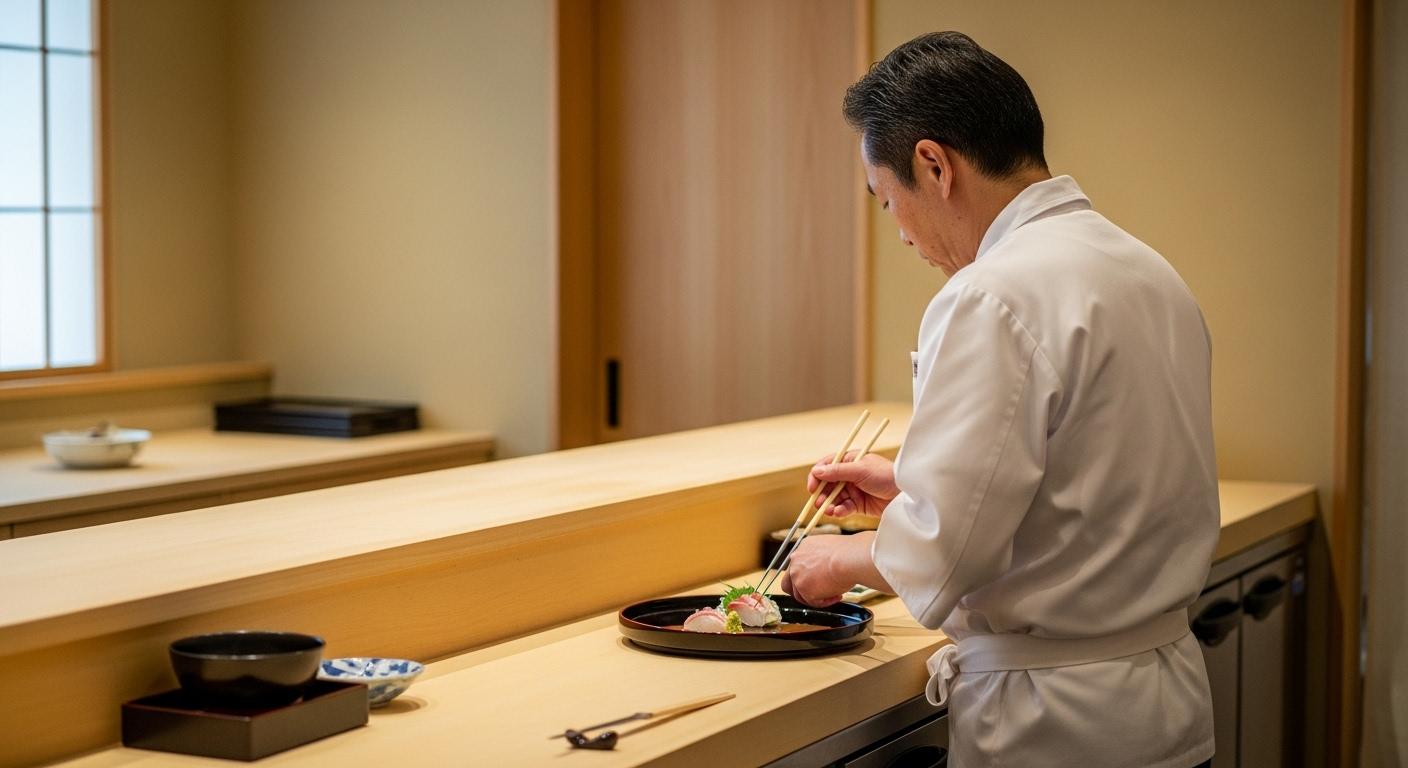
Crafting Process

Types of Knives

From Yanagiba to Deba to Usuba, learn why Japan developed so many specialized blades and how each reflects culinary culture.
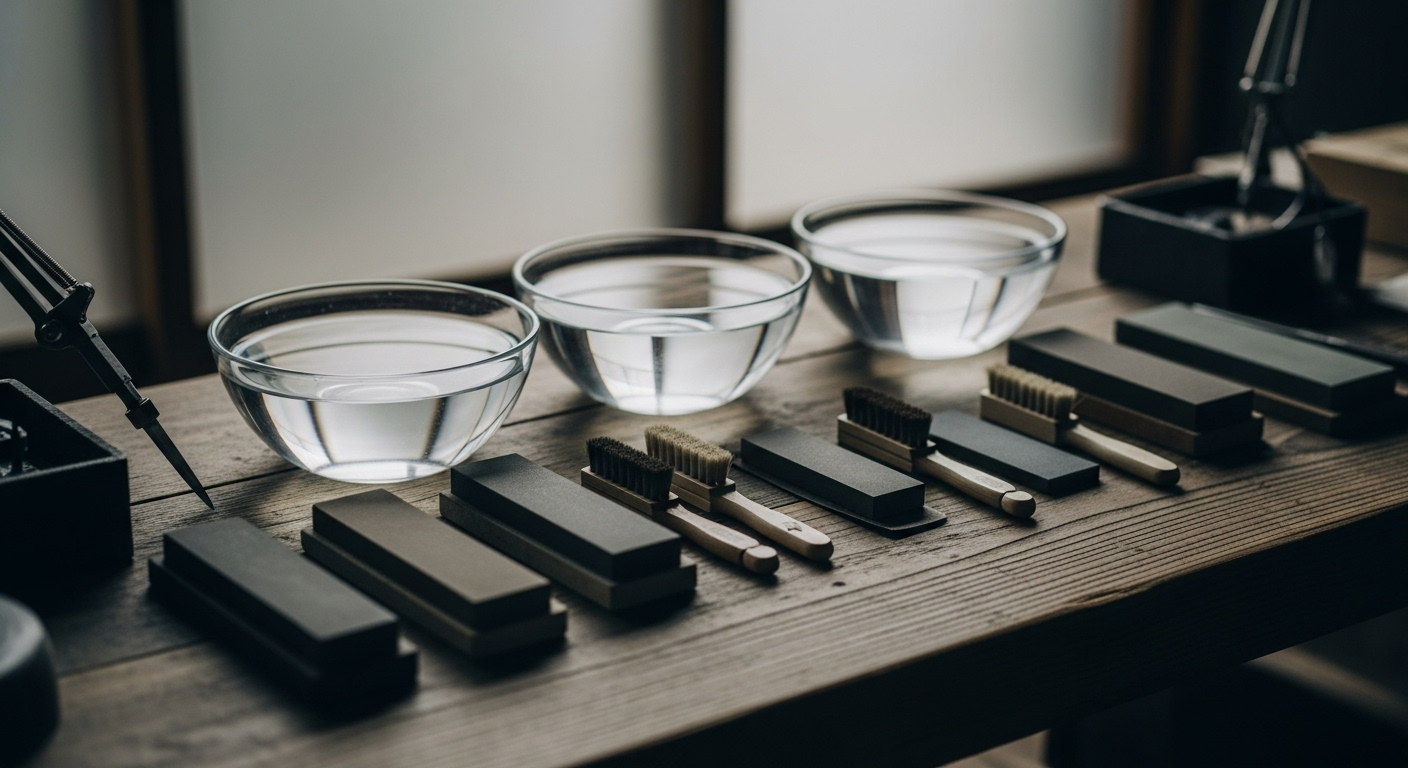
Types of Knives

Blade Finishes

From the precision of Honbazuke sharpening to the elegance of mirror polish, the flowing patterns of Damascus, and the subtle refinement of kido finishing—each finish tells its own story of craftsmanship.

Blade Finishes

Usage & Care

Learn the daily practices—washing, drying, storing, sharpening—that preserve a knife’s sharpness, beauty, and spirit for decades.

Usage & Care

Mindset & Philosophy

Discover The Chef’s Code—principles of character, skill, knowledge, devotion, and professionalism that connect chef and knife

Mindset & Philosophy