• Discover the Origins, Spirit, and Craftsmanship Behind Japan’s Timeless Blades

    Before mastering new skills, true understanding begins with reflection.
    This volume invites you to revisit what you’ve learned and confirm what you truly know.
    Once the knowledge of Japanese knives becomes part of you, share it—speak about it, teach it, and let it inspire others.
    Through your words, the spirit of Japanese blades will travel farther, and the circle of harmony—the Wa—will continue to expand across the world.

    Here, we explore the origins and evolution of traditional Japanese knives:
    from Sakai’s 600-year forging heritage and the philosophy behind White and Blue steels,
    to the artistry of Honyaki and the balance between blade and handle.
    Let this challenge be both a test and a celebration of your journey into the world of Japanese craftsmanship.

Origins & History (Q20)

  • The Beginning of the Blade

    Every blade has a beginning.
    Long before chefs mastered the art of slicing sashimi, ancient humans were shaping stones to survive. From the birth of metalwork in Mesopotamia to the forging traditions of Sakai, the story of Japanese knives is the story of civilization itself — a tale of precision, respect, and evolution.

    This Origins & History challenge invites you to trace that journey:
    from the dawn of cutting tools to the rise of samurai swordsmiths, from the first hōchō to the masterpieces that define Japan’s culinary spirit today.

    Think you know the roots of the Japanese knife?
    Let’s find out — one question at a time.

Regions & Craftsmen: Regions (Q20)

  • The story of Japanese knives begins with the sword.

    From ancient blades preserved in Nara to the samurai era, swordsmiths carried their artistry into the kitchen. When peace in the Edo period reduced the need for weapons, many smiths reinvented themselves, transforming the spirit of the katana into tools for chefs. This gave birth to iconic knives such as the deba, usuba, and yanagiba—each created with precision and purpose.

    Regional cuisines shaped unique designs: the square-tipped usuba of Tokyo, the curved kamagata usuba of Kyoto, the long yanagiba of Osaka, and the tako-biki for firmer fish. Each blade reflects local food culture and philosophy.

    The Meiji Restoration’s sword ban forced smiths once again to adapt, turning their mastery toward kitchen knives. From that challenge grew industries that continue today, blending tradition with innovation.

    Now celebrated worldwide, Japanese knives embody sharpness, respect for ingredients, and centuries of craftsmanship. To hold one is to carry the soul of the sword, reimagined for the art of cooking.

Materials: General Overview (Q20)

  • The Soul of the Blade

    Steel is not just a material—it’s the heartbeat of a Japanese knife.
    Every cut, every shimmer of the edge, every effortless slice begins with the unseen science and spirit hidden inside the steel.

    In this Materials challenge, you’ll uncover what makes one blade sing while another struggles:
    why carbon steel feels alive in your hands, why stainless steel endures the test of time, and how Japan’s legendary Yasuki Steel became the cornerstone of modern craftsmanship.

    To understand steel is to understand the knife itself.
    Let’s dive deep into the elements, heat, and harmony that give Japanese knives their unmatched soul.

Materials: White Steel Series (Q19)

  • Japanese Knives: From Local Decline to Global Rise

    Japanese kitchen knives, refined over 600 years in places like Sakai, are admired worldwide for their sharpness, balance, and artistry. Once sustained by strong domestic demand, Japan’s knife market is now shrinking—driven by fewer households cooking daily, an aging population, and declining restaurants.

    Yet globally, Japanese knives have never been more in demand. Exports have soared by more than 370% in the last two decades, reaching a historic peak of 11.8 billion yen in 2021. This surge is fueled by the global popularity of Japanese cuisine, especially after UNESCO recognized Washoku as Intangible Cultural Heritage in 2013.

    For chefs and passionate home cooks alike, Japanese knives are no longer seen as luxury collectibles, but as essential tools—symbols of precision, culture, and trust. Whether in Michelin-starred kitchens or family homes abroad, they have become icons of craftsmanship that transcend borders.

    At KIREAJI, we view this as more than a trend—it is a mission. By connecting Sakai’s true craftsmanship directly with the world, we aim to preserve tradition, share stories, and deliver knives that embody both history and future.

Materials :Blue Steel Series (Q20)

  • The Intelligence of Steel

    If White Steel is purity, then Blue Steel is wisdom.
    It takes the clean foundation of Shirogami and strengthens it with chromium and tungsten — transforming fragile brilliance into enduring power.

    Blue Steel represents the harmony between human craftsmanship and metallurgical innovation. It’s the steel of chefs who demand both sharpness and stamina, beauty and resilience.

    In this Blue Steel Series challenge, you’ll discover why Aogami #2 is trusted as the professional’s daily companion, why Aogami #1 pushes the limits of strength, and how “Super Blue” became the ultimate evolution of traditional carbon steel.

    To understand Blue Steel is to see how Japan turns science into soul — forging knowledge into a blade that lasts a lifetime.

Materials :Stainless Steels Series (Q20)

  • The Modern Spirit of Purity

    Stainless steel represents the modern evolution of the Japanese blade — a fusion of purity, precision, and progress.
    Where carbon steel demands devotion, stainless steel rewards consistency. It resists rust, endures time, and invites everyone to experience the beauty of sharpness without fear of corrosion.

    In this Stainless Steels Series challenge, you’ll explore how Japan elevated stainless steel from practicality to artistry — from Ginsan, the “silver steel” that bridges old and new, to ZDP189, a powdered marvel that pushes the boundaries of metallurgy.

    Stainless steel may be born of science, but in Japan’s hands, it carries a quiet spirit — one that honors tradition while embracing the future.

Structure & Features:Knife Structures (Q20)

  • The Anatomy of Precision

    Every Japanese knife is a living blueprint of purpose — a balance of structure, material, and spirit.
    From the dual-layered harmony of Awase to the pure, unforgiving strength of Honyaki, each construction tells a story of philosophy as much as technique.

    Where Awase blends resilience and grace through layered steel, Honyaki stands as the pinnacle of mastery — forged from a single piece of high-carbon steel, demanding absolute precision in both creation and use.

    In this Knife Structures challenge, you’ll uncover how design defines destiny: why single-bevel edges matter, how the urasuki hollow gives Japanese blades their effortless glide, and why tapering turns metal into motion.

    To understand knife structure is to understand the very anatomy of sharpness — where every curve, layer, and hollow exists for a reason.

Structure & Features: Honyaki (Q13)

  • The Blade with a Soul

    Among all Japanese knives, Honyaki stands alone — the purest expression of the blacksmith’s spirit and the blade’s potential.
    Forged from a single piece of high-carbon steel, it accepts no compromise and forgives no mistake.
    Each hammer strike, each breath of heat, carries the craftsman’s intuition — for in Honyaki, perfection is not a goal, but a moment of harmony between human and steel.

    The yakiire (quenching) transforms metal into something alive.
    The shimmering hamon line that appears afterward is more than decoration — it is the visible boundary between strength and grace, fire and water, life and death.

    In this Honyaki challenge, you will explore the art where mastery meets mortality: why only a handful of living smiths can still create it, why chefs treat it as a companion rather than a tool, and why, once you hold one, you can feel the quiet heartbeat of steel.

Structure & Features :Handles & Ferrules (Q8)

  • The Harmony Between Hand and Blade

    In Japanese knives, the handle is more than a grip — it is a bridge between the chef, the blade, and the soul of craftsmanship.
    Every detail, from the softness of magnolia wood to the firmness of ebony, is chosen to create balance, not just beauty.

    Traditional Wa-style handles embody the Japanese ideal of impermanence and renewal — lightweight, replaceable, and meant to evolve with the user over time. The ferrule, often made from water buffalo horn, adds strength and spiritual continuity, connecting metal and wood with living harmony.

    In this Handles & Ferrules challenge, discover how form follows feeling: how a handle shapes the way a knife moves, and how true craftsmanship extends beyond the blade — into the very touch of the hand.

  • Epilogue: Blades of Tradition

    Every blade tells a story — of earth and fire, of patience and pursuit.
    In learning about Japanese knives, you’ve not only studied their structure or steel, but glimpsed the philosophy that shaped them: a way of seeing beauty in precision, and harmony in every edge.

    You now carry part of that spirit — the same quiet devotion that has lived in Sakai’s forges for over six centuries.
    Whether you cook, teach, or simply appreciate, every time you speak of these knives, you keep their flame alive.

    Knowledge becomes mastery only when shared.
    So pass it forward — not as facts, but as feeling.
    Let the light of craftsmanship travel beyond borders, and let the “Wa,” the harmony born from creation, continue to expand across the world.

  • If something you’ve learned, noticed, or felt has moved you — please share it.
    Tell others, speak of it, and let the circle of Wa grow one step further.
    When that happens, we at KIREAJI will feel the deepest joy and pride,
    knowing that our mission has reached another heart.


    This is not the end of your learning — it is the moment your understanding begins to breathe.

Origins & History

From samurai swords to modern kitchens, discover how Japanese knives became cultural icons of sharpness, tradition, and identity.

Origins & History

Regions & Craftsmen

Explore Sakai, Sanjō, and Seki—the three great knife-making centers of Japan. And in Sakai, meet the master artisans whose hands preserve tradition and shape the future of Japanese blades.

Regions & Craftsmen

Materials

Discover the steels that shape Japan’s finest knives—from the razor-sharp purity of White Steel to the balance of Blue Steel, the resilience of Ginsan, and the innovation of Super Steels like ZDP189. Each material is more than metal—it is a philosophy forged through centuries of refinement.

Materials

Structure & Features

Uncover the secrets of single-bevel geometry, urasuki hollows, and design features that make Japanese knives precise and unique.

Structure & Features

Crafting Process

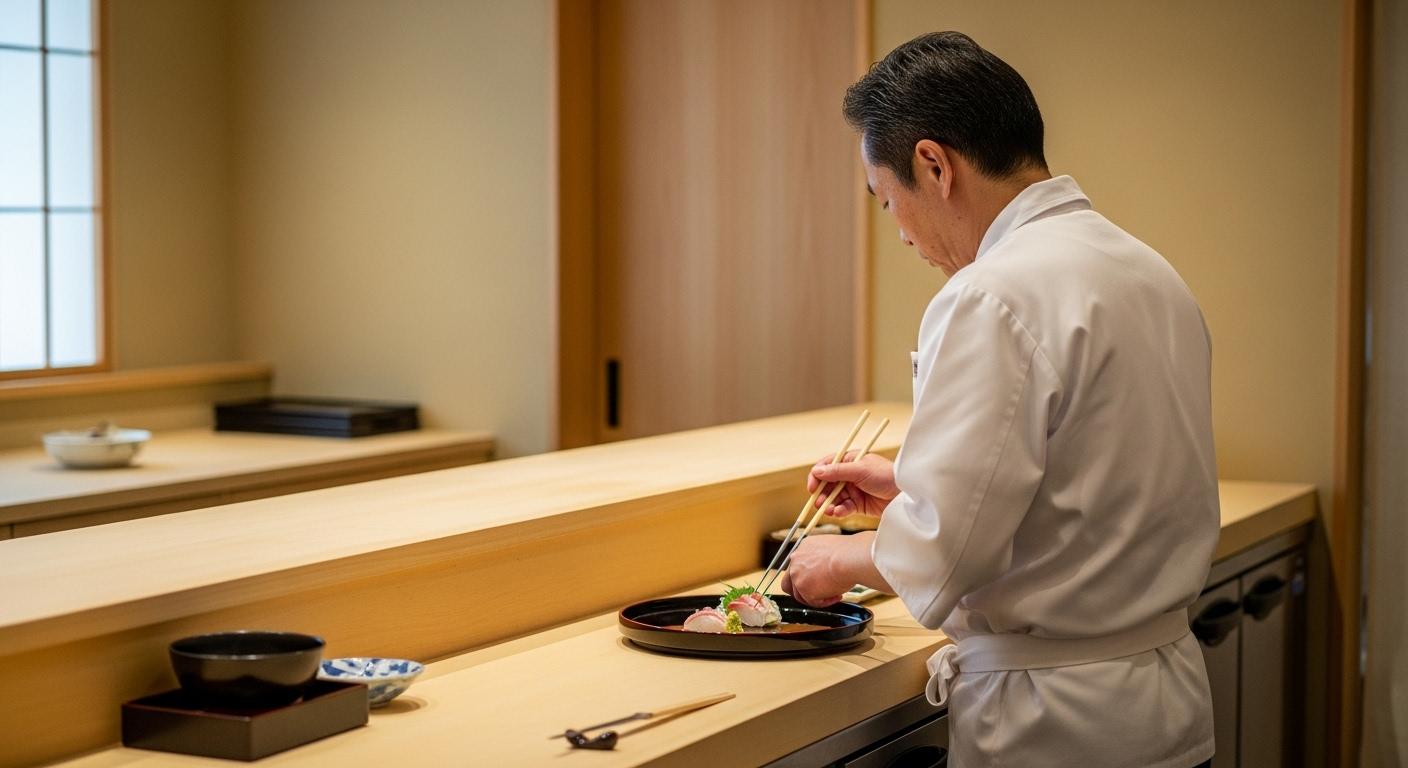
Follow the journey from raw steel to living blade—through forging, quenching, sharpening, and finishing guided by master hands.
Crafting Process

Types of Knives

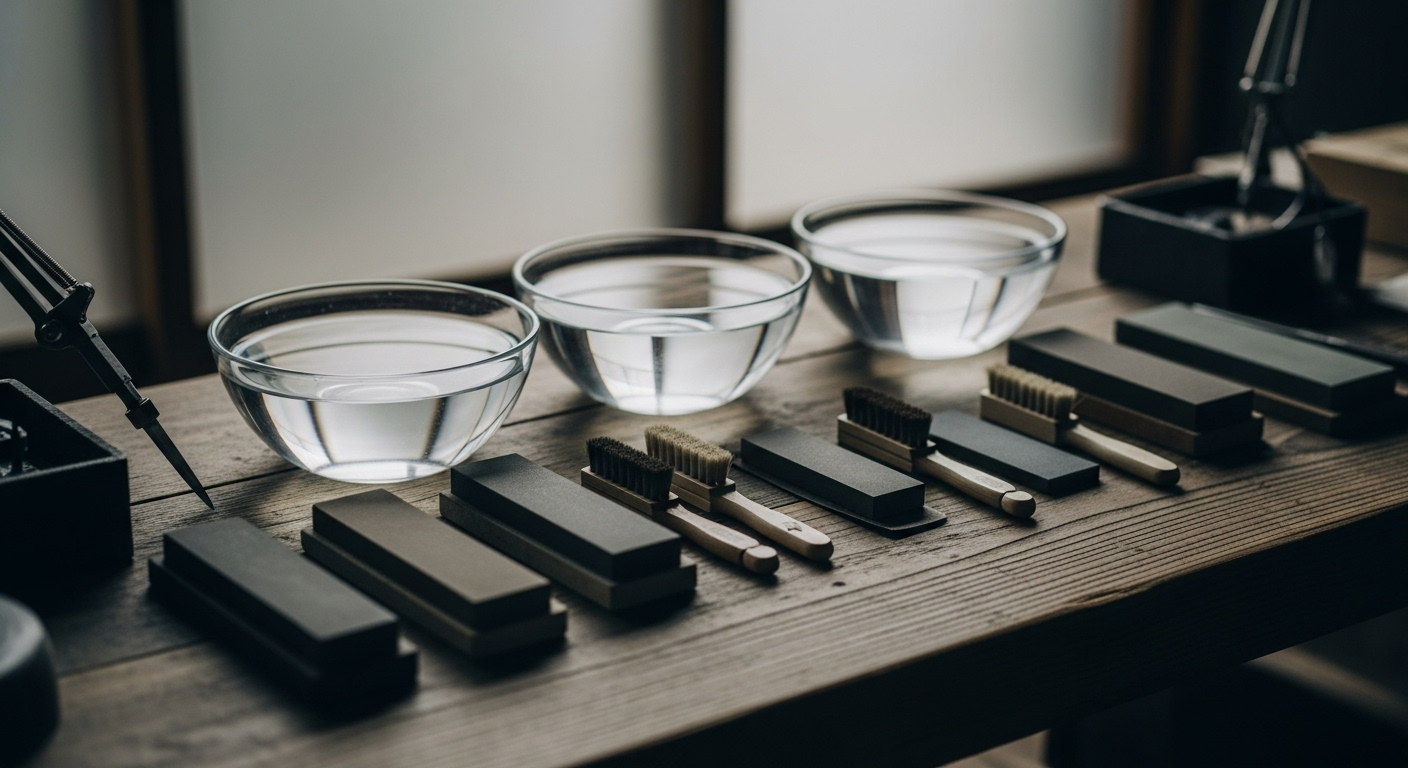
From Yanagiba to Deba to Usuba, learn why Japan developed so many specialized blades and how each reflects culinary culture.
Types of Knives

Blade Finishes

From the precision of Honbazuke sharpening to the elegance of mirror polish, the flowing patterns of Damascus, and the subtle refinement of kido finishing—each finish tells its own story of craftsmanship.

Blade Finishes

Usage & Care

Learn the daily practices—washing, drying, storing, sharpening—that preserve a knife’s sharpness, beauty, and spirit for decades.

Usage & Care

Mindset & Philosophy

Discover The Chef’s Code—principles of character, skill, knowledge, devotion, and professionalism that connect chef and knife

Mindset & Philosophy