Origins & History
-
Skill shapes the dish—but character shapes the chef.
Japanese knives are more than cutting tools—they are vessels of history, culture, and craftsmanship. From the evolution of blades across the world to the unique traditions of Sakai, every detail reveals how knives became inseparable from Japanese cuisine and identity.
In this section, you will discover how global knife-making shaped Japan’s approach, why Sakai rose as the nation’s foremost hub, and why professional chefs continue to choose these knives today. We’ll also explore the cultural and even spiritual meaning of owning a fine Japanese knife.
By tracing the journey from ancient forging techniques to modern culinary trends, you’ll gain not only knowledge but also a deeper appreciation for the philosophy that makes Japanese knives truly exceptional.
-
The Global History of Knives
-
The knife is more than a tool—it is a timeline of human history.
From stone blades of early humans to Damascus steel and today’s hand-forged Japanese knives, each era shaped how people lived, cooked, and created culture.
Japan gave knives unique meaning, turning them into cultural icons through rituals and specialized designs like yanagiba and deba.
Even as mass production made knives widely available, the spirit of craftsmanship has remained a symbol of pride and identity.
To hold a knife today is to hold millions of years of innovation, belief, and human legacy in your hand. -
The Origins of Japanese Knives
-
The story of Japanese knives begins with the sword.
From ancient blades preserved in Nara to the samurai era, swordsmiths carried their artistry into the kitchen. When peace in the Edo period reduced the need for weapons, many smiths reinvented themselves, transforming the spirit of the katana into tools for chefs. This gave birth to iconic knives such as the deba, usuba, and yanagiba—each created with precision and purpose.
Regional cuisines shaped unique designs: the square-tipped usuba of Tokyo, the curved kamagata usuba of Kyoto, the long yanagiba of Osaka, and the tako-biki for firmer fish. Each blade reflects local food culture and philosophy.
The Meiji Restoration’s sword ban forced smiths once again to adapt, turning their mastery toward kitchen knives. From that challenge grew industries that continue today, blending tradition with innovation.
Now celebrated worldwide, Japanese knives embody sharpness, respect for ingredients, and centuries of craftsmanship. To hold one is to carry the soul of the sword, reimagined for the art of cooking.
-
The Essence of the Knife: The “Way” and the True Value of Tools
-
From Words to Spirit: How “Hocho” Reveals the True Meaning of a Knife
A knife is more than steel—it is a mirror of the hand, the heart, and the path of the one who wields it.
This video explores the origins of the word “hocho” (包丁), which once meant not only the kitchen knife but the cook himself, embodying the inseparable bond between craftsman and tool.
We revisit the timeless story of Cook Ding and King Bunkei from the Zhuangzi, where mastery was revealed not as technique alone but as a philosophy—the Way of harmony, sensitivity, and discipline. Cook Ding’s knife, still sharp after nineteen years, became a metaphor for skill joined with spirit.
From there, we reflect on the hidden divide between products and tools. Products work the same no matter who uses them, but tools—like a baseball glove, an F1 car, or a Japanese knife—unfold their true value only through the growth of the one who wields them.
A Japanese knife is never just a product. It is a partner, a mirror, and a challenge. Its spirit asks us whether we seek only convenience, or whether we choose the slower, harder road of mastery. -
Trends in Japanese Knives
-
Japanese Knives: From Local Decline to Global Rise
Japanese kitchen knives, refined over 600 years in places like Sakai, are admired worldwide for their sharpness, balance, and artistry. Once sustained by strong domestic demand, Japan’s knife market is now shrinking—driven by fewer households cooking daily, an aging population, and declining restaurants.
Yet globally, Japanese knives have never been more in demand. Exports have soared by more than 370% in the last two decades, reaching a historic peak of 11.8 billion yen in 2021. This surge is fueled by the global popularity of Japanese cuisine, especially after UNESCO recognized Washoku as Intangible Cultural Heritage in 2013.
For chefs and passionate home cooks alike, Japanese knives are no longer seen as luxury collectibles, but as essential tools—symbols of precision, culture, and trust. Whether in Michelin-starred kitchens or family homes abroad, they have become icons of craftsmanship that transcend borders.
At KIREAJI, we view this as more than a trend—it is a mission. By connecting Sakai’s true craftsmanship directly with the world, we aim to preserve tradition, share stories, and deliver knives that embody both history and future.
-
Why Japanese Knives Are Loved Worldwide
-
From Samurai Swords to Culinary Art
From Michelin-starred chefs to passionate home cooks, Japanese knives are praised the same way: “It’s not just a tool, it’s an extension of my hand.” Their global reputation is built on centuries of tradition, the legacy of the samurai, and a relentless pursuit of perfection.Japanese knives are not mass-produced—they are forged with precision, passing through dozens of stages from heat treatment to hand-sharpening. This discipline creates blades of unmatched sharpness, balance, and durability, turning cooking into art. Their roots trace back to the katana: when swords were banned, swordsmiths devoted their mastery to kitchen knives, infusing them with warrior precision and strength.In regions like Sakai, artisans still craft blades entirely by hand, often continuing family lineages that span centuries. Each knife is unique, carrying the soul and pride of its maker. More than a cutting tool, a Japanese knife is a culinary companion that elevates even the simplest dishes.Forged from superior steels and refined with advanced techniques, Japanese knives combine razor-sharp edges, rust resistance, and durability. This harmony of tradition and innovation explains why they are revered around the world.
-
Why Japanese Chefs Choose Sakai Knives
-
Why do nearly all Japanese chefs choose Sakai knives?
It is not chance, but the result of six centuries of refinement. Sakai’s knife-making tradition, recognized as a Traditional Craft of Japan, continues to set the benchmark for professional kitchens.
The first reason is specialization. In Sakai, no single craftsman makes an entire knife. Instead, each step—smithing, sharpening, and handle-making—is entrusted to a master of that stage. This division of labor channels a lifetime of skill into every detail: a more precise blade profile, a sharper and longer-lasting edge, a perfectly balanced handle.
The second reason is handcraftsmanship. Unlike factory-made knives, Sakai blades are guided by the hands of artisans from start to finish. Every hammer strike, every choice of whetstone, every adjustment of balance is done manually. These subtle interventions are what give Sakai knives their legendary sharpness, durability, and refinement.
This blend of specialization and handcraftsmanship explains why 98% of Japan’s professional chefs—who demand absolute reliability in their tools—choose Sakai. A Sakai knife is more than cutlery; it is trust forged in steel.
-
Why Quality Knives Matter
-
Why Every Great Chef Swears by a Good Knife
A good knife is more than a cooking tool—it is the foundation of every great dish. Sharpness and precision preserve flavors, elevate presentation, and unlock techniques that dull blades cannot achieve. From sashimi’s clean slices to vegetables cut with uniform elegance, the right knife ensures ingredients shine at their best.
Beyond taste, a sharp, well-balanced knife reduces effort and stress in the kitchen. Instead of forcing your way through ingredients, the blade glides naturally, saving time and making cooking more enjoyable. For chefs and home cooks alike, this ease transforms the kitchen into a place of creativity rather than frustration.
A well-forged knife is also a long-term investment. Unlike cheap blades that dull quickly, a handcrafted Japanese knife can last a lifetime when cared for properly. Many are treasured across generations, becoming part of a family’s cooking tradition.
In the end, a good knife does more than cut—it sharpens your skills, deepens your appreciation for food, and transforms cooking into an art. For every culinary journey, the right knife is not just helpful, it is essential.
-
The True Meaning of Blades: Symbols of Protection and New Beginnings
-
Why Giving a Knife Is a Gift of Strength and Hope
In Japan, knives are sometimes avoided as gifts at celebrations, since the word “cut” can be misinterpreted as breaking ties. Yet the true meaning of blades is far deeper—they are not symbols of separation, but of removing misfortune and opening new paths.
Blades have long been revered as sacred in Japanese culture. In the Imperial tradition, a protective sword is given during the Shiken no Gi ceremony to guard against evil and ensure a prosperous future. At Ise Grand Shrine, the great Ōtachi sword is offered every 20 years during the Shikinen Sengu, reaffirming the blade’s spiritual significance.
Across the world, blades also mark new beginnings: scissors at ribbon-cuttings, axes at ship launchings, knives at weddings, and Japan’s Hocho-shiki, a ritual that honors both food and craftsmanship.
To give a knife is to celebrate life’s journey. A finely crafted blade becomes more than a tool—it is a lifelong companion, symbolizing strength, renewal, and hope. Far from being unlucky, blades embody protection and the promise of the future. -
Japan’s Sashimi Culture Was Born from a Razor-Sharp Knife
-
Why does Japan have such a refined sashimi culture?
The answer lies in one surprising element: the unmatched sharpness of the Japanese knife.
Sashimi is not simply raw fish—it is a culinary technique that demands extreme precision. To achieve slices as thin as paper without damaging the fish’s structure, chefs rely on knives so sharp they border on surgical instruments.
The evolution of the yanagiba in the Edo period marked a turning point. With its long, single-bevel edge, the yanagiba allows chefs to slice in a single, smooth motion, preserving both beauty and texture. From delicate sardines to lustrous horse mackerel, Japanese knives reveal the true form of each ingredient without crushing or tearing.
In this way, Japanese craftsmen did more than improve cooking—they perfected the art of cutting itself. Without such exceptional blades, the elegance and subtlety of sashimi would not exist.
In the hands of a skilled chef, a Japanese knife doesn’t just cut—it reveals the soul of sashimi. -
-
Epilogue: Time Forged Into Steel
The story of Japanese knives is not just about blades or technique—it is about survival, adaptation, and spirit. From the swordsmiths of ancient Japan who turned their craft from battle to the kitchen, to Sakai’s artisans who built a tradition of division and specialization, every knife carries echoes of history.
-
To hold a Japanese knife is to feel more than steel and wood. It is to hold centuries of resilience—from the swords of the samurai, to the reinvention of the Meiji era, to the global rise of Washoku that now inspires kitchens worldwide.
-
Each cut you make continues this lineage. With every slice, you are not only preparing food—you are carrying forward a legacy where history, culture, and craftsmanship meet in the edge of a blade.
Knowledge Quiz: Tracing the Blade’s Origins
Regions & Craftsmen
Explore Sakai, Sanjō, and Seki—the three great knife-making centers of Japan. And in Sakai, meet the master artisans whose hands preserve tradition and shape the future of Japanese blades.
Materials
Discover the steels that shape Japan’s finest knives—from the razor-sharp purity of White Steel to the balance of Blue Steel, the resilience of Ginsan, and the innovation of Super Steels like ZDP189. Each material is more than metal—it is a philosophy forged through centuries of refinement.
Structure & Features
Uncover the secrets of single-bevel geometry, urasuki hollows, and design features that make Japanese knives precise and unique.
Crafting Process
Follow the journey from raw steel to living blade—through forging, quenching, sharpening, and finishing guided by master hands.
Types of Knives
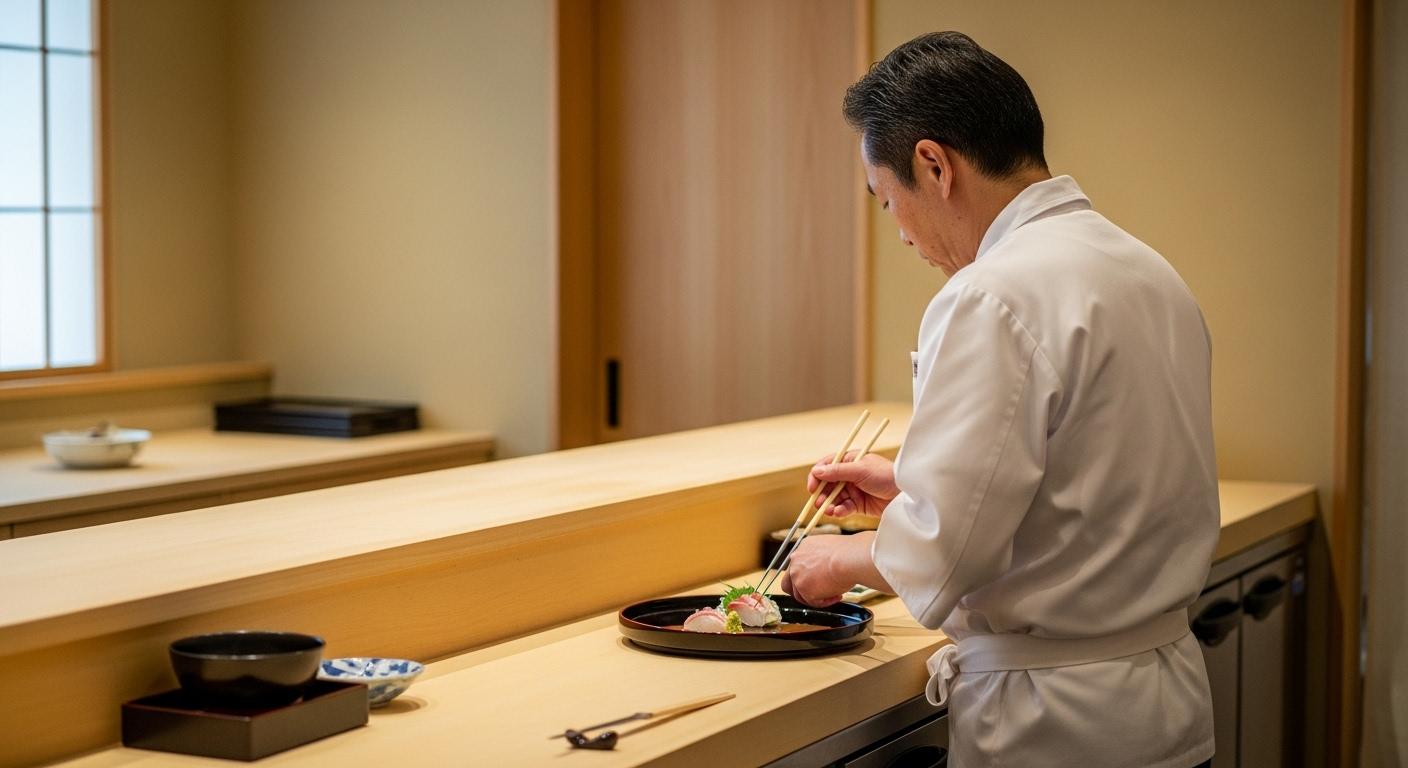
From Yanagiba to Deba to Usuba, learn why Japan developed so many specialized blades and how each reflects culinary culture.

Blade Finishes
From the precision of Honbazuke sharpening to the elegance of mirror polish, the flowing patterns of Damascus, and the subtle refinement of kido finishing—each finish tells its own story of craftsmanship.
Usage & Care
Learn the daily practices—washing, drying, storing, sharpening—that preserve a knife’s sharpness, beauty, and spirit for decades.
Mindset & Philosophy
Discover The Chef’s Code—principles of character, skill, knowledge, devotion, and professionalism that connect chef and knife