Structure & Features:Knife Structures
-
Knife structures are not just construction—they are philosophy.
The form of a Japanese knife reflects more than functionality. Whether forged as a single-bevel blade or a double-bevel one, built as Honyaki from a single piece of steel or as Kasumi with layered construction, every choice carries meaning. Structure defines how a knife moves through ingredients, how it responds to sharpening, and how it evolves with its user.
In this section, we explore why Japan embraced the single edge as a cultural standard, how urasuki became the hidden signature of precision, and why tapering transforms steel into art. We will uncover the differences between Honyaki and Kasumi, and the enduring role of Zenkou versus laminated double-bevel knives. Each structure is more than a technical detail—it is a story of culture, craft, and centuries of refinement.
To understand knife structures is to understand the dialogue between form and function, art and utility, heritage and innovation.
-
Why Are Japanese Knives Single Edged
-
A blade shaped by peace, culture, and craftsmanship.
A Japanese knife is never just a tool—it is the embodiment of centuries of history, pride, and artistry.
The single-edged blade, iconic in Japanese cuisine, was born from a unique path: the cultural reverence for blades in the Kamakura period, perfected during the peaceful Edo era, and transformed by swordsmiths after the Haitōrei edict of 1876.From Emperor Go-Toba’s passion for sword-making, to the refinement of food as art, and the adaptation of samurai swordsmithing into kitchen knife craftsmanship, every step in this journey shaped why Japanese knives became single-edged.
Unlike double-edged knives, the single edge allows chefs to separate fish from bone with flawless precision, glide along natural fibers without damage, and preserve flavor and aesthetics in every dish. In a culture where food reflects philosophy, beauty, and discipline, the single-edged knife was not just practical—it became essential.
-
Japanese vs. Western Knives: Structure, Philosophy, and Craft
-
Two cultures, two philosophies—one kitchen.
Pick up the knife in your kitchen. Is it a versatile partner, ready for almost any task? Or is it a specialized craftsman, designed for one purpose with flawless precision?
This question reveals the essential difference between Japanese and Western knives.Japanese knives, born from the heritage of samurai swordsmiths, are single-edged, purpose-driven, and capable of razor-thin cuts that respect the beauty of ingredients. They embody a philosophy where food is treated as art, sharpening is a ritual of care, and every slice preserves flavor and elegance.
Western knives, in contrast, developed in meat-centered cultures. Built with double edges and sturdy, riveted handles, they are versatile, practical, and efficient—partners made for speed, durability, and adaptability. Here, food preparation was less about presentation and more about nourishment, often enhanced by sauces and seasonings.
These two traditions are not in conflict, but in dialogue. The Japanese Santoku itself is a hybrid, blending Western universality with Japanese refinement. Today, chefs and home cooks alike can choose: the artistic precision of Japanese blades, the robust practicality of Western knives, or the fusion that bridges both worlds.
In the end, the knife you choose is more than a tool—it reflects your cooking style and philosophy.
-
Single vs. Double-Edge Knives — Japanese Precision vs. Western Versatility
-
Single vs. Double-Edge Knives: Where Craft Meets Function
Across kitchens worldwide, two distinct knife philosophies have emerged: the refined precision of Japanese single-edge knives and the practical versatility of Western double-edge knives. Their differences go beyond design—they reflect unique cultural values about food, technique, and craftsmanship.
Single-edge knives like the Deba, Yanagiba, and Usuba embody Japanese tradition. With one side sharpened and the other hollow-ground (urasuki), they deliver unmatched sharpness, ultra-thin slices, and clean food release. They are ideal for specialized tasks such as butchering fish, preparing sashimi, or slicing vegetables with elegance. However, their asymmetry demands skill, and left-handed versions must be specially made.
Double-edge knives, such as the Santoku and Gyuto, provide balance and universality. Sharpened symmetrically on both sides, they are equally suited for right- and left-handed users. Perfect for everyday cooking, they handle meat, fish, and vegetables with ease—but achieving sashimi-level thinness is more challenging.
In the end, choosing between single- and double-edge knives is not just about cutting—it’s about philosophy. Do you value precision rooted in centuries of Japanese craftsmanship, or the versatile practicality of a modern all-purpose tool? -
Single-Edge Structures of Honyaki and Kasumi
-
Pure precision or practical harmony?
In the world of Japanese single-edged knives, two traditions stand apart: Honyaki and Kasumi (Awase).
Honyaki knives, forged from a single piece of high-carbon steel, are the pinnacle of Japanese craftsmanship. They embody purity and precision, delivering razor-thin edges and a cutting feel that reflects the highest level of mastery. Yet this perfection demands skill—both from the blacksmith who forges them and the chef who sharpens and handles them with care.
Kasumi knives, in contrast, are forged by laminating a hard steel core with softer iron. This construction creates a practical balance—sharpness with durability, precision with forgiveness. Easier to sharpen and more approachable for daily use, Kasumi knives carry both tradition and accessibility, though their performance depends heavily on the quality of the forge.
Together, Honyaki and Kasumi reflect two different philosophies in Japanese knife-making: one pursuing uncompromising purity, the other blending practicality with tradition. Choosing between them is not simply about sharpness—it is about the relationship you wish to build with your knife.
-
Double-Edge Knives Explained — Zenkou vs. Kasumi Hari Awase
-
Strength in steel, balance in layers.
Zenkou knives, forged from a single piece of steel, are prized for their strength, edge retention, and consistency. Their uniform hardness resists chipping and delivers long-lasting sharpness, making them trusted companions in professional kitchens. Yet this same quality demands more effort during sharpening, since the whetstone must work through only hard steel without the help of softer layers.
Kasumi Hari Awase knives, by contrast, are built with a hard steel core laminated between softer outer layers. This layered construction offers a balance of sharpness, shock absorption, and ease of sharpening—an accessible choice for both professionals and dedicated home cooks. The trade-off is that their softer layers may deform under stress, and edge retention is shorter compared to Zenkou.
Both Zenkou and Kasumi reflect different solutions to the same challenge: how to unite sharpness, durability, and usability in one blade. Each approach carries the legacy of Japanese craftsmanship, ensuring that even in double-edged form, the knife is more than a tool—it is an expression of culture and tradition.
-
Urasuki: The Signature of Japanese Knives
-
The hidden hollow that makes knives glide.
The legendary sharpness of Japanese single-edged knives does not come from the edge alone—it is also shaped by a subtle feature called urasuki, the gentle concave hollow on the back of the blade. Though barely visible, urasuki reduces friction, releases food cleanly, and makes sharpening more precise and consistent. It is the hidden geometry that transforms every cut into something smoother, lighter, and more controlled.
Urasuki knives separate fish from the bone without tearing, slice sashimi without sticking, and allow sharpeners to maintain a flawless edge with less effort. This detail is not a decorative flourish but a core element of Japanese blade engineering—an innovation born from centuries of experience and refined intuition.
To hold a knife with urasuki is to hold more than steel. It is to inherit the wisdom of craftsmen who understood how to create maximum sharpness with minimal resistance, long before modern science could explain why. Urasuki is the quiet proof that even the smallest details can define an entire tradition.
-
Cheap Knives Often Lack Urasuki — And It Changes Everything
-
Why the hollow makes all the difference.
When choosing a knife, cost can be deceiving. Many budget-friendly blades omit urasuki, the subtle hollow on the back of traditional Japanese knives that defines their sharpness, glide, and precision. Without it, knives dull quickly, stick to ingredients, and compromise the very qualities that make Japanese knives exceptional.
Urasuki reduces friction, allowing the blade to pass through food effortlessly. It prevents food from clinging, ensuring clean release in delicate tasks such as sashimi slicing or katsuramuki peeling. And during sharpening, the concave design ensures perfect contact with the whetstone, preserving a razor-sharp edge with less effort.
Far from decorative, urasuki was engineered specifically for Japanese cuisine, where precision, beauty, and texture are paramount. Its absence in cheaper knives not only affects performance but diminishes the cooking experience itself.
A fine Japanese knife is not just defined by its edge—it is defined by the unseen details, perfected over centuries. Choosing a knife with urasuki means choosing a tool built for sharpness, efficiency, and artistry.
-
Urasuki: The Hidden Feature Behind Sakai’s Unmatched Precision
-
The quiet curve that defines Sakai knives.
Among the many qualities that distinguish Sakai knives, none is more vital — or more overlooked — than the urasuki, the subtle concave surface on the back of a single-bevel blade. Nearly invisible to the eye, it is the hidden detail that makes Japanese knives cut with unmatched smoothness and precision.
Urasuki reduces friction, prevents food from clinging to the blade, and allows chefs to slice with extraordinary thinness and control. This precision is essential in Japanese cuisine, where flavor and presentation must be preserved with every cut. But the feature cannot be replicated by machines. Creating a perfectly even concavity requires decades of skill, judgment, and the practiced hand of a craftsman.
Sakai stands apart for this reason. While other knife-making regions often specialize in double-edged blades suited to machine production, Sakai maintains its single-bevel tradition. Here, urasuki is not simply a technical element but a hallmark of mastery, shaping knives like the deba into tools of both strength and delicacy.
Professional chefs across Japan continue to choose Sakai knives for their effortless glide and refined performance. In every blade, the urasuki serves as the true signature of Japanese craftsmanship — a quiet curve that carries centuries of tradition into the modern kitchen.
-
The Art of Japanese Knives: Mastering Tapering through Craftsmanship
-
How tapering shapes sharpness, balance, and beauty.
A Japanese knife is more than a cutting tool—it is a reflection of centuries of inherited wisdom. At the core of its legendary performance lies tapering, the gradual thinning of the blade from spine to tip. This subtle structure reduces resistance, allowing the blade to glide smoothly and slice with precision.
Unlike mass-produced knives, tapering in traditional wa-bōchō is refined entirely by hand. Masters adjust the spine and edge by sight and touch, customizing thickness for each section of the blade. The result is unique to every knife: a balance of sharpness, durability, and effortless handling.
Tapering not only enhances sharpness but also preserves ingredients. By minimizing cell damage, it keeps flavors fresh and presentations elegant. In single-bevel knives such as the Deba and Yanagiba, tapering achieves unmatched accuracy, shaping slices as thin and delicate as Japanese cuisine demands.
For washoku, tapering is inseparable from culture. From translucent sashimi to katsuramuki, it embodies harmony between beauty and function. To hold a tapered Japanese knife is to hold living tradition—steel transformed into a work of functional art, carrying sharpness, balance, and cultural soul in every cut.
-
-
Epilogue: The Shape of a Philosophy
Knife structures are more than geometry—they are expressions of values.
The single edge embodies precision, respect for ingredients, and the discipline of Japanese cuisine. The double edge reflects versatility, balance, and the efficiency of daily life. Honyaki represents uncompromising purity, while Kasumi honors harmony through contrast. Even details like urasuki or tapering whisper the story of countless hands that shaped them.To choose a knife structure is not merely to select a design—it is to choose a philosophy of cooking. With each cut, you inherit centuries of decisions made by craftsmen, chefs, and cultures. And as you sharpen and use your blade, you add your own chapter, carrying forward a structure that is not just steel, but a way of seeing food, craft, and life itself.
-
Knowledge Quiz: Knife Structures Series
Origins & History
From samurai swords to modern kitchens, discover how Japanese knives became cultural icons of sharpness, tradition, and identity.
Regions & Craftsmen
Explore Sakai, Sanjō, and Seki—the three great knife-making centers of Japan. And in Sakai, meet the master artisans whose hands preserve tradition and shape the future of Japanese blades.
Materials
Discover the steels that shape Japan’s finest knives—from the razor-sharp purity of White Steel to the balance of Blue Steel, the resilience of Ginsan, and the innovation of Super Steels like ZDP189. Each material is more than metal—it is a philosophy forged through centuries of refinement.
Crafting Process
Follow the journey from raw steel to living blade—through forging, quenching, sharpening, and finishing guided by master hands.
Types of Knives
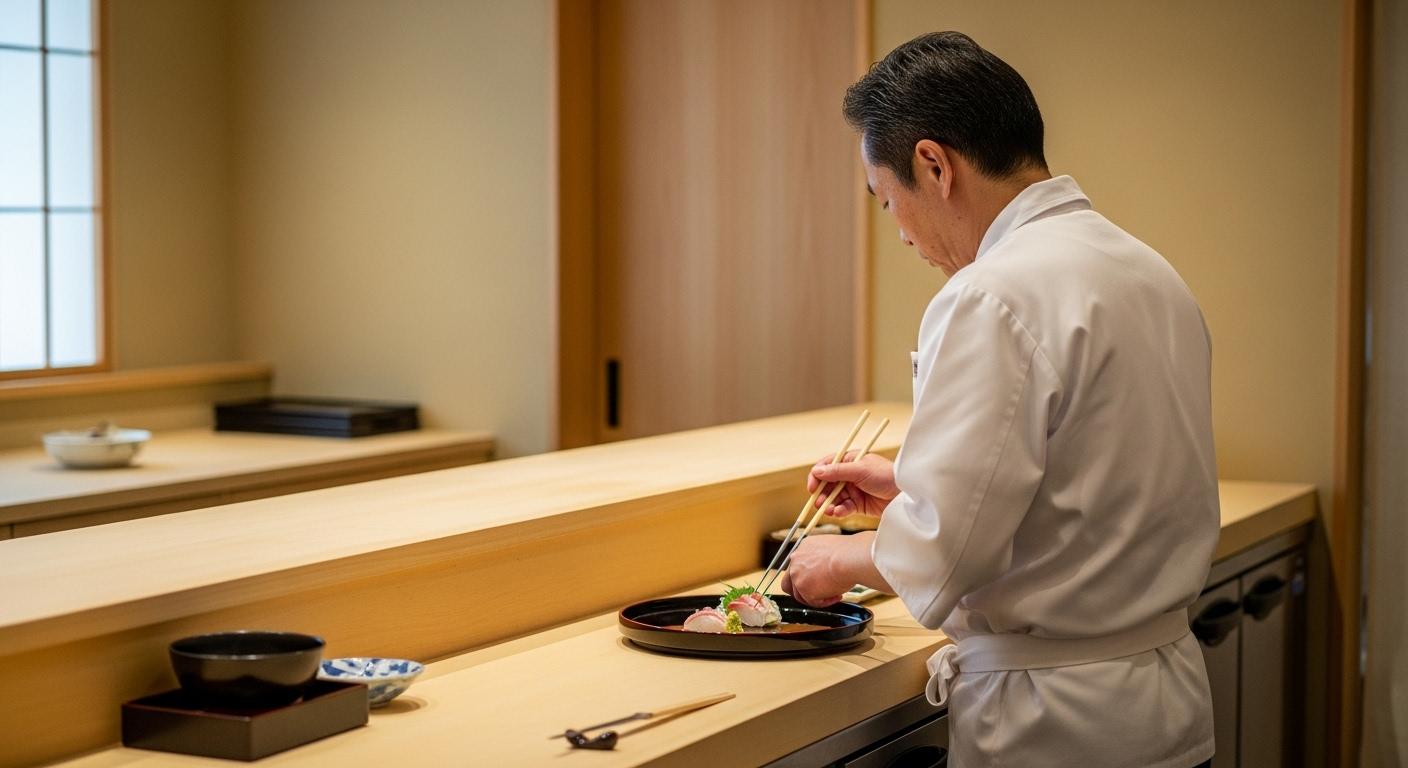
From Yanagiba to Deba to Usuba, learn why Japan developed so many specialized blades and how each reflects culinary culture.
Blade Finishes
From the precision of Honbazuke sharpening to the elegance of mirror polish, the flowing patterns of Damascus, and the subtle refinement of kido finishing—each finish tells its own story of craftsmanship.
Usage & Care
Learn the daily practices—washing, drying, storing, sharpening—that preserve a knife’s sharpness, beauty, and spirit for decades.
Mindset & Philosophy
Discover The Chef’s Code—principles of character, skill, knowledge, devotion, and professionalism that connect chef and knife