• The Hidden Half of a Knife’s Soul

    Handles and ferrules are more than attachments to a blade—they are the hidden half of a Japanese knife’s soul. While the edge defines performance, the handle and ferrule define connection: how the knife rests in the hand, how balance guides movement, and how craftsmanship speaks through subtle detail.

    From magnolia’s lightness and utility to rosewood’s warmth and ebony’s elegance, handle materials reveal both purpose and personality. And at the joint between blade and handle, the ferrule—whether stainless kuchigane or buffalo horn tsunomaki—ensures stability and harmony, embodying Japan’s belief that strength is often found in what is unseen.

    In this section, we explore the world of handles and ferrules: why traditional materials still matter in modern kitchens, how balance transforms precision, and how even the smallest details carry centuries of cultural meaning.

Type of Handle: Tradition and Balance in Japanese Knives

  • The Hidden Half of a Knife’s Soul

    When we speak of Japanese knives, attention often falls on the blade. Yet the handle—the part you hold every day—is equally important. It shapes balance, comfort, and even cultural meaning.

    The most traditional choice is Magnolia (Ho wood), valued for its pale color, light weight, and natural resistance to splitting. Professional chefs have long preferred it for its practicality and ease of use, allowing them to work comfortably for hours.

    Rosewood (Shitan) offers a different kind of appeal: a warm reddish tone that deepens with time. Strong, durable, and resistant to changes in moisture, it combines beauty with resilience. Many chefs appreciate its elegance, which adds character to the blade it accompanies.

    At the pinnacle stands Ebony (Kokutan), with its deep black color and luxurious feel. Dense, water-resistant, and long-lasting, it is often chosen for high-end knives. Though rare and costly, ebony reflects prestige and refinement, making it a mark of distinction in the kitchen.

    In Japanese craftsmanship, the handle is never secondary to the blade—it is its partner. Magnolia speaks of utility, rosewood of warmth, ebony of elegance. Together, they remind us that a knife is more than steel—it is harmony between edge and hand, a union of function and spirit.

The Hidden Strength of Japanese Knife Ferrules : Why Water Buffalo Horn Matters

  • Small detail, big impact — discover why buffalo horn ferrules define true Japanese craftsmanship.

    When most people admire a Japanese knife, their eyes go straight to the blade. Yet in Sakai, the heart of Japan’s knife-making tradition, every detail counts — even the small ring between the handle and blade, known as the ferrule.

    In swords, a similar fitting called the habaki ensures strength and stability. For knives, the ferrule plays the same role: securing the blade, balancing the handle, and ensuring durability through years of use.

    While cheaper knives often rely on plastic or stainless ferrules, traditional Sakai craftsmen continue to choose water buffalo horn. This natural material carries a remarkable property — it tightens with moisture over time, creating a bond that grows stronger, not weaker, with use. Known as tsunomaki (horn-wrapped), buffalo horn ferrules embody the Japanese belief that true quality lies in subtle details.

    Beyond practicality, buffalo horn ferrules offer unique beauty. Their natural variations in color and grain make every knife one of a kind. For professionals, this detail translates into confidence: a knife that feels alive in the hand, resilient, and ready to serve for decades.

    A ferrule may seem minor, but in truth it is a silent guardian of strength, stability, and tradition. Choosing a Japanese knife with a buffalo horn ferrule is more than a practical decision — it is an investment in history, craftsmanship, and a lifelong bond between chef and blade.

  • Epilogue: The Balance in Your Hand

    A Japanese knife is not only the sharpness of its edge—it is the unity of steel, handle, and ferrule, working together as one. The blade delivers precision, but the handle shapes control, and the ferrule anchors trust.

    Magnolia, rosewood, ebony, buffalo horn—each material brings its own spirit, yet all share the same purpose: to turn a tool into a partner. To hold such a knife is to feel balance not only in weight, but in history, culture, and craft.

    In the end, the handle and ferrule remind us of a simple truth: a knife is not defined by what cuts, but by how it feels in the hand. And in that balance lies the heart of Japanese craftsmanship.

Knowledge Quiz: Handles & Ferrules

Origins & History

From samurai swords to modern kitchens, discover how Japanese knives became cultural icons of sharpness, tradition, and identity.

Origins & History

Regions & Craftsmen

Explore Sakai, Sanjō, and Seki—the three great knife-making centers of Japan. And in Sakai, meet the master artisans whose hands preserve tradition and shape the future of Japanese blades.

Regions & Craftsmen

Materials

Discover the steels that shape Japan’s finest knives—from the razor-sharp purity of White Steel to the balance of Blue Steel, the resilience of Ginsan, and the innovation of Super Steels like ZDP189. Each material is more than metal—it is a philosophy forged through centuries of refinement.

Materials

Crafting Process

Follow the journey from raw steel to living blade—through forging, quenching, sharpening, and finishing guided by master hands.
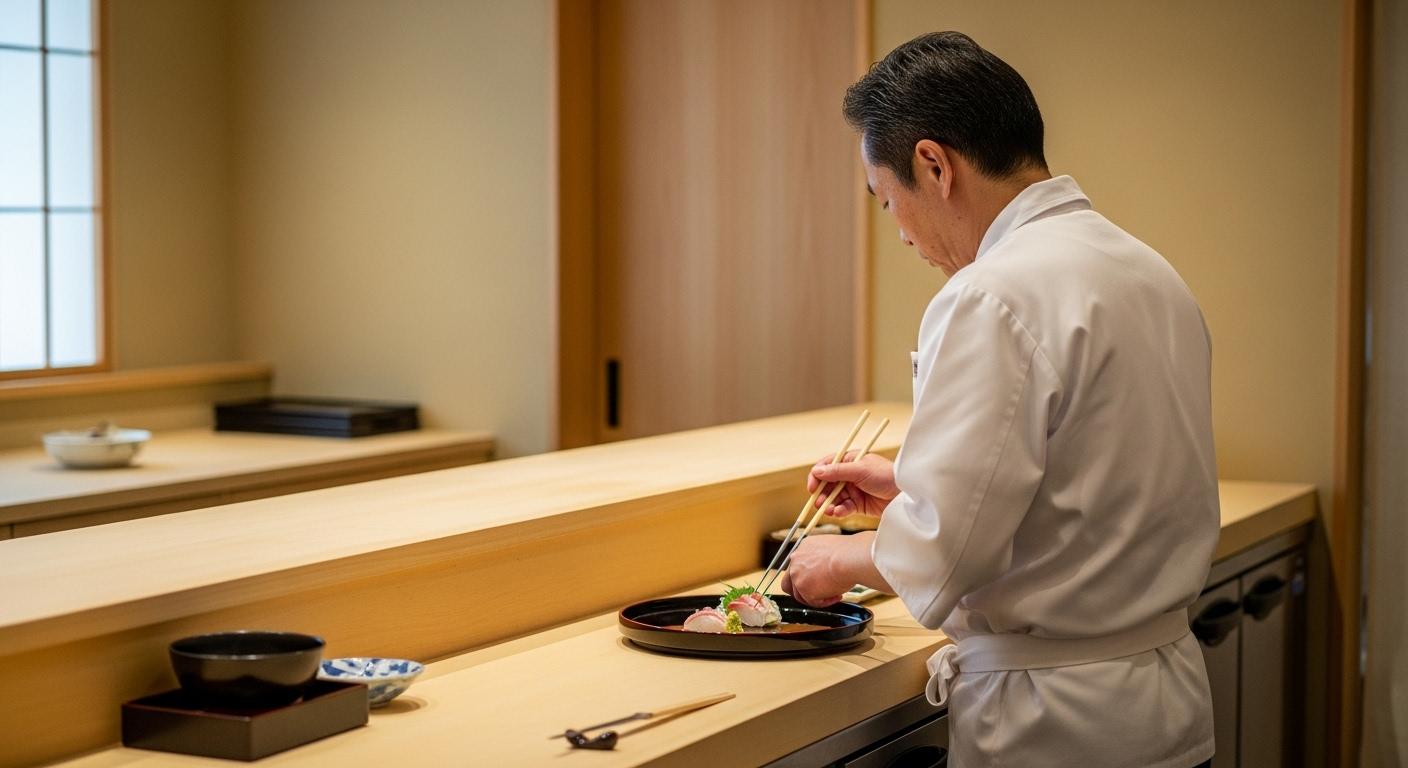
Crafting Process

Types of Knives

From Yanagiba to Deba to Usuba, learn why Japan developed so many specialized blades and how each reflects culinary culture.

Types of Knives

Blade Finishes

From the precision of Honbazuke sharpening to the elegance of mirror polish, the flowing patterns of Damascus, and the subtle refinement of kido finishing—each finish tells its own story of craftsmanship.

Blade Finishes

Usage & Care

Learn the daily practices—washing, drying, storing, sharpening—that preserve a knife’s sharpness, beauty, and spirit for decades.

Usage & Care

Mindset & Philosophy

Discover The Chef’s Code—principles of character, skill, knowledge, devotion, and professionalism that connect chef and knife

Mindset & Philosophy