• Form defines function. Design shapes experience.

    What makes a Japanese knife extraordinary is not only the steel or the craftsmanship, but also the way its structure and design embody centuries of refinement. Every curve, angle, and hidden detail—from the single-bevel edge to the subtle urasuki hollow—exists for a purpose: to enhance sharpness, control, and the beauty of cutting.

    In this section, we explore the unique features that distinguish Japanese knives from their Western counterparts. You will learn why single-bevel geometry creates unmatched precision, how urasuki reduces friction and prevents sticking, and why tapering transforms a blade into both a tool and a work of art. We also dive into the world of honyaki, the pinnacle of Japanese forging, and the design of handles that balance comfort with tradition.

    These are not arbitrary details; they are the essence of functional beauty. By understanding the structure and design of Japanese knives, you will discover how craftsmanship turns steel into a living partner in the kitchen.

Why Are Japanese Knives Single-Edged?

  • A Blade Shaped by Peace, Tradition, and Precision

    Japanese knives are renowned for their single-edged design—a feature that is not merely technical but deeply cultural. The roots trace back to Japan’s long history of reverence for blades, from Emperor Go-Toba’s devotion to swordsmiths in the Kamakura period to the transformation of sword-making into knife-making after the Haitōrei edict of 1876.

    During the peaceful Edo period, with war absent for more than 260 years, swordsmiths refined their skills into tools for daily life, while chefs elevated cooking into an art of precision and aesthetics. This environment gave birth to the single-edged knife, perfectly tailored for Japanese cuisine.

    Single-edged blades allow chefs to separate fish from bone with flawless accuracy, cut along natural fibers without crushing, and preserve flavor and presentation with elegance. More than just practical, they reflect Japan’s philosophy that food is culture and beauty.

    The single-edged knife is thus not simply a design choice—it is a living symbol of Japan’s history, peace, and craftsmanship. Every slice carries with it the soul of a nation that turned blades from weapons into instruments of refinement.

Urasuki: The Signature of Japanese Knives

  • The Hollow That Defines Precision

    Among the many unique features of Japanese knives, urasuki—the subtle concave hollow on the back of the blade—stands as one of the most defining. Far more than a design detail, it is the hidden secret behind the sharpness and effortless performance of traditional knives.

    By reducing the contact surface between blade and ingredient, urasuki minimizes friction, allowing the knife to glide with pinpoint accuracy. For delicate preparations such as sashimi, this ensures smooth slices that preserve texture, flavor, and umami.

    But urasuki is not easy to create. If the hollow is too wide, the blade loses strength; if too narrow, its effect disappears. Only highly skilled artisans can strike the perfect balance, shaping this feature through years of experience and refined judgment.

    Urasuki is more than just a functional innovation—it is a symbol of Japan’s pursuit of precision, a detail that transforms a blade into an instrument of culinary artistry.

Cheap Knives Often Lack Urasuki—And It Changes Everything

  • Why Urasuki Defines the Difference Between Ordinary and Exceptional

    At first glance, knives may appear similar. But the presence—or absence—of urasuki, the subtle concave hollow on the blade’s back, completely changes how a knife performs. Many inexpensive knives skip this step, yet it is precisely what makes Japanese blades extraordinary.

    Without urasuki, knives encounter more friction, dull faster, and struggle with precision. With urasuki, each cut becomes smoother, cleaner, and more efficient. Food releases easily from the blade, delicate textures like sashimi remain intact, and sharpening yields a sharper edge with less effort.

    Urasuki is not just a design detail; it is a feature born from centuries of Japanese culinary tradition. Crafted specifically to meet the needs of techniques such as sashimi slicing and katsuramuki, it represents the harmony of form and function.

    Cheap knives may save money upfront, but they lack the very refinement that transforms cooking into an art. Urasuki is what elevates a knife from being a simple cutting tool to a precision instrument that embodies the spirit of Japanese cuisine.

The Art of Japanese Knives: Mastering Tapering through Craftsmanship

  • Tapering: The Secret Behind Sharpness, Control, and Elegance

    In Japanese knives, tapering—the gradual thinning of the blade from spine to tip—is more than a design choice. It is the hidden key to their extraordinary performance. By reducing resistance, tapering allows each cut to glide smoothly, preserving the integrity of ingredients and ensuring unmatched precision.

    Unlike mass-produced blades, handcrafted tapering demands years of skill. Masters adjust angles and thickness by eye and touch, tailoring each knife to its specific purpose. The result is a blade that is thinner, sharper, and perfectly balanced—capable of delivering effortless cuts while minimizing damage to delicate textures.

    This refinement is most visible in single-bevel knives such as the deba and yanagiba, where tapering amplifies sharpness and control, making them indispensable for tasks like filleting fish or slicing sashimi. Beyond functionality, tapering reflects cultural values: harmony, respect for ingredients, and beauty in presentation.

    In the end, tapering defines why Japanese knives stand apart. It transforms steel into an extension of the chef’s hand—sharp, graceful, and deeply rooted in centuries of tradition.

Single-Edge Structures of Honyaki and Kasumi

  • Honyaki and Kasumi: Two Paths of Single-Edge Perfection

    In Japanese knife-making, single-edge blades are the hallmark of precision. Yet within this category lie two distinct approaches: Honyaki and Kasumi, each carrying its own strengths and philosophy.

    Honyaki knives are forged from a single piece of high-carbon steel, descended directly from the traditions of samurai sword-making. They embody purity and sharpness at the highest level, capable of holding razor-thin edges with unmatched cutting ability. But such perfection comes with demands: sharpening requires great skill, and the hardness makes them less forgiving in daily use. Each piece is a testament to the individual mastery of the craftsman who forges it.

    Kasumi knives, in contrast, are born from the marriage of hard steel and softer iron. This layered structure brings harmony—razor-sharp performance combined with greater ease of sharpening and resilience in everyday cooking. While they may not achieve the extreme sharpness of Honyaki, their practicality and balance have made them indispensable for chefs across Japan.

    Together, these two forms of single-edge knives represent the dual spirit of Japanese craftsmanship: the pursuit of ultimate precision and the search for practical harmony. Whether in the hands of a professional chef or a passionate cook, they embody centuries of tradition shaped by steel and spirit.

Japanese vs. Western Knives: Structure, Philosophy, and Craft

  • Two Traditions, Two Philosophies

    The structure of a knife reflects the culture that created it. Japanese knives, descended from the samurai sword, are often single-edged and highly specialized—each designed for a precise task, from sashimi to vegetables to fish. Their geometry and sharpness preserve flavor, texture, and beauty, embodying the philosophy that food is an art form.

    Western knives, by contrast, evolved in meat-centered kitchens. Built with double edges and sturdy construction, they prioritize versatility and efficiency. One knife can do many tasks, and practicality often outweighs ritual maintenance.

    Together, they represent two philosophies: Japanese knives as works of refined craftsmanship, and Western knives as universal partners in everyday cooking. Today, the lines are blurring, with hybrid knives like the Santoku bridging the best of both worlds.

Honyaki: The Pinnacle of Japanese Blade Craftsmanship

  • Forged from a Single Piece of Steel

    Honyaki represents the highest form of Japanese knife-making, forged entirely from a single block of steel using techniques descended from the samurai sword. Unlike laminated Kasumi blades, which combine soft iron with steel, Honyaki preserves the full potential of its material, whether carbon or stainless, to deliver unrivaled sharpness, edge retention, and durability.

    The forging process demands extraordinary precision. Heated at lower temperatures around 800°C, the steel retains its carbon and fine grain, ensuring both strength and refinement. Every step requires the blacksmith’s intuition and mastery, leaving no margin for error.

    For chefs, a Honyaki is more than a tool—it is a badge of honor. Just as the katana symbolized a samurai’s soul, the Honyaki embodies discipline, respect, and a lifelong bond between craftsman and user. It rewards only those willing to devote care and skill, transforming every cut into an expression of tradition carried forward.

The Price of Perfection: Why Honyaki Knives Are So Expensive

  • A Rare Blade Forged at the Edge of Risk

    Honyaki knives are among the most demanding blades ever created. Forged from a single piece of steel, they allow no margin for error—every hammer strike, every degree of heat, every plunge into water or oil determines whether the blade becomes a masterpiece or shatters instantly. Even for seasoned masters, water-quenching carries a failure rate of more than 30%. Techniques like clay-coating (tsuchioki) are essential, hardening the edge while preserving flexibility in the spine.

    Traditionally crafted from White Steel for clarity and sharpness, or Blue Steel for edge retention, honyaki embodies not only the purity of its materials but also the soul of its craftsman. The difference between perfection and failure lies not in the steel itself but in the smith’s hand, eye, and intuition.

    Today, fewer than a handful of artisans can produce top-grade honyaki. Aging masters, low wages, and long apprenticeships threaten its survival, making each knife a treasure of rarity as well as skill. To own a honyaki is to hold the fragile balance of tradition and excellence—an art form that stands on the brink of disappearance.

Benefits and Risks of Honyaki Knives: The “Knife of Truth” for Professionals

  • A Blade That Rewards Masters, But Tests the Unprepared

    Honyaki knives are revered as the pinnacle of Japanese cutlery, forged entirely from a single block of steel. They deliver unmatched sharpness and exceptional edge retention, preserving precise geometry and performance for decades when properly cared for. In skilled hands, every subtle motion—whether slicing sashimi or performing katsuramuki—translates into perfect cuts, turning technique into art.

    Yet this same purity brings challenges. Their hard steel construction makes them prone to chipping or cracking when used carelessly, while the carbon steel core requires meticulous drying to prevent rust. Sharpening is also unforgiving: without a soft iron layer to guide the edge, every stroke demands precision. Combined with their rarity and premium price, honyaki knives are ill-suited for beginners.

    For professionals, however, the rewards are profound. A honyaki knife becomes more than a tool—it is a reflection of discipline, skill, and care, a partner that amplifies the chef’s spirit with every cut.

Type of Handle: Tradition and Balance in Japanese Knives

  • The Hidden Half of a Knife’s Soul

    When we speak of Japanese knives, attention often falls on the blade. Yet the handle—the part you hold every day—is equally important. It shapes balance, comfort, and even cultural meaning.

    The most traditional choice is Magnolia (Ho wood), valued for its pale color, light weight, and natural resistance to splitting. Professional chefs have long preferred it for its practicality and ease of use, allowing them to work comfortably for hours.

    Rosewood (Shitan) offers a different kind of appeal: a warm reddish tone that deepens with time. Strong, durable, and resistant to changes in moisture, it combines beauty with resilience. Many chefs appreciate its elegance, which adds character to the blade it accompanies.

    At the pinnacle stands Ebony (Kokutan), with its deep black color and luxurious feel. Dense, water-resistant, and long-lasting, it is often chosen for high-end knives. Though rare and costly, ebony reflects prestige and refinement, making it a mark of distinction in the kitchen.

    In Japanese craftsmanship, the handle is never secondary to the blade—it is its partner. Magnolia speaks of utility, rosewood of warmth, ebony of elegance. Together, they remind us that a knife is more than steel—it is harmony between edge and hand, a union of function and spirit.

  • Epilogue: Where Form Meets Function

    The beauty of a Japanese knife is not decoration—it is design with purpose.
    The single-bevel edge that glides like a whisper, the urasuki hollow that reduces resistance, the harmony of hard steel and soft iron fused together—every line exists because it matters.

  • These features are not accidents of tradition; they are deliberate choices, refined over centuries, to honor ingredients and respect the chef’s hand.

  • To understand a Japanese knife’s structure is to see beyond steel and wood—it is to see philosophy shaped into form. And once you grasp this, every cut becomes more than technique. It becomes a dialogue between you, the blade, and the ingredient before you.

Origins & History

From samurai swords to modern kitchens, discover how Japanese knives became cultural icons of sharpness, tradition, and identity.

Origins & History

Regions & Craftsmen

Explore Sakai, Sanjō, and Seki—the three great knife-making centers of Japan. And in Sakai, meet the master artisans whose hands preserve tradition and shape the future of Japanese blades.

Regions & Craftsmen

Materials

Discover the steels that shape Japan’s finest knives—from the razor-sharp purity of White Steel to the balance of Blue Steel, the resilience of Ginsan, and the innovation of Super Steels like ZDP189. Each material is more than metal—it is a philosophy forged through centuries of refinement.

Materials

Crafting Process

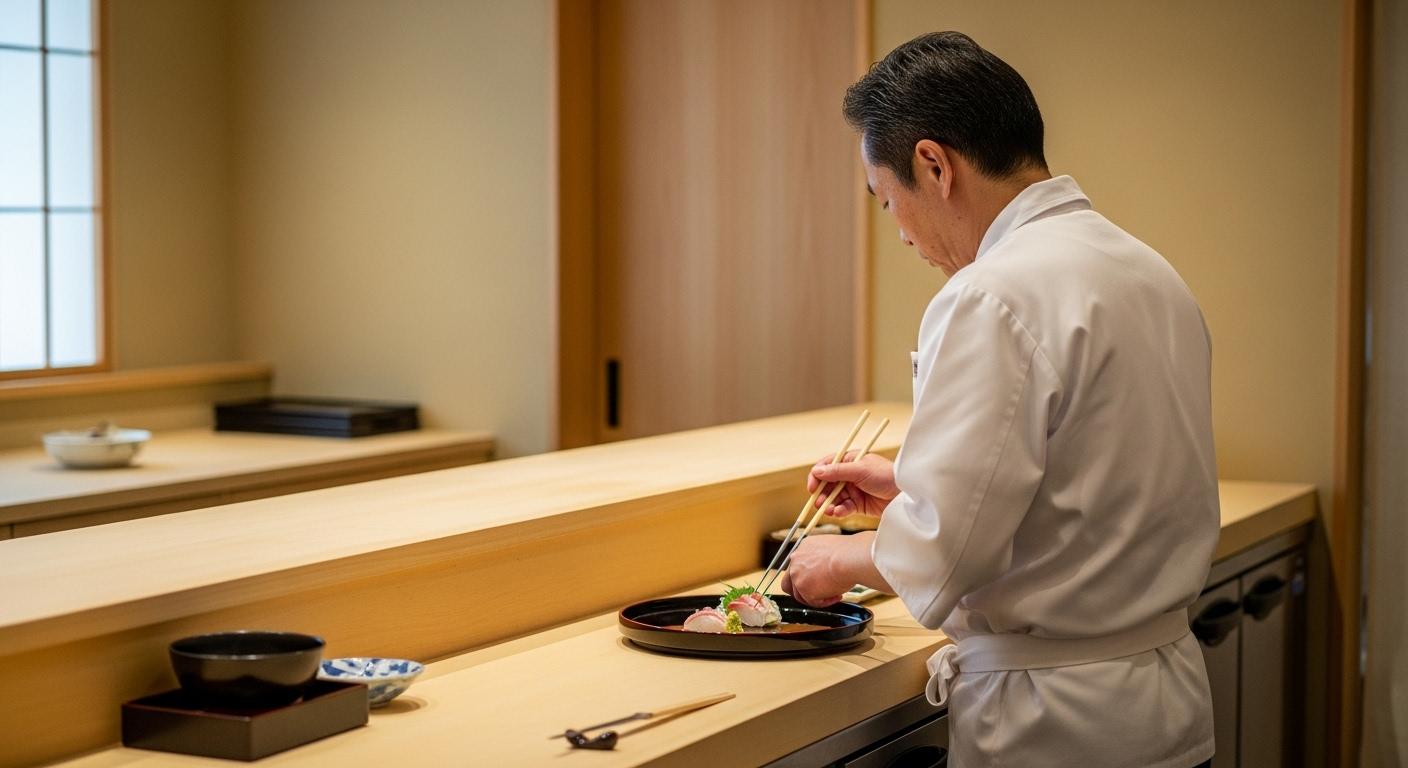
Follow the journey from raw steel to living blade—through forging, quenching, sharpening, and finishing guided by master hands.
Crafting Process

Types of Knives

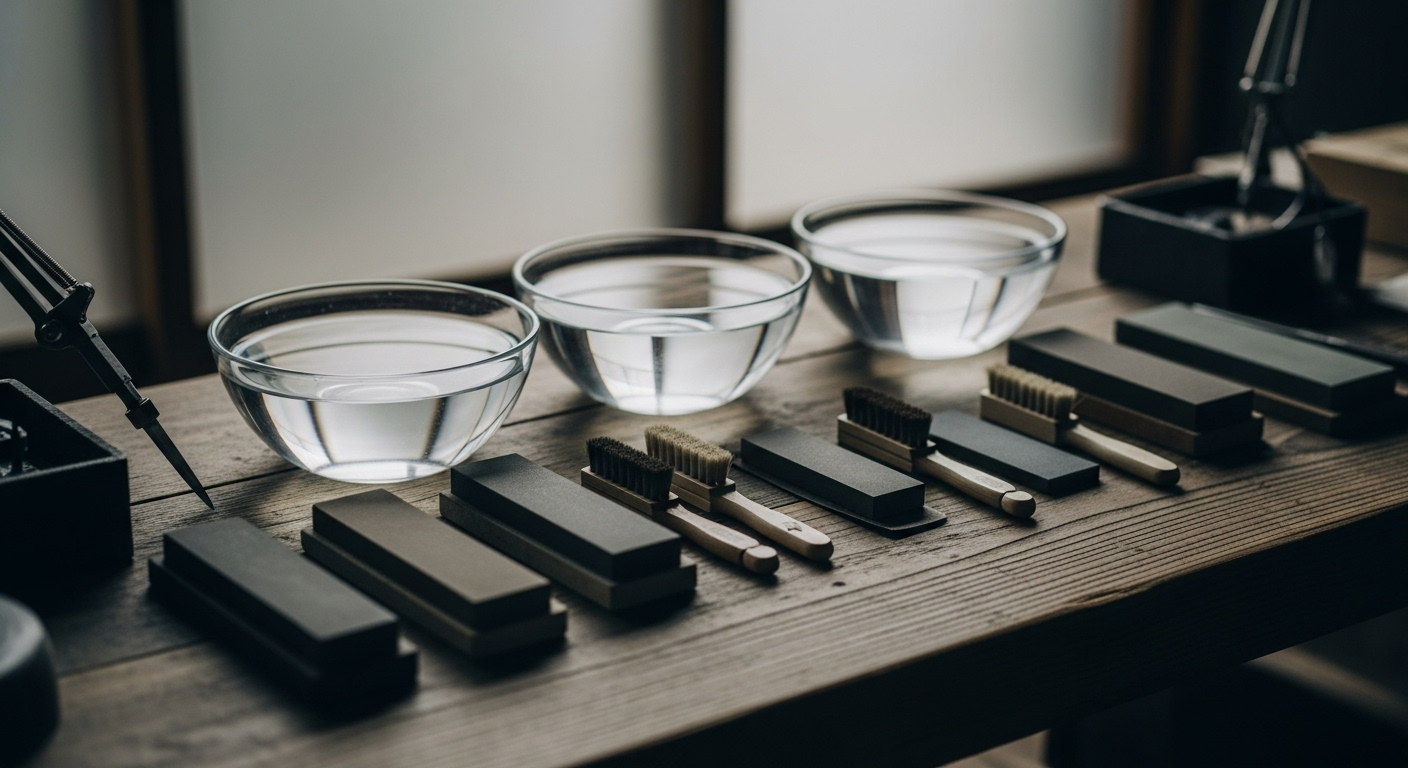
From Yanagiba to Deba to Usuba, learn why Japan developed so many specialized blades and how each reflects culinary culture.
Types of Knives

Blade Finishes

From the precision of Honbazuke sharpening to the elegance of mirror polish, the flowing patterns of Damascus, and the subtle refinement of kido finishing—each finish tells its own story of craftsmanship.

Blade Finishes

Usage & Care

Learn the daily practices—washing, drying, storing, sharpening—that preserve a knife’s sharpness, beauty, and spirit for decades.

Usage & Care

Mindset & Philosophy

Discover The Chef’s Code—principles of character, skill, knowledge, devotion, and professionalism that connect chef and knife

Mindset & Philosophy