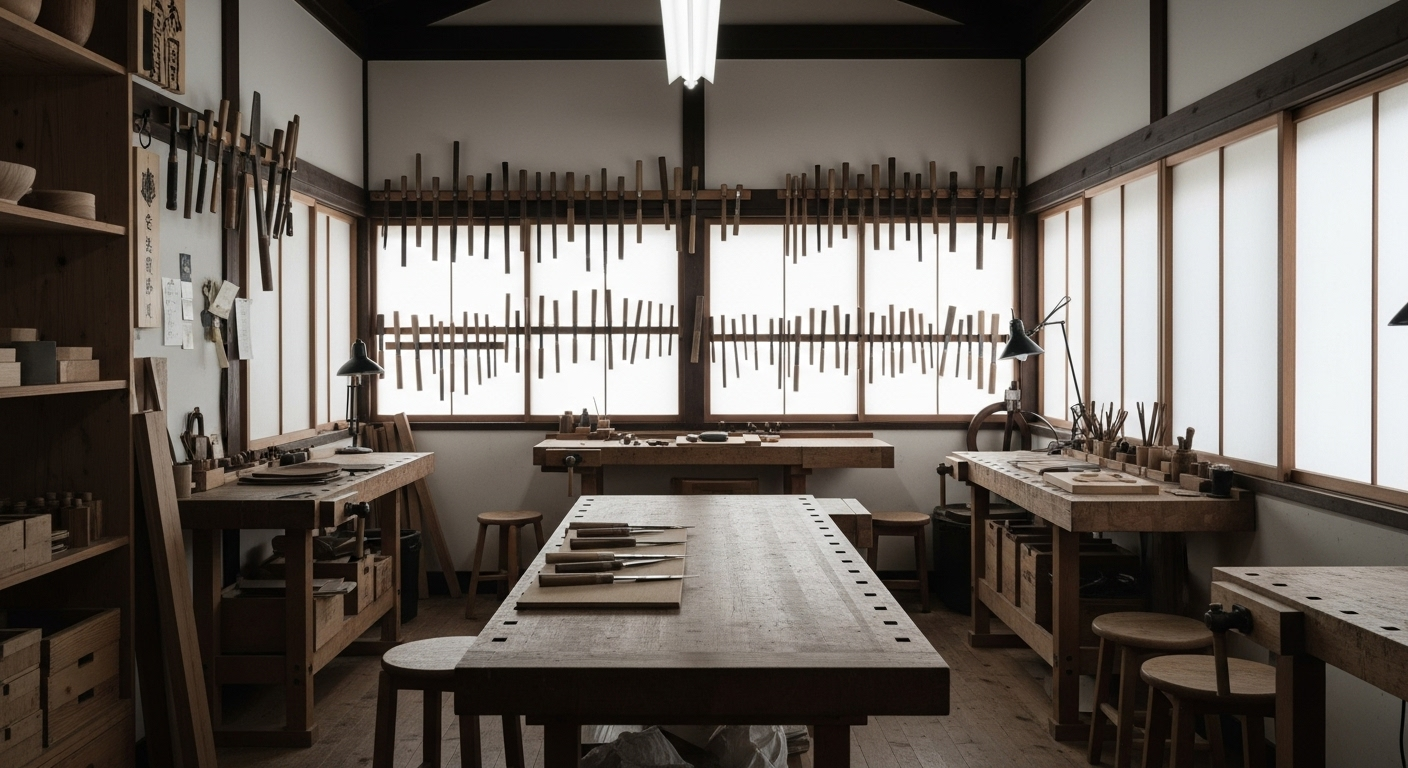
Qu'emporteriez-vous dans l'espace ?
-

Pourquoi faisons-nous des choix différents au quotidien ?
Ce qui est intéressant, c'est la rapidité avec laquelle nos exigences changent lorsque nous reprenons le cours de notre vie quotidienne.
Nous commençons à choisir en fonction du prix.
Disponibilité.
Tendances.
Ce ne sont pas des critères erronés.
Mais ce sont des critères conçus pour des horizons temporels courts.
Les questions qui se posent naturellement lorsqu'on imagine la vie dans l'espace
— Est-ce que ça peut durer ? Est-ce que c'est réparable ? Est-ce que ça vaut la peine d'y consacrer du temps et des soins ?
presque disparaître de nos décisions quotidiennes.
Nous travaillons plus que jamais auparavant.
Nous produisons plus que jamais auparavant.
Et pourtant, étonnamment peu de choses que nous fabriquons nous semblent dignes d'être perpétuées dans le futur.
Le problème n'est pas d'ordre technologique.
Ce n'est pas de la productivité.
C'est que nous choisissons souvent sans nous poser la question plus profonde. -

Acheter, ce n'est pas simplement consommer. C'est un choix.
L'achat d'un objet n'est pas un acte neutre.
C’est un choix concernant ce que nous soutenons — et ce que nous laissons perdurer.
Certains objets sont conçus pour être remplacés rapidement.
D'autres prennent de la valeur au fil du temps passé avec eux.
Chaque achat est un vote discret en faveur de l'un de ces mondes.
Et au fil du temps, ces choix façonnent le type d'avenir que nous léguons. -

Un couteau japonais comme réponse
C'est là qu'un couteau japonais entre en scène.
Un couteau japonais n'est pas fait pour être remplacé.
Il est conçu pour être entretenu.
Lorsque le tranchant s'émousse, on l'affûte — on ne le jette pas.
Lorsque la poignée est usée, elle peut être remplacée.
Le couteau poursuit sa vie.
Un couteau japonais ne vieillit pas au sens habituel du terme.
Il se rapproche de son utilisateur.
Elle existe en dehors de la logique de la rapidité et du jetable.
Il incarne un système de valeurs différent —
Un monde où la longévité, les soins et la responsabilité comptent.


-

La question que nous nous posons réellement
Quand on imagine ce qu'on emporterait dans l'espace,
Nous avons naturellement tendance à choisir des choses qui ont du sens.
Il n'y a aucune raison pour que nous ne puissions pas transposer cet état d'esprit dans la vie sur Terre.
Il ne s'agit pas seulement d'une histoire de couteaux japonais.
C'est l'histoire de la façon dont nous choisissons de vivre.
Non pas en demandant ce qui est le moins cher ou le plus rapide,
mais en se demandant ce qui mérite du temps.
Peut-être que l'avenir ne sera pas façonné par notre niveau de production.
mais en fonction de ce que nous jugeons digne d'être retenu.


Comment choisir un couteau japonais
Choisir un couteau japonais ne se résume pas à une question de spécifications ou de tranchant.
Il s'agit de trouver un outil qui s'adapte discrètement à votre façon de cuisiner, de bouger et de penser.
Si vous êtes prêt à explorer ce choix plus concrètement, ce guide vous accompagnera pas à pas tout au long du processus — du type de couteau et de l'acier à la taille — afin que vous puissiez avancer avec clarté et confiance.

À propos de KIREAJI
KIREAJI fait le lien entre la tradition artisanale Sakai, vieille de 600 ans, et les cuisines du monde entier. Nous proposons des couteaux japonais authentiques, fabriqués à la main, directement issus de l'artisanat de maître, alliant ainsi patrimoine, innovation et un profond respect pour le véritable savoir-faire.