

Origins & History
-

Every Japanese knife carries a story—but few know how deep that story truly goes.
From the earliest stone blades to the samurai sword, and from the rise of Sakai’s famed knife-making tradition to today’s global admiration, the history of Japanese knives reflects centuries of craftsmanship, culture, and human ingenuity.
In this section, we explore how blades shaped cultures, how swordsmiths transformed their skills into culinary artistry, and why the philosophy behind Japanese knives continues to inspire chefs around the world.
Before a knife becomes a tool, it is a legacy.
And by learning its origins, you begin to feel the spirit within the steel.

Regions & Craftsmen: Regions
-

Where a Knife Is Born Matters—Because Place Shapes the Blade.
In Japan, knives are not defined only by steel or technique.
They are defined by where they come from.Sakai, Sanjo, and Seki—three regions shaped by their land, history, and spirit—each forged a different philosophy of craftsmanship. Sakai refined single-bevel knives trusted by nearly all Japanese chefs. Sanjo grew from resilience and nature, creating durable double-edged blades. Seki blended 700 years of swordsmithing with modern innovation.
To understand a Japanese knife is to understand its birthplace.
Because every region carries a story—and every blade carries the soul of its hometown.

Regions & Craftsmen: Craftsmen
-

A Japanese Knife Is Not Just Steel—It Is the Hand of the Craftsman.
Behind every great blade stands a human being:
a lifetime of discipline, a lineage of knowledge, and a spirit passed quietly from master to apprentice.In Sakai and other historic regions, craftsmen dedicate decades to perfecting a single stage—whether forging, sharpening, or finishing. Their work is slow, meticulous, and deeply personal. These are the artisans officially recognized as Traditional Craftsmen of Japan, guardians of techniques refined over centuries.
A Japanese knife is not stamped out by machines.
It is listened into shape, guided by intuition, and brought to life through touch.
Each blade reflects patience, humility, and an unwavering devotion to excellence.In this section, you will meet the masters behind the knives—
from innovators like Shogo Yamatsuka and Satoshi Nakagawa,
to legendary figures who shaped Sakai’s 600-year legacy.To understand a Japanese knife is to understand the people who breathe soul into steel.

Materials: General Overview
-

Steel Is Where Every Japanese Knife Begins—And Where Its Soul Takes Shape.
Before a blade is forged, before it is polished, before it ever touches an ingredient, its destiny is defined by one thing: the steel.
In Japan, steel is not just a material—it is a philosophy.
From the pure sharpness of White Steel to the resilient power of Blue Steel, from the balanced elegance of Ginsan to the cutting-edge innovation of modern stainless and powdered steels, every alloy carries a story shaped by history, culture, and the relentless pursuit of perfection.To learn about steel is to understand why Japanese knives feel alive in the hand.
It is to see how simple iron became a tool of artistry, how craftsmen elevated raw metal into “living steel,” and how each material—from traditional carbon steels to advanced alloys like ZDP189—reflects a different expression of Japanese craftsmanship.Choosing a knife begins with choosing a steel.
And choosing a steel is choosing the future relationship between you and your blade.

Materials: White Steel Series
-

White Steel: Not Just a Material, But a Promise of Purity.
Among all the steels used in Japanese knives, White Steel (Shirogami) is the most honest.
It has almost nothing to hide—no chromium, no tungsten, no “shortcuts.”
What you feel in the blade is the truth of three people:
the blacksmith who forges it,
the sharpener who refines it,
and the chef who brings it to life.White Steel #1 pushes sharpness and hardness to the very limit—a steel for those who pursue absolute precision.
White Steel #2 offers a gentler balance: easier to sharpen, deeply satisfying to use, and trusted by generations of chefs as their everyday partner.
And at the pinnacle stand Honyaki blades, forged from a single piece of steel and hardened in water or oil—knives that sit at the edge of risk and artistry.To choose White Steel is to choose care over convenience,
discipline over shortcuts, and
a lifelong relationship over a disposable tool.

Materials: Blue Steel Series
-

Blue Steel: Where Sharpness Meets Endurance.
If White Steel is purity, Blue Steel (Aogami) is evolution—sharpness strengthened by resilience.
By adding small amounts of chromium and tungsten to White Steel, Japanese craftsmen created a steel that delivers the same razor-like precision while holding its edge far longer. In professional kitchens where knives must perform hour after hour, Blue Steel has become the trusted companion of chefs who demand both sharpness and stamina.
Blue Steel #2 offers a beautiful balance: strong, durable, and responsive on the whetstone—perfect for professionals and passionate home cooks alike.
Blue Steel #1 pushes hardness and edge retention to the limit, revered by chefs who pursue absolute performance.
And at the peak stand the Blue Steel Honyaki blades, forged through high-risk water or oil quenching—where every successful blade is a testament to courage, mastery, and tradition.To learn Blue Steel is to understand a philosophy:
endurance without compromise, sharpness with strength, and tradition refined by innovation.

Materials: Stainless Steel Series
-

Stainless Steel: Tradition That Learned to Evolve.
For centuries, carbon steel shaped the identity of Japanese knives.
But as kitchens changed, so did the steel.Japanese stainless steels were not created to replace tradition—they were created to protect it, adapting centuries-old craftsmanship to the demands of modern cooking. By carefully adding chromium and refining alloy structures, Japanese metallurgists achieved something once thought impossible:
the sharpness and soul of carbon steel, with the resilience and convenience of stainless.From Super Steel engineered through vacuum heat treatment,
to Ginsan, the stainless that feels like carbon,
to ZDP189, a futuristic powder steel pushing hardness to new extremes—
each alloy represents a meeting point between history and innovation.These materials do more than resist rust.
They free chefs to focus on creativity, maintain hygiene effortlessly, and trust their knives through long hours of service—all while retaining the unmistakable cutting feel of Japanese blades.To understand stainless steel is to understand how Japanese craftsmanship survives—
not by resisting change, but by mastering it.

Structure & Features: Knife Structures
-

Why Knife Structure Matters
In Japanese knife-making, structure is never just engineering.
It is a philosophy—one that shapes how a knife moves, how it sharpens, and how it transforms the hands that use it.From single-edge blades designed for purity and precision,
to double-edge knives built for balance and universality,
from the uncompromising mono-steel discipline of Honyaki
to the harmonious layered construction of Kasumi—
every structure tells a story of culture, craft, and intention.Urasuki, the nearly invisible hollow that defines Japanese sharpness.
Tapering, the subtle thinning that turns steel into art.
The distinction between Zenkou and laminated double-bevel blades.
These are not minor details—they are the quiet signatures that give Japanese knives their identity.To explore knife structures is to discover the dialogue between form and function,
art and utility,
tradition and innovation.

Structure & Features: Honyaki
-

Honyaki: The Purest Form of Japanese Blade Craftsmanship
A Honyaki knife is not simply forged — it is born from a single piece of steel, shaped through fire, intuition, and tradition.
No laminations. No shortcuts.
Only one material, one chance, and the full mastery of the craftsman.This structure carries the soul of the samurai sword:
the clay-coated edge, the decisive quench, the hamon that appears like a breath of spirit across the blade.
Honyaki embodies the highest level of sharpness, edge retention, and purity — but also the highest risk, both for the smith who creates it and the chef who uses it.To explore Honyaki is to step into the inner sanctum of Japanese craftsmanship, where skill and philosophy are inseparable.
It is where steel becomes more than metal — it becomes commitment, discipline, and a lifelong partner for those who choose to wield it.

Structure & Features: Handles & Ferrules
-

Handles & Ferrules: The Hidden Half of a Knife’s Soul
While a blade defines sharpness, the handle and ferrule define connection.
They shape balance, guide movement, and determine how the knife becomes an extension of your hand.Magnolia brings lightness and utility, rosewood offers warmth and resilience, and ebony expresses elegance and authority. At the joint, the ferrule—whether stainless kuchigane or buffalo horn tsunomaki—acts as the quiet guardian of stability, reflecting Japan’s belief that true strength often lies in what is unseen.
To explore handles and ferrules is to understand how Japanese knives achieve harmony:
steel for precision, wood for balance, horn for endurance.
Together, they create not just a tool, but a companion shaped by culture and craftsmanship.

Crafting Process
-

Crafting Process: Where Steel Becomes Alive
A Japanese knife is not born from steel alone—it is born from process.
From the first strike of the hammer to the final touch on the whetstone, each step reveals the discipline, intuition, and centuries-old wisdom of the craftsman.Forging shapes inner strength.
Heat treatment awakens the blade’s spirit.
Sharpening reveals its true character.This sequence is more than technique—it is ritual.
It is where swordsmithing evolves into culinary art, and raw steel becomes a lifelong partner in the hands of a chef.

Types of Knives: Traditional Japanese Knives
-

Traditional Japanese Knives: Blades Forged for Purpose
Japanese cuisine does not rely on a single all-purpose knife.
Instead, every blade is crafted with intention—shaped by centuries of culinary wisdom and cultural philosophy.From the Yanagiba that creates sashimi with effortless grace, to the Deba that breaks down fish with strength and respect, to the Usuba that transforms vegetables into art—each knife embodies a specific role and a story of tradition.
These blades are not merely tools.
They reflect how Japan honors ingredients, values precision, and elevates cooking into a form of craftsmanship.

Types of Knives: Modern & Versatile Knives
-

Modern & Versatile Knives: Tradition Meets Today
Japanese knives are not defined only by history—
they are shaped by evolution.As Japanese cuisine encountered Western techniques, new blades emerged:
the Gyuto, refined from the Western chef’s knife;
the Santoku, a beloved all-purpose partner in every Japanese home;
and the Petty, the nimble companion for precision work.These knives bridge cultures and eras, combining Japanese sharpness and balance with modern versatility.
And in tools crafted specially for left-handed chefs, we see something equally important:
respect for individuality, a hallmark of true craftsmanship.

Blade Finishes
-

Blade Finishes: Where Surface Becomes Soul
A Japanese knife is not defined by sharpness alone.
Its surface—the finish—is where beauty, performance, and spirit meet.From the quiet glow of kido finishing, to the mirrored brilliance of polish, to the flowing patterns of Damascus, and the stone-born sharpness of Honbazuke, every finish tells a story. These surfaces influence friction, food release, corrosion resistance, and the very character of the blade.
Most new knives are not delivered razor-sharp—and that is intentional. Through hand-finishing such as Honbazuke, the knife awakens to its true potential, revealing the harmony between steel and craftsman.

Usage & Care: Knives
-

Usage & Care: Where Respect Becomes Performance
A Japanese knife performs at its best only when it is treated with care.
How you use, wash, dry, and store it determines not only its sharpness—but its lifespan, safety, and beauty.In this section, you’ll learn the essentials every owner must know before their first cut, the daily habits that prevent rust and damage, and the construction secrets that determine how long a knife can be sharpened. You’ll also discover the cultural heart of Japanese knife care—from mindful routines to the annual Knife Memorial Service, where tools are honored at the end of their life.

Usage & Care: Cutting Boards & Whetstones
-

Cutting Boards & Whetstones: The Foundations Beneath Every Sharp Edge
A Japanese knife can only shine when its two silent partners are cared for: the cutting board that protects the edge, and the whetstone that renews it. Together, they determine how your knife feels, performs, and endures.
In this section, you’ll learn why board material matters more than most people realize, how soft woods extend edge life, and why choosing the right surface is an investment in your knife—not just a kitchen preference. You’ll also explore the world of whetstones: the cultural roots of Japan’s sharpening tradition, the roles of rough, medium, and finishing stones, and the essential habits that keep them flat, clean, and alive.

Mindset & Philosophy
-

Mindset & Philosophy: Where Technique Ends and Spirit Begins
Japanese knives are more than tools—they are reflections of the person who holds them.
Behind every precise cut lies a mindset shaped by discipline, humility, and respect. Technique can be taught, but spirit must be lived.This section explores The Chef’s Code, five timeless principles passed down from masters to apprentices:
character, skill, knowledge, devotion to flavor, and professional discipline.
These ideas go beyond cooking—they describe how a chef thinks, behaves, grows, and honors the craft every day.

Epilogue — A Knife Is Not Just a Tool. It Is a Connection.
-

In the world of Japanese knives, steel alone does not tell the whole story.
Behind every blade lies a legacy of craftsmanship, a philosophy of respect, and the hands of artisans who dedicated their lives to shaping something that will outlive them.
At Japanese Knife Academy, we believe that a knife is a bridge—
a bridge between the chef and the ingredient,
between tradition and modern creativity,
and above all, between the world’s kitchens and the craftsmen of Japan.
Every lesson, every article, every video we share exists for one purpose:
to connect people around the world with the spirit of Sakai and the timeless craft of Japanese knife-making.
You are not just learning how to choose, use, or care for a knife.
You are stepping into a cultural lineage where tools become partners, where technique becomes philosophy, and where cooking becomes a form of respect.
Our mission is simple, yet profound:
to help more people discover, understand, and cherish Japanese knives—
and to honor the artisans who continue to forge them with heart and soul.
If this Academy inspires even one person to appreciate the beauty of a well-made knife,
or if it helps a single craftsman’s legacy reach another corner of the world,
then our purpose is fulfilled.
Thank you for joining this journey.
May your knife become not only sharp, but meaningful.
May your cooking become not only skillful, but soulful.
And may the stories carried in these blades find a home in your hands.
Welcome to the Japanese Knife Academy.
Where knowledge becomes respect, and respect becomes connection.


Origins & History
From samurai swords to modern kitchens, discover how Japanese knives became cultural icons of sharpness, tradition, and identity.

Regions & Craftsmen
Explore Sakai, Sanjō, and Seki—the three great knife-making centers of Japan. And in Sakai, meet the master artisans whose hands preserve tradition and shape the future of Japanese blades.

Materials
Discover the steels that shape Japan’s finest knives—from the razor-sharp purity of White Steel to the balance of Blue Steel, the resilience of Ginsan, and the innovation of Super Steels like ZDP189. Each material is more than metal—it is a philosophy forged through centuries of refinement.

Structure & Features
Uncover the secrets of single-bevel geometry, urasuki hollows, and design features that make Japanese knives precise and unique.

Crafting Process
Follow the journey from raw steel to living blade—through forging, quenching, sharpening, and finishing guided by master hands.
Types of Knives
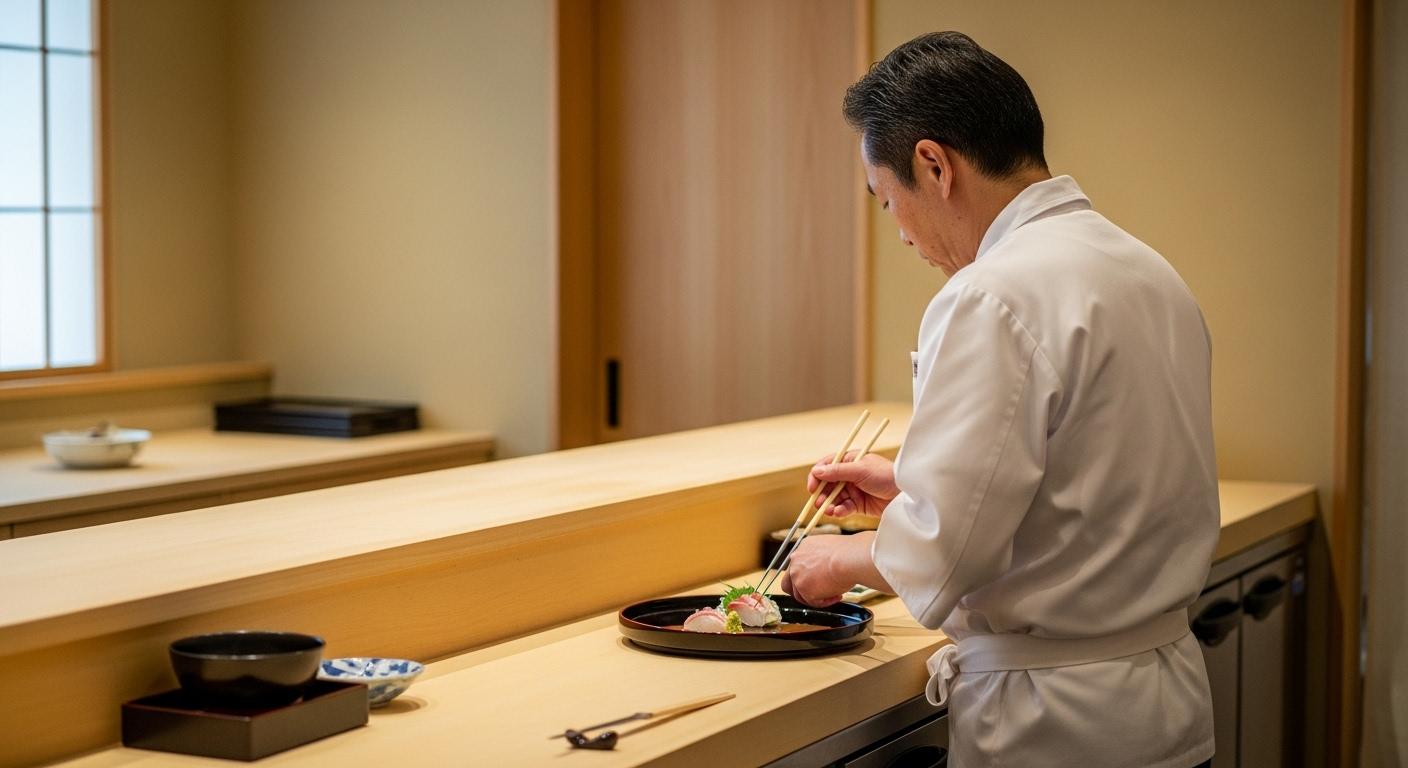
From Yanagiba to Deba to Usuba, learn why Japan developed so many specialized blades and how each reflects culinary culture.
Blade Finishes
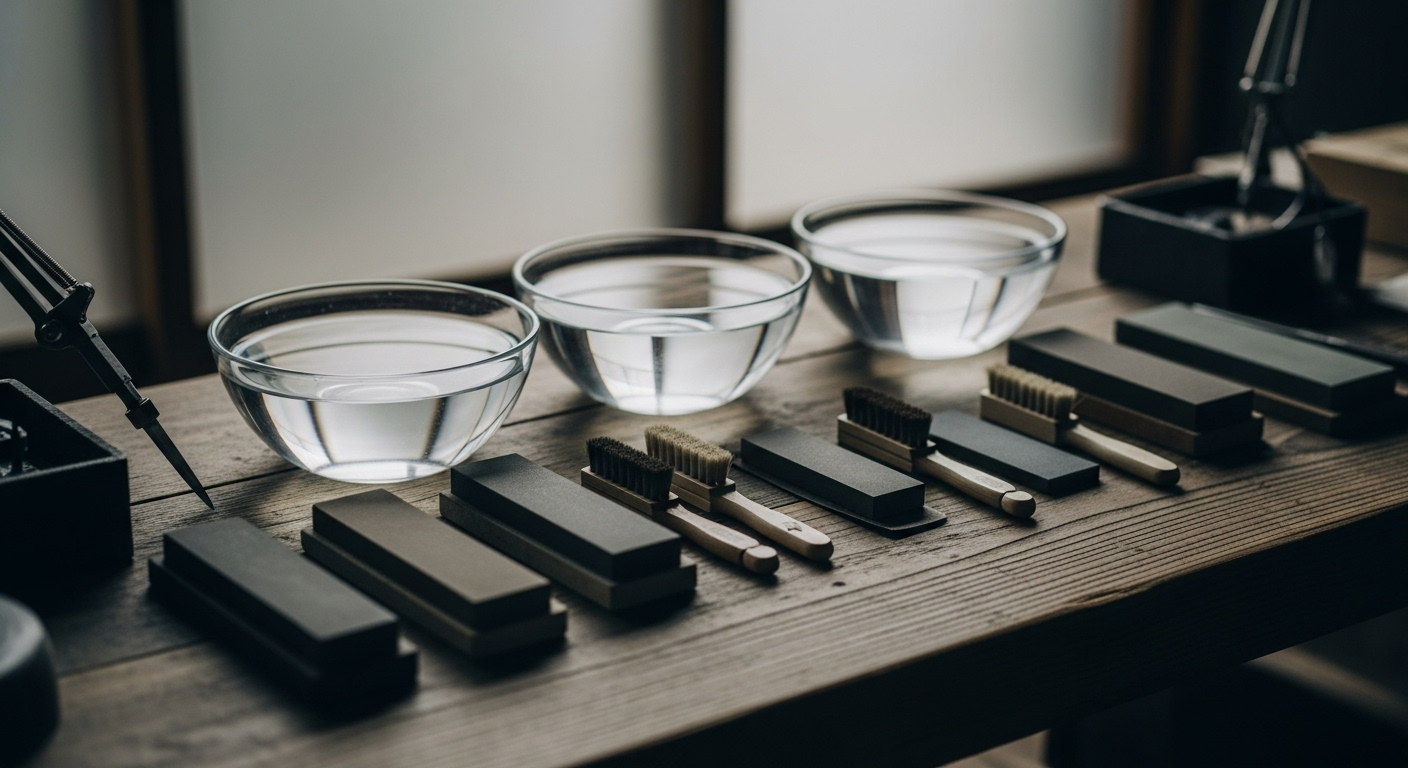
From the precision of Honbazuke sharpening to the elegance of mirror polish, the flowing patterns of Damascus, and the subtle refinement of kido finishing—each finish tells its own story of craftsmanship.

Usage & Care
Learn the daily practices—washing, drying, storing, sharpening—that preserve a knife’s sharpness, beauty, and spirit for decades.

Mindset & Philosophy
Discover The Chef’s Code—principles of character, skill, knowledge, devotion, and professionalism that connect chef and knife