Naoto Yamatsuka
-
A Traditional Craftsman of Sakai Knife Sharpening
In Sakai, where blade sharpening has been refined over centuries as an essential part of Japanese knife-making, Naoto Yamatsuka continues the tradition of precise and disciplined finishing. As a Traditional Craftsman in the sharpening division of Sakai Uchihamono, he represents the quiet strength, patience, and devotion that define Sakai’s professional knife culture.
-
Sakai Traditional Craftsman Collection: Hirotsugu Tosa
即将推出
减少使用的筛选条件数量或删除所有筛选条件
Naoto Yamatsuka: The Spirit of a Single Drop in the Great Ocean
-
The Path of a Sharpener: Began His Career in 1980
Naoto Yamatsuka began his career in knife sharpening in 1980. Through decades of work at the sharpening wheel, he has devoted himself to the demanding craft of blade finishing, a process that determines the final cutting performance, balance, and expression of a knife.
-
Official Recognition
In 2022, Yamatsuka was certified as a Traditional Craftsman in the sharpening division of Sakai Uchihamono. He is also listed by Sakai City and in the official Sakai Uchihamono Traditional Craftsman registry, confirming his recognition in the field of blade sharpening.
-
A Craftsman Who Gives Life to the Blade
In Sakai’s traditional division of labor, the sharpener plays a vital role. After the blade is forged, it is the sharpener who brings out its true cutting ability, shape, balance, and beauty.
Yamatsuka’s work belongs to this essential final stage. Through careful edge formation and precise finishing, he carries forward the tradition of Sakai knives trusted by professional chefs and serious users.
-
Guiding Philosophy
Yamatsuka’s guiding motto is:
“From a drop in an ocean. I believe that a drop that affects nothing is important.”
This phrase expresses a deeply humble and disciplined view of craftsmanship. A single drop may seem small within the vast ocean, but Yamatsuka believes that even such a small presence has meaning. In the same way, each movement of the hand, each adjustment at the sharpening wheel, and each finished blade matters.
His philosophy reflects the spirit of Sakai craftsmanship: true quality is built not through dramatic gestures, but through countless careful details that may appear small, yet are never insignificant.
-
Continuing Tradition
Certified in 2022 after more than four decades of experience, Naoto Yamatsuka represents the continuing future of Sakai knife sharpening. His work stands within a centuries-old tradition, while carrying that tradition forward one blade at a time, with sincerity, precision, and quiet dedication.
KIREAJI's Three Promises to You
-
1. Forged in the Legacy of Sakai
From Sakai City—Japan’s renowned birthplace of professional kitchen knives—each blade is crafted by master artisans with over six centuries of tradition. Perfectly balanced, enduringly sharp, and exquisitely finished, every cut carries the soul of true craftsmanship.
-
2. Thoughtful Care for Everyday Use
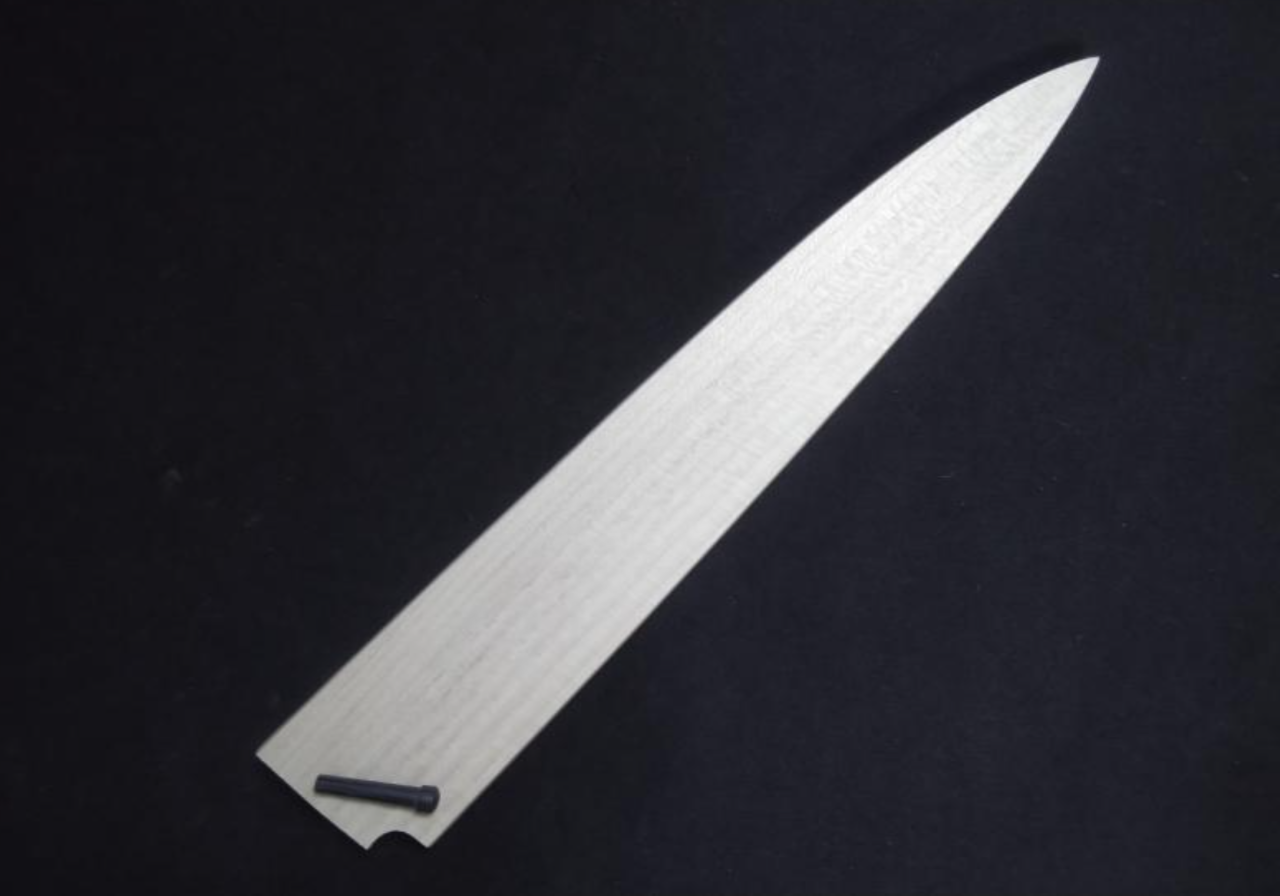
Every knife includes a hand-fitted magnolia saya for safe storage. Upon request, we offer a complimentary Honbazuke final hand sharpening—giving you a precise, ready-to-use edge from day one.
-
3. A Partnership for a Lifetime
A KIREAJI knife is more than a tool—it is a lifelong companion. With our bespoke paid aftercare services, we preserve its edge and beauty, ensuring it remains as precise and dependable as the day it first met your hand.
Why Many Product Photos Show Only the Blade
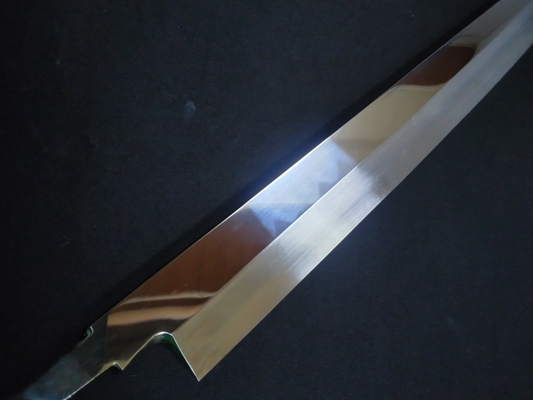
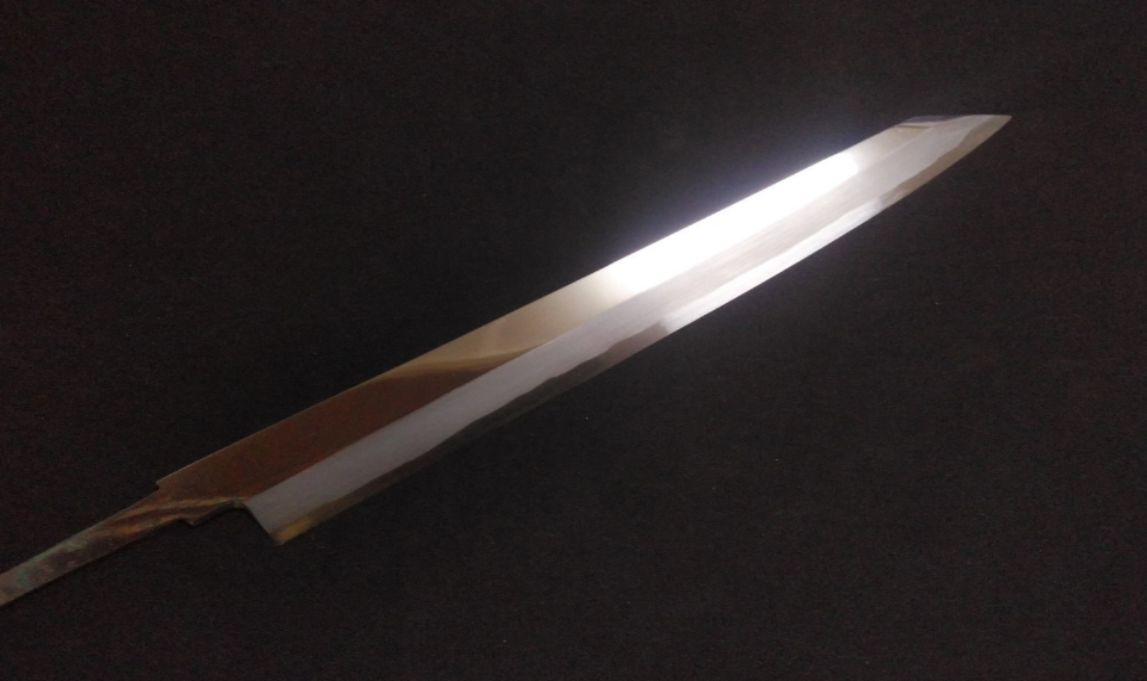
At KIREAJI, every knife is made to order in Sakai, Japan. Photos show the blade before the handle is attached, allowing artisans to perfect the balance and edge for your specific order. Your knife arrives fully finished — tailored just for you.
Global Delivery from Sakai
Across the world, discerning cooks seek authentic Japanese knives from Sakai — Japan’s legendary knife-making city with over 600 years of tradition.
At KIREAJI, we work alongside master artisans in Sakai to fulfill that desire, shipping genuine handcrafted knives directly from the workshop to kitchens worldwide.
Naoto Yamatsuka: A Drop in the Ocean
-
There is a phrase that Naoto Yamatsuka keeps as his guiding principle:
"From a drop in a ocean."
In Japanese — taikai no mizu no itteki — it carries a particular weight. The ocean is vast beyond comprehension. A single drop seems to change nothing. And yet the ocean is made entirely of drops. Every drop belongs. Every drop matters. None is without influence, even when its influence cannot be seen.
This is the philosophy of a man who has spent his working life doing something that most people will never notice — bringing the edge of a blade to its final, defining state — and who has found in that invisible work a clarity of purpose that does not require recognition to sustain itself.
-
Employed in 1980. Certified in 2022.
Naoto Yamatsuka began his career as a sharpener in 1980 — the 55th year of the Showa era. He was certified as a Traditional Craftsman in the sharpening division in 2022, the 4th year of the Reiwa era.
Forty-two years between those two dates.
It is worth pausing on this. The certification of Traditional Craftsman — Dento Kogeishi — requires more than twelve years of formal training and the passage of rigorous government examination. Yamatsuka-san met and exceeded that threshold many times over before his certification was formally awarded. The recognition came after more than four decades of practice. Not because he was waiting to be noticed, but because the work was what mattered, and the work continued regardless of whether recognition arrived.
This is the rhythm of a life spent in genuine craft. You begin. You practice. The years accumulate. And at some point — long after you have found your answer to the question of whether this is worth doing — the wider world confirms what you already knew.
-
What a Sharpener Actually Does
The division of labor in Sakai's knife-making tradition assigns specific stages of production to specific specialists. The smith forges and shapes the blade. The handle-maker fits and finishes the handle. And the sharpener — togishi — does what the word says: they sharpen.
But "sharpen" understates the work significantly.
What Yamatsuka-san does at Yamatsuka Hatsukesho is not simply remove metal from a blade until it is thin enough to cut. He is developing an edge — creating, at the microscopic level of the steel's cutting surface, a geometry so precise that the blade's behavior changes fundamentally. The way it enters food. The way it releases. The way the cook who holds it feels the knife working and, if the sharpening is exceptional, feels the knife and the food and the cut as a single continuous thing.
This edge does not happen automatically. It is the result of a progression through whetstones of increasing fineness, each removing the scratches left by the previous stage and replacing them with finer ones, until the scratches are too small to scatter light and the surface begins to reflect. The final stages use abrasives so fine they are measured in microns. The judgments made at each stage — the angle, the pressure, the movement, the moment when a stage is complete and the next can begin — these are made by feel, by sound, by the way light moves across a surface that is approaching its final state.
No machine has learned to make these judgments. They are made by someone who has been making them, almost every day, since 1980.
-
The Drop That Changes Nothing — and Everything
Yamatsuka-san's guiding phrase — from a drop in an ocean — could be read as humility. A recognition that the individual contribution is small relative to the tradition it serves.
But there is another way to read it, and I think it is closer to what he means.
A drop that affects nothing is, he says, important. Not because its effect is large. Because it is present. Because it belongs to the ocean. Because the ocean that exists without it is not the same ocean.
This is a precise description of what a sharpener's work means within Sakai's tradition. Yamatsuka-san does not forge the blade. He does not design the knife. He does not decide what steel it is made from or what profile it will take. He receives a blade that has already been worked by other skilled hands, and he brings it to its final state — the state in which it will leave Sakai and enter a kitchen somewhere in the world.
That final state is his contribution. Small in the sense that it is one stage among many. Not small in the sense that it determines what the knife becomes. The edge that Yamatsuka-san produces on a blade is the edge that the cook will experience every time they use the knife. It is the part of the knife most directly in contact with the food, most directly expressed in the quality of every cut, most directly responsible for whether the knife performs at the level it was made to perform at.
Without that edge, the blade is not a knife. It is a shaped piece of steel.
The drop is what makes it an ocean.
-
Forty-Two Years of the Same Practice
What happens to a person who spends forty-two years practicing one thing with genuine attention?
The obvious answer is mastery — the development of skill to a level that most people never reach because most people never practice anything with that degree of consistency over that length of time. This is true of Yamatsuka-san, and it is reflected in his certification and in the reputation his workshop holds among those who know Sakai's tradition.
But there is something less obvious that also happens. The practice itself changes. Not because the technique changes — the stones are the same, the steel is the same, the fundamental mechanics of edge geometry are the same. But the practitioner's relationship to the practice deepens in ways that are difficult to describe from outside.
The sharpener who has brought thousands of blades to their final edge knows things about steel that cannot be learned from books or told in words. They know what a correctly developing edge sounds like at the finest stone. They know the particular quality of light on a surface that is three passes from done. They know the difference between a blade that is ready and one that seems ready but is not — and they know it in the body, not in the mind, because the body has made this judgment so many times that the judgment has moved below conscious processing.
This is the knowledge that Yamatsuka-san carries. It cannot be transferred by instruction alone. It exists in him, in his hands, in the accumulated sensation of forty-two years at the whetstone.
-
What His Work Carries Forward
In 2022, when Naoto Yamatsuka received his certification as a Traditional Craftsman, something was formally recognized that had been true for decades: that the knowledge he holds is part of the living tradition that Sakai's knife-making depends on to continue.
The certification is not only a recognition of past practice. It is a statement about the future — an acknowledgment that this knowledge is worth protecting, worth transmitting, worth the effort of formal recognition because it would be a genuine loss if it were not carried forward.
Every blade that leaves Yamatsuka Hatsukesho carries, in its edge, a small piece of a tradition that has been building continuously since the fifteenth century. The cook who uses that blade in their kitchen does not need to know this. But the edge will tell them something — in the quality of the cut, in the way the knife behaves, in the particular feeling of working with a tool that was brought to its final state by someone who has spent a lifetime learning what that state should be.
That is what a drop in an ocean means when the ocean is six hundred years of craft. It belongs. It matters. It is not without influence, even when its influence cannot be seen.
Looking for a Knife by a Specific Craftsman?
Many of the most meaningful knives are found not through a catalogue, but through a conversation.
If there is a knife you have been searching for, tell us its story.
Whether you know the name of the craftsman, the type of knife, the steel, or only the feeling of what you are looking for, we would be pleased to hear from you.
Why Do 98% of Japan’s Chefs Trust Sakai Knives?
For over 600 years, Sakai has perfected a unique craft where each stage—forge, sharpen, finish—is mastered by specialists. This tradition makes Sakai the birthplace of Japan’s most trusted knives.
The 98% Statistic: More Than a Number
According to the Sakai Tourism Bureau, “98% of Japanese chefs use Sakai knives.” This figure isn’t just a claim—it reflects the deep trust chefs place in Sakai’s centuries-old craftsmanship.
Why are Sakai Japanese knives so sharp?
The answer is not one genius craftsman, but a system that makes compromise impossible.
This article explores how specialist masters, strict accountability, and a culture of focus create sharpness with meaning—one blade at a time.
The Master Craftsmen of Sakai Uchihamono
In Sakai, centuries-old techniques are carried forward by government-certified Traditional Craftsmen. Each knife is not just a tool but a living symbol of tradition, precision, and spirit—kept alive through their hands.
The Final Blades of a Retiring Blacksmith
A retiring blacksmith’s unfinished Blue Steel blades have arrived at KIREAJI.
Discover the quiet story of craftsmanship, legacy, and the continuation of Sakai knife culture.
Sakai’s Dwindling Masters: A Legacy at Risk
Once the heart of Japan’s finest cutlery, Sakai now has only a handful of blacksmiths left. With rising competition and fading interest among the young, new markets and fresh apprentices are vital to survival. Supporting these craftsmen means safeguarding a 600-year cultural legacy.
The Soul of Craftsmanship
-
Purity is the Driving Force Behind Mastery
For us artisans, “purity” represents sincere dedication—to the materials, to the techniques, and to the craft itself. It is never about being flashy or loud. Instead, it is about facing the steel before us, shaping it, polishing it, and perfecting it. Through this repetitive process, we discover both joy and wisdom.
-
Times may change, and technology may advance, but the artisan’s pure curiosity and determination remain constant. This unwavering spirit is what allows us to keep moving forward, step by step, without compromise.
-
Even in the smallest blade of a handcrafted knife, we envision the moment when someone holds it and feels, “This is the one.” That moment of recognition is both our pride and our greatest joy.
-
Our knives are born with the hope that they will add warmth and color to daily life—whether in the kitchen or beyond. If they can enrich someone’s world, even just a little, then our work has meaning.
-
To master a single thing with pure devotion—that is the essence we hold dear, now and always.
How Japanese Knives Are Made: The Sakai Tradition
VIDEO PROVIDED: JAPAN TRADITIONAL CRAFTS AOYAMA SQUARE (YOUTUBE)
-
Sakai Forged Blades — Six Centuries of Craftsmanship
For more than 600 years, Sakai knives have been shaped through a tradition of specialized craftsmanship refined across generations.
Widely trusted by professional chefs in Japan and appreciated around the world, these knives are valued not only for their sharpness, but for the skill, precision, and consistency behind each blade.
At KIREAJI, we work directly with the Shiroyama Knife Workshop in Sakai, Japan.Each knife is hand-forged, carefully finished by skilled craftsmen, and shipped directly from the workshop to kitchens around the world.
No mass production. No unnecessary intermediaries.
Only authentic Japanese craftsmanship, shaped one blade at a time. -