• February 13, 2026

  • Many people assume that division of labor means compromise.

    More hands involved.
    More steps.
    More chances for quality to be diluted.

    That assumption makes sense—especially in a world where “mass production” often hides behind the word efficiency.

    But in Sakai, knife making developed along a very different path.

    Here, division of labor does not exist to make work easier.
    It exists to make compromise impossible.

  • Division of Labor Is Not About Being Well-Rounded

    Sakai-style knife making is sometimes misunderstood as a form of collective craftsmanship, as if no single person carries excellence.

    The reality is the opposite.

    Each craftsman in Sakai is a specialist.
    Not a generalist.
    Not someone doing “a bit of everything.”

    This is not a system designed to create balanced craftsmen.
    It is a system designed to produce extreme precision at every stage.

  • An Olympic Way to Understand Sakai Craftsmanship

    Think of elite athletics.

    An athlete who competes in four different track events may be impressive.
    But world records are not set that way.

    Records are set by sprinters who train only for the 100 meters.
    By jumpers who devote their lives to a single takeoff.

    Sakai’s knife making follows the same logic.

    Instead of asking one person to master steel, fire, geometry, and sharpening stones, each “event” is handled by a specialist who has spent decades refining just one skill.

    Not to be versatile.
    But to perform at a world-class level under pressure.

  • Why This System Leaves No Room for Shortcuts

    What truly sets Sakai apart is what happens between stages.

    When a blade moves from forging to sharpening, it is not simply passed along.
    It is judged.

    The next craftsman is not a supervisor.
    He is another specialist—someone who knows immediately whether the previous work was honest, rushed, or exceptional.

    This creates a unique kind of tension.

    A craftsman does not ask,
    “Will the customer notice?”
    but rather,
    “Can I pass this to the next master without embarrassment?”

    In this structure, shortcuts do not disappear.
    They surface.

    And because every stage stands alone, there is no opportunity to quietly fix mistakes later.

    The structure itself enforces integrity.

  • Sharpness as a Shared Responsibility

    The result is a blade that carries multiple signatures—not as names, but as standards.

    Each craftsman takes full responsibility for his stage, knowing that another expert will examine it next.
    This is not collective ownership.
    It is layered accountability.

    That is why Sakai knives feel different.

    Their sharpness is not aggressive for its own sake.
    It feels deliberate. Controlled. Calm.

    Because it was never allowed to be anything less.

  • Why This Resonates Beyond Knives

    This way of thinking resonates far beyond the kitchen.

    In a world that celebrates multitasking and personal branding, Sakai offers a quiet counterexample:
    deep focus, mutual respect among specialists, and systems that reward honesty over speed.

    A Sakai knife is sharp, yes.
    But more importantly, it represents a belief:

    True excellence is not achieved by doing everything yourself.
    It is achieved by doing one thing so well that others can trust you with the rest.

Sakai Uchihamono

  • Sakai Uchihamono: The Blades That Shaped Japan’s Culinary Tradition

    For over 600 years, the city of Sakai has been home to Japan’s most revered knife-making tradition. Known as Sakai Uchihamono, these handcrafted blades are more than tools—they are the foundation of Japan’s culinary artistry. From the precise cut of sashimi to the robust power of a deba knife, every stroke carries the spirit of the craftsman and the legacy of centuries. This is the story of how Sakai knives became the soul of Japanese cuisine.

Why Do 98% of Japan’s Chefs Trust Sakai Knives?

For over 600 years, Sakai has perfected a unique craft where each stage—forge, sharpen, finish—is mastered by specialists. This tradition makes Sakai the birthplace of Japan’s most trusted knives.
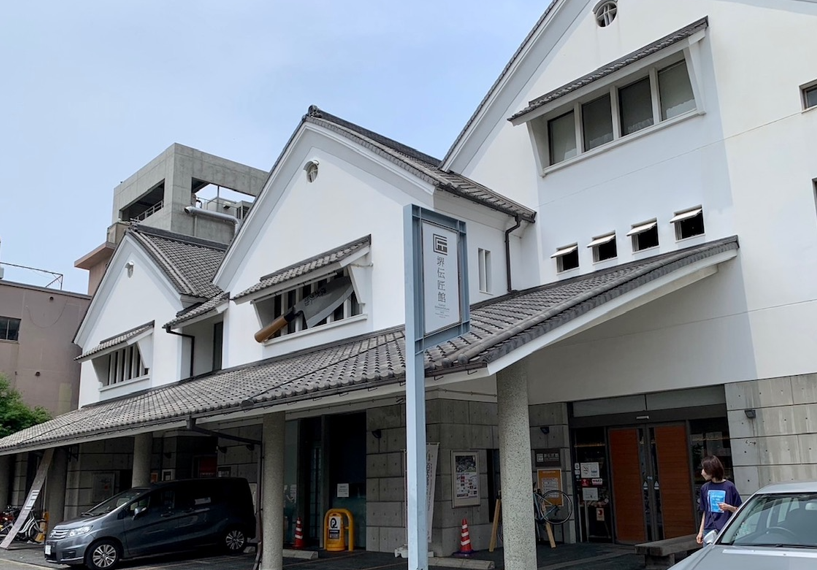
Why Do 98% of Japan’s Chefs Trust Sakai Knives?

The 98% Statistic: More Than a Number

According to the Sakai Tourism Bureau, “98% of Japanese chefs use Sakai knives.” This figure isn’t just a claim—it reflects the deep trust chefs place in Sakai’s centuries-old craftsmanship.

Sakai City Official English Site

The Master Craftsmen of Sakai Uchihamono

In Sakai, centuries-old techniques are carried forward by government-certified Traditional Craftsmen. Each knife is not just a tool but a living symbol of tradition, precision, and spirit—kept alive through their hands.

Sakai’s Traditional Craftsmen

Sakai Uchihamono: 600 Years of Sharpness and Mastery

From forging to sharpening to handle making, every step in Sakai Uchihamono reflects a tradition perfected over six centuries—crafting blades renowned for their ultimate sharpness and artistry.

Sakai Uchihamono

Sakai’s Dwindling Masters: A Legacy at Risk

Once the heart of Japan’s finest cutlery, Sakai now has only a handful of blacksmiths left. With rising competition and fading interest among the young, new markets and fresh apprentices are vital to survival. Supporting these craftsmen means safeguarding a 600-year cultural legacy.
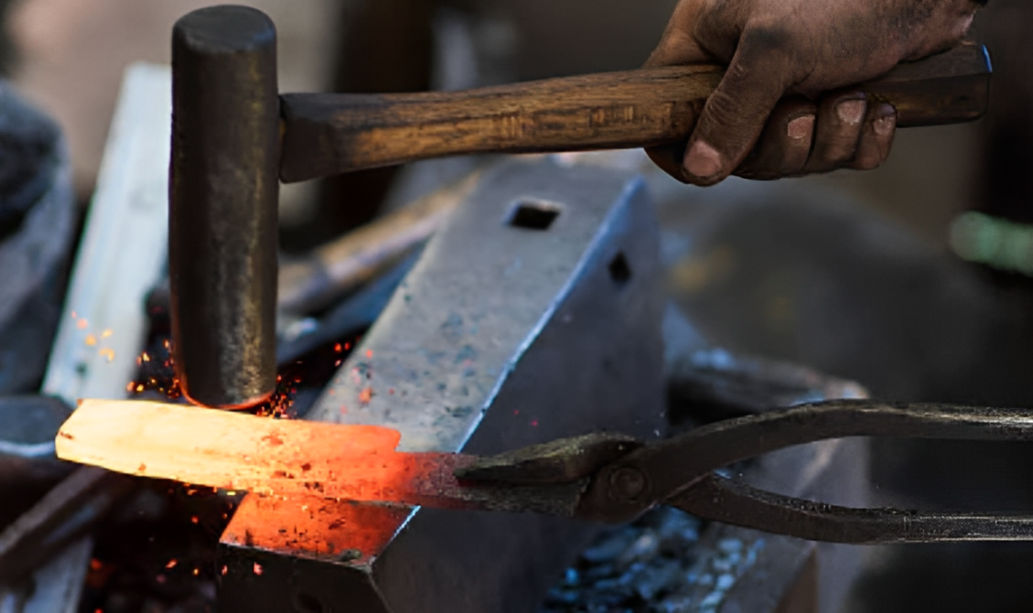
Sakai's Declining Japanese Knife Craftsmen
  • A Blade Shaped by a Lifetime

    I have spent my life shaping steel in Sakai, where tradition is not preserved by words, but by hands.

    Every day, I face the blade knowing that the smallest lapse will remain forever. There is no place to hide shortcuts here. The next craftsman will see everything I leave behind. That awareness sharpens not only the blade, but my own discipline.

    People often ask what makes a knife truly exceptional. It is not a single moment of brilliance. It is the quiet accumulation of care, repeated over decades, with no audience and no applause.

    Through this work, I have learned something simple but demanding:
    when you honor your responsibility fully, others can trust you without hesitation.

    That trust moves the blade forward.
    And in that movement, a knife becomes more than a tool—it becomes a reflection of how we choose to live.

  • japanese_knife_made_in_Sakai

    1. Forged in the Legacy of Sakai

    From Sakai City—Japan’s renowned birthplace of professional kitchen knives—each blade is crafted by master artisans with over six centuries of tradition. Perfectly balanced, enduringly sharp, and exquisitely finished, every cut carries the soul of true craftsmanship.

  • 2. Thoughtful Care for Everyday Use

    Every knife includes a hand-fitted magnolia saya for safe storage. Upon request, we offer a complimentary Honbazuke final hand sharpening—giving you a precise, ready-to-use edge from day one.

  • 3. A Partnership for a Lifetime

    A KIREAJI knife is more than a tool—it is a lifelong companion. With our bespoke paid aftercare services, we preserve its edge and beauty, ensuring it remains as precise and dependable as the day it first met your hand.