

Visit Shiroyama Knife Workshop in Sakai
-

Why Seeing Matters
There is a kind of understanding that can only come through direct experience: being present in a place, handling the objects made there, and seeing the environment in which skilled craftspeople work.
When you visit Shiroyama Knife Workshop in Sakai, you are not entering a conventional showroom or a tourist attraction. You are visiting an active knife workshop in a city that has been producing blades for more than six hundred years.
The traditions that helped shape Japanese professional cuisine are still practiced there today by people who have devoted their working lives to the craft.
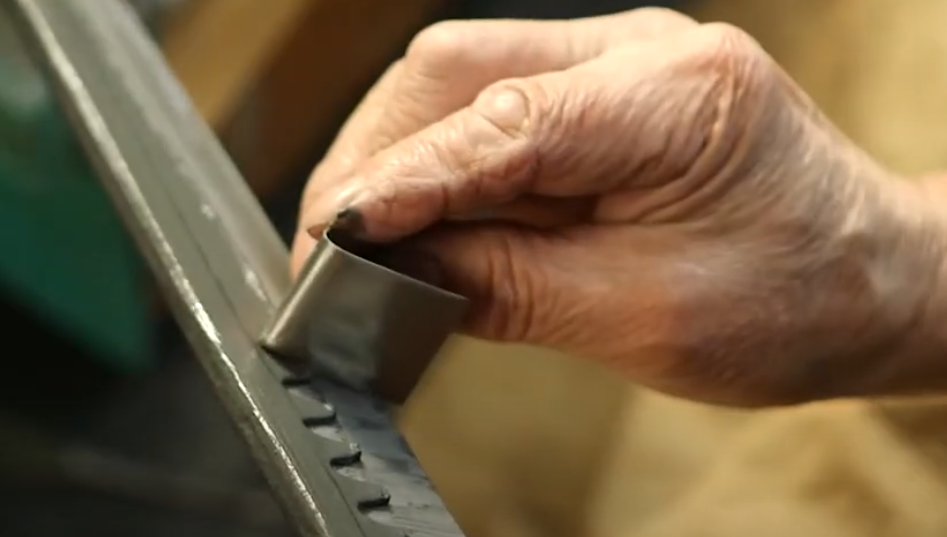
Depending on the workshop’s activities and availability at the time of your visit, you may be able to see knives at different stages of completion. You may also have the opportunity to examine blades before their handles are fitted and gain a clearer understanding of why each stage of production matters.
Above all, you will be able to hold authentic Sakai knives and experience details that specifications and photographs cannot fully communicate: balance, weight, profile, finish, and the way the knife feels in your own hand.
That direct experience often remains with visitors long after they leave.
You will also simply be in Sakai, a city with a quiet confidence in what it makes. This is not a destination created for tourism. It is a place where serious craftsmanship has continued for generations, and that history can be felt in the workshop, the tools, the materials, and the knives themselves.
-

What the Visit Looks Like
This is not a hands-on knife-making or sharpening class, and it is not a structured sightseeing tour with a fixed itinerary.
It is a personal visit to a working knife workshop, arranged by KIREAJI for customers who are interested in seeing and handling authentic Sakai knives and who may be considering purchasing a knife.
Shiroyama Knife Workshop generally welcomes visitors between 9:00 AM and 1:00 PM. Visits are generally not available on Thursdays or Sundays. Visits on other days, including Saturdays, are subject to advance consultation and confirmation with the workshop.
The workshop follows the rhythm of an active craft workshop rather than that of a retail store. The work being carried out in the workshop always comes first, so all visits must be arranged and confirmed in advance.
There is no fee for the visit, and there is no obligation to purchase a knife.
Some visitors find the knife they have been searching for, while others simply gain a clearer understanding of what may suit them in the future.
The length and content of each visit vary depending on the visitor’s interests, questions, and the types of knives they would like to examine. For this reason, there is no fixed itinerary or standard duration.
If you would like to request a visit, please contact KIREAJI through our contact form and provide two or three preferred dates. As availability depends on the workshop’s production schedule, we recommend including dates other than Thursdays and Sundays whenever possible.
We also ask that you tell us, as specifically as possible, what kinds of knives you are interested in seeing. Helpful information may include:
- Knife type, such as Yanagiba, Gyuto, Deba, Fuguhiki, or another style
- Preferred blade length
- Preferred steel, such as Ginsan, White Steel, Blue Steel, or another material
- Whether you are interested in Honyaki
- Intended use
- Whether you are right- or left-handed
Knowing your preferences in advance allows us to coordinate with the workshop and, whenever possible, identify suitable knives for you to examine during your visit.
Please understand that Shiroyama Knife Workshop is operated by a small team and is first and foremost a working craft workshop. Specific knives, craftspeople, production stages, or workshop activities cannot be guaranteed on the day of your visit.
In particular, some knives — such as left-handed single-bevel knives, certain steels, sizes, or specialized specifications — may have limited availability or may require considerable production time. Sharing your preferences with us in advance allows us to check with the workshop before your visit and helps avoid disappointment when possible.
Once we receive your preferred dates and knife interests, KIREAJI will consult directly with Shiroyama Knife Workshop and let you know whether a visit can be arranged and what knives may be available for you to see.
-

The Knife You See in Person May Be the Knife You Take Home
There is another dimension to visiting the workshop that is worth mentioning.
When you hold a knife in person, you are in the best possible position to understand whether it is right for you.
You can feel the balance, examine the finish in natural light, compare profiles and blade lengths, and notice subtle details that are difficult to judge through a screen.
Some visitors arrive with a clear idea of the knife they want. Others discover that a different style, steel, size, or profile feels more natural than they expected.
The workshop may also have knives that are not currently listed on the KIREAJI website. Depending on availability, these knives may be examined and discussed during the visit.
The purpose of the visit is not simply to see what is available. It is to help you develop a more informed understanding of the knife that may truly suit your needs.
You are welcome to visit without any obligation to purchase.
However, when a particular knife feels right in your hand, the workshop visit may also give you the confidence to make a decision that photographs alone could not provide.


Contact form
Why More Knife Lovers Are Discovering Sakai
-

Something Is Changing in Sakai
In October 2024, Sakai City Mayor Hideki Nagafuji shared an interesting development.
Sales at the Sakai Traditional Crafts Museum had reached approximately ¥182 million in fiscal 2023, significantly exceeding the previous record.
But the number itself was not the most interesting part.
The mayor specifically noted that the city had been hearing reports of more overseas visitors purchasing high-value knives at the museum.
At that point in fiscal 2024, sales were continuing to exceed the same months of the previous year, running at approximately 1.3 times the fiscal 2023 level.
That tells us something important.
International interest in Sakai knives is no longer limited to seeing them online or buying them from overseas.
For some travelers, Sakai itself is becoming part of the experience.
-

Sakai City Is Now Building Around That Experience
This is not happening only through individual travelers.
Sakai City itself is increasingly treating traditional craftsmanship as part of the city's visitor experience.
Its new Sakai City Basic Plan 2030 specifically calls for creating more opportunities for people to directly experience artisans' skills through visits to production sites and hands-on craft experiences.
The city also intends to strengthen connections between traditional industries, tourism facilities, and cultural attractions in order to encourage visitors to come to Sakai and explore more of the city.
That is an important shift.
Traditional industries are no longer being treated only as things to preserve or products to sell.
They are becoming part of the reason to visit Sakai itself.
-

What Are Overseas Visitors Really Looking For?
Perhaps they are not simply traveling for a knife.
Because if the goal were only to own a sharp Japanese knife, there would be no reason to travel thousands of kilometers.
Excellent Japanese knives can already be purchased around the world.
What Sakai offers is something different:
proximity.
Proximity to the workshop.
Proximity to the craftsperson.
Proximity to the culture that created the object.
There is something powerful about seeing where a tool comes from.
You begin to ask questions that specifications alone cannot answer.
Who forged this?
Who sharpened it?
Who taught them?
How long has this workshop been doing this?
What does this blade represent within the larger tradition of Sakai?
Those questions transform shopping into understanding.
-

The Best Souvenir May Not Be the Knife
Imagine visiting Sakai and returning home with a knife.
Years later, you may forget many details of the trip.
A restaurant name.
A train station.
The route you walked that afternoon.
But the knife remains in your kitchen.
You pick it up every week.
Perhaps every day.
And every time you do, you remember something about where it came from.
A workshop.
A craftsman's hands.
The sound of a whetstone.
The streets of Sakai.
The knife becomes a physical connection between a journey and everyday life.
That is a very different kind of souvenir.
-

Why This Matters to KIREAJI
Not everyone who loves Japanese knives can travel to Sakai.
For someone living in Canada, the United States, Europe, Australia, or elsewhere, Sakai may be thousands of kilometers away.
But we believe the connection to the place should not disappear simply because the customer cannot travel there.
At KIREAJI, knives do not first travel to a separate KIREAJI warehouse before being sent onward.
They are shipped directly from Shiroyama Knife Workshop in Sakai to customers around the world.
The path is simple:
Sakai → Your Kitchen.
For us, that is more than a shipping method.
It is part of transparency.
The knife's journey to the customer begins in the same city whose craftsmen and workshops give it its identity.
You may not be able to stand in Sakai yourself.
But the knife can still come directly from there to you.
-

Perhaps People Are Traveling for Something Bigger Than a Knife
When someone says,
“I want to go to Sakai and buy a knife,”
perhaps what they really mean is:
“I want to know where it came from.”
“I want to meet the culture behind it.”
“I want the object I buy to have a story I can understand.”
Recent data from Sakai City suggests that more overseas visitors are already making meaningful purchases of knives there.
The city's future strategy goes further, deliberately connecting craftsmanship, workshop experiences, tourism, and international markets.
And the earlier national tourism research showed that international visitors responded strongly when given the opportunity to experience Sakai knife-making firsthand.
Taken together, these developments tell a compelling story.
Sakai knives are no longer reaching the world only through exports.
The world is also beginning to come closer to Sakai.
And perhaps that is exactly what should happen with a living craft.
Because sometimes, to truly understand an object, you need to understand the place that made it possible.
Know the place. Know the maker. Know the knife.


About Shiroyama Knife Workshop
Discover the philosophy, history, and direct-to-customer approach that has defined Shiroyama Knife Workshop for nearly four decades.

Sakai Cultural Works
Extraordinary Japanese knives created at the highest level of Sakai craftsmanship.
Featuring a rare cultural work forged, sharpened, and completed by master artisans — selected as the championship prize for Japan’s national sushi competition scheduled for June 2026.
Available exclusively through KIREAJI.

When Sushi Masters Choose Their Prize
Discover why a handcrafted knife from Shiroyama Knife Workshop in Sakai was selected as the championship prize for a professional sushi competition in Japan. Explore the connection between sushi craftsmanship, Sakai’s division-of-labor tradition, and the spirit of Japanese artisanship.

The Master Craftsmen of Sakai Uchihamono
In Sakai, centuries-old techniques are carried forward by government-certified Traditional Craftsmen. Each knife is not just a tool but a living symbol of tradition, precision, and spirit—kept alive through their hands.
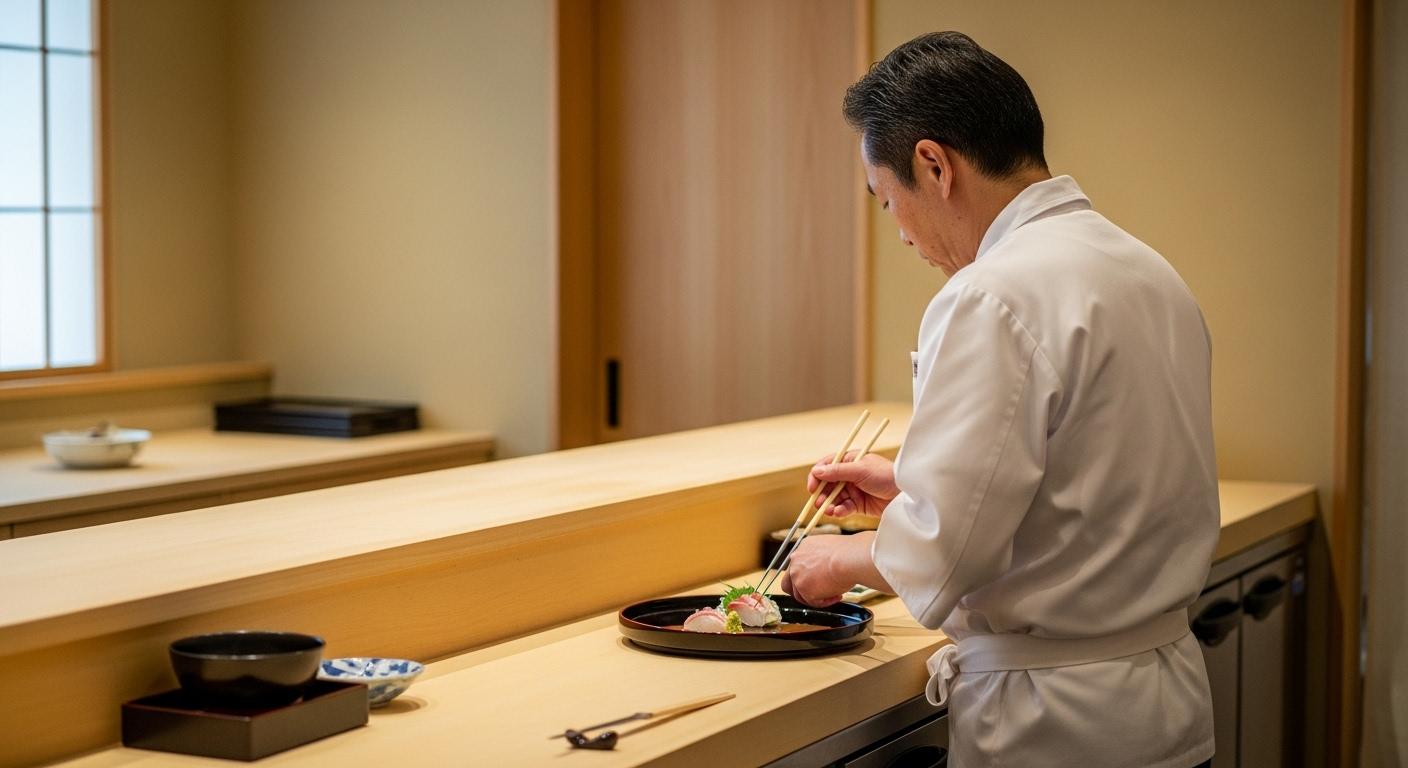
Why Do 98% of Japan’s Chefs Trust Sakai Knives?
For over 600 years, Sakai has perfected a unique craft where each stage—forge, sharpen, finish—is mastered by specialists. This tradition makes Sakai the birthplace of Japan’s most trusted knives.
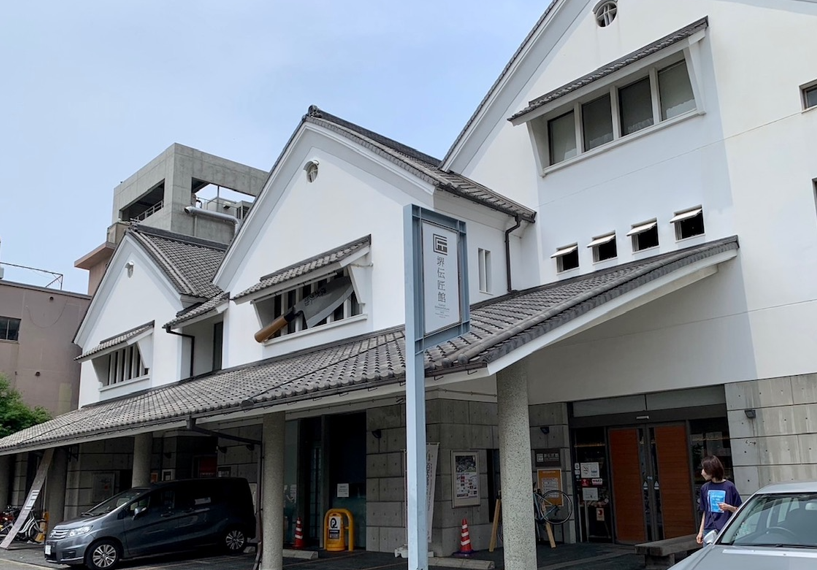
The 98% Statistic: More Than a Number
According to the Sakai Tourism Bureau, “98% of Japanese chefs use Sakai knives.” This figure isn’t just a claim—it reflects the deep trust chefs place in Sakai’s centuries-old craftsmanship.

What Cannot Be Copied: The Meaning Behind Sakai Knives
Technology and design can be copied, but meaning cannot.
While many knives imitate the look of Japanese blades, authentic knives from Sakai, Japan carry over 600 years of craftsmanship and cultural heritage. Through KIREAJI, we share the meaning behind these knives and invite people around the world to Know, Use, and Share the spirit of Sakai.