

KIREAJI Blog About Japanese Knives

Why Is the Deba Knife So Thick?
Discover why the Japanese deba knife is so thick. Learn how its rigid spine, urasuki hollow, and unique geometry enable precise, efficient fish breakdown with a single blade.
Why Is the Deba Knife So Thick?
Discover why the Japanese deba knife is so thick. Learn how its rigid spine, urasuki hollow, and unique geometry enable precise, efficient fish breakdown with a single blade.

What Makes a Good Kitchen Knife? A Knife Sharpe...
The best knife isn’t the most expensive—it’s the one you use. Discover a knife sharpener’s honest perspective on what truly makes a knife worth owning.
What Makes a Good Kitchen Knife? A Knife Sharpe...
The best knife isn’t the most expensive—it’s the one you use. Discover a knife sharpener’s honest perspective on what truly makes a knife worth owning.

Honkayaki and Kasumi: Understanding Japanese Kn...
Discover the fundamental differences between kasumi and honkayaki Japanese knives. Learn how construction affects sharpness, straightness, sharpening, and performance—and which belongs in your kitchen.
Honkayaki and Kasumi: Understanding Japanese Kn...
Discover the fundamental differences between kasumi and honkayaki Japanese knives. Learn how construction affects sharpness, straightness, sharpening, and performance—and which belongs in your kitchen.

How to Carry a Japanese Knife Safely: A Practic...
A complete guide to carrying Japanese knives safely. Learn proper wrapping, storage, and transport methods while understanding legal considerations and protecting your blade.
How to Carry a Japanese Knife Safely: A Practic...
A complete guide to carrying Japanese knives safely. Learn proper wrapping, storage, and transport methods while understanding legal considerations and protecting your blade.

Japanese Knives in 2025: The Year the World Got...
In 2025, Japanese knives moved beyond niche interest and became a global standard. Discover how professional kitchens, cultural experiences, and sustainability reshaped the future of Japanese knife craftsmanship.
Japanese Knives in 2025: The Year the World Got...
In 2025, Japanese knives moved beyond niche interest and became a global standard. Discover how professional kitchens, cultural experiences, and sustainability reshaped the future of Japanese knife craftsmanship.

Why Japanese Knives Are Single-Edged — A Story ...
Why are Japanese knives single-edged? Discover how centuries of peace, sword-making traditions, and culinary precision shaped the unique design of Japanese knives.
Why Japanese Knives Are Single-Edged — A Story ...
Why are Japanese knives single-edged? Discover how centuries of peace, sword-making traditions, and culinary precision shaped the unique design of Japanese knives.
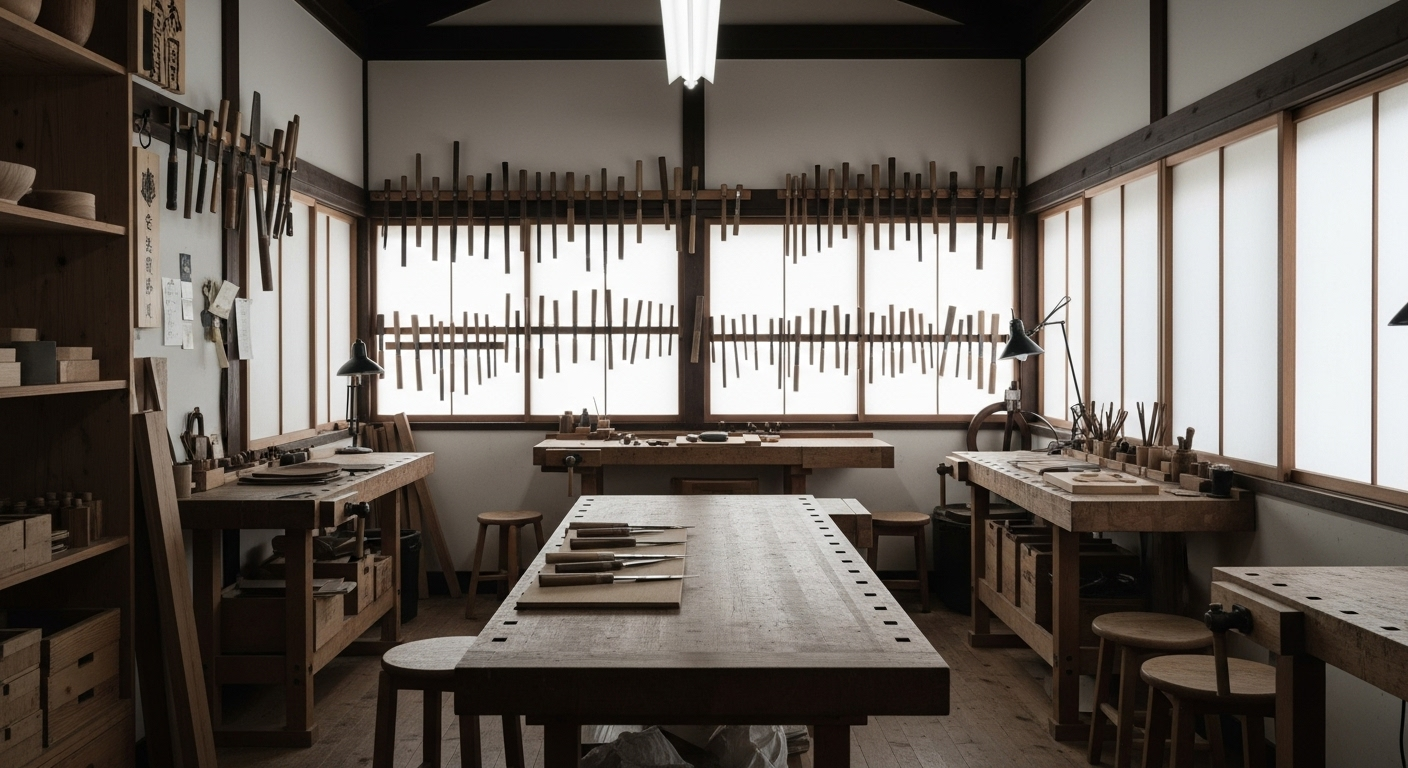
Why We Write About Japanese Knives
-

The Problem We Kept Encountering
When we first began reaching customers outside Japan, we noticed something that stayed with us.
The interest was genuine. People around the world had heard about Japanese knives. They wanted to understand them. They asked real questions — about the difference between single and double bevel, about what ura-suki actually does, about how to maintain a high-carbon blade, about why a knife made in one city carries a different character than one made in another.
But alongside that genuine curiosity, there was also a great deal of noise. Misinformation passed around as fact. Imitations sold with the vocabulary of authenticity. Reviews written by people who had held a knife for a week treating their impressions as the whole story.
The people asking honest questions deserved honest answers. Not marketing. Not mystification. Not the kind of reverence that puts something on a pedestal and makes it feel inaccessible. Just clear, patient explanation from people who have spent their lives close to this craft.
That is what we are trying to write.
-

Because the Craftspeople Deserve It
There is another reason, and it sits closer to the center of why we exist.
The craftspeople in Sakai who make these knives — the smiths who forge the blades, the sharpeners who spend hours bringing an edge to its final form — do not have large platforms. They do not write blogs. Most of them have spent their careers doing one thing with extraordinary focus, and communicating that work to a global audience was never part of what they were asked to do.
But their work deserves to be understood. Not just purchased — understood.
When someone buys a knife without knowing anything about who made it or how, the transaction is complete but something is missing. The craftsperson's decades of skill are present in the object, but invisible to the person holding it. That invisibility is a kind of loss — for the buyer, who doesn't know what they have, and for the maker, whose work goes unrecognized in any meaningful sense.
We write because we want to make that invisible work visible. We want the person holding the knife to have some sense of the hands that shaped it, the city it came from, the tradition those hands are part of. Not as a romantic story layered over a commercial transaction, but as the actual context that makes the object what it is.
-

Because Imitation Spreads in a Vacuum
We have written elsewhere about the imitations we encountered when living abroad — knives with Japanese-sounding names and kanji on the blade, bearing no actual connection to the craft they were mimicking. That experience shaped how we think about this blog.
Imitation spreads most easily when the real thing is poorly understood. When people don't know what to look for, they cannot tell the difference. When they cannot tell the difference, the imitation fills the space. The market for "Japanese knives" grows, but the connection to actual Japanese knife-making — to Sakai, to the specific people and techniques and traditions that give the category its meaning — weakens with every imitation that sells.
The answer to that problem is not outrage. It is not legal action. The most durable answer is comprehension. When people understand what a genuine Sakai knife is — what makes it distinct, how it was made, what it does that other knives don't — they become capable of recognizing it. And of recognizing what it isn't.
Every article we write that clearly explains the ura-suki hollow, or the division between the smith and the sharpener, or what honbazuke means and why it matters, is a small contribution to a more informed market. One where the real thing is harder to displace, because the people who want it know what they're looking for.


