

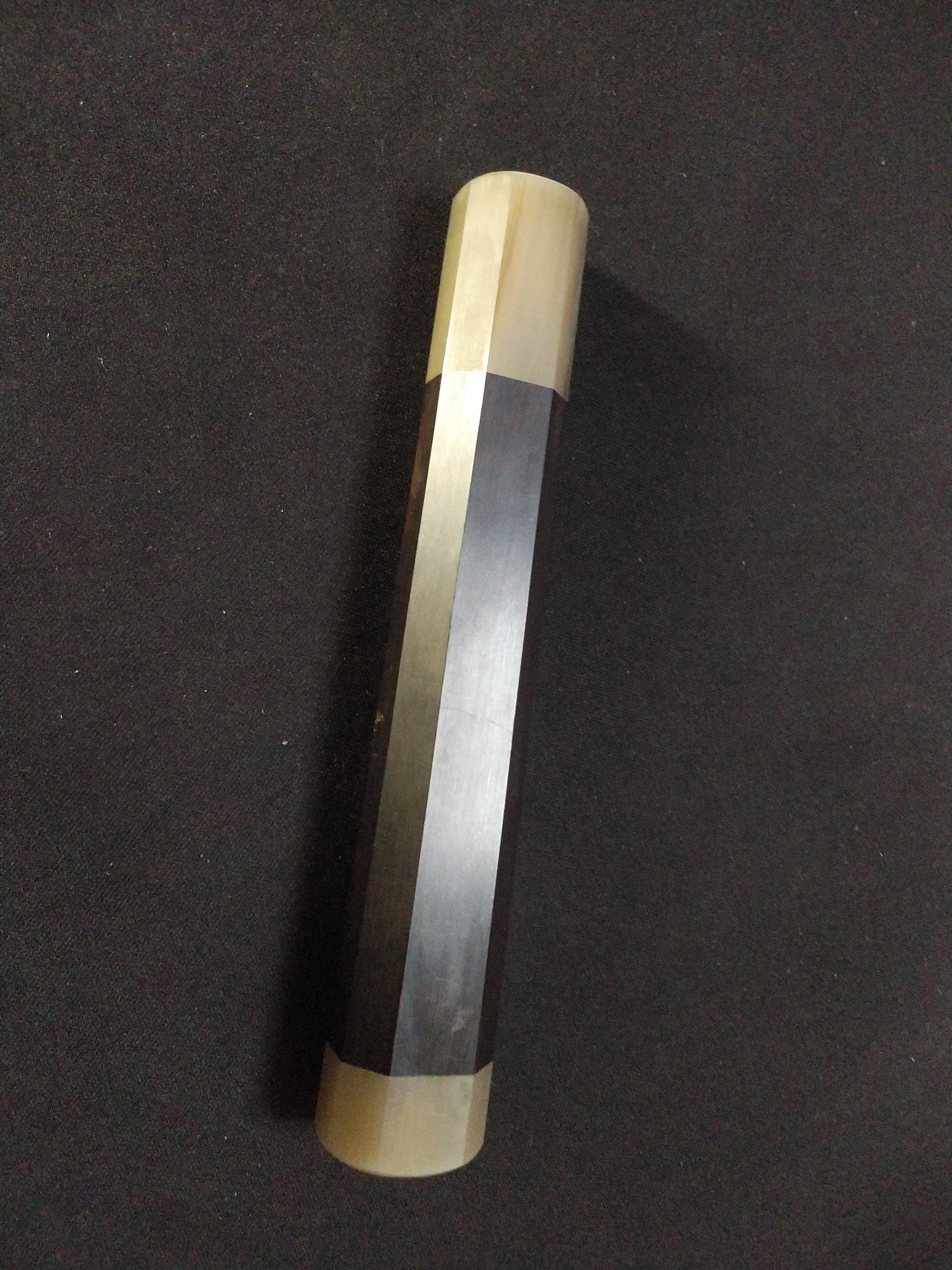
1-1. 乌木
乌木以其深黑色调和丰富纹理而闻名,长期以来一直是奢华的象征。这种稀有木材通常用于制作高端日本刀具的刀柄,这些刀具因其美观和实用而受到专业厨师和其他许多人的青睐。
乌木的独特性质使其成为制作刀柄的理想材料。它的硬度和出色的防水性是它经常被选为刀柄的原因。即使经过大量使用,它的颜色和形状也不会改变,随着时间的推移仍能保持其美观。因此,乌木手柄经常出现在高品质的刀片上,例如传统的日本锻造刀。
此外,乌木因其奢华的外观而被广泛用于乐器、家具和工艺品。其强度和耐用性使其用途广泛。然而,乌木越来越稀有,使其成为一种难以获取的材料,这进一步提高了用它制成的产品的价值。
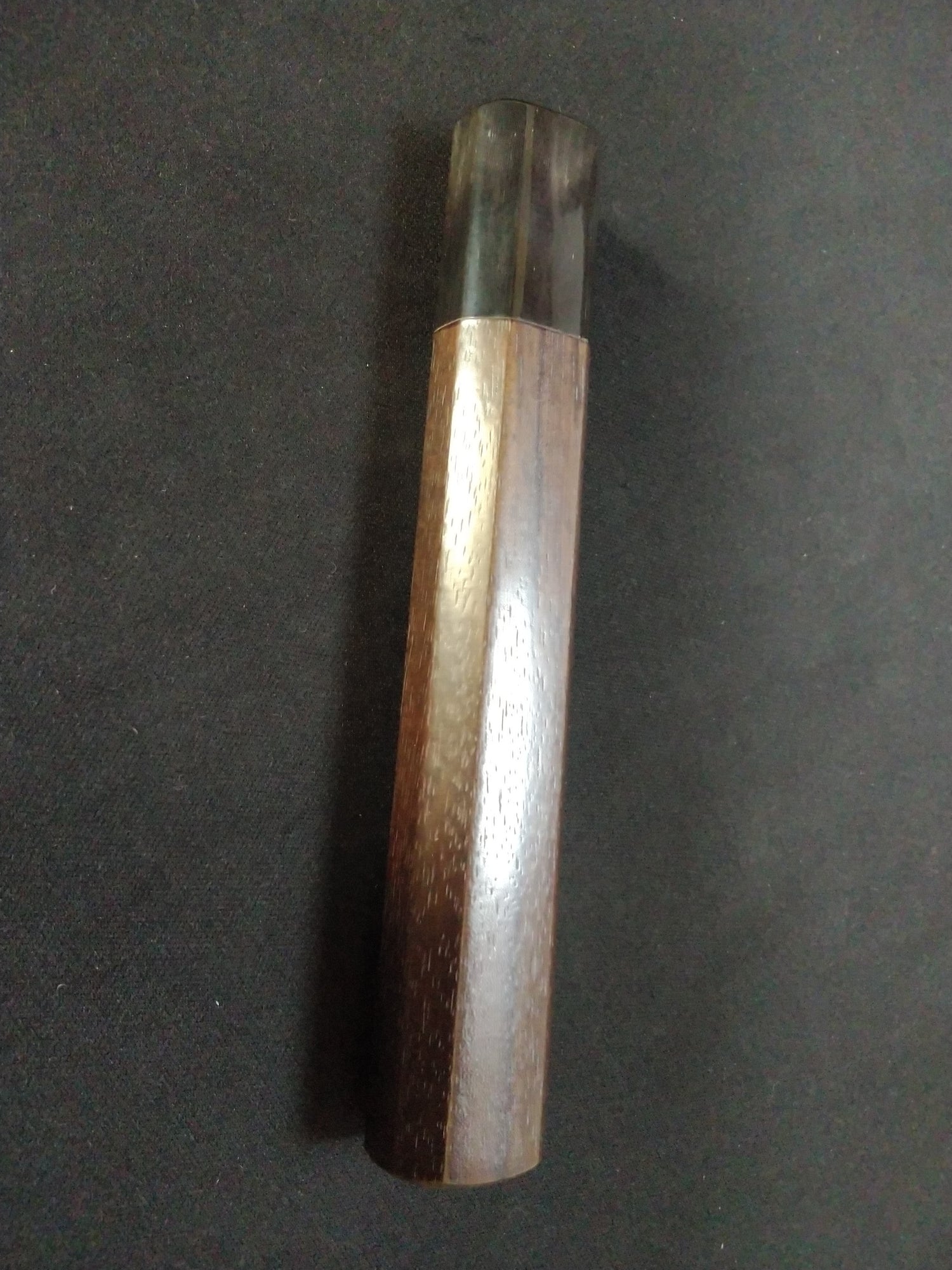
1-2. 玫瑰木(石檀)
玫瑰木以其独特的红色调而闻名,与乌木相比,它有着不同的魅力。这种木材坚硬、耐用,光泽优雅,是刀柄、吉他、家具和许多其他用途的首选材料。玫瑰木最大的特点之一是耐潮耐干。随着时间的推移,木材的颜色和纹理会加深,使用时间越长,其美感就越强。
虽然玫瑰木的颜色不如乌木深,但其温暖的色调受到许多人的欢迎,在某些应用中可以用作乌木的替代品。然而,乌木不仅仅是一种替代品;其作为木材的耐用性和价值备受推崇。每次使用由乌木制成的产品时,您都会想起这种材料的品质。
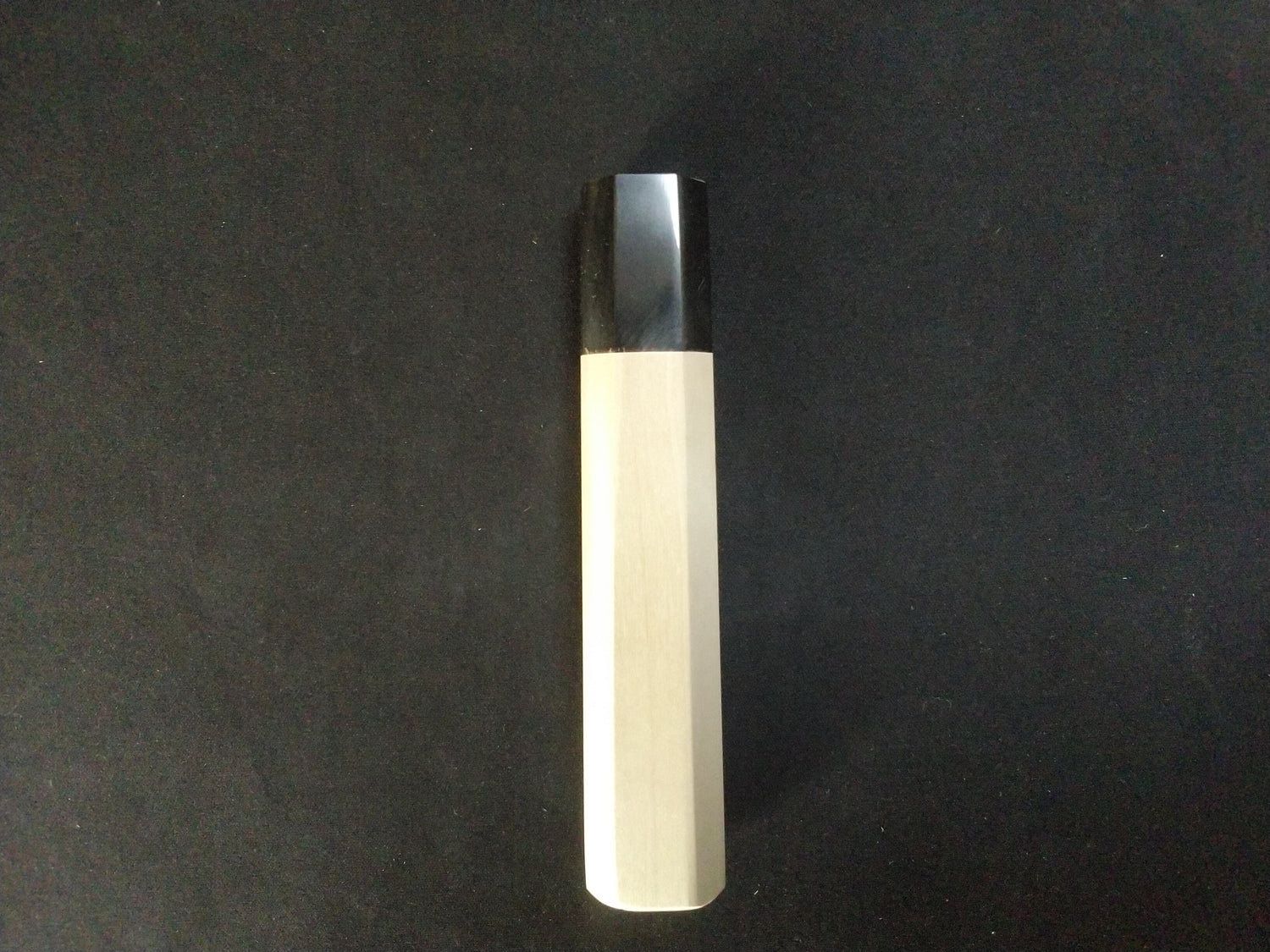
1-3。厚朴
带有传统何氏木(木兰)手柄的日本厨刀因其美观和实用性而受到世界各地专业厨师和美食爱好者的青睐。何氏木因其洁白、光滑的质地以及柔软和温暖的手感而成为许多日本厨刀的首选材料。这种木材防水且耐用,足以承受长时间使用,而且使用时间越长,它就越贴合您的手部,增加了其舒适度和吸引力。
木兰木因其独特的特性而被选为日本刀具的刀柄。它不仅具有轻便、不易开裂的实用优势,而且手感柔软舒适,便于长时间使用。出于这些原因,它尤其受到专业厨师的青睐,体现了日本刀具制作的精髓,将传统技术与现代需求相结合。
优点:
- 美学吸引力:木材的自然美为刀具增添了温暖、经典的外观,每种木材都具有独特的视觉特征。
- 符合人体工程学的握把:这些手柄设计舒适,紧贴手部,有些还具有防滑处理,以便更好地抓握。
缺点:
- 维护:木质手柄需要定期保养,包括上油和彻底干燥,以防止损坏。
- 湿气敏感性:木材长时间暴露在水中会膨胀或弯曲,因此使用后需要仔细干燥。
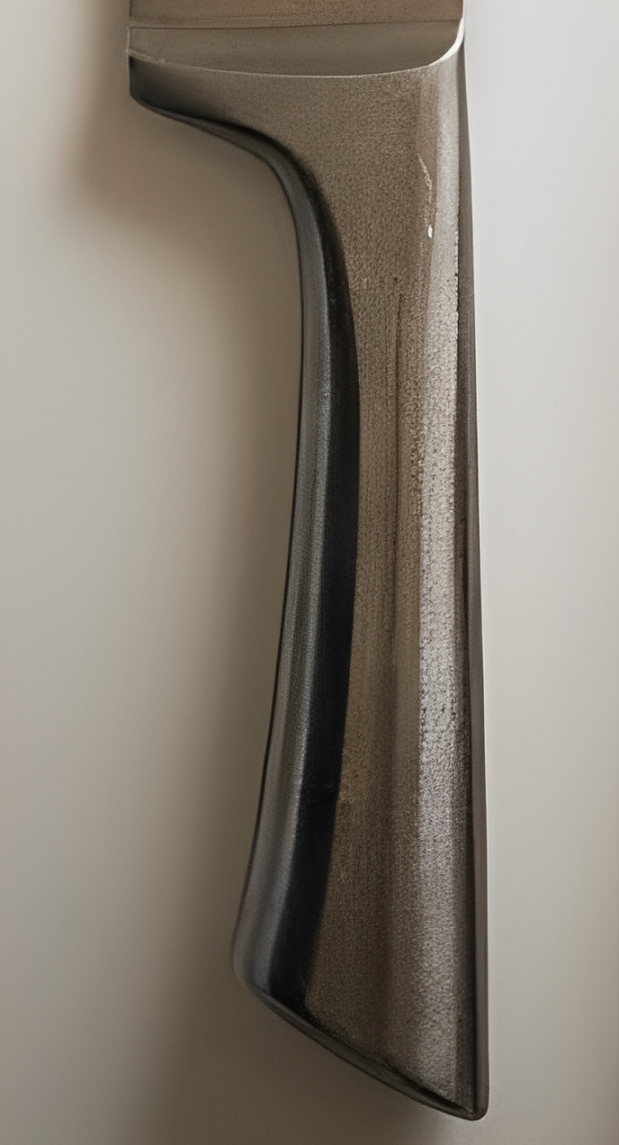
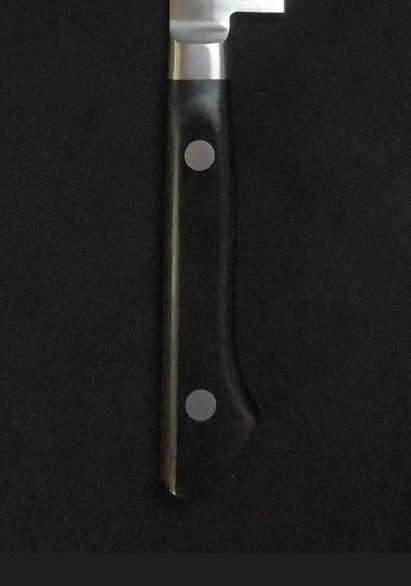
优点:
- 耐用性:这些手柄经久耐用,确保您的刀具经受住时间的考验,刀刃不会变钝或断裂。
- 易于清洁:光滑的表面和极少的缝隙使这些手柄易于清洁,轻松保持卫生。
- 可用洗碗机清洗:许多不锈钢手柄都可以安全地用洗碗机清洗,增加了维护的便利性。
缺点:
- 舒适度:缺乏纹理可能会使这些手柄打滑,特别是用湿手时,从而降低抓握的舒适度。
- 美观:不锈钢手柄可能缺乏木质手柄的温暖和特色,这取决于个人喜好。
刀刃之魂:为何刀柄与刀刃同样重要
-

日本刀的刀柄不仅仅是握柄——它是厨师的手与几个世纪传统之间的桥梁。
不同的材料赋予刀具不同的平衡性、舒适性和耐用性,它们不仅塑造了刀刃本身,也塑造了刀具的特性。


选择合适的刀柄——工艺和可靠性的证明
-

柱子
另一方面,低成本刀具通常使用较软的钢材,经常使用会很快磨损。即使搭配优质刀柄,刀片本身也会随着时间的推移而退化,从而降低刀具的整体性能和可靠性。平衡良好的刀具不仅仅是拥有锋利的刀片;刀片和刀柄之间的协同作用对于实现使用过程中的精确性、稳定性和舒适性起着至关重要的作用。
-

柱子
此外,刀柄不仅仅是一个握柄,更是厨师手的延伸。刀柄的形状、重量和质地会显著影响刀具在手掌中的自然贴合度,影响厨房的信心和效率。在餐厅或烹饪课等专业场合,外观很重要。精致、高品质的刀柄不仅可以增强刀具的美感,还可以展示使用者对其手艺的执着。选择优质的刀柄可以提升您的烹饪体验并给人留下深刻印象。
-

《酒井之魂》
握住堺产的日本刀,就握住了历史、创新和信任。
合适的刀柄不仅仅平衡刀片,还能平衡厨师的精神。
选择手柄不仅仅是选择材质,更是对烹饪的热情和对传统的尊重的宣言。


如何保养日本刀的刀柄
-

手柄保养的两大要点
1.保持干燥——警惕“隐形锈迹”
日本刀柄的构造非常简单:刀柄插入木柄,没有螺丝或铆钉。这意味着如果水渗入刀片和刀柄之间的缝隙,内部就会生锈,而你甚至不会注意到。
-

保养日本刀也是体验的一部分
日本刀不仅仅是一种工具——它会随着您的成长而发展。您使用和保养得越多,它就越能成为您手的延伸,并形成您风格的独特特征。


刀柄:日本刀的生命之源
-

即使是最好的刀刃也可能因内部结构损坏。因此,妥善保养刀柄至关重要,因为保养得当的刀柄能够延长刀具的使用寿命并保持其强度。

The Handle That Completes the Knife
-

The Language of Materials
Walk into the workshop of a traditional Japanese knife-maker and you will find, alongside the steel and the forge, a quiet collection of woods and composite materials — each with its own character, its own feel in the hand, its own relationship with time and use.
Natural wood is the oldest language. Ho Wood (magnolia), rosewood, ebony — each carries a warmth that no synthetic material has yet replicated. Natural wood responds to your hand: it absorbs the oils of your skin over years of use, shifting slightly in texture and feel, becoming incrementally more yours. That process of gradual personalization is, for many chefs, the whole point.
But natural wood requires a relationship. It asks to be dried after use, oiled occasionally, protected from the dishwasher and from prolonged contact with water. A neglected wooden handle will crack, warp, or loosen from the blade over time. The chefs who love natural wood handles most are the ones who understand that caring for a tool is not a burden — it is a practice.
For those who want the warmth of wood without the full commitment of maintenance, laminated composite woods — materials like Pakkawood and Micarta, where natural wood is saturated with resin and compressed under high pressure — offer a compelling middle path. The appearance and feel remain close to natural wood. The water resistance and durability improve substantially. The requirement for oiling disappears. These handles are particularly well suited to home kitchens where a knife moves frequently from prep to washing to storage.
At the more technical end of the material spectrum, G10 and carbon fiber represent the engineering approach to handle design. G10 is a fiberglass-reinforced laminate; carbon fiber is exactly what its name suggests. Both are extraordinarily hard, virtually immune to moisture, and feather-light relative to their strength. These materials ask nothing of the user in terms of maintenance. What they ask instead is a willingness to accept a purely functional aesthetic — there is no grain, no warmth, no character that develops over time. The handle performs, consistently and indefinitely, without change.
Between these poles sit synthetic resins — ABS plastic, nylon, and their variants. Durable, hygienic, impact-resistant, and available across every price point, these handles are workhorses. They are not the choice of a chef seeking a deep connection with their tools, but they are the reliable, unpretentious option for a kitchen where practicality comes first.
-

The Language of Shape
Material tells you what the handle is made of. Shape tells you how it thinks.
Japanese-style handles and Western-style handles approach the question of grip from fundamentally different philosophies — and understanding that difference changes how you hold a knife.
The round handle is the most forgiving shape in the Japanese tradition. Without angles or pronounced ridges, it accommodates any grip style without preference or correction. It suits chefs who switch naturally between pinch grip and handle grip, who don't want the knife to dictate their hand position.
The D-shaped handle is more opinionated. Its cross-section — flat on one side, curved on the other — fits the palm with a specificity that the round handle deliberately avoids. Most D-shaped handles are oriented for right-handed use, which gives left-handed chefs reason to pay attention before purchasing. Within that constraint, the D-shape offers something the round handle cannot: a consistent, repeatable orientation. Every time you pick up the knife, your hand finds the same position automatically.
The octagonal handle is the most precise of the three Japanese forms. Eight flat faces give the hand eight reference points, making fine adjustments to grip angle immediate and intuitive. Slippage under the pressure of long preparation sessions is dramatically reduced. This is why the octagonal shape appears most frequently on high-end traditional Japanese knives — it is not purely aesthetic. It is the shape that gives the most control.
Western-style handles approach the question of structure differently. The defining consideration is the tang — the extension of the blade's steel into the handle.
A full-tang construction runs the blade steel from tip to the end of the handle, sandwiched between two handle scales (slabs of material fixed on either side). The result is exceptional rigidity, a weight distribution that feels balanced and planted, and a construction whose structural integrity is visible and verifiable. Pull at a full-tang handle and nothing moves. For many Western-trained chefs, this solidity is deeply reassuring.
A semi-tang or hidden tang extends the steel only partway into the handle. Weight shifts toward the blade. The knife feels lighter at the back, more aggressive at the front — a quality that some chefs prefer for specific tasks where forward momentum matters.
Molded handles, constructed as a single seamless unit, eliminate the joints and seams where bacteria can accumulate. Many are dishwasher safe. In professional kitchens where hygiene protocols are strict and knives are cleaned repeatedly throughout a shift, this matters considerably.
-

The Handle as Philosophy
There is a reason that traditional Japanese knife-makers — including the craftspeople of Sakai who have shaped blades for 600 years — have always treated the handle as a serious decision rather than a finishing detail.
The handle is where the knife's story meets yours. The blade carries the maker's skill. The handle carries your daily life — the grip of ten thousand mornings of preparation, the particular pressure of your hand, the wear patterns that accumulate only through years of use.
To choose a handle carefully is to choose the terms of a long relationship. And in a kitchen where the right knife can change the quality of everything that follows, those terms are worth getting right.


KIREAJI 对您的三个承诺
-

1. 秉承堺的遗志
堺市——日本著名的专业厨刀发源地——每一把刀都由拥有超过六个世纪传统的工匠精心打造。完美平衡、持久锋利、精湛工艺,每一次切割都蕴含着真正的工艺精髓。
-

2. 贴心呵护,呵护您的日常使用
每把刀都配有手工镶嵌的木兰刀鞘,方便安全存放。我们可根据您的要求提供免费的“本刃付”手工磨刀服务,让您从第一天起就能拥有精准的刀刃。
-

3. 终生的伙伴关系
KIREAJI 刀不仅仅是一件工具,更是您一生的伴侣。我们提供定制的付费售后服务,以维护其锋利和美观,确保它始终如初,精准可靠,如同初次接触您的手。


