• 为什么只有日本有用磨刀石磨刀的文化?

    在本视频中,我们探讨了日本得天独厚的地理条件和地质层如何孕育出稀有的天然磨刀石,以及如何塑造了用石头磨刀的悠久传统。

  • — 地质、精神和美学的独特融合,创造了独一无二的刀刃传统

    你们国家是怎么保养厨刀的?
    在很多地方,当刀变钝时,通常的做法就是更换它。

    但在日本,刀具是“通过磨砺而培养的”。
    这种磨砺远不止是日常维护——它是一种传承了几个世纪的根深蒂固的文化哲学
    为什么只有日本发展出如此丰富的磨刀石文化?
    答案在于地质奇迹能工巧匠精神的完美结合。

  • ■来自大地的馈赠:日本,无与伦比的天然磨刀石之国

    日本位于四大板块交汇处,具有独特的地质条件。
    数亿年来,古老的沉积层被推至地表附近,
    可以获得地球上几乎其他地方都找不到的稀有且品质极高的天然磨刀石

    特别是在京都地区,青砥石、阿卡平石、天草石、大村石等著名的天然石材备受推崇。
    其中,京都的终点石被认为是极致的
    这些石头在磨刀过程中自然会产生细腻的浆液,起到抛光剂的作用,既能磨利刀片,又能使刀片更加精致。
    最终结果是,成品不仅功能强大,而且抛光效果极佳

  • ■ 其他国家为何无法发展这种文化——地质原因

    天然磨刀石确实存在于世界各地——
    其中包括美国的阿肯色石、比利时的阿登石等等。
    然而,这些石头通常太硬、太粗糙,或者不适合日本磨刀石擅长的精细加工

    此外,欧洲地质条件稳定,古老地层很少浮出水面,导致磨刀石资源有限。
    这种稀缺性导致了一种文化:刀具更经常被更换或进行工业维护,而不是手工精心磨砺。

  • ■ 日本精神:工具是工艺的伙伴

    日本磨刀石文化的另一个关键是日本人与工具的独特关系

    刀不仅仅是一种工具——
    它是厨师身体的延伸,也是工匠值得信赖的伙伴。

    因此,磨砺不仅仅是维护——它是一种感恩、正念和准备的安静仪式。
    这种态度与禅宗冥想和茶道等其他日本艺术产生了共鸣。

  • ■ 蕴含在磨砺中的美与哲学

    日本的磨刀文化致力于平衡功能性与美感

    刀片仅仅锋利是不够的。
    刀刃的花纹、磨刀石留下的细微打磨痕迹、镜面般的表面效果,无不体现着磨刀师的技艺和艺术感。
    他们共同将一个简单的厨房用具提升为一件艺术品

  • 柱子

    美丽与精湛的旅程从您的厨房开始。
    与 KIREAJI 一起踏上优雅的磨刀艺术之旅,探索日本传统的灵魂。

  • The Roots of Japanese Sharpening A Culture Born from Earth & Respect

    日本的磨刀不仅仅是一项维护工作,更是一种受特殊地质条件和对工具的深深敬意所塑造的文化传统
    日本独特的天然磨石能打造出无与伦比的光滑刀刃,磨刀被视为一种用心的仪式,而不仅仅是日常保养。
    刀具被视为值得信赖的伙伴,这体现了一种重视工具而不是丢弃工具的理念。

  • Why Learning to Sharpen Changes Everything

    There is a moment many young cooks remember clearly.

    They are standing at the cutting board, struggling with katsuramuki — that slow, paper-thin spiral of daikon that seems impossible to get right. Their hands tense. The knife drags. The vegetable tears instead of yields. And quietly, a thought creeps in:

    Maybe I don't have what it takes.

    But here is what no one told them: the knife was dull.

    This is where sharpening begins — not as a technical skill, but as a way of seeing. In Japanese culinary culture, togi, the act of sharpening, has never been treated as mere maintenance. It is considered a form of practice in itself. A daily conversation between the cook and the blade. A ritual that shapes not just the edge of a knife, but the character of the person holding it.

    What follows are four truths about sharpening that most chefs only discover far too late.

  • 1. A Dull Knife Lies to You About Your Talent

    Before you question your ability, check your knife.

    This sounds almost too simple. But it is one of the most common and most painful mistakes in a young cook's early years. A dull blade doesn't just underperform — it deceives. It makes you compensate with pressure, with awkward angles, with force that belongs nowhere near fine ingredients. Bad habits form quietly, invisibly, until they feel like second nature.

    A sharp knife removes this interference. Suddenly, your actual skill has room to surface. Cuts become cleaner. Movements become lighter. What felt like a talent gap was often nothing more than a tool problem.

    Sharpening, learned early, is an act of honesty. It strips away a hidden obstacle and shows you — and the knife — what you are actually capable of.

  • 2. The Knife Cuts. The Flavor Follows

    Ask an experienced chef why food tastes different when cut by someone who truly knows their knife, and they will not talk about seasoning. They will talk about the blade.

    A dull knife does not cut. It crushes. Under pressure, cell walls collapse, moisture escapes, and the ingredient — before it ever reaches heat — has already begun to deteriorate. The texture softens where it should hold. The flavor disperses where it should concentrate.

    A sharp knife separates cleanly. The cells stay intact. The structure holds. What reaches the pan, or the plate, is the ingredient as it was meant to be.

    In Japanese cuisine, this is not a subtle distinction. It is foundational. The idea that how you cut determines what you cook is built into the vocabulary of the kitchen, into the design of every blade, into the silence required when you sharpen.

    Precision is not only about appearance. It is about taste.

  • 3. The Knife You Care For Becomes the Chef You Are

    A beginner in a traditional Japanese kitchen is often handed a carbon steel knife.

    It seems like a strange gift. Carbon steel rusts if left wet for minutes. It stains. It demands to be dried immediately, oiled carefully, stored with attention. Compared to stainless, it is unforgiving.

    But that is precisely the point.

    Caring for a difficult tool builds a particular kind of discipline — the kind that doesn't announce itself. You wipe the blade without thinking. You check the edge without being asked. You begin to understand the knife not as an object, but as something that responds to how you treat it.

    Japanese knives carry this philosophy in their very shapes. The yanagiba, long and slender, built for the single drawing cut of sashimi. The deba, heavy and thick-spined, made to move through bone without flinching. The usuba, flat and precise, designed for the vegetable work that reveals everything about a cook's patience.

    Each shape holds a purpose. But that purpose only becomes legible through sharpening. When you learn to restore an edge, you begin to understand why the edge was made that way. The knife starts to teach you — if you are willing to listen.

  • 4. Start Before You Think You Are Ready

    Here is something that surprises many people outside professional kitchens: a significant number of working chefs are not comfortable sharpening their own knives.

    They cook daily. They are skilled. But sharpening — that slow, repetitive work on the stone — was never properly learned, and now it feels too late to begin without embarrassment.

    It is never too late. But starting early changes everything.

    The whetstone asks nothing glamorous of you. No audience. No immediate reward. You hold the angle, you feel the steel, you listen for the sound that tells you the edge is forming. Early attempts are inconsistent. The bevel is uneven. The results are humbling.

    And that is where the real learning begins.

    Over time, you develop something that cannot be taught directly: sensitivity. You feel the difference between a knife at seventy percent and one at its full edge. You understand steel the way a surgeon understands suture — not intellectually, but through the hands. This sensitivity moves with you through your entire career.

    The chefs who sharpen well are rarely the loudest in the kitchen. But they are almost always the most precise.

  • The Quiet Path to a Sharper Self

    There are textures only a truly sharp knife can produce. Cuts so clean the ingredient seems to open rather than separate. Flavors preserved because nothing was crushed, nothing was torn, nothing was lost on the way from board to bowl.

    These things cannot be purchased. They cannot be rushed. They live on the other side of a practice that is slow, repetitive, and easy to dismiss — until the day you understand what it was building all along.

    Sharpening is not preparation for cooking.

    It is cooking. The first act of it. The one that determines everything that follows.

    Begin there.

  • The Hidden Foundation Behind Japan’s Legendary Sharpness

    When people talk about Japanese knives, they often focus on steel, craftsmanship, or tradition.
    But behind every exceptional Japanese blade lies something just as important — the sharpening stone.

    The history of Japanese sharpening stones is not simply the evolution of a tool.
    It is the quiet foundation that shaped Japan’s knife culture, craftsmanship, and the pursuit of ultimate sharpness.

    Let’s explore this fascinating journey through time.

  • 1. The Beginning of Sharpening

    Polished Stone Age to Yayoi Period (Before 300 BCE – 300 CE)

    The origin of sharpening in Japan dates back thousands of years.

    During the Polished Stone Age, people began shaping tools by rubbing stones together.
    This simple act became the earliest form of sharpening.

    Archaeological discoveries from this period reveal clear abrasion marks, showing that sharpening stones were already essential tools.

    By the Yayoi period, trade between regions began to develop.
    Certain stones proved better for sharpening, and people started distinguishing between ordinary stones and sharpening stones.

    Some of these stones were even exchanged like valuable goods.
    This suggests that specialists and early distribution networks may already have existed.

    From the very beginning, sharpening was not just practical — it was already becoming a craft.

  • 2. The Birth of Quality and Identity

    Heian to Kamakura Period (794–1333)

    During the Heian period (794–1185), people began recognizing differences in sharpening stone quality.
    Famous stones such as Iyo-to from present-day Ehime Prefecture emerged and became early branded stones.

    Then came a turning point.

    During the Kamakura period (1185–1333), natural finishing stones were discovered in Kyoto.
    This discovery changed everything.

    These finishing stones allowed:
    - Sharper Japanese swords
    - Improved cutting performance
    - The ability to polish blades for beauty

    For the first time, blades could achieve both function and aesthetics.

    The remarkable variety of Japanese finishing stones is still considered rare worldwide.
    Some even call it a miracle unique to Japan.

  • 3. The Flourishing of Culture

    Edo Period (1603–1868)

    As Japan entered the peaceful Edo period, sharpening stones became more widely available.

    Previously, finishing stones were tightly controlled due to their importance for weapons.
    But as society stabilized, they spread to craftsmen and cooks.

    This era saw the rise of:
    - The philosophy of caring for tools
    - The spirit of "mottainai" (avoid waste)
    - The refinement of sharpening techniques

    At the same time, Japanese food culture evolved.

    Techniques such as pull-cutting for sashimi became common.
    Knife shapes like Yanagiba and Deba were developed and refined.

    Sharpening stones helped shape not only knives — but also Japanese cuisine itself.

  • 4. Modernization and Synthetic Stones

    Meiji to Showa Period (1868–1989)

    During the Meiji period, industrialization increased mining of natural stones.
    This became the golden age of natural sharpening stones.

    However, another revolution soon arrived.

    In the early Showa period (1926–1940s), synthetic sharpening stones were developed using abrasives from the United States.

    These stones offered:
    - Consistent quality
    - Controlled grit levels
    - Reliable performance

    Unlike natural stones, synthetic stones removed uncertainty and improved accessibility.

    Later, in the late Showa to Heisei period (1970s–2000s), synthetic finishing stones improved significantly.
    They made it possible to sharpen harder steels such as Blue Steel to their full potential.

    This expanded what Japanese knives could achieve.

  • 5. The Modern Revolution

    The Present Era

    Today, we are living through another major transformation.

    The introduction of diamond flattening plates has changed sharpening dramatically.

    These tools allow anyone to keep sharpening stones perfectly flat — a critical factor for proper sharpening.

    This innovation has:
    - Improved sharpening accuracy
    - Made sharpening easier to learn
    - Enhanced the performance of both synthetic and natural stones

    Modern chefs and knife enthusiasts now have unprecedented choices.

    They can choose:
    - Natural stones for feel and character
    - Synthetic stones for precision and consistency
    - Ultra-fine stones (30,000 grit and beyond) for ultimate sharpness

    For the first time in history, sharpening can be adjusted based on the flavor and texture of ingredients.

    This makes today the most exciting and luxurious era in sharpening history.

  • The Quiet Partner Behind Japanese Knives

    Japanese knives are often celebrated for their steel and craftsmanship.

    But behind every great blade lies the quiet partner that makes it truly shine —
    the Japanese sharpening stone.

    Understanding sharpening stones means understanding Japanese knives.
    And understanding Japanese knives means stepping into a deeper world of craftsmanship, culture, and care.

    The next time you hold a Japanese knife, remember:

    Its sharpness is not only forged —
    it is refined through centuries of sharpening tradition.

一、磨刀前

  • 在本部分中,我们将介绍任何磨刀人必备的知识。记住这些要点,你会发现更容易解决磨刀过程中可能出现的任何问题。

  • 1.单刃刀背面的重要性

    对于单刃刀而言,刀背的作用(由磨刀时的背压塑造)对于实现最佳锋利度至关重要。单刃刀的刀背采用一种称为“ura-suki”的特殊设计,其中部分钢材被去除以减少切割阻力简化磨刀

  • 这种设计只有在后刃得到妥善保养的情况下才会有效。理想情况下,后刃应该非常薄,通常小于0.5 毫米,称为“螺纹背”。过度锐化后刃会使刀刃不必要地变厚,增加切割食材时的阻力,从而降低刀具的锋利度。这一原则也适用于其他类型的刀具,如用于切割硬质材料的Deba 。在这里,后刃略微变厚有助于防止碎裂。根据预期用途调整刀刃对于保持刀具的有效性至关重要。

  • 柱子

    这属于“修理”,而不是“磨刀”,通常甚至超出了专业厨师的专业知识范围。同样,如果刀片严重缺损,建议将其送去修理,而不是试图用粗糙的磨刀石修复。定期磨刀对于磨练技能至关重要,但了解在家可以达到的极限并知道何时寻求专业帮助也很重要。手边备几把同类型的刀以防出现问题也是明智之举。

  • 柱子

    例如,用于切割硬质材料的刀具(如DebaGarasaki )如果刀刃过于锋利,则容易碎裂。这会损害刀片的锋利度,需要经常重新磨刀以修复损坏。此外,过度磨刀会大大改变其他厨刀与您日常使用的刀具相比的手感,这可能会对您的工作效率产生负面影响。重要的是要考虑适合您特定需求和动作的锋利程度。磨刀的目标之一应该是避免过度锋利

  • 柱子

    “Kaeri”的存在表明该阶段的磨刀工作已完成。但是,这些薄片过多不一定是有益的。过多的“Kaeri”会导致不必要的刀片材料去除,因此需要小心谨慎。此外,随着磨刀过程接近完成,去除的金属量会减少,“Kaeri”会趋于变保持警惕并不要忽视这个迹象很重要。

  • 柱子

    然而,处理这些泥浆可能很困难。太多的泥浆可能会导致刀片上本应保持不动的部分被无意地磨尖,从而难以精确控制刀片的边缘。为了解决这个问题,有些人选择“流水磨刀”,在磨刀过程中将泥浆冲洗掉,这对于微调刀刃特别有用,因为它完全依赖于磨刀石的磨蚀力。有效调整泥浆量并在必要时切换到流水磨刀可以优化磨刀效果

  • Before_Sharpening_Knives

    磨刀的精髓在于了解刀刃本身。
    精湛技艺始于磨刀的刃口、毛刺和磨料,而不仅仅是磨刀的动作本身。

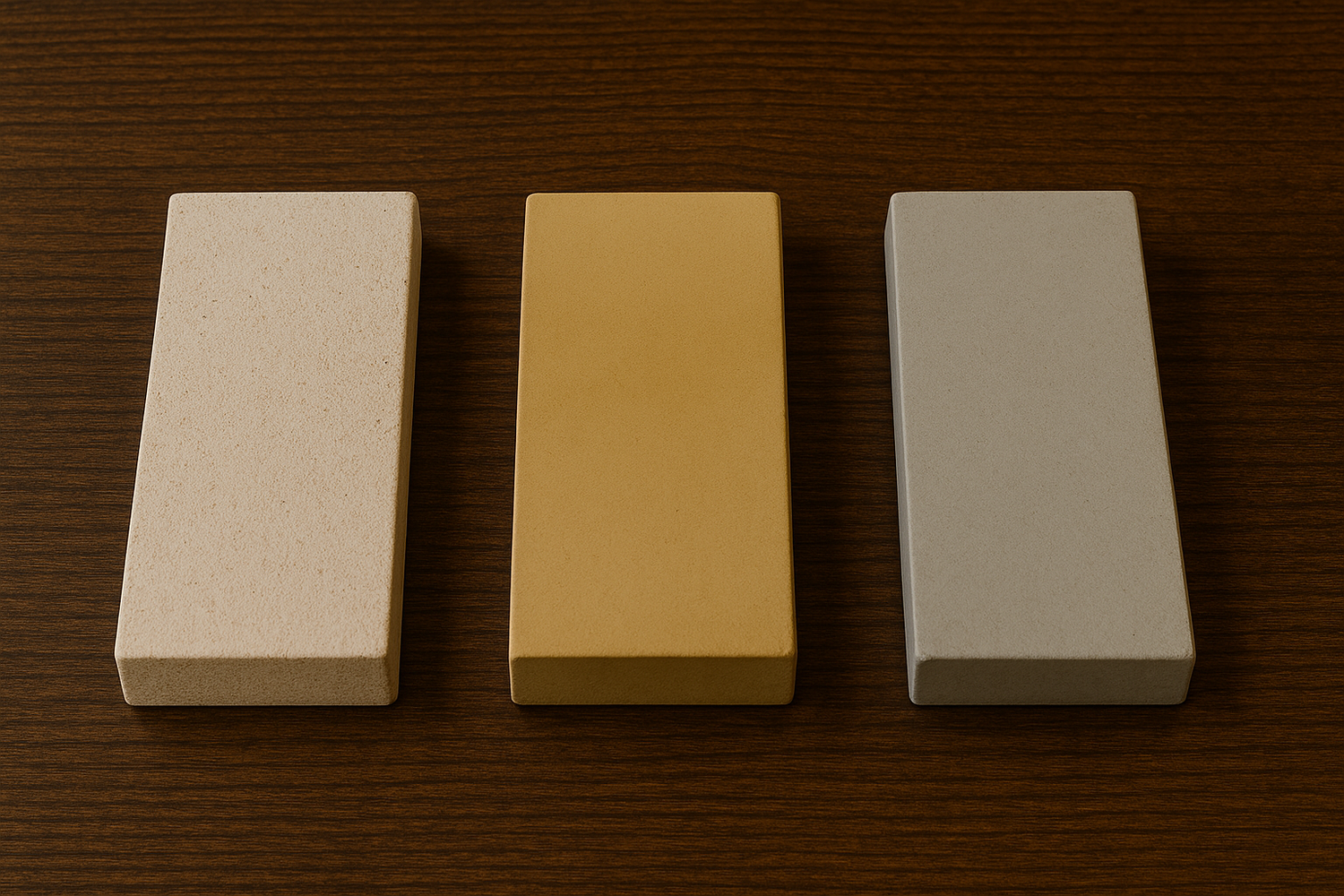
  • 打造锋利刀具的过程始于选择正确的磨刀石。磨刀石的粒度会影响刀刃的锋利度和抛光度:

  • 柱子

    • 粗糙的石头(240-600粒度):
      适用于修复受损边缘或创建新边缘。这些磨石可快速高效地去除材料。
    • 中等大小的石头(800-2,000 粒度):
      非常适合打磨刀刃。此系列的砂纸能够抚平粗石留下的粗糙感,为最终抛光做好准备。
    • 精加工石(粒度3,000-8,000):
      用于实现镜面般的抛光和异常锋利的边缘,非常适合精确切割。
  • 柱子

    请记住,不同制造商的砂粒数量可能有所不同,因此遵循特定于磨刀石品牌的指导方针非常重要。

  • 3. 抛光石(3,000–8,000 目)

    这些石头将锋利转化为艺术

    • 它们创造出镜面般的抛光效果和足够精细的边缘,可以进行最精细和精确的切割。
    • 尤其适用于寿司或怀石料理的日本刀,因为外观和性能同样重要。
  • 关于砂砾数量的重要说明

    请记住,粒度编号并非全球统一标准。不同制造商的粒度编号可能略有不同。请务必参考您具体磨刀石品牌的指南。

  • 柱子

    1.评估你的刀片:
    磨刀之前,请检查刀子是否有缺口或刻痕,以确保刀刃光滑。

  • 柱子

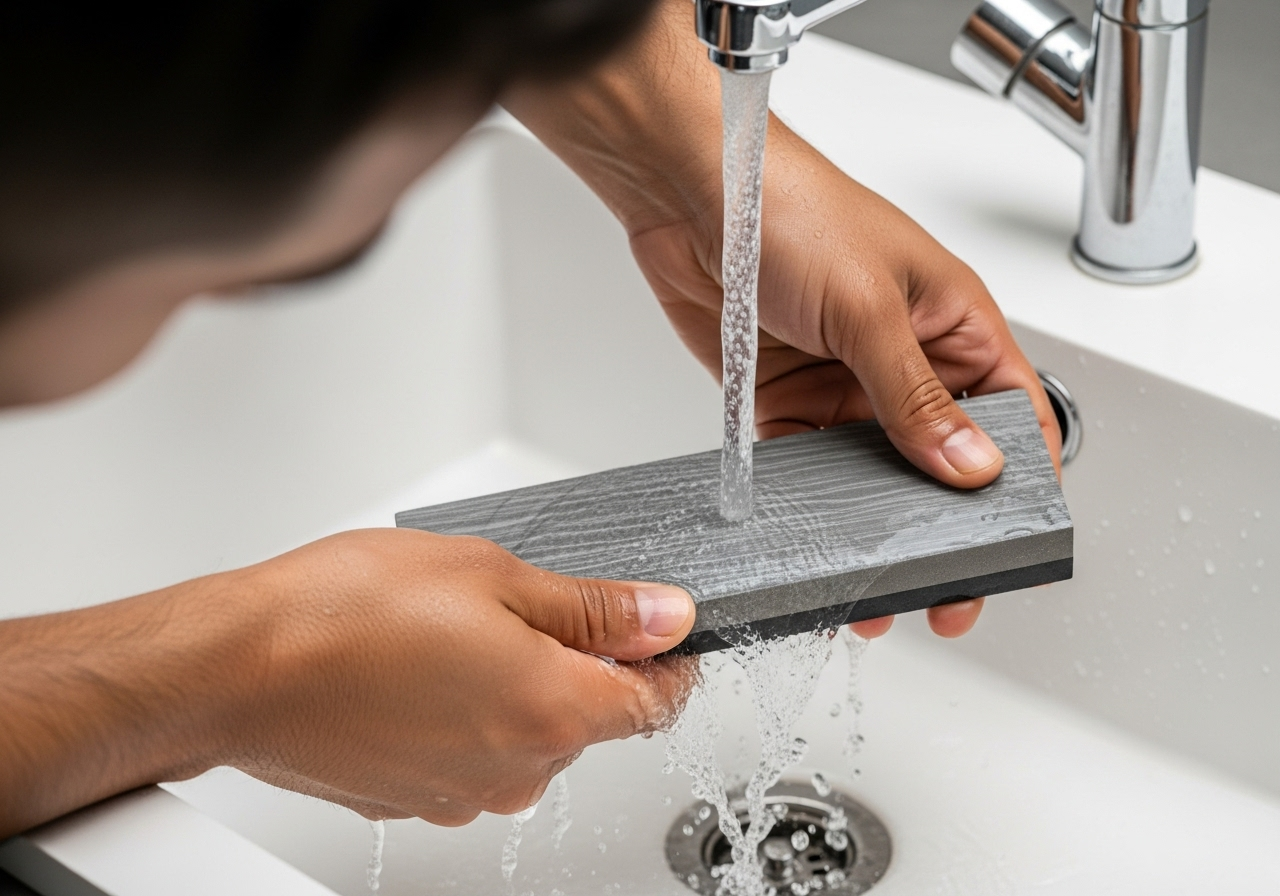
    2. 浸泡或弄湿您的石头:
    水起到润滑剂的作用,减少摩擦,防止热量积聚,以免损坏刀具。使用过程中,无论是浸泡还是湿润,都要确保石头足够湿润。

  • 柱子

    3.找到你的角度:
    刀和磨石之间的角度对于有效磨刀至关重要。通常,这个角度在 20-30 度之间,但根据刀和个人喜好可能会有所不同。始终保持这个角度是关键。

  • 柱子

    4.锐化运动:
    轻轻用力,将刀在磨石上来回滑动,保持角度。使用平滑、均匀的滑动可获得最佳效果。定期翻转刀,使两面均匀磨砺。

  • 柱子

    5.清洁和干燥:
    磨刀后,冲洗并擦干刀片和磨刀石,确保它们清洁且可供下次使用。

  • 6.清洁和储存

    磨刀后,彻底冲洗刀和磨刀石,并将其完全擦干。将刀存放在安全干燥的地方,以保持刀刃锋利。

磨刀石种类

当你拥有一把好刀时,找到一块合适的磨刀石来保养它同样重要。在本节中,我们将探讨各种磨刀石的重要性建议使用频率

磨刀石种类

油石的日常保养

虽然磨刀石对于刀具保养至关重要,但您可能想知道它们本身是否需要特殊护理。虽然它们通常不需要太多关注,但它们可能遇到的最严重问题(类似于刀具生锈)是弯曲和凹陷。重要的是要知道要注意什么,以防止这些问题并确保您的磨刀石保持良好状态以便清洁和有效使用。

油石的日常保养
  • 尽早学会磨刀是开启厨师未来的关键。

    掌握磨刀艺术不仅仅是为了保养刀具,还在于充分发挥刀具的潜力,将你的技能提升到一个新的水平。这是一项基础实践,为烹饪的卓越铺平了道路。

  • 刀具的状况直接关系到您作为厨师的精准度和能力。一把锋利的刀可以轻松切开食材,保持食材的新鲜度并增强外观。性能的提高不仅能提高菜肴的质量,还能提高您在厨房的精准度和效率

  • “了解你的工具就是了解你自己。”尽早学会磨刀可以让你与你的工具产生一种和谐感,将你的工作流程转变为无缝和自然的过程。这种联系拓展了你作为厨师的潜力,并为更多的机会打开了大门。

  • 对于有抱负的厨师和烹饪爱好者来说:花点时间学习磨刀的艺术吧。通过保养你的工具,你会发现为你的技艺和你自己开辟新的可能性的乐趣。开始磨刀,开始塑造你的未来。

  • 开始磨练,你就会开始塑造你的未来。

  • japanese_knife_made_in_Sakai

    1. 秉承堺的遗志

    堺市——日本著名的专业厨刀发源地——每一把刀都由拥有超过六个世纪传统的工匠精心打造。完美平衡、持久锋利、精湛工艺,每一次切割都蕴含着真正的工艺精髓。

  • 2. 贴心呵护,呵护您的日常使用

    每把刀都配有手工镶嵌的木兰刀鞘,方便安全存放。我们可根据您的要求提供免费的“本刃付”手工磨刀服务,让您从第一天起就能拥有精准的刀刃。

  • 3. 终生的伙伴关系

    KIREAJI 刀不仅仅是一件工具,更是您一生的伴侣。我们提供定制的付费售后服务,以维护其锋利和美观,确保它始终如初,精准可靠,如同初次接触您的手。