如何握住薄刃
食指和拇指夹住刀刃的根部,其余三根手指牢牢握住刀柄。薄刃基本上就是用这个姿势来切各种食物。

如何握住出刃或柳刃
要正确使用这把刀,请用中指、无名指和小指握住刀柄,将食指放在刀背上,将拇指放在刀刃上。用食指控制刀的移动和压力。根据要切的食物,对每种类型的刀使用正确的握法很重要。
多列

握刀的艺术:解锁日本刀
-

只有当刀身和刀柄完美配合时,日本刀才能发挥其最佳性能。
掌握正确的站姿和刀具专用握法,才能确保真正的控制力、安全性和精准度。

The Pull Cut: Japan's Secret to Better-Tasting Food
-

It Began With Ceremony
The pulling cut didn't originate at a chef's cutting board. It began in ritual.
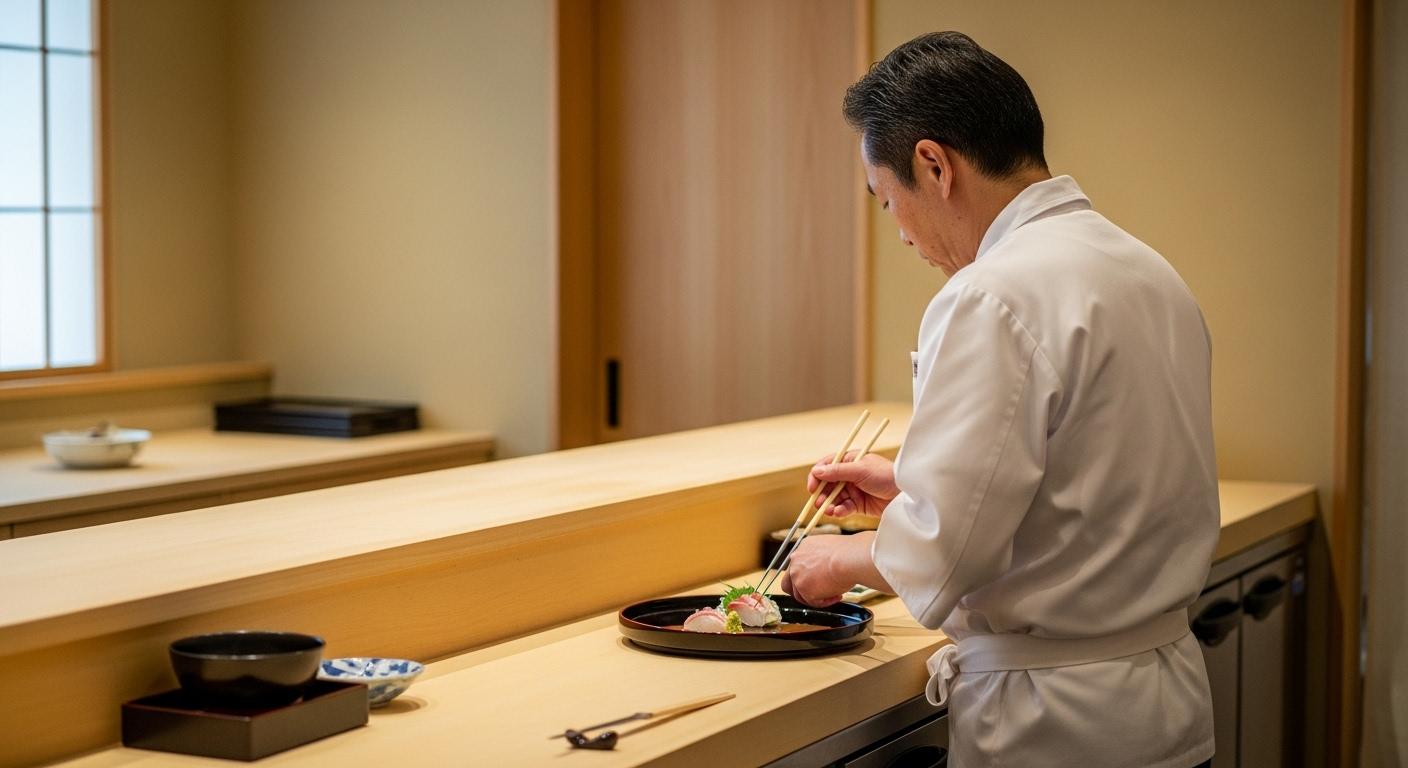
Japan has a tradition called hochoshiki — a ceremonial preparation in which a whole fish is broken down using only a knife and chopsticks. The hands never touch the ingredient. The practice grew from the belief that sacred food must not be contaminated by human contact, and it demanded a technique that could perform precise, controlled work without the stabilization of fingers.
The answer was the pull. A long, drawing motion — deliberate, unhurried, exact. And in finding that answer, Japanese culinary culture discovered something that went far beyond ceremony: that pulling through an ingredient, rather than pressing through it, produced food that tasted better.
That discovery shaped everything that followed.
-

What Happens Inside the Ingredient
The difference between a push cut and a pull cut comes down to pressure — and what pressure does to food at a cellular level.
When you push a blade through an ingredient, force concentrates ahead of the edge. Cells compress before they separate. This compression ruptures cell walls, releasing enzymes and bitter compounds that the intact cell would have contained. The food is cut, but it has also been stressed — and that stress shows up in the flavor.
A pull cut works differently. The blade enters the ingredient and draws through it with minimal downward force. Rather than compressing and rupturing, the edge slices cleanly along the cell boundaries. The cellular structure remains largely intact. What stays inside the cell, stays there.
The result is measurable. The same carrot, cut with the same knife, will taste sweeter when pulled through than when pushed through. The same fish will be cleaner on the palate, without the faint bitterness that comes from cellular damage. This is not refinement for its own sake. It is a technique that genuinely changes what ends up in the mouth.
-

Influence of the Sword
The pull cut also carries the influence of Japanese sword culture — and this connection is more than symbolic.
Japanese swordsmanship developed the drawing cut over centuries: a technique in which the blade is moved along its edge rather than driven straight through. The physics favor a slicing motion over a chopping one — more efficient, more precise, requiring less brute force. When that logic migrated from the dojo into the kitchen, it found a natural home in a culinary culture already oriented toward minimal intervention and maximum respect for the ingredient.
The parallel runs deep. A sword that chops through its target and a sword that draws through it perform the same function but with fundamentally different relationships to force. The same is true of a knife that pushes through a tomato and one that pulls through it.
-

Three Hundred Years of Evidence
Japanese cuisine is the most precise culinary tradition in the world in its handling of raw ingredients. The emphasis on texture, freshness, and the clean, unadorned flavor of the ingredient itself is not accidental — it is the product of centuries of technique refined around a single idea: the less you disturb the ingredient, the more of it survives to the plate.
The pull cut sits at the center of that idea. Born from ceremony, shaped by sword culture, encoded into the geometry of the knife itself, and validated by the simple, repeatable fact that food cut this way tastes better.
In Japan, how you cut is part of how you cook. And how you cook is part of what you serve.


能通过刀来判断厨师的技术吗?
厨师的厨艺确实可以通过观察他们的刀具来衡量,尤其是那些使用时间较长的刀具。刀具的状况和形状会因习惯性使用而改变,这可以反映出厨师的个性、用心和对烹饪的态度。保养良好、精心打磨的刀具充分说明了厨师对工作的奉献精神和态度。

How to Cut Vegetables
切菜是一种尊重。本文阐述了切菜动作、纤维方向和压力如何影响蔬菜的质地和风味,展示了正确的刀工如何将普通的蔬菜变成精致的菜肴。