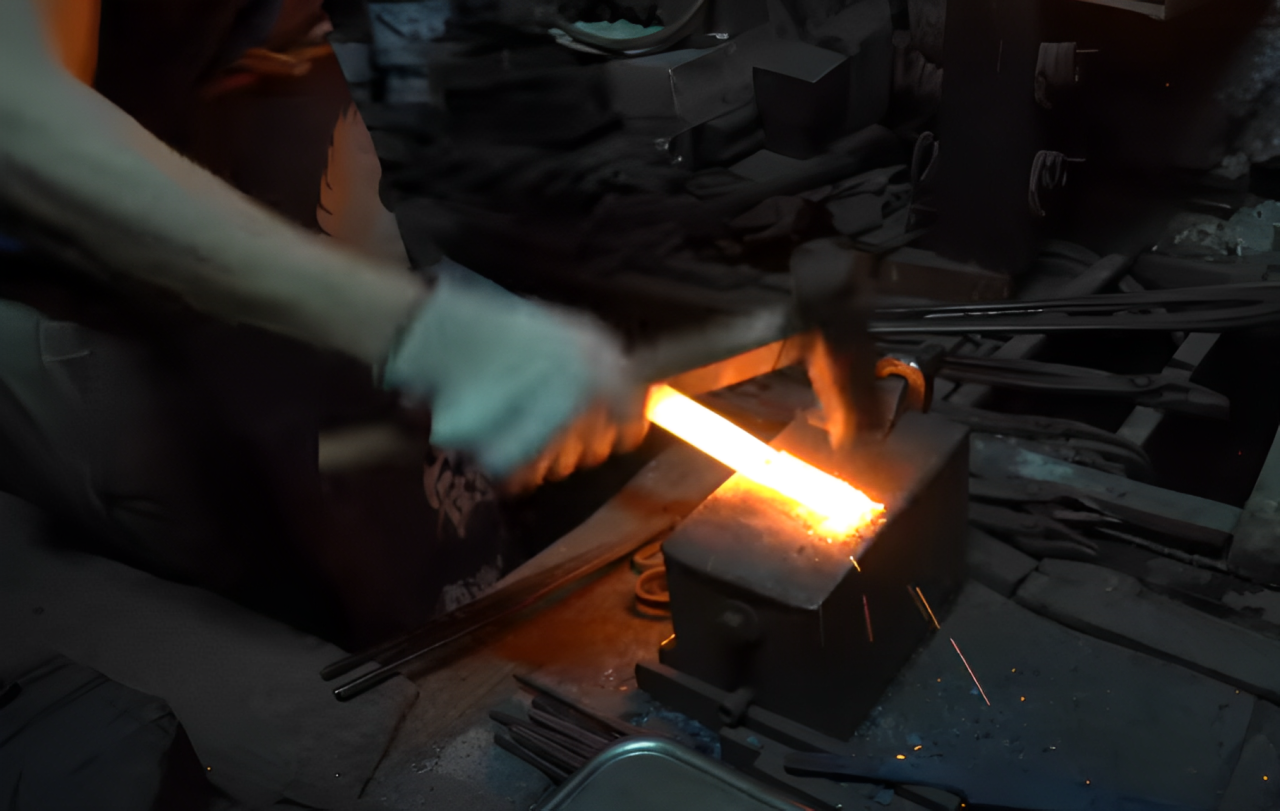
• 刀具主要分为两种:一种是由工匠手工精心制作的刀具,另一种是由工厂大批量生产的刀具。每种刀具在制造工艺、质量、锋利度、耐用性、成本和个性方面都有很大的不同。


  • When choosing a knife—whether for the kitchen, the workshop, or the great outdoors—the question often comes down to one fundamental choice: handcrafted or factory-made? These two paths represent not just different manufacturing methods, but entirely different philosophies. One is rooted in centuries of tradition, human skill, and artistry; the other is driven by efficiency, consistency, and accessibility. Understanding the differences between them can help you make a smarter, more informed investment—and perhaps develop a deeper appreciation for the blade in your hand.

  • 手工刀:

    • 每把刀都是由几位技艺精湛的工匠独特打造的
    • 刀片采用传统方法锻造,包括手工加热和塑造金属。
    • 每一步都格外注重细节
    • 这一劳动密集型过程生产出的刀具极其耐用。
    • 每把刀都体现了工匠的技艺和细心
  • 量产工厂刀具:

    • 制造过程是自动化的,可以同时生产多把刀。
    • 使用自动化机器对刀片进行塑形和磨锐。
    • 生产线管理高效,能够在短时间内生产大量刀具。
    • 这些刀具通常是通过压锻制成的,这种技术可以快速生产,但可能会牺牲手工制品的一些独特品质。
  • 手工刀:

    • 每把刀的品质直接源于工匠非凡的技艺和经验
    • 每把刀都经过精心制作,注重细节
    • 通过工匠的亲切关怀,确保了始终如一的高品质。
  • 量产工厂刀具:

    • 采用标准化流程来保持一致的质量。
    • 然而,质量控制的差异可能导致单个产品之间存在差异。
  • 手工刀:

    • 刀具均由技艺精湛的工匠手工打磨
    • 它们具有无比锋利的边缘
    • 锋利度可维持较长时间
  • 量产工厂刀具:

    • 工厂制造的刀片经过均匀磨锐,具有良好的初始锋利度。
    • 然而,随着使用,锋利度可能会很快变钝。
  • 手工刀:

    • 采用优质材料制成,并经过精密工艺打磨。
    • 结构极其耐用
    • 只要保养得当,这些刀具可以使用一生
  • 量产工厂刀具:

    • 耐用性一般,需要根据使用频率定期维护。
    • 某些材料和制造方法可能会导致更快的磨损和易生锈。
  • 手工刀:

    • 成本体现了手工制作工艺和高品质材料
    • 这些刀具是宝贵的投资
  • 量产工厂刀具:

    • 生产成本低,导致价格相对便宜。
    • 通常作为消耗品购买。
  • 手工刀:

    • 由于手工制作,每把刀都具有独特的特征和特性
    • 个性展现了工匠的技艺和热情
    • 每把刀都是一件个性化且独特的艺术品
  • 量产工厂刀具:

    • 设计和形状都是标准化的,导致刀具之间几乎没有个性。

  • Ultimately, the choice between a handcrafted knife and a mass-produced one is deeply personal. If you value precision, longevity, and the story behind the object—the hands that shaped it, the fire that forged it—a handcrafted knife is more than a tool; it is a lifelong companion. On the other hand, if practicality and affordability are your priorities, factory-made knives offer reliable performance without the premium price tag. Whichever path you choose, understanding what goes into each blade ensures that your decision is one you'll never regret.

  • What Happens Inside the Steel When a Craftsman Picks Up the Hammer

    There is a question that serious knife buyers eventually ask, and that deserves a serious answer: why does forging matter? In an era when computer-controlled machinery can cut steel to tolerances that the human hand cannot match, when laser-cut blanks can be produced in their hundreds from a single sheet, when quality control systems can reject any blade that deviates from specification — why does the work of a craftsman at a hammer still produce a better knife?

    The answer is not romantic sentiment. It is physics.

  • The Grain That Flows

    Steel is not a uniform material. At the microscopic level, it has a structure — a directional organization of the metal's internal grain, sometimes called the flow line, that reflects the history of how the steel was worked from raw material into its current form.

    In a piece of flat rolled steel — the sheet from which most mass-produced knife blanks are cut — this grain structure runs parallel to the surface, like the grain of a plank of wood. When a blank is cut from this sheet, whether by laser, press, or water jet, the cutting process severs the grain wherever it crosses the cut line. The edges of the blank, and particularly the cutting edge that will eventually become the knife's edge, are cut across the grain.

    This matters because the grain structure is the steel's internal support system. A steel loaded along the direction of its grain is stronger than the same steel loaded across it. A cutting edge that runs across the grain is structurally weaker at exactly the point where structural strength is most needed.

    Forging changes this entirely. When a blacksmith works a piece of steel under the hammer, the metal moves — not just in shape, but in structure. The grain flows with the steel as it is worked, wrapping around the blade's profile rather than being severed by it. The forged blade's cutting edge runs along the grain, not across it. The strongest direction of the metal is aligned with the direction in which the blade will be stressed in use.

    This is not visible in the finished knife. It cannot be measured with a ruler or detected by touch. But it is real, and it is one of the fundamental reasons why a forged blade, all other things being equal, has a structural integrity that a blade cut from flat stock does not.

  • The Taper That Cannot Be Ground

    The second advantage of forging is less about metallurgy and more about geometry — but it is equally consequential.

    A well-made Japanese knife has a specific thickness profile: thicker at the heel, progressively thinner toward the tip. This taper is not incidental. As explored elsewhere in this collection, it is one of the structural features that reduces friction and cellular disturbance as the blade moves through an ingredient. The knife that tapers correctly parts the food rather than pushing it aside.

    Producing this taper from flat stock, by grinding and removing material, creates a problem that is less obvious than it first appears. A traditional Japanese knife is not a single steel — it is a laminate: a core of hard steel, clad on one or both sides by a softer iron. This laminate structure is what allows the hard steel to be used for the cutting edge while the softer iron provides the body's resilience.

    When this laminate structure is tapered by grinding, the ratio of hard steel to soft iron changes. At the thinner sections, where more material has been removed, the proportion of the two materials is different from the original specification. The geometry may look correct, but the internal structure is not what the maker intended.

    Forging avoids this entirely. When the blacksmith hammers the steel toward its taper — working the heel thick and driving the material toward a thinner tip — the laminate structure is preserved proportionally throughout. The ratio of hard steel to soft iron remains consistent from heel to tip, because the material is being moved rather than removed. The taper is achieved without compromising the internal architecture that the taper was designed to preserve.

    This is a subtle distinction, but it is the kind of distinction that accumulates into a blade that performs differently from one that looks similar but was made differently.

  • The Freedom to Choose

    Most knife manufacturers, even those producing quality products, work from what is known in the Japanese knife trade as rikirizai — pre-laminated clad steel, produced by specialist suppliers, in which the hard core and soft cladding have already been bonded together before the steel reaches the knife-maker.

    This is practical. The laminating process requires its own equipment and expertise, and using pre-laminated stock removes a variable from the production process. For high-volume manufacture, it is the sensible approach.

    But it is also a constraint. The blacksmith who works from pre-laminated stock is limited to the combinations that the suppliers produce: the available core steels, the available cladding materials, the available laminate thicknesses. The knife they make will be excellent within those parameters, but it will not be something that the supply chain did not already contain.

    The forging craftsman who combines their own materials has no such constraint. They choose the core steel for its specific properties — a particular grade of Shirogami, or Aogami, or a newer alloy — and they choose the cladding material independently. They can match a steel that holds a particular kind of edge to an iron that provides a particular kind of resilience. They can create combinations that no supplier currently offers because no supplier has yet made them.

    This freedom is not just technical. It is creative. The craftsman who combines their own materials is making decisions at the earliest possible stage of the knife's existence — decisions that will propagate through every subsequent stage of making and manifest, ultimately, in the character of the finished blade. The knife that results from this process carries, in a very real sense, the maker's judgment at a depth that a knife made from pre-specified materials cannot.

  • Temperature as a Tool

    The fourth advantage of forging is the most subtle, and in some ways the most significant: the ability to use heat precisely, as an active instrument of microstructural change rather than simply as the means to make the steel workable.

    Steel's internal grain structure is not fixed. It responds to temperature — growing at high heat, refining at lower heat, transforming in specific ways at specific temperatures during quenching. The industrial approach to this is specification: heat the steel to the specified temperature, hold for the specified time, quench in the specified medium. Consistency is the goal, and the system is optimized for it.

    The forging craftsman's approach is different. They are reading the steel in real time — watching the color, responding to the way the metal moves under the hammer, adjusting the heat based on what the material is showing them. This is not imprecision. It is a different, more responsive form of control.

    When a skilled blacksmith says they work at a particular temperature because that temperature produces a particular result, they are describing something that the specification sheet cannot capture: the accumulated understanding of how this specific steel, worked in this specific way, at this specific temperature, produces a grain structure with specific properties. This knowledge is experiential, not theoretical. It cannot be programmed into a machine, because it depends on the real-time feedback of a particular piece of steel on a particular day, responding to hammer and heat in ways that are never quite identical.

    The ability to respond to the steel — to adjust, to compensate, to optimize in the moment — is what separates hand forging from industrial production at the level of grain structure. And grain structure, as this series has established across multiple articles, is the foundation of everything that determines how a knife actually performs.

  • One Knife at a Time

    There is a final quality of hand forging that resists technical description but deserves to be named.

    Mass production requires compromise. When a knife is produced in quantities of hundreds or thousands, the decisions about its design must be made in advance, applied uniformly, and held constant across the production run. If a particular step in the process occasionally produces a result that is 95% of optimal, that 95% becomes the standard — because the cost and complexity of chasing the final 5% across a full production run is prohibitive.

    The hand forger has no production run. Each knife is its own decision tree. If a particular piece of steel requires more work at a particular stage, it gets that work. If the taper is not quite right after the initial forging, it is corrected. If the geometry after grinding is not what was intended, the piece goes back to the forge.

    The knife that leaves a forging craftsman's workshop has been evaluated as an individual, not passed through a system. Every decision about it was made by someone looking at this specific piece of steel, at this specific stage, with this specific result in mind. The knife is the product of attention — not automated attention, but the judgment-bearing attention of a skilled person making a series of decisions whose quality will be visible, eventually, in how the knife performs.

    This is not to say that all forged knives are better than all production knives. Skill in forging is a variable; a poorly executed forged knife is inferior to a well-made production knife. But a forged knife made by a skilled craftsman who has used the process's advantages — the preserved grain flow, the integral taper, the freedom of material combination, the real-time temperature control, the per-piece optimization — is something that production cannot equal, regardless of the specification of the steel.

  • What This Means When You Hold the Knife

    The differences described in this article are mostly invisible. You cannot see the grain flow in a finished blade. You cannot measure the laminate ratio at different points along the taper. You cannot quantify the craftsman's temperature decisions or the per-piece optimizations that happened during making.

    What you can do is cut with it. And in the cut — in the way the edge enters the ingredient, in the way the blade moves through the food, in the way the knife responds to the whetstone over years of maintenance — the accumulation of those invisible decisions becomes perceptible. Not as information, but as quality: a quality that is difficult to articulate and unmistakable once experienced.

    This is what forging produces. Not a story about a knife. A knife that has a story — written in the structure of the steel, by the hands that made it.

  • 批量生产的工厂刀具和手工刀具各有优缺点。虽然工厂刀具容易获得且性价比高,但它们往往在质量和耐用性方面存在局限性。另一方面,手工刀具代表着对质量和耐用性的真正投资。这些刀具经过精心制作和专业制作,具有无与伦比的工艺和耐用性,可提供终身的卓越性能。在它们之间进行选择取决于您的需求和预算,但选择手工刀具意味着拥抱一件可以提升您的烹饪体验并经得起时间考验的艺术品。

  • 另一方面,手工刀具代表着对品质和耐用性的真正投资。这些刀具经过精心制作工艺精湛经久耐用使用寿命长。选择它们取决于您的需求和预算,但选择手工刀具意味着拥抱一件艺术品,它可以提升您的烹饪体验经得起时间的考验

  • 手工刀具承载着工匠的精神——独具特色,由熟练的工匠手工塑造和打磨,持久锋利,具有长期的价值
    工厂生产的刀具虽然性能稳定且价格实惠,但其性能虽然实用,却最终是可以更换的

  • 刀具制作中重质不重量

    提供高质量、精心制作的产品比简单地增加产量更具挑战性
    我们设定的标准越高,我们能够持续生产的产品就越少——这是现实情况。

  • 例如,对于定制刀具制造商来说,等待两年并不罕见。这是因为精心设计、独一无二的产品本身就具有物理限制。当然,我们很乐意扩大规模并吸引更多客户,但扩大规模并保持这种质量水平并非易事。

  • 我们把质量放在第一位,全身心投入每一把刀。我们的目标是在真正欣赏其价值的客户的支持下,继续这种专注的工艺。

  • 谨慎使用廉价刀具

  • 购买便宜的刀可能意味着所用的钢材质量较差。劣质钢材往往很快就会失去锋利度,最终会降低烹饪效率。

    KIREAJI 提供由堺市刀具制造工坊的可靠工匠精心制作的正宗日本刀具。每把刀都是手工制作,确保您收到的是值得信赖的高品质产品,让您安心无忧。