Sakai Cultural Works
-
Extraordinary works born from Sakai’s centuries-old knife-making culture.
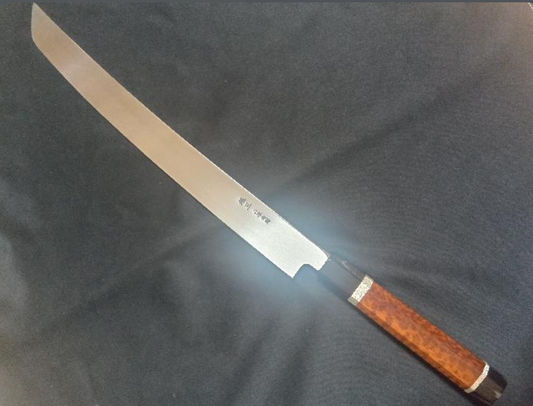
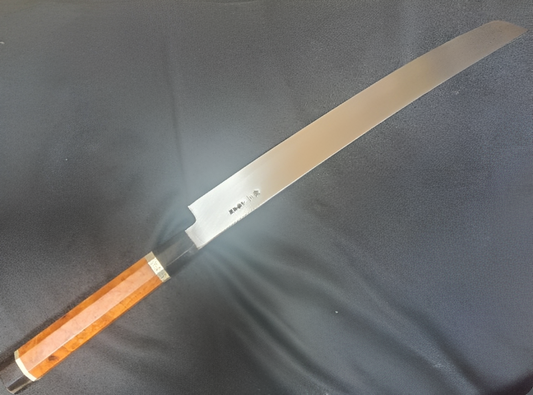
In June 2026, a special Japanese knife crafted by Shiroyama Knife Workshop. in Sakai City was selected as the championship prize for a national sushi competition held in Japan. Rather than being created merely as a luxury knife, this work was chosen as a symbol of sushi craftsmanship, Japanese culinary culture, and the spirit of Sakai artisanship.
What makes these works especially significant is that they are not distributed through ordinary retail channels. These extraordinary creations are available exclusively through KIREAJI, making them exceptionally rare cultural pieces for collectors, chefs, and admirers of authentic Japanese craftsmanship around the world.
-
Each work embodies the collaborative craftsmanship for which Sakai is renowned:
- Forged by Traditional Craftsman Shogo Yamatsuka
- Sharpened by Traditional Craftsman Mitsuo Yamatsuka
- Handle crafted by Toshiyuki Terauchi
- Forged by Traditional Craftsman Shogo Yamatsuka
-
This division of labor is one of the defining characteristics of Sakai knife culture. Rather than a single artisan completing every process, masters specializing in forging, sharpening, and handle craftsmanship dedicate their lives to perfecting their respective crafts. The result is not simply a knife, but a cultural work shaped through generations of accumulated skill, philosophy, and artistic expression.
Particularly noteworthy is the involvement of Toshiyuki Terauchi, a distinguished artisan known for elevating Japanese knife handles and sheaths into works that seamlessly unite functionality with artistic beauty. His work adds another layer of refinement and cultural depth to these exceptional creations.
Sakai Cultural Works exists to preserve and share these extraordinary works with the world.
Sakai Cultural Works Collection
-
银山大马士革钢柳刃(切付)270毫米 - 镜面抛光(双面)
原价 $4,000.00 CAD原价单价 / 每$0.00 CAD促销价 $4,000.00 CAD -
银山大马士革钢柳刃(切付)270毫米 - 镜面抛光(双面)
原价 $4,250.00 CAD原价单价 / 每$0.00 CAD促销价 $4,250.00 CAD
The Craftsmen Behind the Work
Shogo Yamatsuka
Master of Ginsan and Sakai Forging Tradition
Shogo Yamatsuka began his career as a bladesmith in 1973 under the guidance of his father, a Sakai blacksmith associated with the name “Yuzan.”
Recognized as a Traditional Craftsman in 2012, he is regarded as one of Japan’s distinguished masters of Ginsan steel — a rare stainless steel that requires the sensitivity and precision of traditional forging techniques.
Guided by his belief that “Work never betrays you,” his craftsmanship reflects decades of discipline, dedication, and pride in Sakai knife-making.
Mitsuo Yamatsuka
A Craftsman in Constant Pursuit of Sharpness
Mitsuo Yamatsuka is a master sharpener specializing in single-edged blades, mirror polishing, and traditional Sakai sharpening techniques.
Known for pursuing not only sharpness, but the ideal cutting experience itself, he combines traditional methods with continuous refinement and innovation. His beautifully finished blades reflect the precision and quiet elegance of Sakai craftsmanship.
Within Sakai Cultural Works, his work preserves and carries forward the spirit of traditional Japanese sharpening.
Toshiyuki Terauchi
Master of Tradition, Creator of New Beauty
Toshiyuki Terauchi is a distinguished artisan who transforms Japanese knife handles and sheaths into works that unite functionality with artistic beauty.
Trained under the legendary craftsman Mr. Mizuno, whose collaborative works with Hakuhō and Genkai received a gold prize at a traditional crafts competition over 30 years ago, Terauchi continues to carry forward a refined tradition of craftsmanship with elegance and precision.
Within Sakai Cultural Works, his craftsmanship brings a final layer of sophistication and cultural depth to each piece.
When Japan Chooses a Blade to Honor Its Best
-
-
There are moments when an object is asked to represent something greater than itself.
In June 2026, the national organization representing Japan’s sushi professionals — the All Japan Sushi Association — will hold its national championship. The winners will receive, as a symbol of their achievement, a Japanese knife crafted by Shiroyama Knife Workshop. in Sakai and presented through KIREAJI.
Not a trophy.
Not a medal.
A knife.We believe this choice reveals something important about Japanese sushi culture — and about the role a knife holds within it.
-
Why a Knife
At its core, sushi is a discipline of the blade.
The texture of fish, the beauty of a cut surface, and even the way flavor is released depend directly on the precision of the cut itself. A great sushi chef is, in many ways, someone who has devoted years to mastering the movement of a knife.
When Japan’s national sushi competition chose a knife to honor its champions, it was not choosing an accessory. It was choosing the very tool through which a sushi chef’s skill is expressed.
And when it chose a knife from Sakai — Japan’s historic center of knife craftsmanship — it was also recognizing the cultural tradition behind that blade.
-
Three People, One Work
Every piece within the Sakai Cultural Works collection is shaped through the collaboration of specialists whose skills have been refined over decades.
The blade is forged by Traditional Craftsman Shogo Yamatsuka, a master known for his exceptional work with Ginsan steel.
The sharpening is completed by Traditional Craftsman Mitsuo Yamatsuka, whose pursuit of ideal sharpness reflects Sakai’s long sharpening tradition.
The handle is crafted by Toshiyuki Terauchi, an artisan known for elevating Japanese handle craftsmanship into an expression of beauty and refinement.
Three specialists.
Three lifetimes of focused dedication.
One cultural work.This division of labor has defined Sakai craftsmanship for centuries. Rather than mastering every stage superficially, each artisan devotes an entire lifetime to a single discipline. The result is a depth of craftsmanship impossible for any one individual to achieve alone.
-
What Makes These Works Different
The works within Sakai Cultural Works are not distributed through conventional retail channels.
They are presented exclusively through KIREAJI as exceptionally limited cultural pieces created for those who deeply appreciate Japanese craftsmanship, sushi culture, and Sakai’s knife-making tradition.
This exclusivity is not a marketing strategy. It is simply the natural result of creating works at this level.
A knife chosen to represent Japan’s highest sushi competition cannot be treated as a mass-produced object. It is created through time, concentration, and decades of accumulated skill. Genuine mastery cannot be accelerated.
These works are meant not only to be used, but also to be understood — as objects carrying the philosophy, aesthetic sensibility, and cultural legacy of Sakai craftsmanship.
-
The Completion of the Object
In Japanese knife culture, attention is often focused entirely on the blade itself.
But true completion lives in the harmony of the entire object.
The balance between blade and handle, the refinement of materials, the precision of proportion, and the quiet elegance of the final finish all shape the presence of the knife as a cultural work.
The performance lives in the blade.
The completeness lives in the whole. -
Why We Are Honored to Present These Works
KIREAJI exists to connect Sakai’s craftsmanship with people around the world who seek to truly understand Japanese knife culture.
The Sakai Cultural Works collection represents the highest expression of that mission — works that embody the spirit of Sakai’s division of labor, the mastery of Traditional Craftsmen, and the cultural depth of Japanese culinary tradition.
That these works were chosen to honor Japan’s finest sushi professionals is something we consider deeply meaningful.
We are honored to present them to the world with the care and respect they deserve.
What Is a Traditional Craftsman?
Ever wondered what it takes to be officially recognized by the Japanese government as a “Traditional Craftsman”?
In Sakai City — Japan’s most celebrated hub of knife-making — only a select few artisans earn this prestigious title.
Why do 98% of Japanese Chefs Use Knives from Sakai?
The secret lies in Sakai’sdivision of labor and fully handcrafted process.
This feature explores thetradition and artisan culturebehind Japan’s most trusted knives.
The 98% Statistic: A Trusted Source
The Sakai Tourism Bureau states that "98% of Japanese chefs use Sakai knives" in their articleAppeal of World Renowned Sakai Knives. This claim underscores the enduring reputation of Sakai craftsmanship.
Sakai's Declining Japanese Knife Craftsmen
Sakai's esteemed cutlery tradition, renowned for its sharpness and craftsmanship, is at risk with only a dozen blacksmiths remaining. Facing competition and declining interest, strategies such as exploring new markets and fostering youth interest are vital for survival. This situation underscores a broader challenge in cultural preservation. Supporting Sakai’s craftsmen is crucial to maintaining this legacy.
How Japanese Knives Are Made: The Sakai Tradition
VIDEO PROVIDED: JAPAN TRADITIONAL CRAFTS AOYAMA SQUARE (YOUTUBE)
-
Sakai Forged Blades — Six Centuries of Unrivaled Craftsmanship
Loved by chefs around the world and trusted by 98% of Japan’s top culinary professionals, Sakai knives are more than tools—they are the living legacy of over 600 years of master craftsmanship.
-
At KIREAJI, we work directly with the Shiroyama Knife Workshop in Sakai, Japan, ensuring every blade is hand-forged, finished to perfection, and shipped straight from the workshop to kitchens across the globe. No middlemen. No mass production. Only authentic, artisan-made knives, crafted to elevate your cooking for a lifetime.