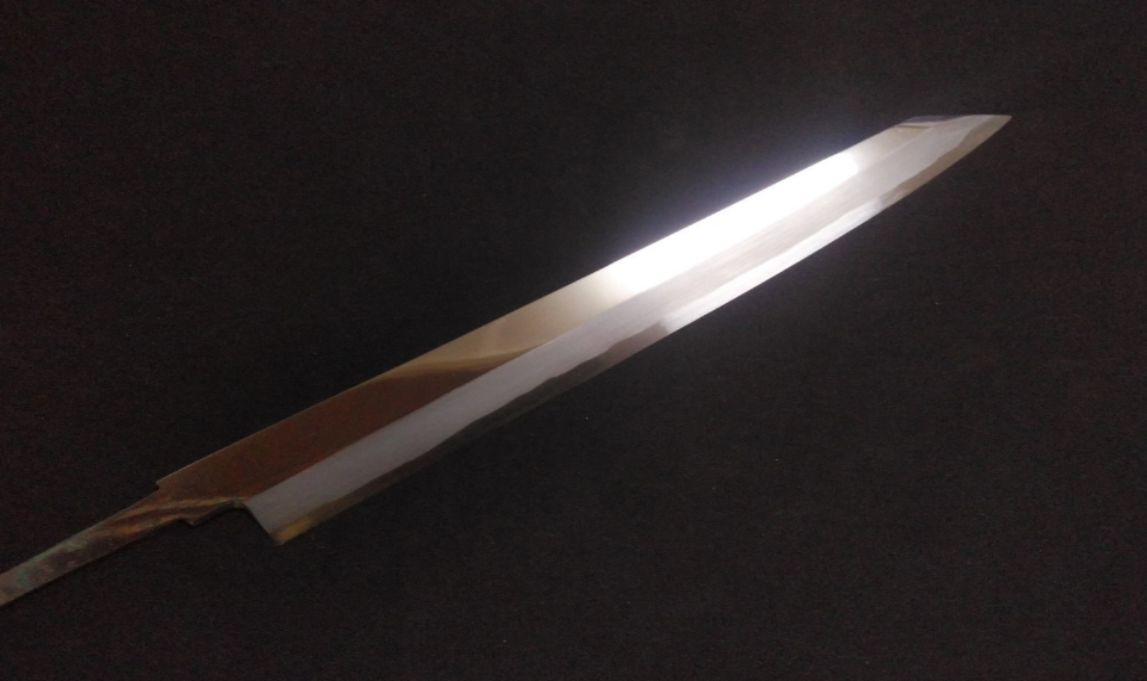
• Not all knives are created equal—and not all hands are the same.

    At KIREAJI, we craft traditional Japanese single-edged knives in both right- and left-handed versions, ensuring perfect balance, precision, and comfort for every chef.

    By combining centuries-old Sakai craftsmanship with a deep respect for the natural sensitivity of each hand, our knives transform cutting into a seamless, expressive art.

    This is more than a knife—it’s your perfect fit, designed to bring out your full potential in the kitchen.

Left-Handed Japanese Knife Collection

  • Notice Regarding Left-Handed Sheaths

    For left-handed knives, we provide the best possible right-handed sheath as an alternative. Unfortunately, a dedicated left-handed sheath is not available at this time. We sincerely regret any inconvenience this may cause and appreciate your understanding and cooperation.
    If you have any questions, please feel free to contact us.

  • Notice: Honbazuke Service for Left-Handed Knives Suspended Until Further Notice

    At present, due to unforeseen circumstances, the craftsman who was previously responsible for the Honbazuke of left-handed knives is no longer available. In addition, the other craftsmen in our workshop are currently experiencing an extremely high volume of work, making it difficult to arrange the necessary coordination.
    As a result, we regret to inform you that this service is temporarily suspended.
    Unfortunately, we are also unable to confirm at this time when, or if, the service will resume.
    We sincerely apologize for any inconvenience this may cause and thank you for your kind understanding.

  • japanese_knife_made_in_Sakai

    1. Forged in the Legacy of Sakai

    From Sakai City—Japan’s renowned birthplace of professional kitchen knives—each blade is crafted by master artisans with over six centuries of tradition. Perfectly balanced, enduringly sharp, and exquisitely finished, every cut carries the soul of true craftsmanship.

  • 2. Thoughtful Care for Everyday Use

    Every knife includes a hand-fitted magnolia saya for safe storage. Upon request, we offer a complimentary Honbazuke final hand sharpening—giving you a precise, ready-to-use edge from day one.

  • 3. A Partnership for a Lifetime

    A KIREAJI knife is more than a tool—it is a lifelong companion. With our bespoke paid aftercare services, we preserve its edge and beauty, ensuring it remains as precise and dependable as the day it first met your hand.

Why Many Product Photos Show Only the Blade

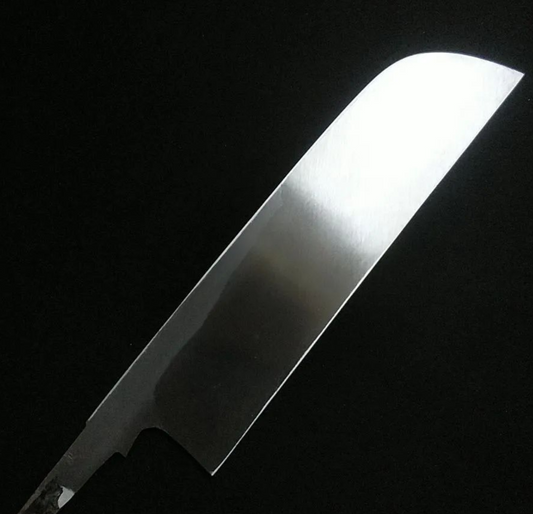
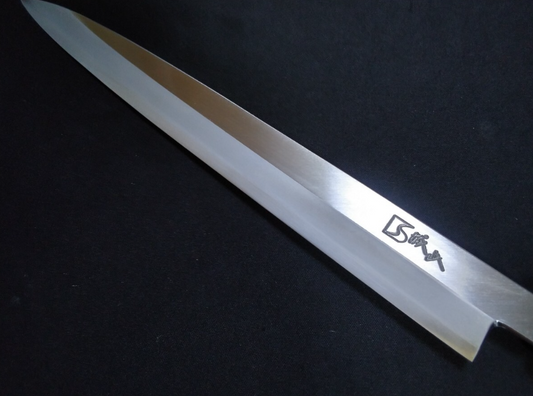
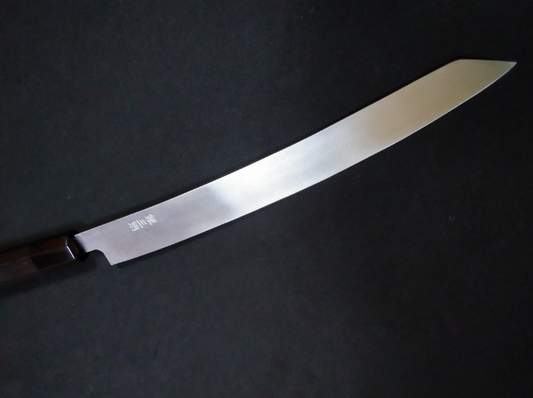
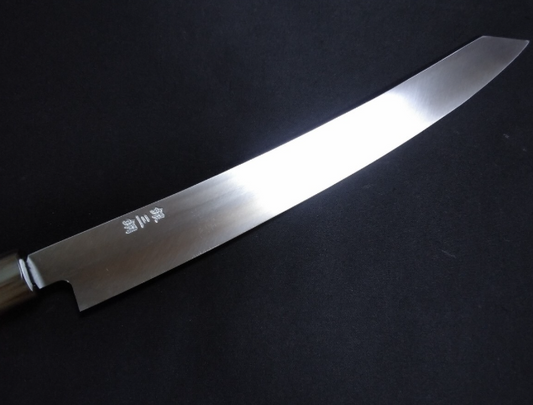
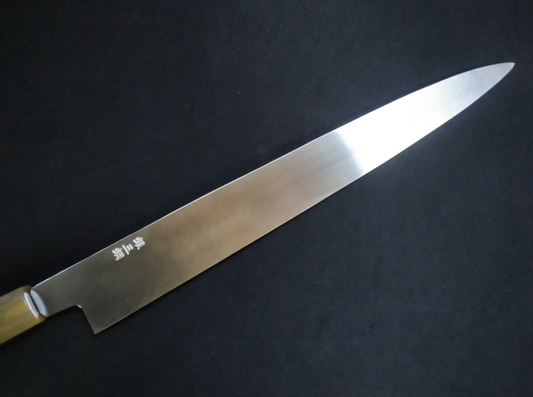
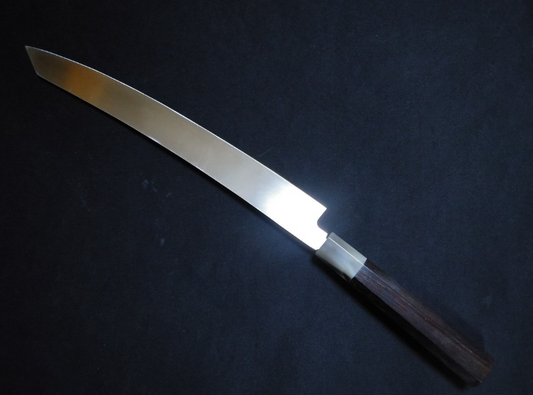
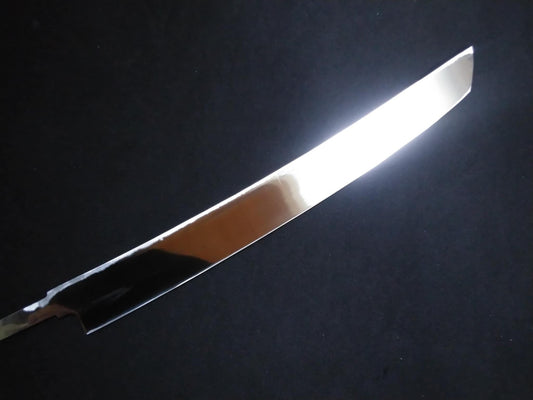
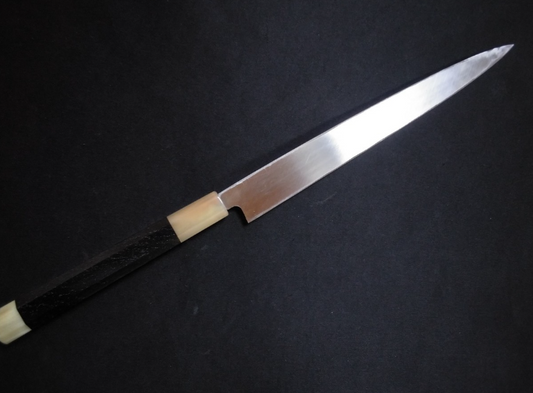
At KIREAJI, every knife is made to order in Sakai, Japan. Photos show the blade before the handle is attached, allowing artisans to perfect the balance and edge for your specific order. Your knife arrives fully finished — tailored just for you.

Made-to-order Japanese knives

Global Delivery from Sakai

Across the world, discerning cooks seek authentic Japanese knives from Sakai — Japan’s legendary knife-making city with over 600 years of tradition.
At KIREAJI, we work alongside master artisans in Sakai to fulfill that desire, shipping genuine handcrafted knives directly from the workshop to kitchens worldwide.

Global Delivery from Sakai
  • Why Left-Handed Versions Exist

    In Japanese single-edged knives, the blade is sharpened on only one side, with the opposite side slightly concave. This asymmetry means the blade must be reversed for left-handed users—otherwise, cutting becomes awkward, inaccurate, and even unsafe.

  • For this reason, professional left-handed chefs require knives specially crafted for their handedness. In Sakai, Japan’s knife-making capital, master craftsmen adjust not only the edge but also the subtle geometry of the blade to ensure perfect balance and precision.

  • Handedness in Japanese Culinary Tradition

    Interestingly, in traditional Japanese cuisine, a chef’s handedness was not always determined by their dominant hand. For example, in the art of slicing sashimi, even left-handed apprentices were historically trained to cut with their right hand.

  • Why? Beyond mentor tradition, plating aesthetics played a key role: arranging sashimi from left to right allowed diners to pick up each slice easily with chopsticks—a gesture of hospitality and refinement. As a result, many left-handed chefs still use right-handed knives for specific tasks today.

  • KIREAJI’s Philosophy — Respecting the Hand’s Natural Sensitivity

    At KIREAJI, we believe knives should adapt to the chef, not the other way around. While tradition has its beauty, modern craftsmanship allows us to celebrate the unique sensitivity of each hand.

  • Our left-handed knives are built with the same meticulous care as our right-handed models, ensuring that every chef—regardless of handedness—can experience the full potential of Japanese blade performance. This is not only about efficiency, but about unlocking new creative possibilities in the kitchen.

  • A Professional Chef’s Perspective

  • "Cooking is a conversation between my hands and my tools. As a left-handed chef, using a knife made for me feels like gaining back a missing half of my craft. Precision improves, speed increases, and the joy of cooking returns in full measure."

  • "The right knife is not just a tool—it’s a partner. For left-handed chefs, finding that partner changes everything."

Why Are Left-Handed Knives More Expensive?

  • For the 10% of the world who are left-handed, finding a truly perfect knife is more than convenience—it’s about unlocking precision, comfort, and joy in cooking. But why do left-handed Japanese knives often cost more than their right-handed counterparts? The answer lies in time, rarity, and unmatched craftsmanship.

  • 1. 2–3 Times Longer to Make

    Crafting a left-handed knife requires reversing the entire blade geometry. Since most artisans train for decades making right-handed knives, working in the opposite direction demands extra care, control, and time—often two to three times longer than a standard blade.

  • 2. A Knife for Just 10% of the Population

    With far fewer left-handed chefs, production is naturally limited. This scarcity means each left-handed knife is made in small numbers, adding to its exclusivity and value.

  • 3. Precision That Passes the Most Rigorous Checks

    Because these knives are crafted less frequently, every detail—from the edge grind to the blade balance—is inspected with extraordinary attention. The result is a knife you can trust for life.

  • A Tool Worthy of Your Craft

    Owning a left-handed Japanese knife is more than having the right tool—it’s a celebration of individuality, tradition, and skill. Each blade is a rare piece of functional art, made to fit you perfectly and elevate every cut you make.

  • The Left-Handed Blade Precision Crafted Against the Grain

    Left-handed Japanese knives embody rarity shaped by mastery. Because artisans must reverse every step of the process, each blade demands far more time, focus, and control than a standard right-handed knife. With only 10% of the world able to use them, they become not just tools but personal, functional art—crafted with uncommon precision for those who need them most.

  • A Blade for the Left Hand — Honoring Every Chef’s Journey

    For generations, most Japanese knives were made exclusively for right-handed users. For left-handed chefs, this meant working with tools that never truly fit—straining the grip, disrupting balance, and limiting precision.

    That is why the left-handed knife holds such meaning. By reversing the structure of the blade—its edge, bevel, and spine—it becomes a tool that finally belongs in the left hand. With it, cutting feels natural, smooth, and confident.

  • Creating left-handed knives is not a simple matter of flipping the design. Each one requires careful recalibration of angles and geometry, demanding extra time and skill from the craftsman. But this effort is worth it, because a knife should never limit its user—it should empower them.

    Today, left-handed knives are more available than in the past, yet they remain a symbol of dedication to inclusivity in craftsmanship. For me, each blade I forge is a promise: every chef, regardless of hand, deserves a knife that feels truly their own.

  • When a left-handed chef holds such a knife, it is more than a tool. It is an affirmation that their craft, too, has been honored with the same respect, care, and artistry.

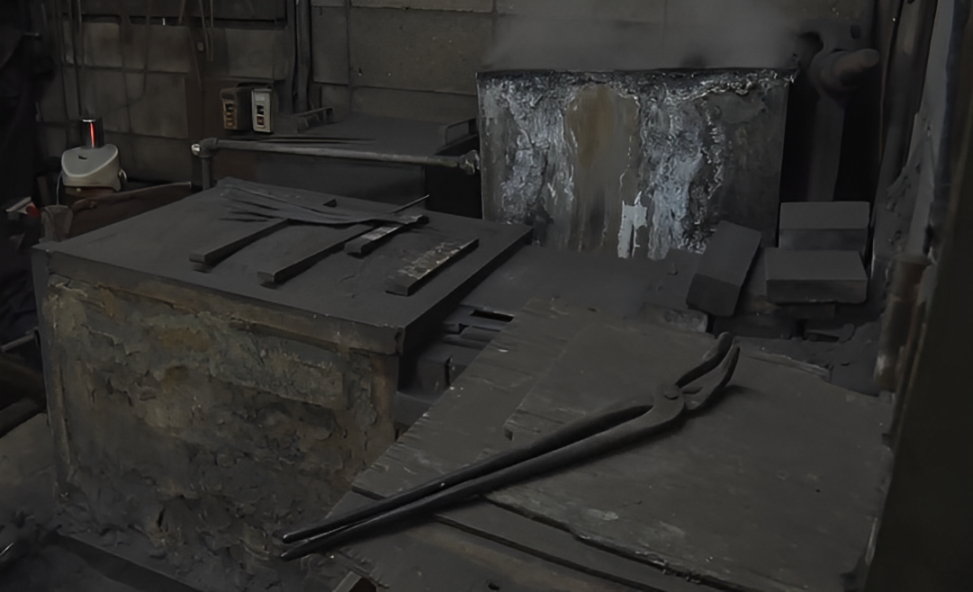
How Japanese Knives Are Made: The Sakai Tradition

Video Provided: Japan Traditional Crafts Aoyama Square (YouTube)

  • Sakai Forged Blades — Six Centuries of Unrivaled Craftsmanship

    Loved by chefs around the world and trusted by 98% of Japan’s top culinary professionals, Sakai knives are more than tools—they are the living legacy of over 600 years of master craftsmanship.

  • At KIREAJI, we work directly with the Shiroyama Knife Workshop in Sakai, Japan, ensuring every blade is hand-forged, finished to perfection, and shipped straight from the workshop to kitchens across the globe. No middlemen. No mass production. Only authentic, artisan-made knives, crafted to elevate your cooking for a lifetime.