• KIREAJI 会详细解答您的所有紧迫问题,让您轻松了解磨刀石的使用和维护的复杂细节。

关于磨刀石的常见问题解答

我没有磨刀石。我可以用磨刀石代替吗?

磨刀石和磨刀器的作用不同。磨刀石可以完成磨刀所需的所有工作,而磨刀器则只是磨刀刃的工具。当刀刃需要临时磨快时,磨刀器很有效,但如果没有磨刀石,很难实现“减薄、塑形和磨快刀刃,以保持长时间的锋利”的原始磨刀过程。最好认识到两者的用途不同。

我应该多久磨一次刀?

这取决于目的。你用刀的目的是“切食物”还是“让食物美味”?如果是后者,那么每天磨刀是理想的。这是因为如果一把新磨的、满分为 100 的刀的锋利度是让食物美味的原因,那么随着刀的锋利度随着使用而降低,食物的美味度也会降低。如果你接受这是一件好事,只是暂时磨刀,那么磨刀的频率必然会降低。

磨刀时出来的黑色泥状物质,是来自磨刀石还是刀呢?

它是被磨刀片的钢材和砂轮的磨料颗粒的组合。

流出的泥浆该怎么办?

你可以在泥浆上磨刀而不冲洗,也可以一边用水冲洗一边磨刀。前者可以更快地磨刀,因为你可以使用磨好的砂砾,而后者可以更精确地磨刀。例如,如果你想快速磨刀,你可以用泥浆磨刀而不用水冲洗,如果你想精确地磨刀,你可以用水冲洗一边磨刀。

磨刀时应使用多大的力气?

首先,你应该学会用不会让你在连续磨刀一小时后感到疲劳的力度来磨刀。磨刀力度不仅取决于磨刀人的力度,还取决于磨刀石的粒度和硬度。这并不意味着你只要按住磨刀石就能磨刀。

砂轮看起来凹陷了。你能修好它吗?

有一种用于修正磨刀石表面的磨刀石,称为“表面修正磨刀石”。每次使用它,可以确保磨刀石保持平整。

我的磨刀石有裂纹。我还能用吗?

即使磨刀石出现裂纹,只要用力修整平整,仍可使用。但是,随着磨刀石变薄,因磨刀压力而从裂纹处破裂的可能性增加,因此当裂纹变大时,请考虑更换磨刀石。

当我磨刀时,它们现在在磨刀石上滑​​动很顺畅。是堵塞了吗?

如果刚开始磨刀时没有打滑,中途开始顺畅滑动,则认为是堵塞了。如果发生堵塞,只要适当重新磨刀,就可以恢复到原来的状态。另一方面,如果刀一开始就感觉很滑,可能是磨刀石不对,但有人说不锈钢刀很难磨,因为它们本来就很滑。
在这种情况下,使用磨刀后剩下的残渣而不冲洗,更容易磨刀。

磨面石是否像磨刀石一样,浸泡在水中后再使用?

无需浸泡即可使用,但使用前最好先浸泡一下。使用金刚石磨料时,无需将其浸泡在水中。

我磨得不太好。你有什么建议吗?

让我们从更长远的角度来看待问题。当“知识”和“技能”同时存在时,磨刀水平就会提高。另一方面,即使你能很好地磨刀,如果你没有知识来支持它,你就没有能力对刀、磨刀石或环境的细微变化做出反应。关键是,两者都很重要。为了将这些知识和技能结合起来,阅读一本提供磨刀知识的书,磨刀,然后过一段时间再读这本书是很有效的。我第一次阅读时不清楚的理论,随着我积累经验,往往会变得清晰起来。另一方面,这本书也可能证实你自己的磨刀是正确的。
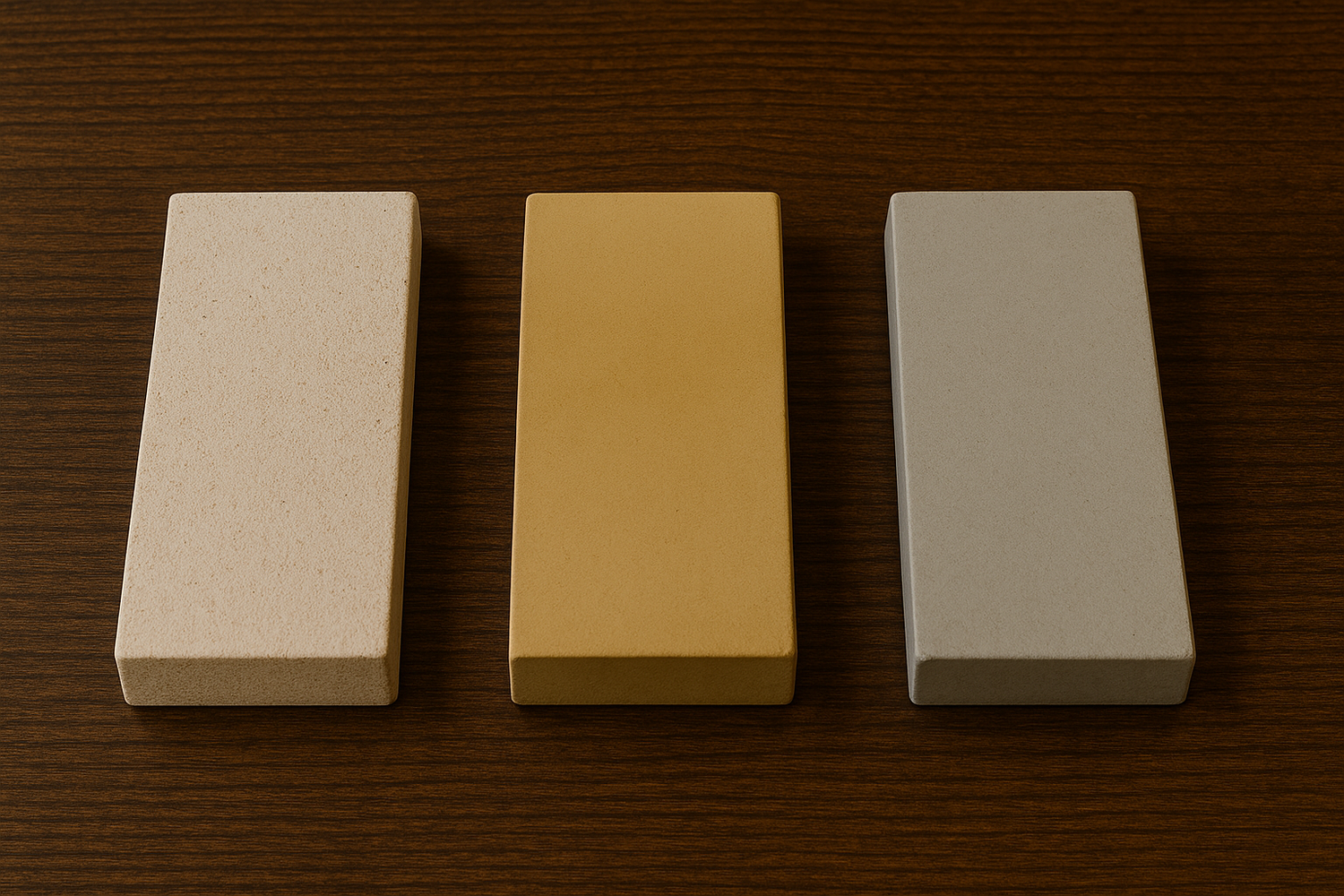
磨刀石的种类

拥有一把好刀意味着要选择合适的磨刀石来保养它。从粗磨石到精磨石,每一种磨刀石在磨刀和保养中都发挥着重要作用。了解它们的区别有助于您保持刀刃的最佳性能,并了解每种磨刀石的使用频率。

磨刀石的种类

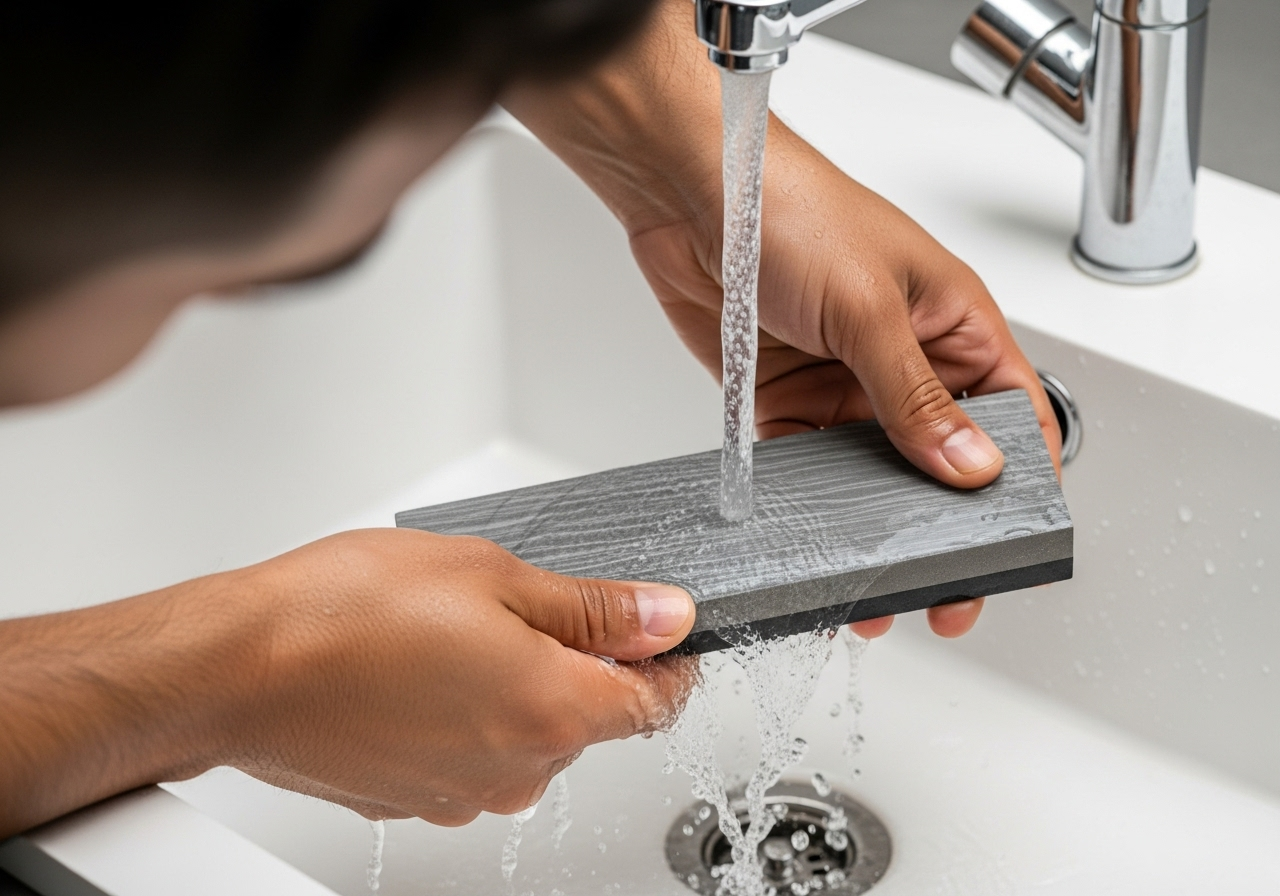
磨刀石的日常保养

磨刀石只需少量保养,但弯曲或凹陷等问题会影响其性能。妥善保养,您的磨刀石就能保持最佳状态,确保每次都能精准有效地进行磨砺。

磨刀石的日常保养
  • Why Learning to Sharpen Changes Everything

    There is a moment many young cooks remember clearly.

    They are standing at the cutting board, struggling with katsuramuki — that slow, paper-thin spiral of daikon that seems impossible to get right. Their hands tense. The knife drags. The vegetable tears instead of yields. And quietly, a thought creeps in:

    Maybe I don't have what it takes.

    But here is what no one told them: the knife was dull.

    This is where sharpening begins — not as a technical skill, but as a way of seeing. In Japanese culinary culture, togi, the act of sharpening, has never been treated as mere maintenance. It is considered a form of practice in itself. A daily conversation between the cook and the blade. A ritual that shapes not just the edge of a knife, but the character of the person holding it.

    What follows are four truths about sharpening that most chefs only discover far too late.

  • 1. A Dull Knife Lies to You About Your Talent

    Before you question your ability, check your knife.

    This sounds almost too simple. But it is one of the most common and most painful mistakes in a young cook's early years. A dull blade doesn't just underperform — it deceives. It makes you compensate with pressure, with awkward angles, with force that belongs nowhere near fine ingredients. Bad habits form quietly, invisibly, until they feel like second nature.

    A sharp knife removes this interference. Suddenly, your actual skill has room to surface. Cuts become cleaner. Movements become lighter. What felt like a talent gap was often nothing more than a tool problem.

    Sharpening, learned early, is an act of honesty. It strips away a hidden obstacle and shows you — and the knife — what you are actually capable of.

  • 2. The Knife Cuts. The Flavor Follows

    Ask an experienced chef why food tastes different when cut by someone who truly knows their knife, and they will not talk about seasoning. They will talk about the blade.

    A dull knife does not cut. It crushes. Under pressure, cell walls collapse, moisture escapes, and the ingredient — before it ever reaches heat — has already begun to deteriorate. The texture softens where it should hold. The flavor disperses where it should concentrate.

    A sharp knife separates cleanly. The cells stay intact. The structure holds. What reaches the pan, or the plate, is the ingredient as it was meant to be.

    In Japanese cuisine, this is not a subtle distinction. It is foundational. The idea that how you cut determines what you cook is built into the vocabulary of the kitchen, into the design of every blade, into the silence required when you sharpen.

    Precision is not only about appearance. It is about taste.

  • 3. The Knife You Care For Becomes the Chef You Are

    A beginner in a traditional Japanese kitchen is often handed a carbon steel knife.

    It seems like a strange gift. Carbon steel rusts if left wet for minutes. It stains. It demands to be dried immediately, oiled carefully, stored with attention. Compared to stainless, it is unforgiving.

    But that is precisely the point.

    Caring for a difficult tool builds a particular kind of discipline — the kind that doesn't announce itself. You wipe the blade without thinking. You check the edge without being asked. You begin to understand the knife not as an object, but as something that responds to how you treat it.

    Japanese knives carry this philosophy in their very shapes. The yanagiba, long and slender, built for the single drawing cut of sashimi. The deba, heavy and thick-spined, made to move through bone without flinching. The usuba, flat and precise, designed for the vegetable work that reveals everything about a cook's patience.

    Each shape holds a purpose. But that purpose only becomes legible through sharpening. When you learn to restore an edge, you begin to understand why the edge was made that way. The knife starts to teach you — if you are willing to listen.

  • 4. Start Before You Think You Are Ready

    Here is something that surprises many people outside professional kitchens: a significant number of working chefs are not comfortable sharpening their own knives.

    They cook daily. They are skilled. But sharpening — that slow, repetitive work on the stone — was never properly learned, and now it feels too late to begin without embarrassment.

    It is never too late. But starting early changes everything.

    The whetstone asks nothing glamorous of you. No audience. No immediate reward. You hold the angle, you feel the steel, you listen for the sound that tells you the edge is forming. Early attempts are inconsistent. The bevel is uneven. The results are humbling.

    And that is where the real learning begins.

    Over time, you develop something that cannot be taught directly: sensitivity. You feel the difference between a knife at seventy percent and one at its full edge. You understand steel the way a surgeon understands suture — not intellectually, but through the hands. This sensitivity moves with you through your entire career.

    The chefs who sharpen well are rarely the loudest in the kitchen. But they are almost always the most precise.

  • The Quiet Path to a Sharper Self

    There are textures only a truly sharp knife can produce. Cuts so clean the ingredient seems to open rather than separate. Flavors preserved because nothing was crushed, nothing was torn, nothing was lost on the way from board to bowl.

    These things cannot be purchased. They cannot be rushed. They live on the other side of a practice that is slow, repetitive, and easy to dismiss — until the day you understand what it was building all along.

    Sharpening is not preparation for cooking.

    It is cooking. The first act of it. The one that determines everything that follows.

    Begin there.

  • 烹饪的基础是切割,支撑这个基础的工具就是一把锋利的刀。

    精心切割食材是烹饪的第一步,它对菜肴的味道、质地和外观有很大影响。精心打磨的刀具支撑着这一关键时刻。锋利的刀具可以顺畅地切割而不会压碎食材,从而带出其天然的味道和品质。

  • 磨刀不仅是为了使刀刃更锋利,也是一种与工具对话的形式,是烹饪艺术的心理准备。作为传统工匠,我们倾注心血打造刀具,不仅适合使用者的手,还能提升烹饪的乐趣。如果我们的工作能为热爱烹饪的人带来片刻的快乐,那对我们来说就是最大的满足。

  • 作为工匠,我们相信磨刀石不仅仅是保养的工具,更是维持刀具寿命的灵魂。通过磨砺来呵护您的刀刃,您也能提升自身的技艺,并加深对食材的欣赏。

  • 如果我们用磨刀石精心保养的刀具能够给您的烹饪带来哪怕是一丝的快乐,那对我们来说就是最大的回报。

  • japanese_knife_made_in_Sakai

    1. 秉承堺的遗志

    堺市——日本著名的专业厨刀发源地——每一把刀都由拥有超过六个世纪传统的工匠精心打造。完美平衡、持久锋利、精湛工艺,每一次切割都蕴含着真正的工艺精髓。

  • 2. 贴心呵护,呵护您的日常使用

    每把刀都配有手工镶嵌的木兰刀鞘,方便安全存放。我们可根据您的要求提供免费的“本刃付”手工磨刀服务,让您从第一天起就能拥有精准的刀刃。

  • 3. 终生的伙伴关系

    KIREAJI 刀不仅仅是一件工具,更是您一生的伴侣。我们提供定制的付费售后服务,以维护其锋利和美观,确保它始终如初,精准可靠,如同初次接触您的手。