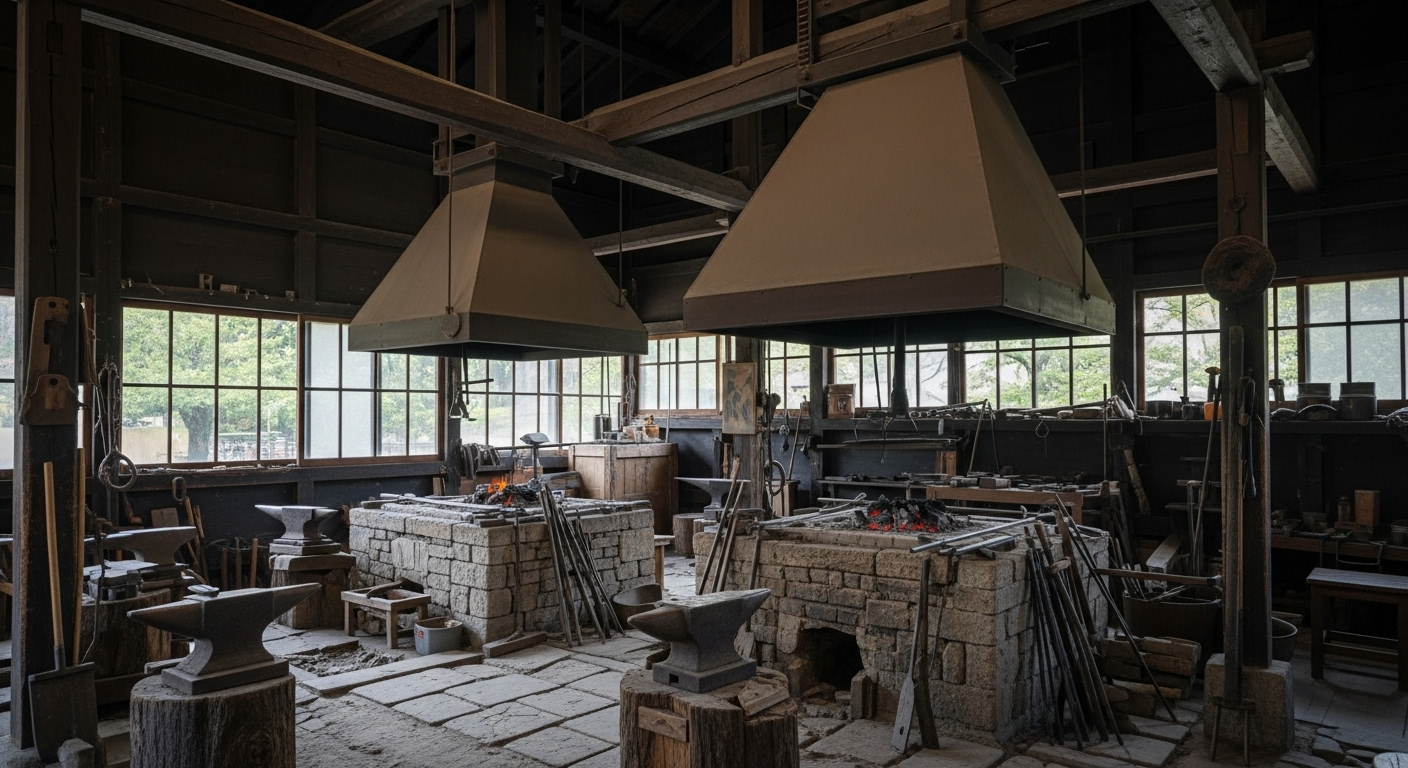
• From Samurai Swords to Culinary Art: The Timeless Story of Japanese Knives

    Behind every Japanese knife lies more than steel—it carries centuries of history, the spirit of the samurai, and the artistry of master craftsmen. From the days of sword forging to today’s kitchens, discover how these blades became a cultural treasure, shaping the soul of Japanese cuisine.

  • 1. What Is a Japanese Kitchen Knife?

    A Cultural Legacy Forged in Steel
    When speaking about Japanese cuisine, one cannot overlook the Japanese kitchen knife, or wabocho. Far more than a cooking tool, it is a cultural artifact—an embodiment of Japanese aesthetics, respect for ingredients, and the relentless pursuit of perfection in craftsmanship.

    Unlike Western knives, which are often designed for versatility, Japanese knives evolved with a high degree of specialization. The deba for filleting fish, the yanagiba for slicing sashimi in one graceful pull, the usuba for creating precise and elegant cuts of vegetables—each knife was born from culinary necessity and cultural values.

    In Japan, cutting is not just mechanical work; it is a ritual of respect for the ingredient and for the guest who will eat it. This philosophy permeates every blade, turning each cut into a quiet expression of culture.

  • 2. Origins: From Sword to Kitchen Blade

    The story of Japanese kitchen knives begins with the sword.

    As early as the Nara period (710–794 CE), knives with long handles and slender, slightly curved blades—echoing the form of the katana—were already in use. Ten such knives remain preserved in the Shosoin Repository in Nara. They are not only historical artifacts but also a testament to the early sophistication of Japanese steelwork, carrying the DNA of swordsmithing into the kitchen.

  • 3. Edo Period: From Samurai to Craftsman

    The Edo period (1603–1868) brought peace, reducing the need for weapons. Thousands of swordsmiths faced extinction. Many chose reinvention.

    Applying their mastery of forging, heat treatment, and blade shaping to everyday tools, they transformed the art of sword-making into the craft of kitchen knives. This shift was not a loss, but an evolution—transferring centuries of martial precision into the culinary world and giving birth to a knife culture unmatched anywhere else.

  • It was during this time that iconic blades were born: the Deba, designed for butchering fish; the Usuba, crafted for precise vegetable work; and the Yanagiba, perfected for slicing sashimi with elegance. Each blade carried forward the spirit of the sword but redefined it for the kitchen—refining both form and purpose in ways unique to Japan.

  • With the arrival of Western culture in the late 19th century, a major change occurred: the centuries-long ban on meat consumption was lifted. Alongside this shift came the introduction of Western-style knives, particularly the Gyuto (beef-sword), adapted for cutting meat. This marked the beginning of Japan’s fusion of traditional Japanese knives with Western culinary tools, expanding the nation’s knife culture in new directions.

  • 4. Meiji Period: The Haitōrei and Reinvention

    The Meiji Restoration’s Haitōrei (Sword Abolishment Edict of 1876) banned samurai and civilians from carrying swords. For swordsmiths, it was a devastating blow.

    Yet from this crisis arose resilience. Former swordsmiths turned their skills toward kitchen knives, farming tools, and cutlery, planting the seeds of regional knife-making industries. This reinvention ensured that the spirit of the katana—sharpness, strength, beauty—would live on in the Japanese kitchen knife.

  • 5. Regional Differences: Cuisine Shapes the Blade

    Japanese knives evolved in harmony with regional cuisines.

    • Eastern Japan (Tokyo): the Higashi-gata usuba, with its straight square tip, suited to bold cuts.
    • Western Japan (Kyoto, Osaka): the Kamagata usuba, with a sickle-like curve, designed for delicate slicing in kaiseki cuisine.
    • Kansai region: birthplace of the yanagiba, for long, clean sashimi cuts.
    • Kanto region: its counterpart, the tako-biki, with a square tip, ideal for firmer fish like octopus.


    These differences show that Japanese knives are not merely tools; they are reflections of regional food culture, shaped by local tastes and traditions.

  • 6. Evolution Meets Modernity: From Japan to the World

    Today, Japanese kitchen knives are celebrated worldwide. Their lightness, sharpness, and longevity distinguish them from Western counterparts.

    Modern blacksmiths preserve traditional hand-forging methods while integrating innovation—powder steels, stainless alloys, ergonomic handles—bridging heritage and modernity. For chefs across the globe, owning a Japanese knife is no longer just a matter of function, but a declaration of identity and respect for craftsmanship.

  • 7. Conclusion: Preserving Tradition, Inspiring the Future

    The Japanese kitchen knife carries the legacy of the sword, the philosophy of respect for ingredients, and the artistry of generations of craftsmen.

    It is not only a tool, but a cultural story—cutting across centuries, connecting tradition to innovation, and uniting chefs around the world through steel and spirit.

    At KIREAJI, we believe every Japanese knife holds this story within its blade. By sharing these treasures with the world, we hope to keep the tradition alive, inspire new generations of chefs, and let the quiet soul of Japanese craftsmanship shine across borders.

  • From Sword to Kitchen: The Evolving Spirit of the Japanese Knife

    Behind every Japanese knife lies a lineage shaped by centuries of craftsmanship.

    Its form may have evolved, but the spirit of the blade remains unchanged—precision, dedication, and the pursuit of perfection.

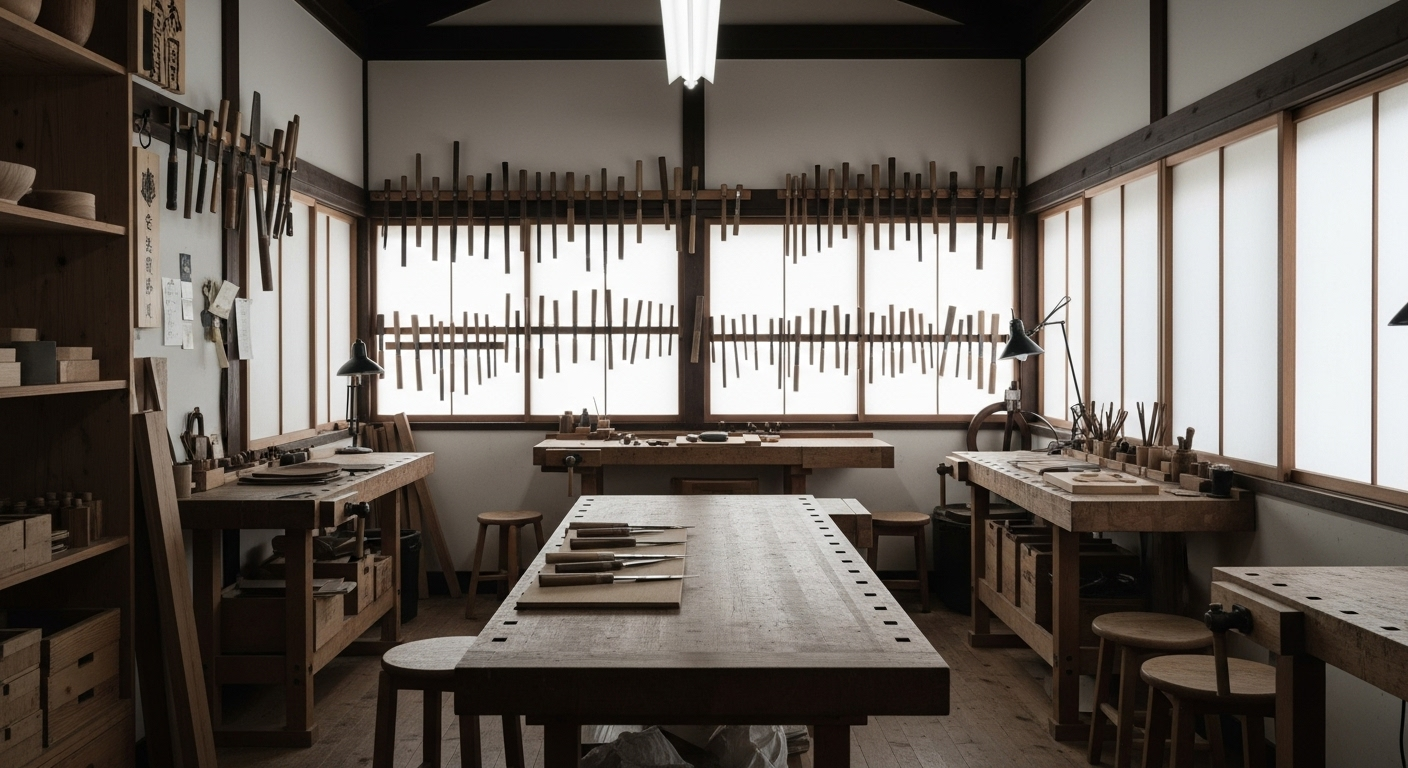
The Essence of the Knife: The 'Way' and the True Value of Tools

  • The Essence of the Knife: The “Way” and the True Value of Tools

    A knife is more than steel. It is a mirror of the hand, the heart, and the path of the one who wields it.

    The Japanese word “包丁” (hocho), now synonymous with “kitchen knife,” originally meant the cook himself. Over centuries, it came to embody not just the person or the act of cooking, but also the trusted tool without which the craft cannot exist.

  • The Tale of Cook Ding (庖丁) and King Bunkei

    In the classic text Zhuangzi, the legendary cook 庖丁 (Cook Ding) demonstrated his mastery before King Bunkei. With movements so fluid they seemed like a dance, he dismembered an ox without resistance, the blade gliding as if guided by invisible music.

  • Stunned, the king exclaimed:
    “Your technique is beyond belief!”

    But Cook Ding replied:
    “I follow not technique alone, but the Way. For years I studied not only with my eyes but with my heart. I perceive the rhythms of muscle and bone, and my blade flows with them. I do not cut against—I move within. That is why my knife, after nineteen years, is still as sharp as new.”

  • The king was humbled. What he witnessed was not mere skill, but a philosophy—about harmony, sensitivity, and a life lived in attunement with one’s craft.

  • Products vs. Tools: The Hidden Divide

    This story reveals a truth that still matters today.

    • Products—like rice cookers or cars—perform the same no matter who uses them.
    • Tools, however, unlock their value only through the user’s growth. A baseball glove becomes part of the athlete’s body. An F1 car transforms into a partner only through the driver’s sensitivity.

    The Japanese kitchen knife is such a tool. Its beauty lies not only in sharpness, but in the way it answers to your discipline, your curiosity, your respect for ingredients. Its value is alive—shaped by the hands that use it.

  • The Spirit of the Knife

    Even King Bunkei, with all his power, bowed to this truth: mastery lies not in possessions, but in the path one walks with one’s tools.

    The spirit of the Way embedded in the knife transcends cooking. It asks each of us:
    Do you seek only convenience? Or do you choose the slower, harder road of mastery?

  • A Japanese knife is never just a product.
    It is a partner, a mirror, and a challenge—growing sharper as you do.

  • The Knife as a Way: Understanding Its Living Value

    A Japanese knife reveals its true worth only through the user’s growth.

    It is not a tool that performs for you, but a companion that sharpens as you do.

The History of Knives Around the World

Every knife carries a story that spans 2.6 million years—from the stone tools of early humans to today’s handcrafted Japanese blades. More than tools, knives reflect human progress, culture, and the timeless bond between people and their craft.

The History of Knives Around the World
  • The Samurai Spirit in a Kitchen Knife: Tradition Forged Through Change

    A blade is more than just a tool—it is a companion in daily life. Behind every knife lies the wisdom and passion of generations of craftsmen.

  • The kitchen knife you hold today traces its roots back to the legendary Japanese swords that once safeguarded samurai lives. When the Meiji-era Haitōrei Edict brought an end to the samurai era, swordsmiths faced an uncertain future. Yet rather than allowing their skills to fade into history, they found a new purpose: crafting Uchihamono—the everyday tools of life, from knives to farming implements.

  • Through countless cycles of heating, hammering, tempering, and cooling steel, these artisans pursued the perfect balance of sharpness and durability. Their dedication lives on in the knife that glides effortlessly through ingredients, elevating the experience of everyday cooking.

  • To cherish and care for your tools is to honor the spirit of these artisans. A well-used, well-loved knife becomes an extension of your hand, a testament to the craftsmanship that shapes it, and a bridge connecting us to a tradition forged through perseverance.

  • japanese_knife_made_in_Sakai

    1. Forged in the Legacy of Sakai

    From Sakai City—Japan’s renowned birthplace of professional kitchen knives—each blade is crafted by master artisans with over six centuries of tradition. Perfectly balanced, enduringly sharp, and exquisitely finished, every cut carries the soul of true craftsmanship.

  • 2. Thoughtful Care for Everyday Use

    Every knife includes a hand-fitted magnolia saya for safe storage. Upon request, we offer a complimentary Honbazuke final hand sharpening—giving you a precise, ready-to-use edge from day one.

  • 3. A Partnership for a Lifetime

    A KIREAJI knife is more than a tool—it is a lifelong companion. With our bespoke paid aftercare services, we preserve its edge and beauty, ensuring it remains as precise and dependable as the day it first met your hand.