Collection Artisanale Sakai : Kohei Ebuchi
-
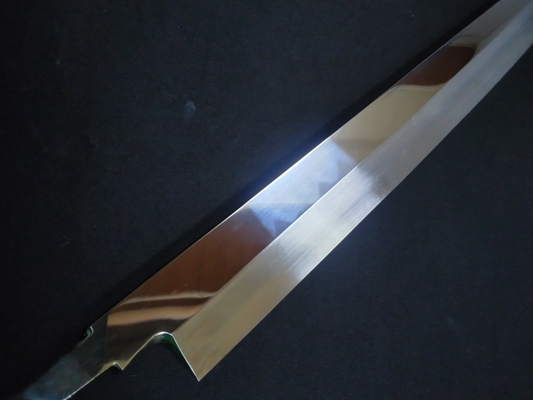
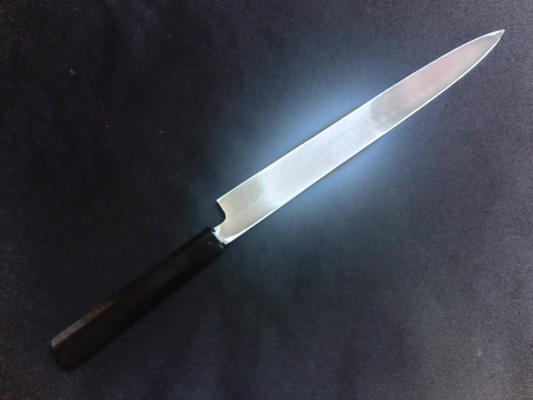
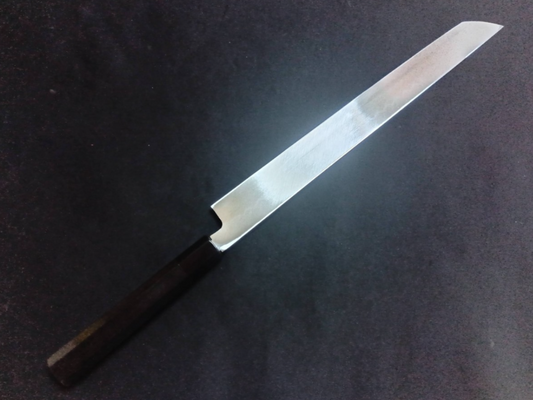
Super acier (Honyaki) Deba 210mm-poli miroir (des deux côtés)
Prix habituel $1,800.00 CADPrix habituelPrix unitaire par$0.00 CADPrix promotionnel $1,800.00 CAD -
Super acier (Honyaki) Deba 210mm-poli miroir (des deux côtés)
Prix habituel $1,950.00 CADPrix habituelPrix unitaire par -
Super acier (Honyaki) Deba 210mm-poli miroir (des deux côtés)
Prix habituel $2,150.00 CADPrix habituelPrix unitaire par



The KIREAJI Difference
KIREAJI Complimentary Services
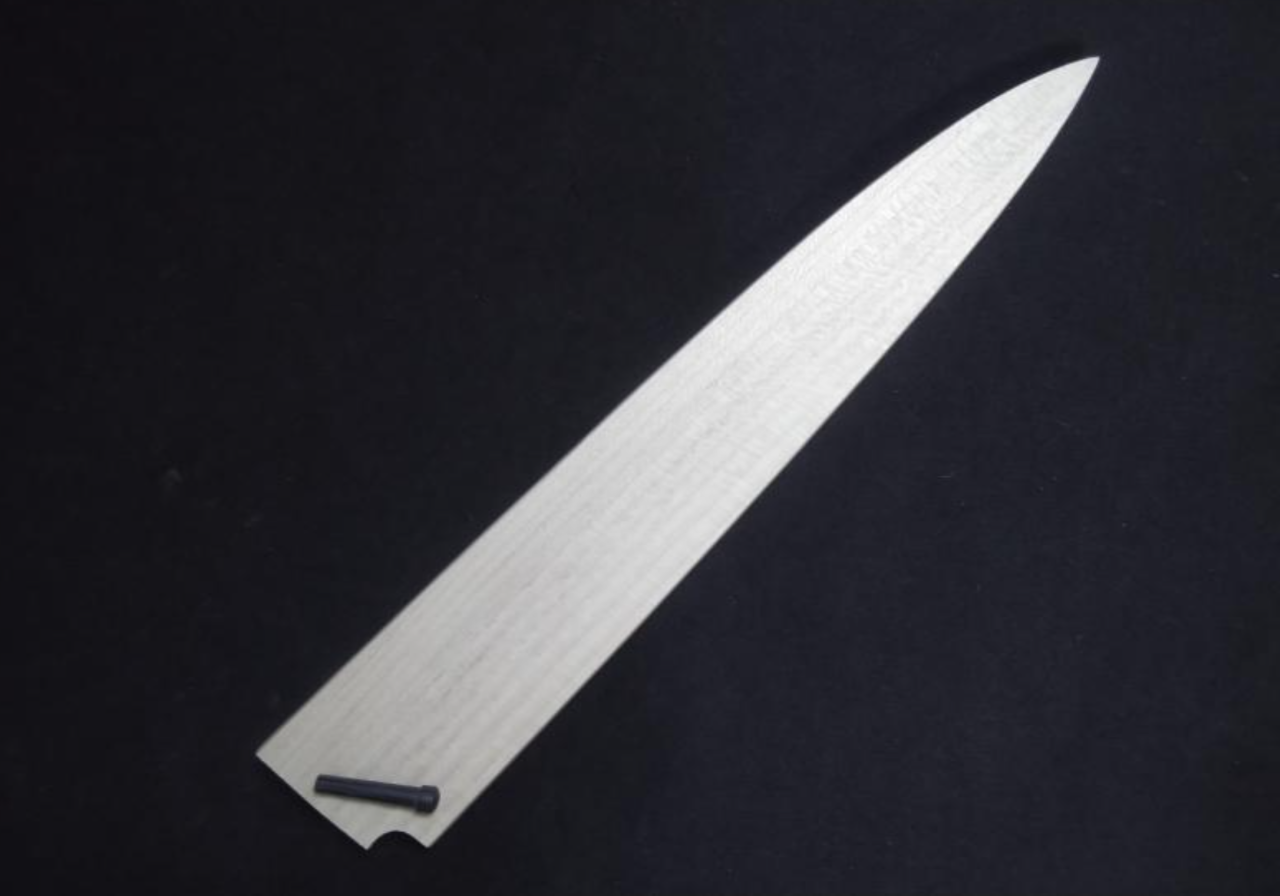
Every knife includes a magnolia wood saya, carefully selected and fitted to provide safe storage and protection. Upon request, we also provide complimentary Honbazuke, a practical initial hand-sharpening intended to prepare the knife for first use while allowing the owner to further refine the edge over time according to their own preferences.
Why Many Product Photos Show Only the Blade
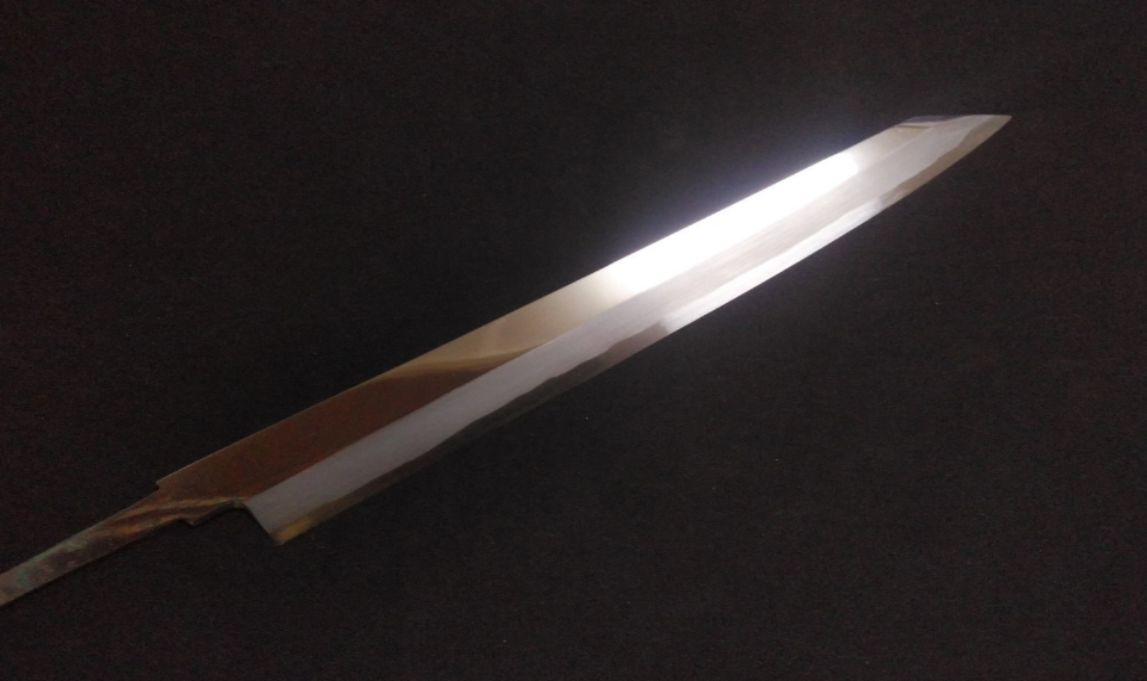
At KIREAJI, every knife is made to order in Sakai, Japan. Photos show the blade before the handle is attached, allowing artisans to perfect the balance and edge for your specific order. Your knife arrives fully finished — tailored just for you.

Global Delivery from Sakai
Across the world, discerning cooks seek authentic Japanese knives from Sakai — Japan’s legendary knife-making city with over 600 years of tradition.
At KIREAJI, we work alongside master artisans in Sakai to fulfill that desire, shipping genuine handcrafted knives directly from the workshop to kitchens worldwide.
Kohei Ebuchi : Ce que le feu et le marteau font réellement à l'acier
-

Fermer ce que la matière première a laissé ouvert
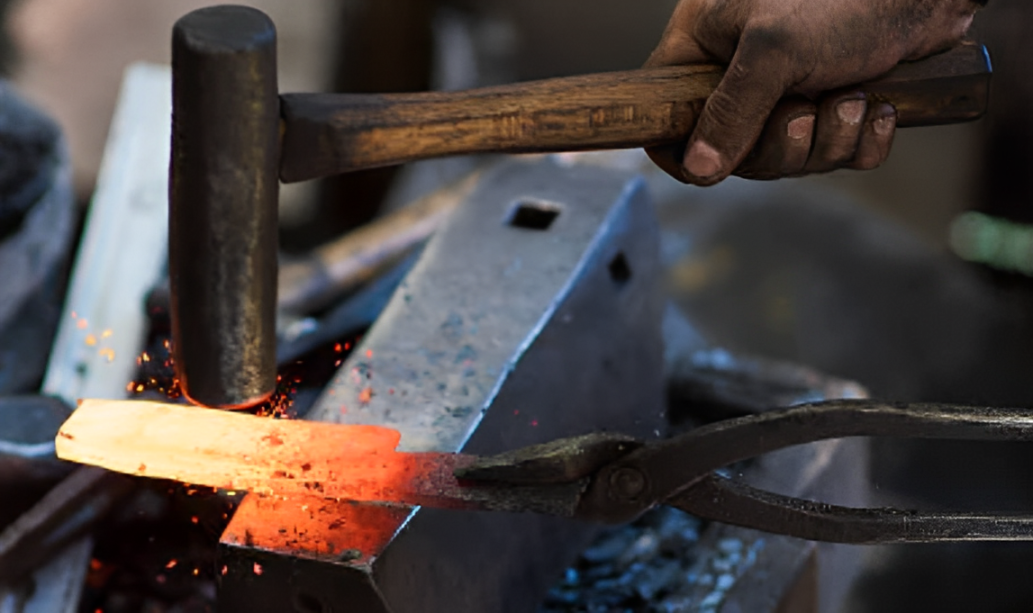
Lorsqu'un forgeron chauffe l'acier et le frappe, le résultat visible est un changement de forme. Le métal s'aplatit, s'étale et commence à prendre la forme que le forgeron recherche. C'est ce que la plupart des gens imaginent lorsqu'ils pensent au forgeage.
Mais le travail le plus important se déroule là où l'œil ne peut voir.
Au niveau microscopique, l'acier n'est pas solide de la manière simple qu'il apparaît. Il a une structure : grain, organisation cristalline, et au sein de cette structure, des lacunes et des irrégularités minuscules. Ces minuscules espaces sont invisibles à l'œil nu, mais ils sont importants. Ils peuvent devenir des points de faiblesse, des endroits où l'acier peut céder sous des contraintes répétées.
Le marteau les ferme.
Chaque coup compresse le matériau, resserre la structure et affine ce qui se trouve à l'intérieur. L'expression japonaise hagane ga shimaru — l'acier se resserre — décrit quelque chose de réel. La densité du métal augmente. Le grain devient plus fin. Ce qui était lâche devient concentré. Ce qui était inégal devient plus homogène.
L'acier qui en résulte est plus résistant aux chocs, plus stable à l'usage et plus apte à conserver son tranchant face aux exigences répétées du travail quotidien.
C'est pourquoi les outils forgés ont été choisis à travers les cultures et les siècles pour les travaux qui exigent de la ténacité : l'épée japonaise, le ciseau de menuisier, le lourd deba utilisé pour découper le poisson. Le marteau ferme ce que la matière première a laissé ouvert, et ce faisant, produit quelque chose que la matière première, aussi excellente soit-elle, n'aurait pu devenir seule.
-

La conversation avec le métal
Il existe une autre dimension à la forge, plus difficile à décrire que la densité ou la géométrie, mais que les forgerons expérimentés comprennent profondément.
L'acier se souvient.
Ce n'est pas du mysticisme. C'est une vérité pratique concernant le comportement des matériaux. L'acier qui a été contraint de prendre une forme contre sa nature peut porter cette contrainte en lui. Il peut sembler correct en sortant de l'atelier, mais au fil des années d'utilisation, des cycles thermiques répétés et de la pression quotidienne, cette contrainte cachée peut commencer à se manifester. Une lame peut se voiler subtilement. Une ligne qui était droite peut ne plus le rester.
Le forgeron qui comprend cela n'impose pas simplement une forme à l'acier. Il travaille avec.
Il lit comment le matériau réagit à chaque coup. Il sent où il bouge facilement et où il résiste. Il ajuste le rythme, la séquence et le placement de ses coups afin que l'acier puisse atteindre sa forme sans être forcé contre lui-même.
C'est ce que les forgerons expérimentés entendent lorsqu'ils parlent d'un dialogue avec le métal. Ce n'est pas une phrase romantique. C'est une description pratique d'un processus dans lequel le matériau donne des informations à chaque instant, et le forgeron doit être suffisamment habile pour les lire.
Une lame façonnée de cette manière est stable non seulement lorsqu'elle quitte la forge, mais aussi pendant des années et des décennies d'utilisation. Sa forme n'a pas été imposée de l'extérieur. Elle a été atteinte par la compréhension.
-

Ce que cela signifie pour le couteau que vous tenez
Chaque couteau fabriqué à Sakai selon les méthodes traditionnelles de forgeage à la main porte ces qualités invisibles : l'acier consolidé sous le marteau, la géométrie établie avec précision avant le traitement thermique, et la stabilité obtenue grâce au dialogue d'un forgeron avec le matériau.
Ces qualités ne sont pas toujours visibles dans le couteau fini. La personne qui le tient ne pourra peut-être pas les voir ou les mesurer directement. Mais elles se manifestent avec le temps : dans la tenue du fil, dans la constance du comportement du couteau, dans la stabilité de la lame après des années d'utilisation, et dans la confiance tranquille qu'un cuisinier ressent lorsque le couteau fonctionne comme il se doit.
C'est la valeur que représente le forgeage. Non seulement le coût d'un couteau, mais le temps, la discipline et le jugement investis dans l'acier avant que quiconque ne touche une pierre à aiguiser.
L'aiguiseur qui amène la lame à son tranchant final travaille avec un matériau qui a déjà été préparé à la forge pour que ce tranchant devienne exceptionnel. Le meulage, le polissage et l'affûtage final reposent tous sur ce que le feu et le marteau ont établi.
Lorsque vous coupez avec un couteau forgé à la main de Sakai, vous coupez avec un acier véritablement transformé — non pas simplement mis en forme, mais changé de l'intérieur par la chaleur, la force et le jugement accumulé de quelqu'un qui a passé sa vie professionnelle à apprendre ce que le métal exige.
Cette transformation est invisible.
Elle est présente dans chaque coupe.



Vous cherchez un couteau d'un artisan spécifique ?
Bon nombre des couteaux les plus significatifs ne se trouvent pas dans un catalogue, mais à travers une conversation.
S'il y a un couteau que vous cherchez, racontez-nous son histoire.
Que vous connaissiez le nom de l'artisan, le type de couteau, l'acier, ou seulement la sensation de ce que vous recherchez, nous serions ravis de vous entendre.
Pourquoi 98 % des chefs japonais font-ils confiance aux couteaux Sakai ?
Depuis plus de 600 ans, Sakai perfectionne un savoir-faire unique où chaque étape – forge, affûtage, finition – est maîtrisée par des spécialistes. Cette tradition fait de Sakai le berceau des couteaux les plus réputés du Japon.
La statistique des 98 % : plus qu'un chiffre
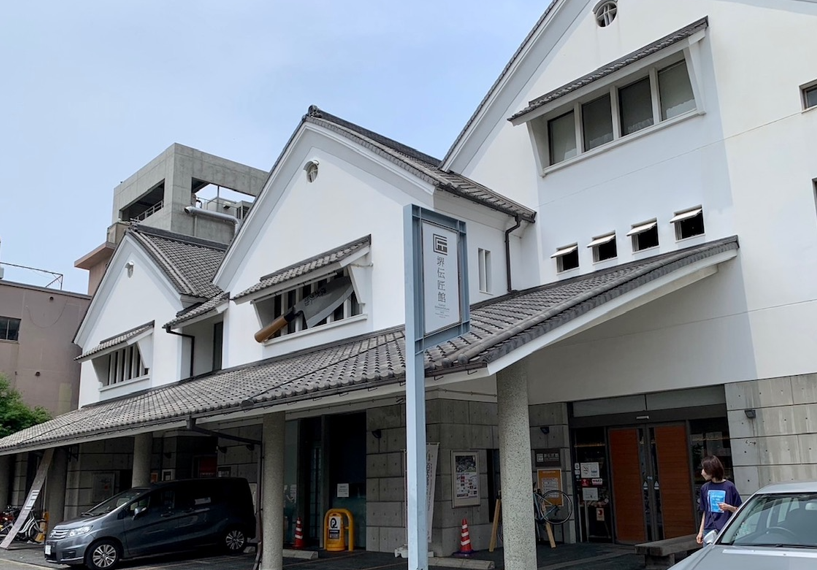
Selon l'Office du tourisme de Sakai, « 98 % des chefs japonais utilisent des couteaux Sakai ». Ce chiffre n'est pas une simple affirmation : il reflète la confiance profonde que les chefs accordent au savoir-faire séculaire de Sakai.

Pourquoi les couteaux japonais Sakai sont-ils si tranchants ?
La solution ne réside pas dans un seul artisan de génie, mais dans un système qui rend tout compromis impossible.
Cet article explore comment des maîtres spécialistes, une responsabilisation rigoureuse et une culture de la concentration permettent de créer un tranchant porteur de sens, une lame à la fois.

Les maîtres artisans de Sakai Uchihamono
À Sakai, des artisans traditionnels certifiés par le gouvernement perpétuent des techniques ancestrales. Chaque couteau n'est pas un simple outil, mais un symbole vivant de tradition, de précision et d'esprit, perpétué par leurs mains.

Les dernières lames d'un forgeron à la retraite
Les lames inachevées en acier bleu d'un forgeron partant à la retraite sont arrivées chez KIREAJI.
Découvrez la discrète histoire de l'artisanat, de l'héritage et de la pérennité de la culture coutelière de Sakai.

Les maîtres déclinants de Sakai : un héritage en péril
Autrefois berceau de la meilleure coutellerie japonaise, Sakai ne compte plus qu'une poignée de forgerons. Face à la concurrence croissante et à la baisse d'intérêt des jeunes, de nouveaux marchés et de jeunes apprentis sont essentiels à la survie. Soutenir ces artisans, c'est préserver un héritage culturel vieux de 600 ans.
Satoshi Nakagawa
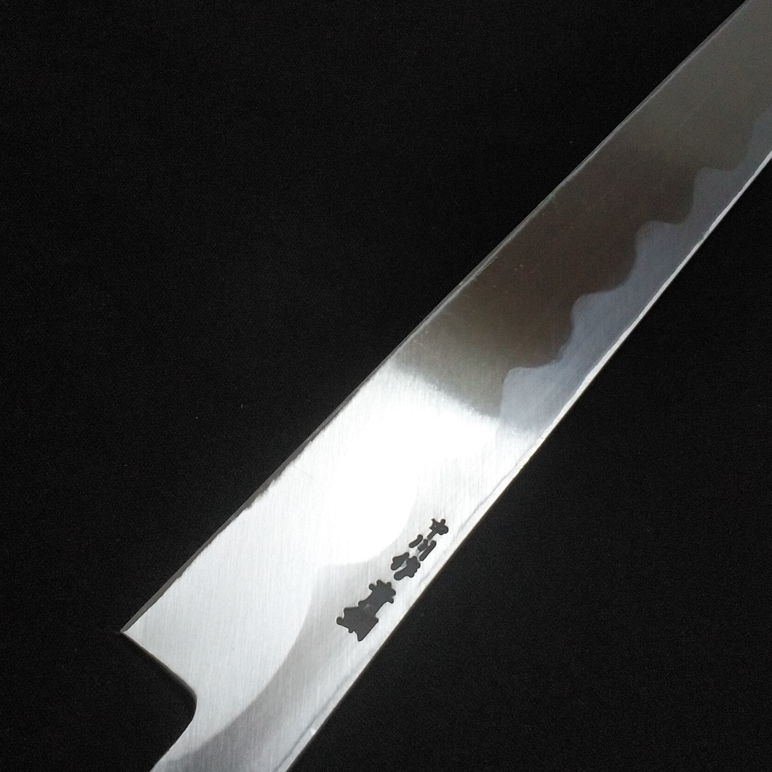
Satoshi Nakagawa, unique apprenti de Kenichi Shiraki, perpétue les traditions et les techniques raffinées de son maître. Après 16 ans de formation, il s'est imposé comme un forgeron d'un talent exceptionnel, fabriquant des couteaux qui honorent l'héritage de Shiraki avec précision et soin.