Yasuki Steel
-
The soul of a great knife lies in its steel.
Have you ever wondered what makes Japanese knives so sharp, so precise, and so loved by chefs worldwide?
Behind their brilliance lies Yasuki Steel—a legendary material born from centuries of tradition, refined through the spirit of Japanese craftsmanship.This video takes you inside the world of Yasuki Steel: its history rooted in Tatara ironmaking, its role in shaping the famed Sakai knives, and its uncertain future.
Discover why this extraordinary steel is not just a material—but the soul of Japanese blades. -
-
Have you ever struggled with a dull kitchen knife? The sharpness of a blade shapes not only the quality of your dishes but also the joy of cooking itself. At the heart of Japan’s world-renowned Sakai Knives lies a legendary material: Yasuki Steel. This steel embodies more than performance—it represents the very essence of Japanese craftsmanship.
-
Origins of Yasuki Steel
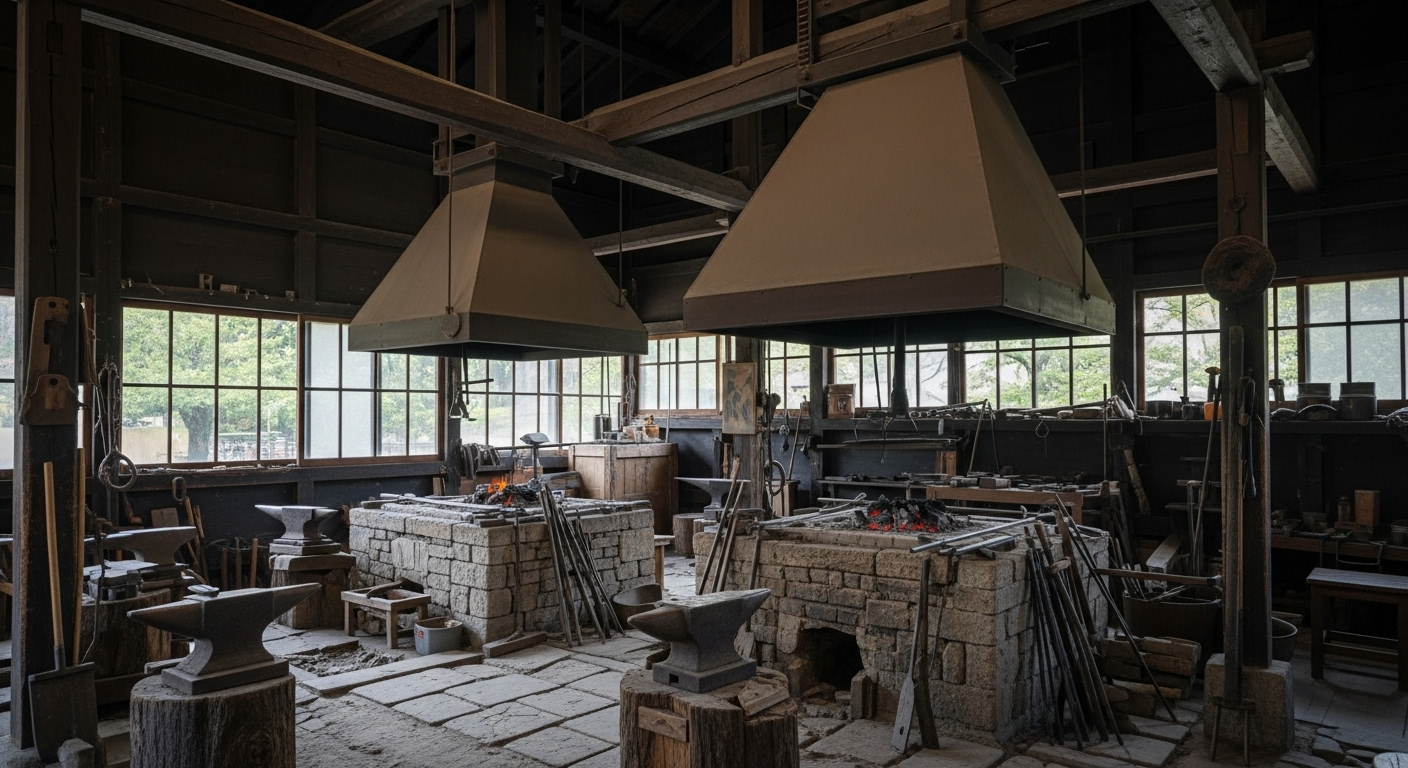
Yasuki Steel, produced at Hitachi Metals’ Yasugi Works in Shimane Prefecture, is one of Japan’s most celebrated steels. Its roots trace back to Tatara ironmaking, an ancient method using high-purity sand iron. For centuries, this steel has supported Japan’s swordsmithing and blade-making traditions.
Over time, Yasuki Steel evolved into several series, each with unique characteristics:
-
1. White Steel (Shirogami)
Extremely hard and capable of producing razor-sharp edges, perfect for precision knives.
-
-
2. Blue Steel (Aogami)
Enhanced with tungsten and chromium, offering greater durability and longer edge retention.
-
-
3. Ginsan
A modern high-carbon stainless steel that combines sharpness with rust-resistance, ideal for daily use.
-
This versatility makes Yasuki Steel the material of choice for master bladesmiths worldwide.
-
-
Sakai Knives: Tradition Forged in Steel
Sakai City in Osaka has been producing blades for over 600 years. The unmatched quality of Sakai Knives comes from the perfect marriage of Yasuki Steel and the artisans’ skill.
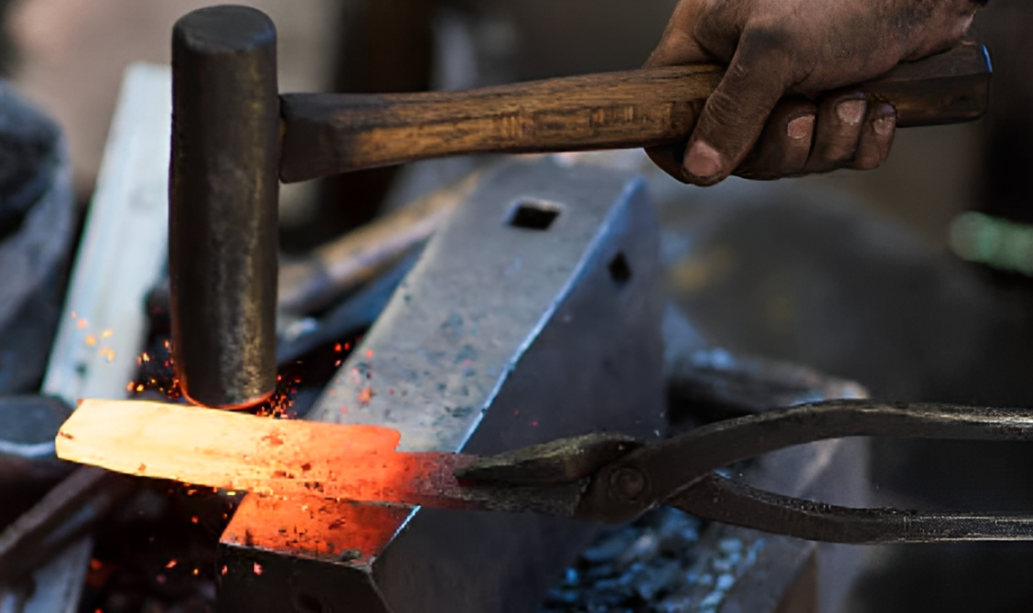
Unlike mass-produced knives, Sakai blades undergo a meticulous process: forging, heat treatment, and final sharpening are all performed by hand. This process unlocks the steel’s full potential, creating knives that are exceptionally sharp, durable, and beautiful.
As one Michelin-starred chef put it:
“Sakai Knives are not just tools. They are instruments that breathe life into culinary creations and symbolize the spirit of Japanese craftsmanship.”
-
-
Why Yasuki Steel Matters Today
hand, adorned with subtle patterns, and finished with precision—is a work of art born from centuries of skill.
Yet this tradition now faces uncertainty:
- Corporate Transition: In 2023, Hitachi Metals was acquired by Bain Capital and reorganized under a new company, Proterial. This has raised concerns that profit-driven policies may overshadow cultural heritage.
- Small Market Size: High-grade steels like Yasuki account for only a tiny portion of the metal industry, making their production vulnerable.
- Changing Priorities: Large corporations increasingly view specialty steels as “unprofitable,” threatening their long-term continuation.
Without action, we may one day lose access to this extraordinary steel that has defined Japanese craftsmanship for generations. -
Preserving a Brilliant Tradition
So, what can we do? The answer is simple: use it, share it, and pass it on. By cooking with Yasuki Steel knives, experiencing their sharpness, and spreading their story, we help preserve this tradition.
Owning a knife made from Yasuki Steel is not just about having a tool. It means holding a piece of Japan’s history, culture, and craftsmanship in your hands.
Now is the time to take action—before this brilliant tradition fades.
Yasuki Steel is the ultimate expression of Japanese craftsmanship. Experience its sharpness, share its story, and help protect its future.
Yasuki Steel at a Crossroads: Protecting the Heart of Japanese Blades
-
For centuries, Yasuki steel has been the core material behind Japan’s finest blades, providing the purity, sharpness, and durability that define world-class craftsmanship.
Today, this irreplaceable steel faces an uncertain future as corporate shifts and declining profitability threaten its continued production.
By choosing these knives and sharing their story, we take part in preserving a cultural legacy that cannot be rebuilt once lost. -
FAQ About Yasuki Steel
Q1. What is Hitachi Yasuki Steel?
Hitachi Yasuki Steel refers to a family of premium steels produced at the Yasuki Works in Shimane Prefecture, a region with centuries of steelmaking heritage. Historically known for the Tatara smelting method that supplied steel for Japanese swords, Yasuki today combines this legacy with modern metallurgy. The result is high-grade steels—such as White Steel and Blue Steel—that have become the foundation of traditional Japanese kitchen knives.
Q2. What are the different types of Yasuki Steel used in knives?
Two main variants of Yasuki Steel dominate Japanese knife-making. White Steel (Shirogami) is made with exceptionally pure iron sand, resulting in minimal impurities, superb sharpness, and ease of sharpening. Blue Steel (Aogami) builds upon White Steel by adding small amounts of chromium and tungsten, which increase toughness, edge retention, and wear resistance. These qualities make them the preferred steels of many professional chefs.
Q3. What makes Tamahagane special, and how is it different from Yasuki Steel?
Tamahagane is the traditional steel made in a Tatara furnace, smelted through a labor-intensive process that produces natural variations and inclusions, giving Japanese swords their beauty and strength. While both Tamahagane and Yasuki Steel originate from iron sand, Yasuki Steel is refined industrially for consistency, purity, and reliability—qualities that make it far more suitable for professional-grade kitchen knives.
Q4. Why did Hitachi sell its steel division?
Hitachi Ltd. divested its steel subsidiary, Hitachi Metals, as part of a strategic focus on digital technologies and IT solutions. While Yasuki Steel remained highly respected worldwide, it was seen as outside Hitachi’s new core business areas. The division now operates under Proterial, Ltd., ensuring continuity of the Yasuki Steel brand.
Q5. Is Yasuki Steel suitable for professional kitchen knives?
Absolutely. Yasuki Steel is one of the most trusted materials in Japanese cutlery. Its purity, hardness, and ability to take a fine edge make it indispensable for chefs seeking high-performance tools rooted in centuries of tradition.
Q6. Why is Yasuki Steel so highly regarded worldwide?
Yasuki Steel combines centuries-old Japanese steelmaking heritage with modern refinement. It offers chefs around the globe the unique experience of knives that are not only tools but also cultural artifacts, embodying the precision, artistry, and reliability of Japanese craftsmanship.
Yasuki Steel: The Heart of Japanese Knives — Current State and Future
Yasuki Steel, the legendary material behind Japan’s White and Blue steels, now faces a new chapter after the 2023 transition from Hitachi Metals to Proterial. Production continues, though with uncertainty, and the industry stands at a turning point. For makers, users, and collectors worldwide, understanding Yasuki Steel has never been more essential.
Is ZDP189 No Longer Available? — The Truth Behind the Legendary Steel
Once hailed as a “dream material”, ZDP189 is now fading from the spotlight. This article uncovers the corporate strategy behind its decline and the possible end of this legendary steel—a must-read for collectors and craftsmen alike.
The Soul of Craftsmanship
-
Steel, Spirit, and the Future of Japanese Knives
The brilliance of Japanese knives does not come from technique alone. At their core lies the spirit of the craftsman—and the steel that forms the blade.
-
For centuries, artisans have relied on steels such as White Steel (Shirogami) and Blue Steel (Aogami), valued for their purity and sharpness. These traditional carbon steels embody the very essence of Japanese bladesmithing. Their continued production allows us to carry forward the legacy of our ancestors.
-
In modern times, **Hitachi Metals—now Proterial—**has supported this tradition by providing high-grade steels like Ginsan (Silver #3) and the high-performance ZDP-189. These steels, refined to extraordinary purity, have enabled us to forge blades that combine sharpness, durability, and beauty.
-
Yet today, there are whispers of uncertainty. Some specialty steels—such as ATS-34, ZDP-189, and Ginsan—have been rumored to face reduced availability or even production concerns. Likewise, even for White and Blue Steel, voices in the craft world quietly wonder how long these carbon steels will continue to be produced in an era increasingly dominated by stainless alloys and globalized supply chains.
-
As artisans, we cannot control the tides of industry. But what we can do is pour our spirit into every blade, ensuring that—no matter the steel—we create knives that carry the soul of Japanese tradition.
-
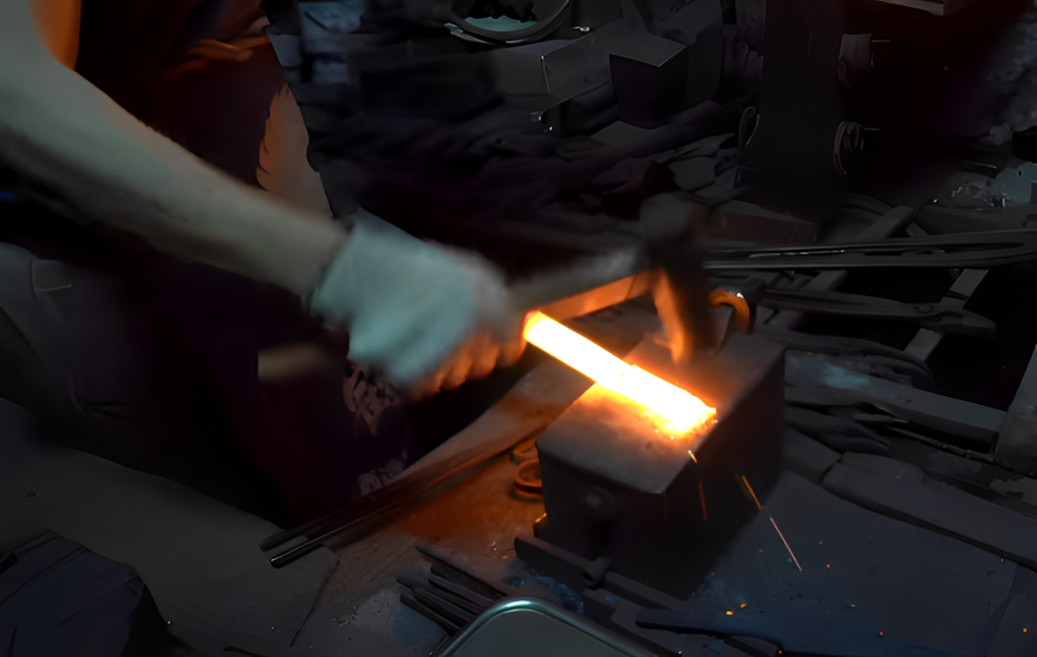
The steel may one day change, but the spirit of the craftsman will never disappear. With each hammer strike and every pass of the whetstone, we keep alive not just a material, but a philosophy: that a knife is more than a tool—it is a bridge connecting the wisdom of the past with the hopes of the future.
Experience the sharpness trusted by 98% of Japan’s top chefs — handcrafted in Sakai City.
Through our exclusive partnership with Shiroyama Knife Workshop, we deliver exceptional Sakai knives worldwide. Each knife comes with free Honbazuke sharpening and a hand-crafted magnolia saya, with optional after-sales services for lasting confidence.
KIREAJI's Three Promises to You
-
1. Forged in the Legacy of Sakai
From Sakai City—Japan’s renowned birthplace of professional kitchen knives—each blade is crafted by master artisans with over six centuries of tradition. Perfectly balanced, enduringly sharp, and exquisitely finished, every cut carries the soul of true craftsmanship.
-
2. Thoughtful Care for Everyday Use
Every knife includes a hand-fitted magnolia saya for safe storage. Upon request, we offer a complimentary Honbazuke final hand sharpening—giving you a precise, ready-to-use edge from day one.
-
3. A Partnership for a Lifetime
A KIREAJI knife is more than a tool—it is a lifelong companion. With our bespoke paid aftercare services, we preserve its edge and beauty, ensuring it remains as precise and dependable as the day it first met your hand.