-
Salmon
-
We will introduce how to fillet a salmon. You can see the whole process from pre-processing to how to use a Japanese knife with explanations.
Master the art of salmon preparation with precision Japanese knife skills, detailed in our comprehensive guide.
How to fillet Salmon:
- Remove the scales using a scale knife (barahiki).
- Use a kitchen knife to remove any remaining scales.
- Put the head on the right-hand side, insert the knife from the stomach, and remove the innards.
- Insert the knife into the dark red meat, wash the dark red meat from the scales and stomach, and remove any moisture.
- Insert the knife diagonally so that the pectoral fins point towards the head, and cut along the backbone.
- Turn the fish over, insert the knife diagonally again as before, and remove the head.
- Put the tail on the left-hand side and insert the knife from the stomach along the line of the backbone.
- Insert the knife just short of the tail, rotate 180 degrees, and cut along the backbone to remove this part of the body.
- Insert the knife from the back just between the backbone and the meat, rotate 180 degrees, and remove the backbone.
- Cut off the dorsal fin and anal fin.
- Insert the knife against the front side of the body, slice up with the knife, and scoop out the abdominal bone. When it is hanging off, stand the knife up and cut.
- Insert the knife against the back side of the body, slice up with the knife, and scoop out the abdominal bone. When it is hanging off, stand the knife up and cut.
- Remove any small, fine bones.
Video Provided: Sabakeru Channel (part of the Nippon Foundation's "The Ocean and Japan Project")
The Origin of Craftsmanship
-
Because they are handmade, each one is unique.
-
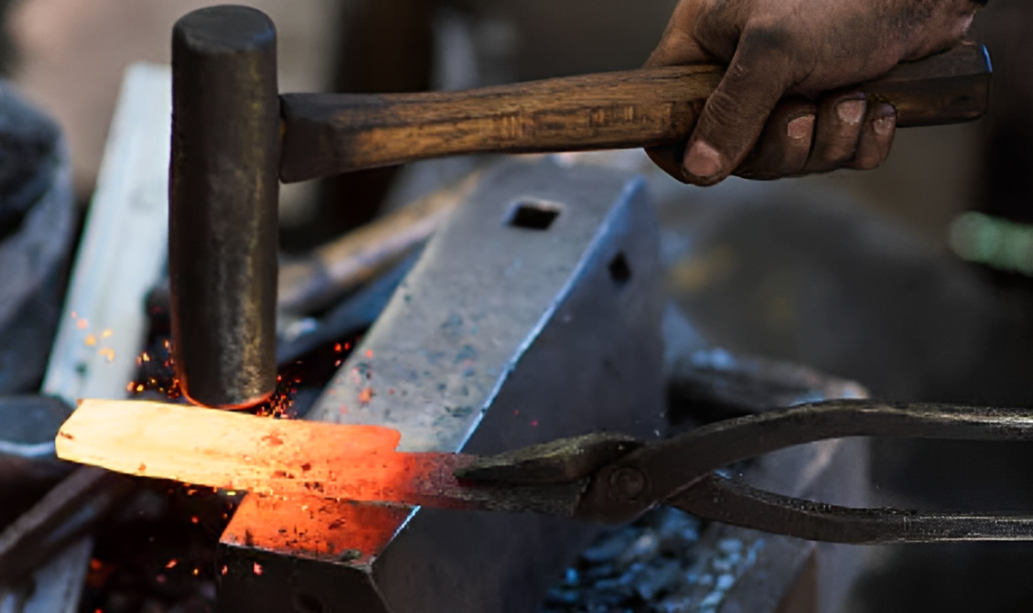
Unlike machine-made products, each handmade knife is different. Every piece reflects the warmth of the craftsman's hands and the subtle adjustments made during the process. This is why every knife has its own character, and each strike carries special meaning.
-
Of course, the same techniques are used to create each one, but it’s the small differences that make each knife unique—this is the charm of handmade craftsmanship. It’s what makes a knife more than just a tool for the user.
-
Because they are handmade, it’s not about perfect uniformity; instead, each knife carries the warmth and sense of the moment it was made, and the more it’s used, the more attachment it builds. This special quality is the value that only a handmade knife can offer.
Experience the sharpness trusted by 98% of Japan’s top chefs — handcrafted in Sakai City.
Through our exclusive partnership with Shiroyama Knife Workshop, we deliver exceptional Sakai knives worldwide. Each knife comes with free Honbazuke sharpening and a hand-crafted magnolia saya, with optional after-sales services for lasting confidence.
KIREAJI's Three Promises to You
-
1. Forged in the Legacy of Sakai
From Sakai City—Japan’s renowned birthplace of professional kitchen knives—each blade is crafted by master artisans with over six centuries of tradition. Perfectly balanced, enduringly sharp, and exquisitely finished, every cut carries the soul of true craftsmanship.
-
2. Thoughtful Care for Everyday Use
Every knife includes a hand-fitted magnolia saya for safe storage. Upon request, we offer a complimentary Honbazuke final hand sharpening—giving you a precise, ready-to-use edge from day one.
-
3. A Partnership for a Lifetime
A KIREAJI knife is more than a tool—it is a lifelong companion. With our bespoke paid aftercare services, we preserve its edge and beauty, ensuring it remains as precise and dependable as the day it first met your hand.