

-

From Stone to Steel: Humanity’s First Innovation
The journey began over 2.5 million years ago, when early humans shaped stone into cutting tools. By the Bronze Age and the Iron Age, blades were no longer just tools for survival—they had become instruments of civilization, influencing agriculture, warfare, and daily life.
-

Japan’s Unique Knife Culture
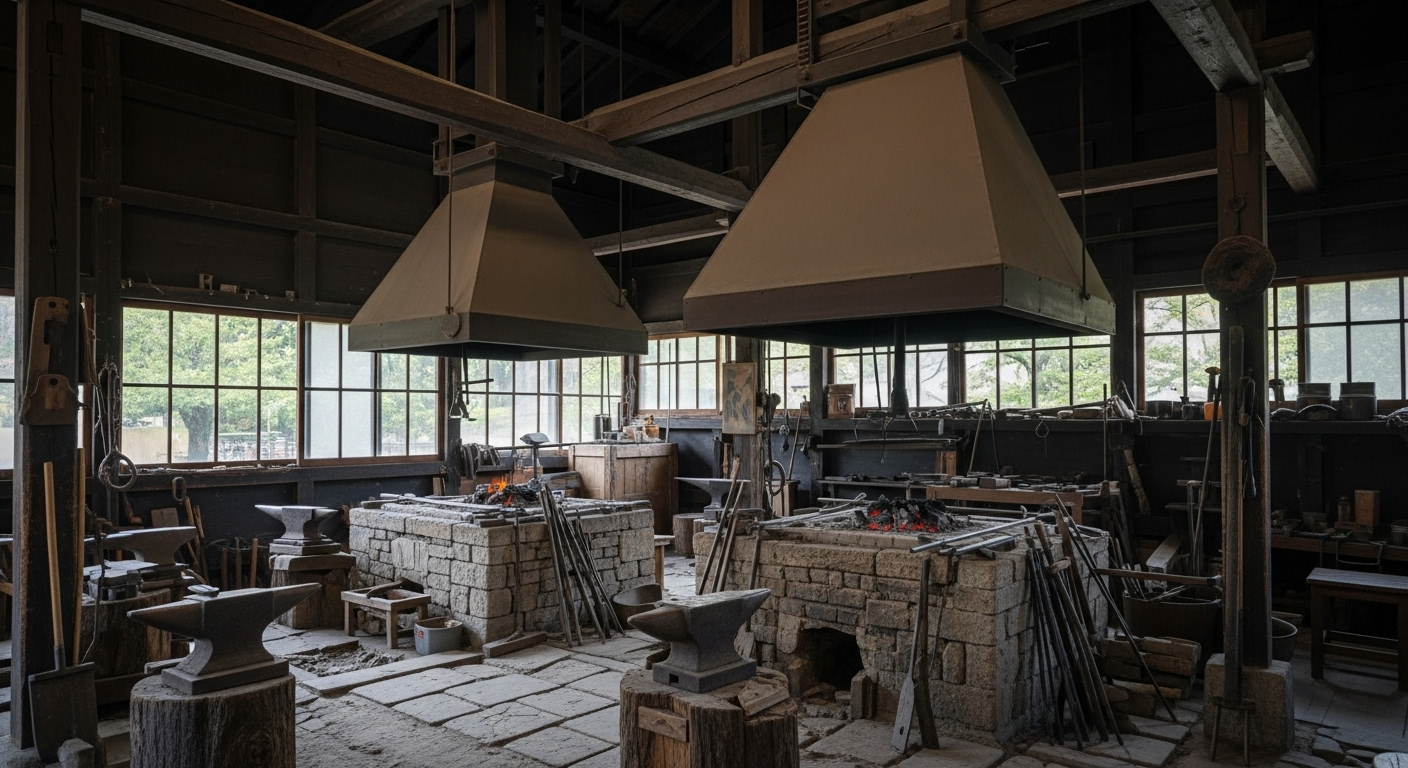
In Japan, knives evolved not only as tools but as cultural icons. Rituals like Hocho-shiki in the imperial court reflected a philosophy of preparing food with purity and respect. Over centuries, this spirit gave rise to highly specialized blades—deba, yanagiba, nakiri—each designed for a precise purpose. By the Edo period, Sakai forged knives had earned the mark of Sakai Kiwame, a seal of unmatched quality still celebrated worldwide.
-

The Industrial Revolution: Efficiency vs. the Aura of the Craftsman
The Industrial Revolution brought knives into the age of mass production, lowering costs and making them accessible to all. Yet at the same time, critics argued that something irreplaceable—the aura of the craftsman’s hand—was fading away. This tension between efficiency and tradition reminds us that true romance lies not only in progress, but in the spirit preserved through handmade blades.
-

A Living Legacy in Your Hands
Today’s knife—whether stainless steel, ceramic, or hand-forged Damascus—is the culmination of this grand story. Every slice you make connects you to ancestors who shaped, sharpened, and dreamed of better tools.
And yet, a knife is more than a reflection of history—it is a companion that outlives generations. With proper care, a well-forged blade can serve not only you, but your children and grandchildren. Unlike modern appliances that fade with time, knives have endured for nearly 2 million years.


A Cut Through Time: How Knives Shaped Human History
-

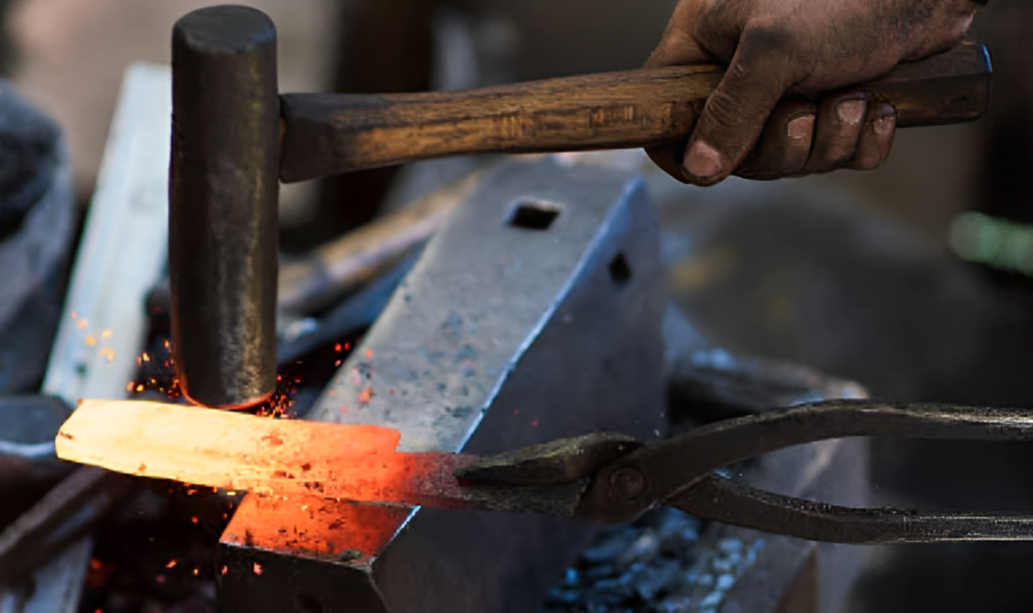
Every knife carries the history of human ingenuity—from stone tools to modern craftsmanship.
What you hold today is the result of millions of years of evolution, shaped by culture, skill, and the pursuit of better tools.

Q1. What is the oldest knife in the world?
The oldest known cutting tool was discovered in 1960 in Tanzania, Africa, and is estimated to be about 1.8 million years old. While it was made of simple stone, it represents the earliest prototype of what we now recognize as a knife. Research into these ancient tools continues to evolve, offering new insights into the origins of human craftsmanship.
Q2. Why were knives invented?
Knives originated from ancient stone tools, known as knapped stone tools, created by chipping rocks into sharp edges. Early humans used them for hunting, skinning animals, and cutting meat. These tools were vital for survival, as they allowed people not only to gather food but also to prepare it. From these beginnings, the knife became one of humanity’s most essential tools.
Q3. Why are knife tips pointed?
The pointed tip of a knife is not just aesthetic—it serves a practical purpose. Concentrating force on a sharp tip allows it to penetrate material more effectively, initiating the cut. From there, the wedge-like geometry of the blade enables the cut to progress smoothly. A good example can be seen in Japanese cuisine, where sushi chefs use long yanagiba knives to slice fish in a single graceful pull, relying on precision and sharpness rather than brute force.
Q4. When did knives become specialized for cooking?
Knives began as all-purpose survival tools, but as human societies advanced, cooking developed into a cultural practice. In ancient civilizations such as Egypt, Greece, and China, knives were increasingly refined for food preparation rather than hunting or combat. In Japan, this specialization reached its peak during the Edo period (1603–1868), when the diversity of Japanese cuisine inspired the creation of distinct knives for fish, vegetables, and meat. This evolution reflects how knives became not only tools of survival but also instruments of culinary art.

The History of Japanese Knives
From their roots in samurai sword-making to the Edo-era refinement of Yanagiba and Deba, Japanese knives trace a journey of tradition and innovation. Each blade reflects not only craftsmanship, but the culture and spirit of Japan itself.


KIREAJI's Three Promises to You
-

1. Forged in the Legacy of Sakai
From Sakai City—Japan’s renowned birthplace of professional kitchen knives—each blade is crafted by master artisans with over six centuries of tradition. Perfectly balanced, enduringly sharp, and exquisitely finished, every cut carries the soul of true craftsmanship.
-

2. Thoughtful Care for Everyday Use
Every knife includes a hand-fitted magnolia saya for safe storage. Upon request, we offer a complimentary Honbazuke final hand sharpening—giving you a precise, ready-to-use edge from day one.
-

3. A Partnership for a Lifetime
A KIREAJI knife is more than a tool—it is a lifelong companion. With our bespoke paid aftercare services, we preserve its edge and beauty, ensuring it remains as precise and dependable as the day it first met your hand.


