

Sakai Uchihamono: The Story of Japanese Soul Captivating the World
-

Ancient Roots: Blades That Cultivated the Land and Built a Nation
The history of Sakai knives stretches back to the 5th-century Kofun period, when Japan’s largest burial mounds—like the Nintoku Emperor’s tomb—were constructed. Such monumental projects required robust iron tools, and Sakai became a hub for blacksmiths producing them.
These early craftsmen developed sophisticated forging techniques, especially for tools like hoes and plows, which played a crucial role in Japan’s agricultural and societal development. Sakai’s knives are not just "old"; they are a crystallization of the very technology that built Japan.
-

A Surprising Pivot: Tobacco Knives Open the Door to the Future
In the late 16th century, as tobacco was introduced from Portugal, Sakai's blade industry underwent an unexpected transformation. During the peaceful Edo period, the demand for guns plummeted—so Sakai’s blacksmiths repurposed their exceptional skills to produce tobacco-cutting knives.
This shift reflects their adaptability and spirit of innovation. Techniques once used for weapons now supported a peaceful lifestyle. It’s a prime example of turning crisis into opportunity, forging a new path for Sakai’s knife-making legacy.
-

Official Endorsement: The Shogunate’s “Sakai Kiwame” Mark
The quality of Sakai’s tobacco knives impressed the ruling Tokugawa Shogunate so much that they awarded the “Sakai Kiwame” seal of quality and granted exclusive sales rights nationwide.
This official endorsement was a precursor to modern branding and quality assurance—catapulting Sakai knives into national fame and laying the foundation for their continued evolution. It also allowed artisans to focus on raising standards, establishing Sakai’s reputation for excellence.
-

Evolving with Food Culture: The Rise of the Japanese Kitchen Knife
In the late Edo period, as Japan’s culinary culture blossomed—particularly around fish and vegetables—the demand for specialized Japanese knives surged. Located near Osaka, the culinary capital, Sakai’s blacksmiths responded by creating over 40 types of knives, including the yanagiba for sashimi, usuba for vegetables, and deba for fish.
This diversification shows not only technical mastery but also the co-evolution of Japanese cuisine and Sakai’s blade craftsmanship. A dynamic exchange between chefs and artisans drove innovation—a model that echoes today’s user-centered design. Sakai craftsmen have long been co-creators of culinary culture, not just toolmakers.
-

Single-Bevel Mastery: Precision That Preserves Flavor
Unlike Western double-edged knives, Sakai blades often feature a single-bevel design—sharpened on one side and flat on the other. This creates extraordinary sharpness and allows ingredients to be sliced cleanly without damaging cellular structure, preserving flavor and texture.
Essential for slicing sashimi, this design is a marriage of utility and aesthetic, rooted in traditional sword-making and perfected by generations of Sakai artisans.
-

Division of Mastery: A System Built on Specialization
The making of a Sakai knife is divided into three major stages: forging, sharpening, and handle fitting. Each is performed by a dedicated specialist, creating a division of labor system that ensures unparalleled quality.
While a generalist might master one or two steps, Sakai artisans dedicate their lives to perfecting a single craft. This focus means that even the smallest refinements lead to significant improvements in the final blade. The collaboration fosters a shared pursuit of perfection—resulting in knives with precision and character that machines cannot replicate.
-

The Soul of Hand-Forging: Fire, Water, and Steel
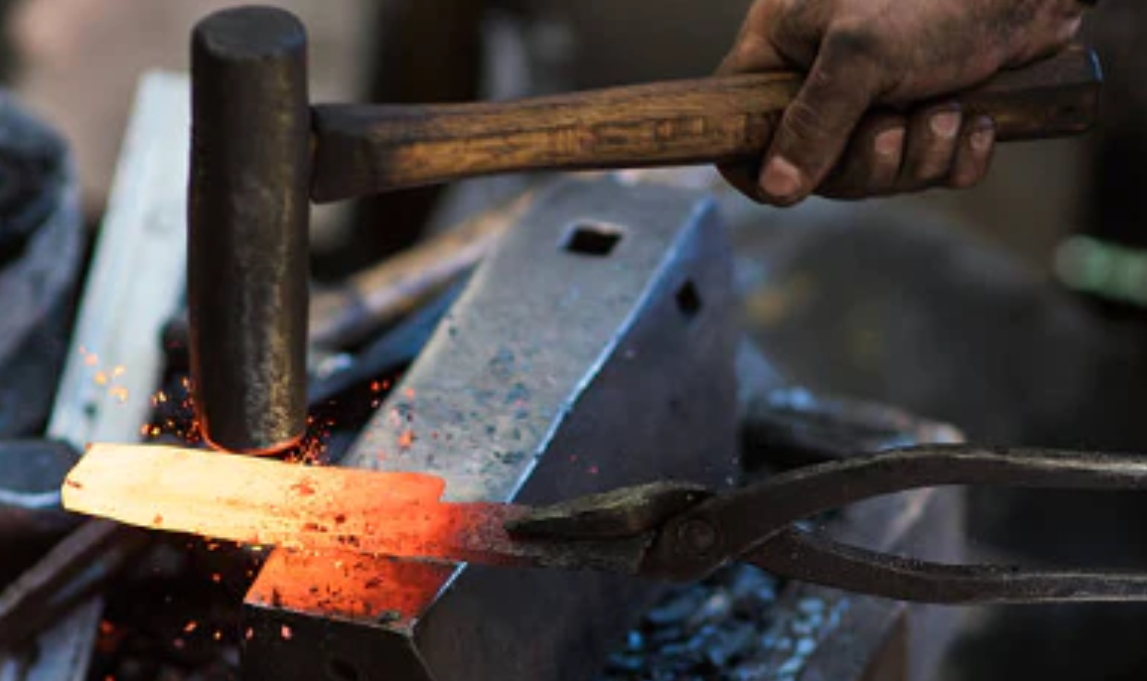
At the heart of Sakai knife-making lies the hand-forging (tanzō) process. Heated steel is hammered repeatedly to increase density, creating knives with exceptional sharpness and durability.
Heat treatment techniques—like quenching and tempering—are based on the artisan’s intuition and years of experience, watching the color of flames, managing rapid cooling, and re-heating at precise temperatures.
The result is a “living blade” infused with the craftsman’s soul. With proper care, Sakai knives can last over a century, bearing testimony to their extraordinary craftsmanship.
-

Passion and Legacy: The Spirit That Transcends Generations
At the core of Sakai’s excellence is the passion of its artisans. They take immense pride in knowing their blades empower chefs around the world. Renowned master sharpener Koichi Morimoto, for instance, tests blade sharpness with a strand of his own hair—a testament to his obsessive pursuit of perfection.
The transmission of tradition is equally vital. The city of Sakai offers grants to nurture successors, and artisans welcome school visits to inspire the next generation. By letting children handle real blades, they sow the seeds of curiosity and reverence for monozukuri.
-

The Secret of the Artisan’s Wooden Clogs: Wisdom Forged in Water and Fire
In Sakai’s sharpening workshops, the air resonates with the sound of metal and flowing water. During the sharpening process, large amounts of water are used to cool the friction heat generated by whetstones, leaving the floors constantly wet. To cope with this environment, some artisans wear traditional high wooden clogs called "takageta." These clogs not only protect their feet from cold and moisture but also symbolize the wisdom and time-honored practices passed down through generations. Surrounded by metal, water, and fire, these craftsmen continue to hone their skills with ingenuity born of experience.
-

Over 40 Types of Specialized Knives: A Reflection of Japanese Culinary Depth
One of the most remarkable aspects of Sakai Uchi Hamono is the incredible variety of knives it offers. Beyond the well-known yanagiba for sashimi, deba for filleting fish, and usuba for vegetables, there are over 40 distinct types, including the honegiri for cutting conger eel bones, the unagisaki for eel, the fuguhiki for thinly slicing fugu, and even noodle-cutting knives.
This diversity reflects the complexity of Japanese cuisine and the meticulous attention of artisans to draw out the best from each ingredient. These many shapes and functions exist to meet the demands of chefs seeking the “perfect knife”—a variety that has, in turn, driven the evolution of Japanese culinary arts. Even among knives with the same function, regional and stylistic variations exist, making the world of Sakai knives endlessly rich. -

Challenges of the Present: Preserving Tradition While Forging Ahead
While Sakai Uchi Hamono has a glorious past, it also faces modern challenges. An aging workforce, a lack of successors, and competition from cheap, mass-produced knives are problems shared by many traditional industries. Once home to over 30 blacksmiths, Sakai now has fewer than 10.
Yet, Sakai’s artisans are rising to the occasion, embracing both preservation and innovation. The city supports apprenticeship programs to train a new generation, and crowdfunding efforts are bringing global attention and support to the craft. There are also efforts to combine hand-forging traditions with modern machinery, resulting in knives that are even more durable and refined. Sakai Uchi Hamono continues to evolve—not as a relic of the past, but as a living tradition that cuts boldly into the future.


Q1. What makes Sakai forged knives special?
Sakai forged knives are renowned worldwide for their extraordinary sharpness, durability, and craftsmanship. Each blade is created through a traditional process that fuses hard steel for a keen cutting edge with soft iron for resilience, resulting in knives that are razor-sharp yet resistant to chipping. This artistry is rooted in over 600 years of history in Sakai City, where generations of master artisans have refined every step of the process—from forging and sharpening to the crafting of handles.
Q2. Why are Sakai knives so sharp?
The sharpness of Sakai knives comes from a combination of materials, design, and handcraft. By joining hagane (hard steel) with jigane (soft iron) and shaping the blade into a single-bevel edge, artisans create knives that cut with remarkable precision. This allows chefs to slice food cleanly, preserving delicate textures and enhancing flavor—an essential requirement in Japanese cuisine.
Q3. Why do professional chefs rely on Sakai knives?
In the world of Japanese cuisine, precision is essential. Professional chefs rely on Sakai knives for their unrivaled sharpness, perfect balance, and meticulous craftsmanship. Unlike mass-produced knives, each Sakai blade reflects the dedication of specialists: one artisan for forging, another for sharpening, and another for handle-fitting. This division of expertise ensures uncompromising quality.
04. What challenges does the Sakai knife industry face?
The Sakai knife industry carries centuries of tradition, but today it faces a shortage of new craftsmen. As fewer young people enter the trade, the future of these irreplaceable skills is at risk. Supporting Sakai knives is not only about owning an exceptional tool but also about helping preserve a cultural legacy.
Q5. How significant is Sakai’s presence in the knife market?
Sakai is one of Japan’s three major knife-producing regions and is particularly dominant in the professional chef market. It is estimated that about 90% of Japanese cuisine chefs in Japan use knives forged in Sakai. This overwhelming trust reflects both the historic reputation and the enduring excellence of Sakai Uchihamono.
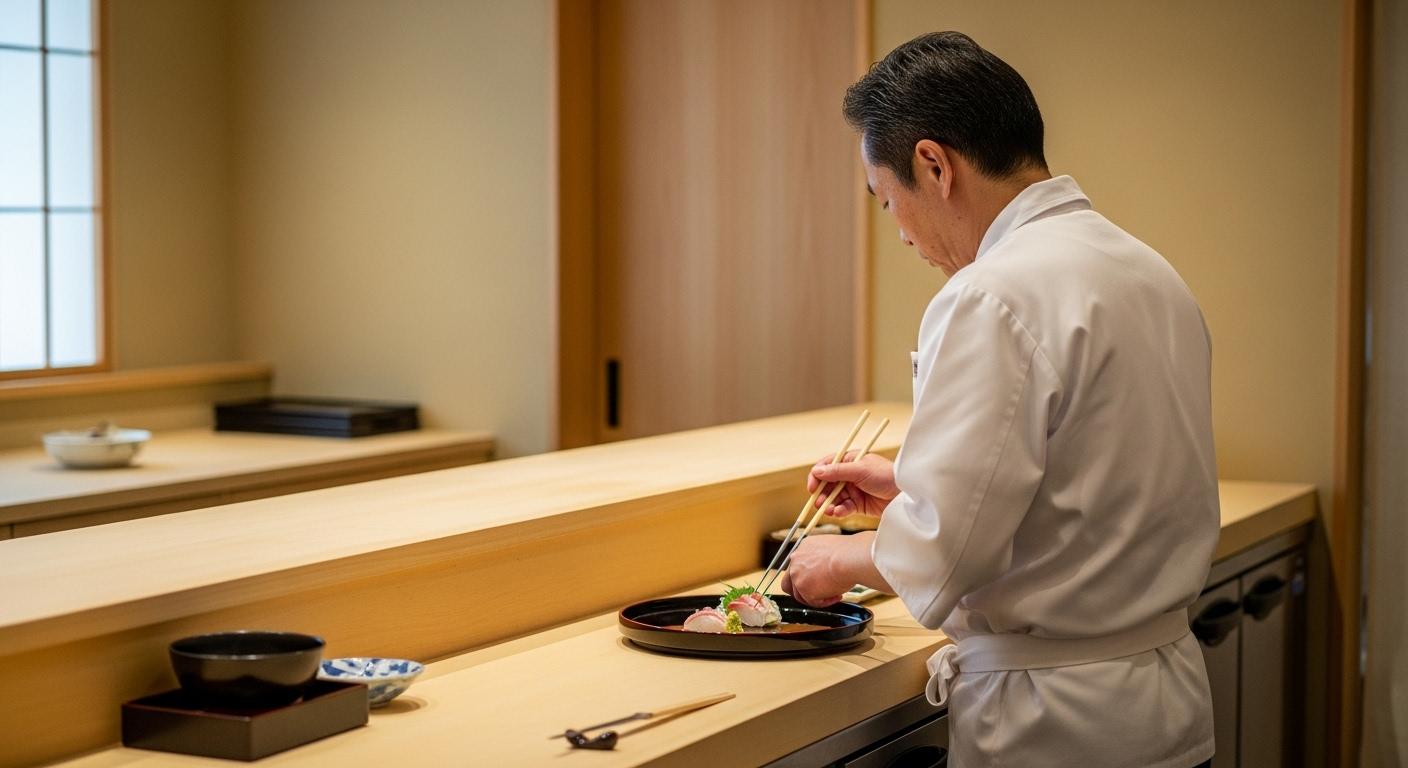
Why Do 98% of Japan’s Chefs Trust Sakai Knives?
For over 600 years, Sakai has perfected a unique craft where each stage—forge, sharpen, finish—is mastered by specialists. This tradition makes Sakai the birthplace of Japan’s most trusted knives.

The 98% Statistic: More Than a Number
According to the Sakai Tourism Bureau, “98% of Japanese chefs use Sakai knives.” This figure isn’t just a claim—it reflects the deep trust chefs place in Sakai’s centuries-old craftsmanship.

The Master Craftsmen of Sakai Uchihamono
In Sakai, centuries-old techniques are carried forward by government-certified Traditional Craftsmen. Each knife is not just a tool but a living symbol of tradition, precision, and spirit—kept alive through their hands.

Sakai Uchihamono: 600 Years of Sharpness and Mastery
From forging to sharpening to handle making, every step in Sakai Uchihamono reflects a tradition perfected over six centuries—crafting blades renowned for their ultimate sharpness and artistry.

Sakai’s Dwindling Masters: A Legacy at Risk
Once the heart of Japan’s finest cutlery, Sakai now has only a handful of blacksmiths left. With rising competition and fading interest among the young, new markets and fresh apprentices are vital to survival. Supporting these craftsmen means safeguarding a 600-year cultural legacy.


KIREAJI's Three Promises to You
-

1. Forged in the Legacy of Sakai
From Sakai City—Japan’s renowned birthplace of professional kitchen knives—each blade is crafted by master artisans with over six centuries of tradition. Perfectly balanced, enduringly sharp, and exquisitely finished, every cut carries the soul of true craftsmanship.
-

2. Thoughtful Care for Everyday Use
Every knife includes a hand-fitted magnolia saya for safe storage. Upon request, we offer a complimentary Honbazuke final hand sharpening—giving you a precise, ready-to-use edge from day one.
-

3. A Partnership for a Lifetime
A KIREAJI knife is more than a tool—it is a lifelong companion. With our bespoke paid aftercare services, we preserve its edge and beauty, ensuring it remains as precise and dependable as the day it first met your hand.


