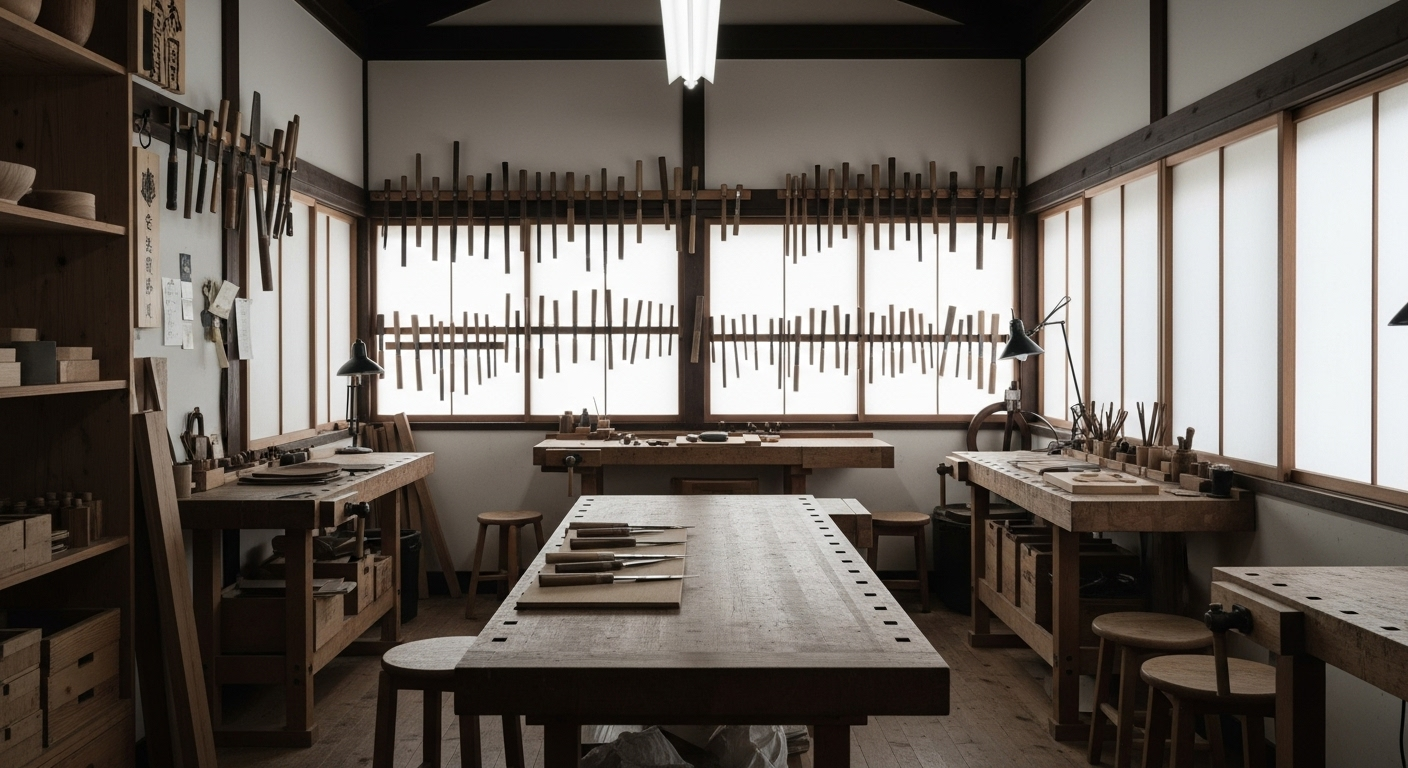
November 24 – “Washoku Day”:Celebrating Japan’s Culinary Soul and the Blades That Bring It to Life
-
November 24, 2025.
-
Every year on November 24, Japan celebrates Washoku Day—a holiday dedicated to honoring the essence of Japanese cuisine.
Fittingly, the date comes from a play on sounds:
11 (ii) – 2 (ni) – 4 (hon) → “Good Nihon.”
A reminder to appreciate nature, craftsmanship, harvest, and the cultural wisdom behind Japanese food.
Why Washoku Day Was Created
Washoku Day was established to help people rediscover the beauty of traditional Japanese cuisine and pass its values to future generations.
Late November marks the height of Japan’s autumn harvest.
Markets fill with seasonal ingredients—the foundation of Washoku’s philosophy:
Use each ingredient at its seasonal best, with respect and intention.
Its cultural significance also reflects the moment when Washoku was recognized by UNESCO as an Intangible Cultural Heritage in 2013.
Since then, November has been widely observed as “Washoku Month,” featuring regional dishes, cooking events, and food traditions across Japan.
Washoku: A Cuisine of Philosophy, Not Recipes
Washoku is shaped by values, not strict formulas:
• Harmony between nature and people
• Respect for ingredients
• Celebration of seasonality
• Beauty in simplicity and precision
• Mindfulness in preparation
This philosophy touches everything—from broth preparation to slicing vegetables to the quiet elegance of a carefully plated dish. -
The Deep Connection Between Washoku and Japanese Knives
To understand Washoku fully, it is essential to understand the tools that make it possible.
Japanese Knives Were Created for Washoku
Japanese knives are not general-purpose tools.
They evolved specifically to support the techniques of Washoku.
Forged using methods inherited from Japanese sword-making, they embody centuries of refinement. Their designs—whether yanagiba for sashimi, deba for fish butchery, or usuba for vegetables—were created to highlight the beauty of Japanese ingredients:
・A clean cut keeps fish glossy and alive-looking
・Paper-thin vegetable slices reveal freshness and fragrance
・A precise angle transforms texture and mouthfeel
・The single-edge blade preserves cells and prevents bruising
In other words, Washoku shaped the knives, and the knives shaped Washoku.
A Tool That Reflects the Craftsman and the Cook
For Japanese chefs, a knife is more than an instrument.
It reflects skill, discipline, and even the spirit of the cook.
Its sharpness determines the beauty of each dish; its geometry enables the precision that Washoku demands.
Globally, these knives are admired not only as cooking tools but as cultural artifacts—carriers of the Japanese aesthetic:
elegance, honesty, refinement, and respect for nature. -
Why Washoku Still Matters Today
In today’s world of convenience foods and mass production, Washoku Day reminds us of something timeless:
Food prepared with intention tastes different.
Ingredients treated with care feel different.
And cooking done with craft—not haste—creates memories, not just meals.
Washoku encourages us to slow down, observe carefully, and appreciate more deeply.
Not only the food—but the unseen traditions and hands behind it. -
Experiencing Washoku Anywhere in the World
You don’t need to be in Japan to experience the spirit of Washoku.
You can begin with simple actions:
Cut ingredients cleanly and mindfully.
Let one flavor shine rather than many compete.
Observe textures, colors, and aromas.
Use tools that help express care—rather than speed.
A Sakai-forged Japanese knife becomes a quiet partner in this experience.
When you use a tool shaped by craftsmen carrying 600 years of history,
your kitchen becomes connected to a much larger cultural story. -
Washoku Day Is an Invitation
November 24 is more than a Japanese holiday.
It is an invitation to the world:
To honor craft through food.
To appreciate the hands that shape ingredients.
To celebrate nature and the seasons.
And to find joy in cooking with intention.
Wherever you are today,
you can join in the spirit of Washoku—
and carry its philosophy forward with every meal you make.
The Soul of Craftsmanship
-
Honoring the Hands, the Harvest, and the Culture Behind Every Knife
-
On November 24, Japan celebrates Washoku Day—a moment to appreciate not only the food on the table, but also the traditions and skills that make Japanese cuisine possible.
For us craftsmen in Sakai, this day carries a special meaning.
Washoku is a culture built on respect: respect for the seasons, for the ingredients, and for the people who prepare them. And the knife is the tool that transforms that respect into form.
For centuries, Japanese knives have evolved alongside Washoku itself.
Every blade we forge is designed not for power, but for precision.
Not to dominate the ingredient, but to reveal its beauty.
When we shape steel, we are shaping the future of this cuisine.
As time passes, machines grow more common, and handcraft becomes rarer.
Yet Washoku Day reminds us why we must continue:
because food prepared with intention tastes different,
and a knife made with intention cuts differently.
A clean slice protects the life within the ingredient.
A refined edge brings out color, fragrance, and texture.
And behind every cut lies the spirit of the craftsman who forged the blade.
To everyone around the world who celebrates Washoku today—even far from Japan—
thank you for valuing the art, the philosophy, and the quiet discipline behind our work.
Your appreciation helps keep this tradition alive.
As long as there are hands that cook with care,
we will continue to forge knives with care.
Experience the sharpness trusted by 98% of Japan’s top chefs — handcrafted in Sakai City.
Through our exclusive partnership with Shiroyama Knife Workshop, we deliver exceptional Sakai knives worldwide. Each knife comes with free Honbazuke sharpening and a hand-crafted magnolia saya, with optional after-sales services for lasting confidence.
KIREAJI's Three Promises to You
-
1. Forged in the Legacy of Sakai
From Sakai City—Japan’s renowned birthplace of professional kitchen knives—each blade is crafted by master artisans with over six centuries of tradition. Perfectly balanced, enduringly sharp, and exquisitely finished, every cut carries the soul of true craftsmanship.
-
2. Thoughtful Care for Everyday Use
Every knife includes a hand-fitted magnolia saya for safe storage. Upon request, we offer a complimentary Honbazuke final hand sharpening—giving you a precise, ready-to-use edge from day one.
-
3. A Partnership for a Lifetime
A KIREAJI knife is more than a tool—it is a lifelong companion. With our bespoke paid aftercare services, we preserve its edge and beauty, ensuring it remains as precise and dependable as the day it first met your hand.