• September 22, 2024

  • A New Era in Knife-Making

    In the evolution of Japanese knives, a quiet revolution is underway. Beyond the flames of the forge, vacuum heat treatment has emerged as a bridge between centuries of tradition and cutting-edge science. For the first time, blades are being crafted with a precision that preserves the artistry of the past while pushing performance into the future.

  • What Is Vacuum Quenching?

    Vacuum quenching is a specialized heat treatment that takes place in a sealed vacuum furnace. The steel is heated, stabilized, and rapidly cooled—most often with controlled gas flow. This prevents oxidation, distortion, and loss of carbon, producing blades that combine sharpness, resilience, and beauty.

    • Heating: Steel is raised to extreme temperatures inside a vacuum furnace.
    • Stabilizing: The temperature is held steady to form an even austenite structure.
    • Rapid Cooling: Gas or liquid cooling transforms the structure into martensite, the foundation of hardness.
    • Tempering: A controlled reheating stage balances toughness with flexibility.
  • Why It Matters: The Benefits

    1. A Flawless Finish
      Free from oxidation, the blade emerges with a radiant luster—no scale, no discoloration—only clean, mirror-like steel.
    2. Strength That Lasts
      Without decarburization, the steel retains its full carbon content, which means edge retention and wear resistance far surpass conventional heat treatments.
    3. Precision Engineering
      Minimal distortion ensures the edge can be ground to perfection, allowing chefs to trust the same cut—time after time, day after day.
  • Shiroyama Knife Workshop: Tradition Meets Technology

    At the forefront of this innovation is Shiroyama Knife Workshop, where artisans pair vacuum heat treatment with traditional hand-finishing. Their proprietary Super Steel embodies this fusion, achieving:

    • Phenomenal Sharpness: Harnessing the full potential of high-carbon alloy steels.
    • Long-Term Durability: Resistant to chipping, corrosion, and fatigue.
    • Artisan Beauty: A lustrous finish hand-polished to reflect both light and heritage.

    Here, science sets the stage, but the artisan’s touch completes the performance.

  • The Challenges Ahead

    Vacuum quenching is not without its hurdles. Specialized furnaces are costly, processing times are long, and only a few workshops currently have access to the technology. Yet, as more craftsmen adopt it, and as equipment becomes more efficient, vacuum quenching is poised to transform the landscape of premium knife-making.

  • The Challenges Ahead

    Vacuum quenching is not without its hurdles. Specialized furnaces are costly, processing times are long, and only a few workshops currently have access to the technology. Yet, as more craftsmen adopt it, and as equipment becomes more efficient, vacuum quenching is poised to transform the landscape of premium knife-making.

  • Conclusion: The Future Forged in a Vacuum

    Vacuum quenching is not merely a scientific upgrade—it’s a cultural shift. It allows knives to retain the soul of Japanese craftsmanship while gaining the benefits of modern metallurgy.

  • For chefs, it means blades that shine longer, cut cleaner, and inspire greater confidence.
    For collectors, it signals the dawn of a new category of heirloom-quality knives.

  • The next time you hold a vacuum-quenched knife, you’re not just holding steel—you’re holding the future of Japanese craftsmanship, forged in silence, polished with passion.

The Making of Japanese Knives

  • Steel. Fire. Spirit. — The Soul of Japanese Knives.

    Step inside the world of Sakai’s master artisans.
    Witness the centuries-old techniques that transform raw steel into knives of extraordinary sharpness, beauty, and spirit—from forge welding and hardening to the final, flawless sharpening.

    This is more than craftsmanship. It is a living tradition.

The Making of Japanese Knives

For over six centuries, Sakai’s artisans have transformed raw steel into blades of extraordinary sharpness and beauty. From forging and heat treatment to sharpening and handle fitting, each step carries the spirit of tradition—revealing why Japanese knives are trusted by chefs around the world.
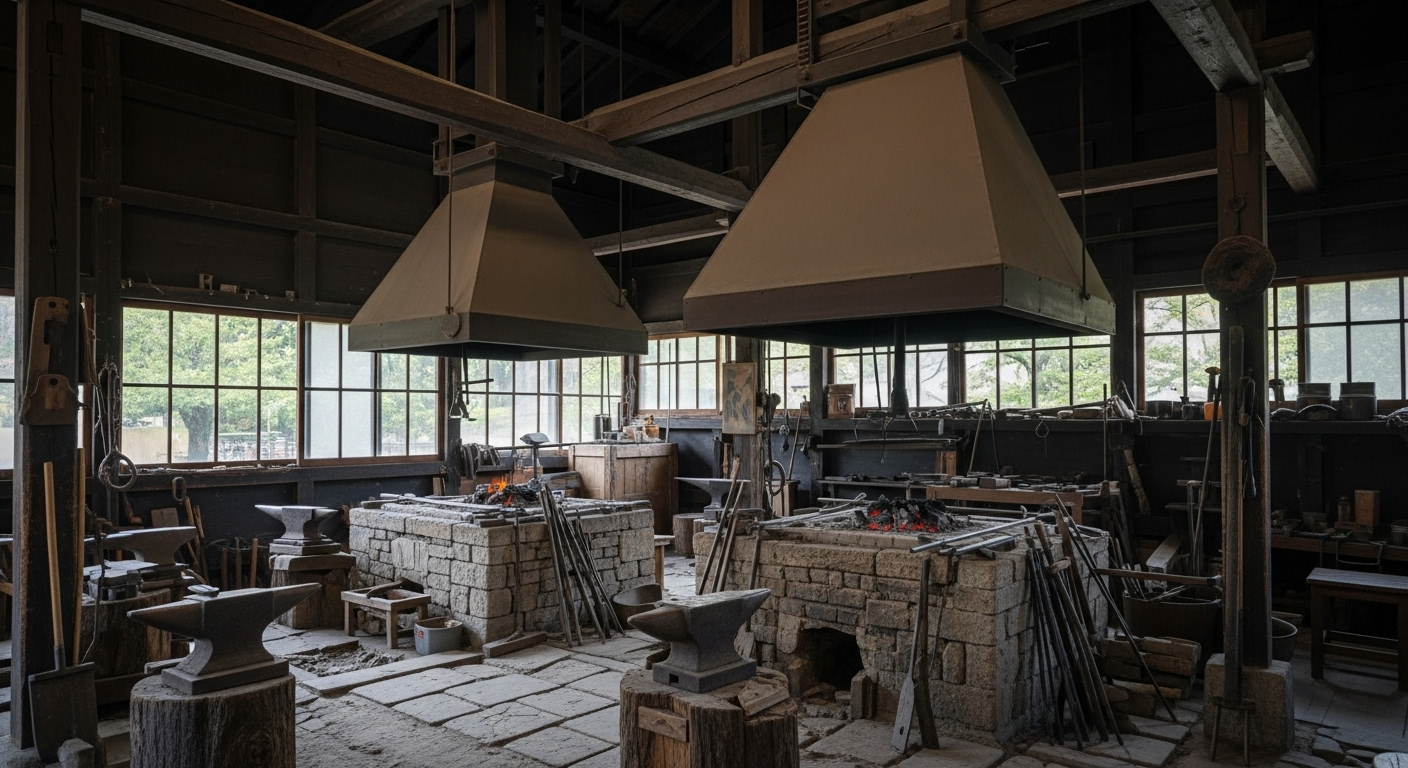
The Making of Japanese Knives
  • The Greater the Soul, the Greater the Struggle—The Light Beyond the Path of a Craftsman

    To make a Japanese knife is never just a job. It is the act of sharpening both heart and skill through endless trial and error, until a form finally begins to emerge. No matter how many years pass, I can never be fully satisfied with what I create—because there is always something more to seek, something deeper to uncover.

  • The finest craftsmen are those who struggle most with their own creations. Choosing the steel, searching for balance, ensuring sharpness that will endure—each step is filled with countless decisions, each one demanding, “Is this truly the best?”

  • By continuing this struggle, I slowly refine not only the knife, but myself. Perfection may not exist, but the pursuit of it shapes growth—and within that pursuit lies pride. This is the path of the Japanese knife craftsman: to walk through struggle, yet always toward the light.

  • japanese_knife_made_in_Sakai

    1. Forged in the Legacy of Sakai

    From Sakai City—Japan’s renowned birthplace of professional kitchen knives—each blade is crafted by master artisans with over six centuries of tradition. Perfectly balanced, enduringly sharp, and exquisitely finished, every cut carries the soul of true craftsmanship.

  • 2. Thoughtful Care for Everyday Use

    Every knife includes a hand-fitted magnolia saya for safe storage. Upon request, we offer a complimentary Honbazuke final hand sharpening—giving you a precise, ready-to-use edge from day one.

  • 3. A Partnership for a Lifetime

    A KIREAJI knife is more than a tool—it is a lifelong companion. With our bespoke paid aftercare services, we preserve its edge and beauty, ensuring it remains as precise and dependable as the day it first met your hand.