• JUNE 23, 2024

  • Forging More Than Steel

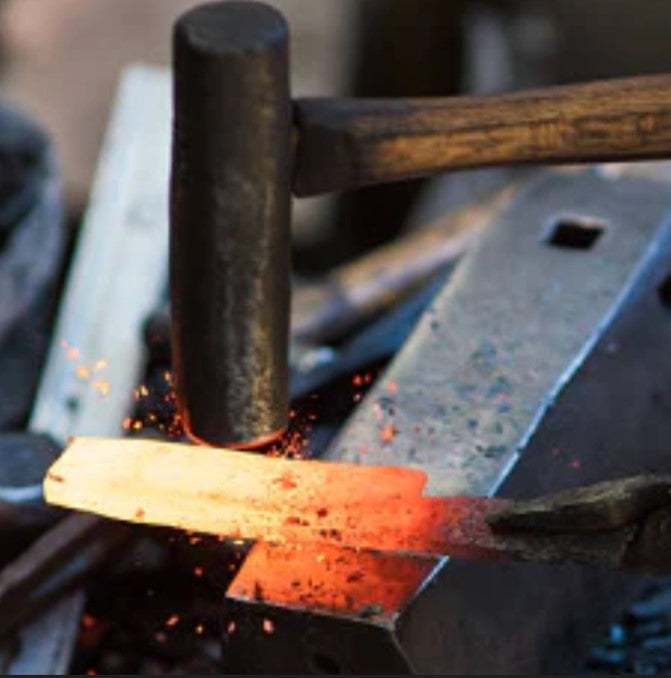
    Behind every Japanese knife lies a balance between art and science. Among the many steps in knife making, quenching and tempering are perhaps the most dramatic. Fire, water, and steel meet in a ritual that has been repeated for centuries—transforming ordinary metal into a blade that chefs trust with their craft.

    These processes are not just technical adjustments. They are decisions that determine whether a knife becomes a tool, or a lifelong companion.

  • Quenching: The Moment of Transformation

    When the steel is heated to around 800°C (or higher for stainless steels, up to 1100°C), it glows with life. At that moment, it is plunged into water or oil.

    • Water quenching cools the blade almost instantly. The result is exceptional hardness, the foundation of razor-sharp edges. But it comes with risk: a single crack can end the blade’s journey.
    • Oil quenching slows the cooling, producing a blade that is softer, smoother, and less likely to break. This method is common in Western knife making, and in stainless steel Japanese knives as well.

    Every blacksmith must decide: do they chase maximum sharpness at the risk of failure, or stability at the cost of hardness? This choice defines the character of the knife.

  • Tempering: Giving Steel a Soul

    After quenching, the blade is hard—but brittle, like glass. This is where tempering breathes resilience into the steel.

    By reheating the blade to between 170°C and 250°C, the structure relaxes. The steel gains flexibility, balancing hardness with toughness. The lower the tempering temperature, the harder the final blade, but too low and the knife risks becoming fragile.

    Through tempering, the blade is not only sharpened for performance—it is prepared for life in the hands of its user.

  • Why Structure Matters

    Even perfect heat treatment cannot save poorly prepared steel. For a knife to endure, its grain structure must be fine and dense, achieved only through careful forging long before quenching.

    In this way, quenching and tempering are not isolated steps, but the culmination of every hammer strike that came before. They are the final proof of a blacksmith’s discipline, intuition, and respect for steel.

  • Conclusion: Fire, Water, and the Spirit of Craftsmanship

    Quenching hardens. Tempering softens. Together, they create balance.

    This dance between extremes is what gives Japanese knives their legendary sharpness and resilience. It is why, in the hands of a chef, the blade feels alive—neither brittle nor weak, but perfectly attuned to its purpose.

    When you hold a Japanese knife, you hold not just sharpened steel, but a story of fire, water, and human spirit—crafted to bring beauty and precision into your kitchen.

The Making of Japanese Knives

For over six centuries, Sakai’s artisans have transformed raw steel into blades of extraordinary sharpness and beauty. From forging and heat treatment to sharpening and handle fitting, each step carries the spirit of tradition—revealing why Japanese knives are trusted by chefs around the world.
The Making of Japanese Knives
  • True Sharpness Comes from Relentless Dedication

    In the world of Japanese knives, there is a saying we hold dear: “Do what anyone can do, but do it so well that no one else can match you.” This philosophy forms the very foundation of our craft.

  • Hammering the steel, sharpening the blade, shaping the form—these may appear as simple, repetitive actions. But pouring your heart into each step, attuning yourself to subtle differences, and pushing beyond what others might call ‘good enough’ is what defines true craftsmanship.

  • This mindset isn’t limited to knife-making. It’s a universal truth that applies to any profession or challenge. Instead of settling for "good enough," strive for "what’s beyond." By committing to efforts that no one else is willing to make, we forge a path that leads to excellence.

  • This spirit extends far beyond knife-making. In any profession, in any challenge, excellence is found not in settling for “good enough,” but in striving for what lies beyond. By committing to the efforts that others may not take, we carve a path toward mastery.

  • So to all readers: never hesitate to give your all to what lies before you. Through relentless dedication, you will discover your own unique sharpness—a quality no one else can ever replicate.

  • japanese_knife_made_in_Sakai

    1. Forged in the Legacy of Sakai

    From Sakai City—Japan’s renowned birthplace of professional kitchen knives—each blade is crafted by master artisans with over six centuries of tradition. Perfectly balanced, enduringly sharp, and exquisitely finished, every cut carries the soul of true craftsmanship.

  • 2. Thoughtful Care for Everyday Use

    Every knife includes a hand-fitted magnolia saya for safe storage. Upon request, we offer a complimentary Honbazuke final hand sharpening—giving you a precise, ready-to-use edge from day one.

  • 3. A Partnership for a Lifetime

    A KIREAJI knife is more than a tool—it is a lifelong companion. With our bespoke paid aftercare services, we preserve its edge and beauty, ensuring it remains as precise and dependable as the day it first met your hand.