• JULY 5, 2023

  • Introduction to the Deba

    The Deba knife is one of the cornerstones of Japanese culinary tradition. Originally developed in Sakai before 1864, it was hailed as a masterpiece designed to meet the demands of professional fishmongers and chefs. With its thick spine, substantial weight, and robust design, the Deba embodies the artistry and practicality of Japanese knife-making, built to handle the rigors of seafood preparation with precision and confidence.

  • Design and Functionality

    What sets the Deba apart is its distinctive blade structure. Its thick and wide form allows it to withstand heavy tasks such as filleting whole fish, removing heads, and cutting through small bones without compromising the edge. The curved profile from heel to tip makes it ideal for smoothly separating flesh from bone, while the pointed tip allows for delicate work such as gutting or removing gills. The weight of the blade itself assists the user, providing natural force when chopping through tougher parts like crab shells or chicken joints.

  • KIREAJI Japanese knife direct
  • Versatility and Variations

    Although primarily intended for fish, the Deba is surprisingly versatile. It is used for descaling, gutting, and filleting, but also for preparing poultry and light butchery tasks. Sizes vary greatly: smaller versions around 10 cm, known as aji-kiri bōchō, are perfect for small fish like horse mackerel, while massive 50 cm Deba knives exist for large catches. Most are single-bevel, in keeping with Japanese tradition, though double-edged Deba can also be found in certain regions for more general use.

  • Considerations and Precautions

    Despite its strength, the Deba is not a cleaver. It is not suited for cutting through large bones or frozen foods, which can damage the blade. Selecting the appropriate size—commonly 15–20 cm for household or professional kitchen use—ensures comfort, control, and safety.

  • Conclusion

    The Deba knife is more than a kitchen tool; it is a reflection of Japan’s respect for fish, a central element of its cuisine. With roots in Sakai’s centuries-old knife-making tradition, the Deba combines history, craftsmanship, and functionality. Whether filleting delicate sashimi-grade fish or preparing poultry, it remains an indispensable ally in the kitchen—a blade that embodies the spirit of Japanese gastronomy.

  • The Deba is defined by a rare balance: heavy enough to split bone, yet crafted to deliver precise, clean cuts that honor the fish. Its single-bevel geometry allows the blade to glide along the skeleton without waste, while its weight encourages technique over force. In skilled hands, the Deba becomes an instrument of power guided by sensitivity, revealing the philosophy that true mastery comes from letting the knife—and the ingredient—lead the way.

Deba

  • The Weight of Tradition in Your Hands

    Heavy in hand, precise in action — the Deba transforms the art of preparing fish. Forged through centuries of tradition, it turns every cut into an act of respect and skill.

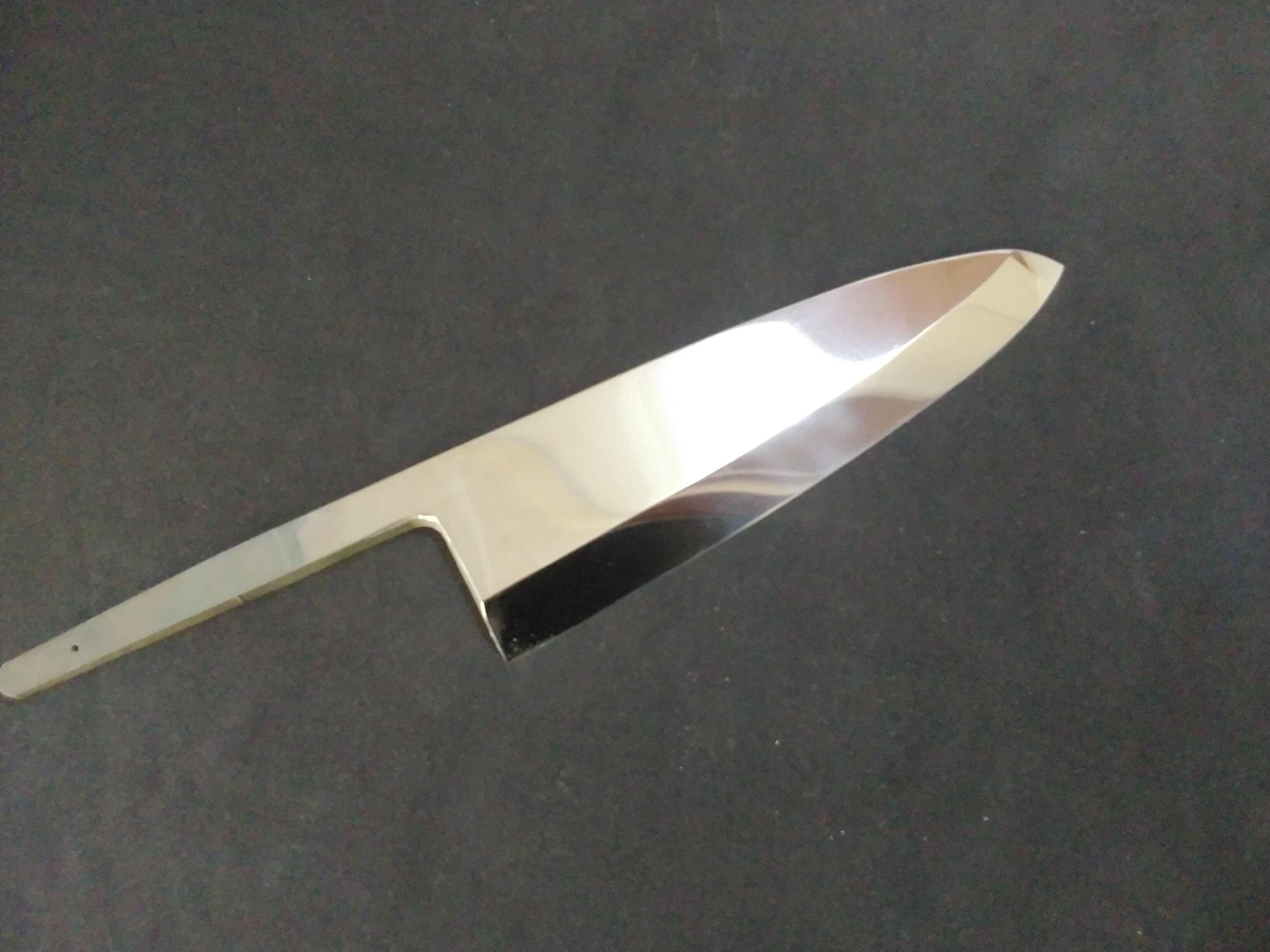
Ginsan Deba 210mm -Mirror Polished(one side)

Deba

A single-bevel knife for filleting fish. With a thick spine, broad blade, and substantial weight, it cuts cleanly through bones while protecting delicate flesh, making it indispensable in traditional Japanese cuisine.

Deba
  • Embracing Tradition, Growing Through Questions

    For a craftsman, the heart is never without questions. How can this steel be forged more beautifully? How can this blade cut more cleanly? These quiet doubts accompany us every time we stand before the fire.

    Over the years, I have learned that to ask is not a weakness, but the beginning of growth. When we question our own methods—when we dare to wonder if there might be a better way—the answers slowly appear in the blades we create. A cleaner cut, a finer polish, a sharper edge—these are the silent responses that steel gives back to us.

  • The answers do not always come in words. Often, they are felt in the fingertips as the whetstone meets the edge, or seen in the reflection of light on a finished surface. Through such moments, tradition deepens, and understanding grows.

    Every question leads to a new challenge, and every challenge becomes the seed of tomorrow’s craft. For me, this is the true spirit of being a craftsman: to honor tradition not by repeating it, but by questioning it, and through those questions, carrying it forward.

  • japanese_knife_made_in_Sakai

    1. Forged in the Legacy of Sakai

    From Sakai City—Japan’s renowned birthplace of professional kitchen knives—each blade is crafted by master artisans with over six centuries of tradition. Perfectly balanced, enduringly sharp, and exquisitely finished, every cut carries the soul of true craftsmanship.

  • 2. Thoughtful Care for Everyday Use

    Every knife includes a hand-fitted magnolia saya for safe storage. Upon request, we offer a complimentary Honbazuke final hand sharpening—giving you a precise, ready-to-use edge from day one.

  • 3. A Partnership for a Lifetime

    A KIREAJI knife is more than a tool—it is a lifelong companion. With our bespoke paid aftercare services, we preserve its edge and beauty, ensuring it remains as precise and dependable as the day it first met your hand.