Blue Steel #1 vs Blue Steel #2 — Choosing the Right Japanese Steel for Your Knife

  • APRIL 5, 2024

  • In Japanese knife-making, Blue Steel stands as one of the most respected materials—valued by chefs worldwide for its sharpness, edge retention, and durability.
    Yet within Blue Steel, there are two distinct types: Blue Steel #1 and Blue Steel #2. At first glance, they may appear similar, but subtle differences in carbon content and performance make each suited to different cooking styles and levels of expertise.

    This guide explores their unique strengths, trade-offs, and practical applications, helping you decide which steel is the best partner for your culinary journey.

  • 1. Blue Steel's Attraction: The Secrets of Sharpness and Lasting Power

  • Characteristics of Blue Steel

    Blue Steel is known for its sharpness and the durability of its edge. For professionals like sushi chefs, who spend hours slicing sashimi, a knife that dulls mid-task is problematic. The consistency of the cut from the beginning to the end of their work can vary significantly if the knife loses its sharpness. However, a Blue Steel knife maintains its cutting performance throughout, which is a significant advantage.

  • 2. Blue Steel #1 vs. Blue Steel #2: Factors Determining Your Knife Selection

  • Differences Between Blue Steel #1 and #2

    Blue Steel is available in two varieties, designated as #1 and #2, differing in their carbon content and other alloying elements. The carbon content is higher in #1 than in #2, which means #1 can achieve greater hardness and sustain sharpness longer but is more prone to chipping.

  • Blue Steel #1

    • Pros: Smooth cutting performance and lasting sharpness
    • Cons: The blade is very hard, requiring skillful sharpening techniques, relatively expensive, and susceptible to rust, necessitating careful maintenance
  • Blue Steel #2

    • Pros: Consistent sharpness, satisfactory edge retention, easier to sharpen compared to Blue #1
    • Cons: Expensive and prone to rust, requiring regular care
  • 3. Blue Steel#1: In search of the finest cutting performance

  • Blue Steel #1 is considered the top choice within the Blue Steel category, offering exceptional sharpness and endurance. However, its hardness makes it challenging to handle and resharpen, thus it may not be suitable for those without advanced sharpening skills.

  • 4. KIREAJI's Choice: Why Blue Steel #2 is the Choice of Many Chefs

  • At KIREAJI, we prefer Blue Steel #2 for our knives, considering its ease of use. While we do offer knives made of Blue Steel #1, they are relatively few.

  • 5. Choosing Knives Wisely: Finding the Balance Between Price and Quality

  • Caution Against Inexpensive Knives

    Knives from Sakai are individually crafted by artisans, and the price can vary significantly depending on the forging and sharpening craftsmen involved. Even if made from the same steel, the price can vary widely based on the artisan. Buying a cheap knife just because it's made from Blue Steel might result in acquiring a tool that's difficult to use. At KIREAJI, we add more steps to our process, ensuring that every knife reaches a level of quality that will satisfy our customers.

  • 6. Conclusion: Finding the Best Blue Steel Knife for You

  • Choosing between Blue Steel #1 and Blue Steel #2 ultimately comes down to your priorities and skills.

    • Blue Steel #1 delivers the highest sharpness and edge retention—ideal for professional chefs who demand top-tier cutting performance and are confident in sharpening and maintenance.
    • Blue Steel #2 provides a balanced blend of sharpness, durability, and ease of sharpening—making it a versatile choice for both seasoned chefs and dedicated home cooks.

    Whichever you choose, a knife crafted from Blue Steel is more than a tool—it is a reflection of Japanese craftsmanship, built to serve as a lifelong culinary companion.

  • Blue Steel #1 vs. Blue Steel #2: A Guide to Choosing Your Japanese Knife Steel

    Both Blue Steel grades deliver exceptional performance, but their true value is revealed only through expert craftsmanship.

    A knife becomes remarkable when material, technique, and intention come together in harmony.*

Blue Steel #1

  • Mastering the Pinnacle of Japanese Knife Steel

    Born from the pure edge of White Steel #1 and refined with chromium and tungsten, Blue Steel #1 is the choice of master chefs who demand precision, durability, and long-lasting sharpness. It’s not for beginners—this is a steel that rewards skill, discipline, and care, becoming a lifelong partner in the hands of those who master it.

Blue Steel #2

  • The Perfect Balance Between Sharpness and Strength

    In the world of Japanese knives, Blue Steel #2 is trusted by chefs who need both performance and durability.
    Born from pure White Steel #2 with the addition of chromium and tungsten, it keeps its razor edge longer, resists chipping, and offers a silky-smooth sharpening experience.
    From the first slice of the day to the last plate of service, this steel stands by you—quietly, reliably, and with a touch of tradition in every cut.

Blue Steel #1

Sharpness at its highest form.
Enriched with tungsten and chromium, Blue Steel #1 achieves superior hardness and edge longevity. Demanding yet rewarding, it is favored by master chefs who require flawless performance at the highest level.

Blue Steel #1

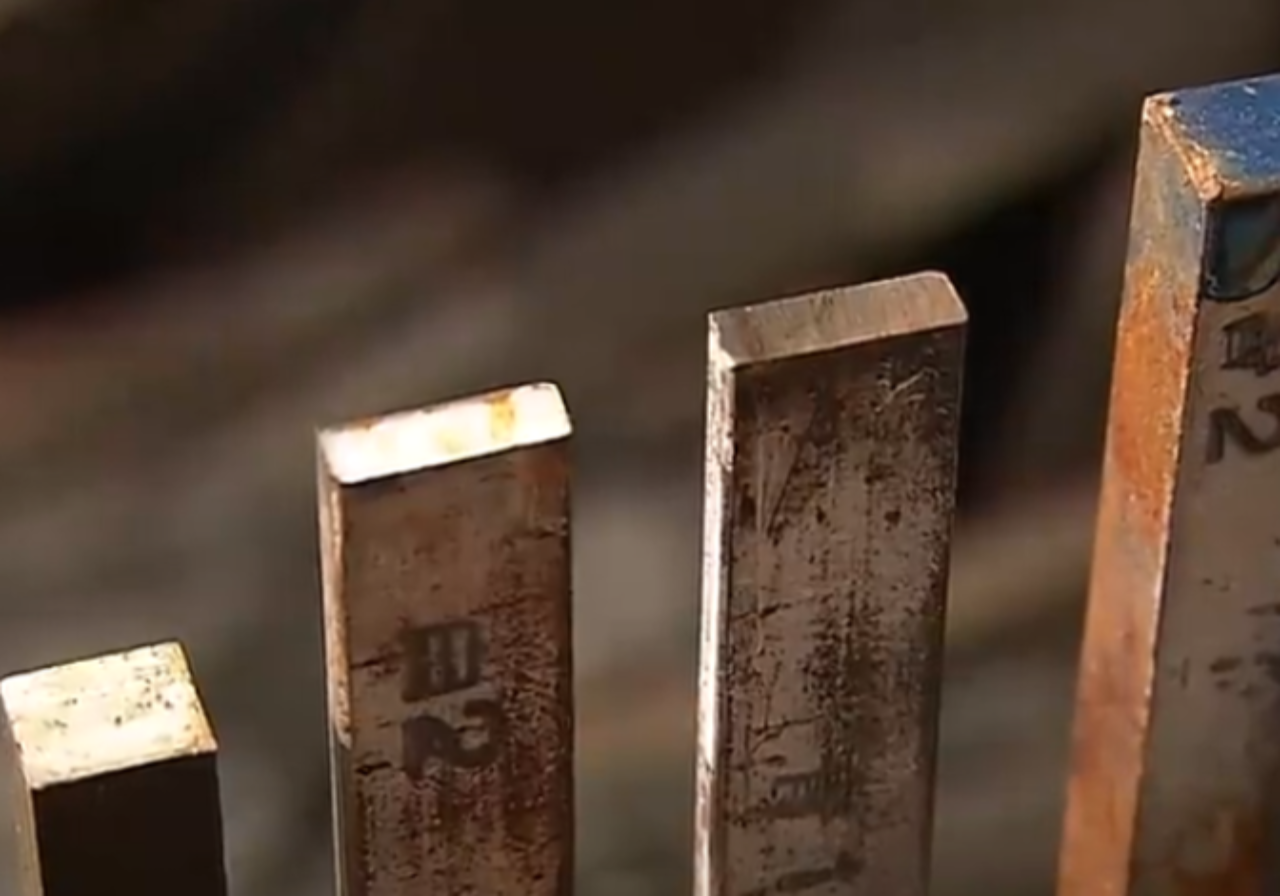
Blue Steel #2

Strength for the everyday professional.
Alloyed with tungsten and chromium, Blue Steel #2 balances keen sharpness with added durability and wear resistance. Trusted in busy kitchens, it delivers consistent performance service after service.
Blue Steel #2

Material of Knife

Understanding a Japanese knife begins with its steel. At KIREAJI, we introduce the core materials—White Steel, Blue Steel, Ginsan, and Super Steel—explaining how each influences sharpness, durability, and ease of care. By learning these differences, you can choose a knife that truly fits your cooking style and values.

Material of Knife
  • The Art of Embracing Worry

    Feeling anxious about the future is not unusual. Even we artisans—who have forged blades for decades—carry quiet doubts. Each time I create a new knife, I ask myself: Will this blade meet the expectations of the chef? Will it truly serve its purpose? These questions linger in my mind like a shadow.

  • But as the work begins—hammering the steel, shaping the form, sharpening the edge—that worry slowly transforms. I’ve come to see that worry is not an obstacle but a compass. It draws me back to the present, urging me to pour my heart into every step.

  • The very existence of worry means there is still a future worth striving for. By meeting each task sincerely, the unease turns into a quiet confidence—just as raw steel is refined into a blade. This is the truth my craft has taught me: anxiety is not a weakness, but the foundation for growth.

  • If fear of the future holds you back, return your focus to the now. Move your hands, steady your heart, and take even the smallest step forward. In time, those worries may sharpen you into someone stronger than you ever imagined.

  • Every journey begins with a single cut. For us artisans, it is our calling to forge that cut with care—and in doing so, to remind others that uncertainty can be the fire that shapes us.

  • japanese_knife_made_in_Sakai

    1. Forged in the Legacy of Sakai

    From Sakai City—Japan’s renowned birthplace of professional kitchen knives—each blade is crafted by master artisans with over six centuries of tradition. Perfectly balanced, enduringly sharp, and exquisitely finished, every cut carries the soul of true craftsmanship.

  • 2. Thoughtful Care for Everyday Use

    Every knife includes a hand-fitted magnolia saya for safe storage. Upon request, we offer a complimentary Honbazuke final hand sharpening—giving you a precise, ready-to-use edge from day one.

  • 3. A Partnership for a Lifetime

    A KIREAJI knife is more than a tool—it is a lifelong companion. With our bespoke paid aftercare services, we preserve its edge and beauty, ensuring it remains as precise and dependable as the day it first met your hand.