KIREAJI
超级钢(本烧)Deba 210mm
超级钢(本烧)Deba 210mm
库存低:剩余1
Shipping is free to the United States and Canada.
无法加载取货可用性信息
What is the difference between White Steel #2 and Blue Steel #2?
<超钢(本烧)>
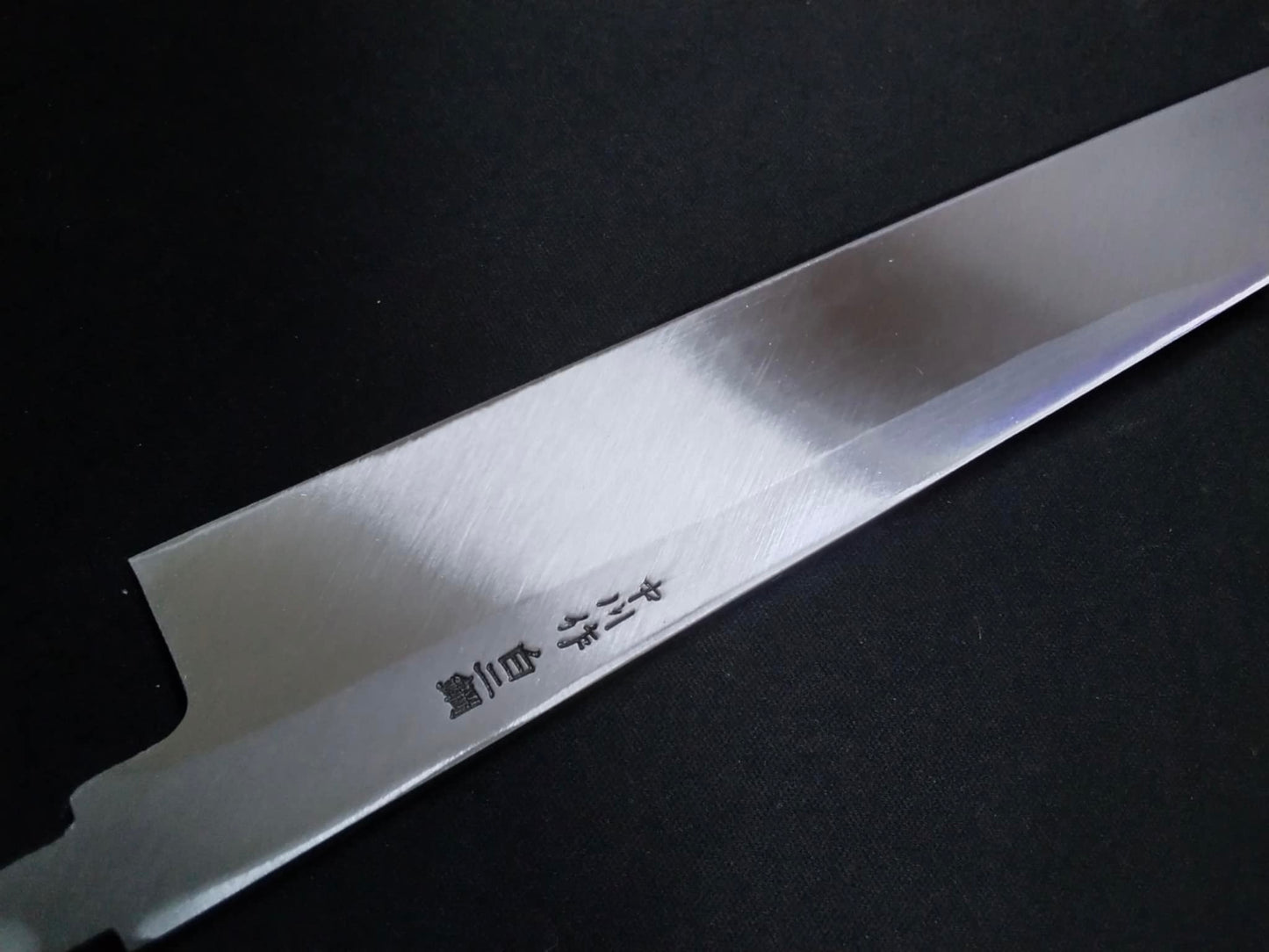
Super Steel Honyaki 是一款适合专业人士的尖端日本刀,它防锈并具有 Honyaki 的持久锋利度。此外,刀片不易碎裂且不易丢失。
据说“Honyakii”一词的起源是因为硬化过程与日本使用的非常相似,只是对刀片进行硬化以增加其硬度并提高其锋利度。
双面镜面处理。所有磨刀均由传统工匠 Tadayoshi Yamatsuka 完成。山冢先生的镜面加工据说是大阪堺市最好的。
该产品是一把了不起的日本刀。
YOUTUBE 上的一个日本料理技术频道展示了一把超钢、优质磨光的柳叶刀。视频中出现的人居然用过柳叶刀,还评价它的锋利度。他称赞它的锋利“像剃须刀片”。
代表九州的寿司师傅使用城山牌日本刀,在去年10月于日本举办的全国寿司技艺展上获得金奖。
<德巴>
Deba 具有较厚的刀片和锋利的薄切削刃。这把刀是用来煮鱼的。用于去除鱼头和磨碎鱼。
-单刃:右手
-镜面抛光:双面
<品牌名称>
城山(产于大阪堺市)
<材料>
- 刀片:超级钢
- 手柄:玉兰和水牛角
<尺寸和重量>
-手柄到尖端的长度:214㎜
-刀片高度:63㎜
-厚度:7.6㎜
-重量:504 克
免费。如果您想要本马祖克,请在订购时选择“是”。
新刀的刀片有意制成钝角,以防止碎裂。因此,刀片的锋利度不是很好。重塑刀片以达到原始锋利度的过程称为 Honbazuke。
<沙耶(鞘)>
Saya 是免费的。

What Makes This Knife Truly Special
A Bold, Heavyweight Blade Forged by a Young Sakai Artisan
Hand-forged by a rising young traditional craftsman from Sakai, this knife features an impressive 4.5mm spine thickness that delivers a commanding weight and presence—embodying both strength and refined craftsmanship.
Traditional craftsmen working on this product
Precautions
-
1. Honbazuke (Initial Sharpening)
To request Honbazuke, please select “Yes” when placing your order. This service is provided free of charge.
Honbazuke is a practical initial hand-sharpening intended to prepare the knife for use. Because sharpening preferences vary, it is not a final sharpening customized to the individual user.
Please note that hand-sharpening may leave visible sharpening marks that can appear similar to scratches. Customers with specific sharpening preferences, or those who intend to preserve the knife primarily as a collectible, may prefer to select “No” and receive the knife without Honbazuke.
-
2. Protective Coating on New Japanese Knives
New Japanese knives are coated with a transparent protective liquid vinyl coating to prevent rust during storage and international shipping.
Especially on mirror-polished blades, this coating may appear as a rainbow-like film depending on the lighting. This is not a defect in the steel or the finish.
How to remove the coating:
・Wash the blade gently with a sponge and mild dish soap, then rinse with lukewarm water.
・If difficult to remove, gently wipe while washing using tissue paper or a soft cloth.
・If residue remains, wiping with a cloth lightly moistened with alcohol (sanitizing ethanol) is effective.
・Never use metal scrubbers or abrasive cleaners, as they may damage the blade surface. -
3. Handcrafted Nature
Each knife is handcrafted by skilled artisans and is therefore unique.
Minor scratches or marks may be visible as a result of the handmade production process. These do not affect performance or functionality. We kindly ask for your understanding in advance. -
4. Measurements
Please consider the listed weight and length as approximate values.
-
5. Inventory
We carefully manage our stock. However, in the rare event that an item becomes unavailable after ordering, we will notify you by email.
If you have any questions, please feel free to contact us. (Estimated reply time: within 10 hours)
Features of White Steel #2
Recommended Users for White Steel #2
-
1. Those Who Value Sharpness with Manageable Upkeep
White Steel #2 delivers a keen edge with a forgiving sharpening response, making it well-suited for culinary enthusiasts and professional chefs who want reliable, consistent performance without demanding maintenance.
-
2. Those New to Japanese Carbon Steel Knives
A foundational steel in traditional Japanese knife-making, White Steel #2 is ideal for users beginning to explore the craft and characteristics of Japanese cutlery — offering an accessible entry point into high-performance carbon steel.
-
3. Those Seeking a Versatile Everyday Knife
With a strong balance of sharpness, ease of re-sharpening, and moderate rust resistance, White Steel #2 suits a wide range of users — from home cooks building their skills to professionals looking for a dependable all-purpose blade.
Before Using a Japanese Knife
A knife is more than a tool—it’s the heart of cooking. Learning how to use it properly helps protect its quality, durability, and safety, so you can enjoy it for years while elevating every meal.
Japanese Knife Care
With the right daily care, your knife will stay sharp and reliable for a long time. Here, we share the key points to keep it in peak condition and extend its lifespan.
Why Great Chefs Value a Good Knife
-
A great knife is more than a kitchen tool. It affects how ingredients are cut, how flavors are preserved, and how naturally a cook can work in the kitchen.
A well-crafted knife allows for cleaner cuts, greater control, and a more comfortable cooking experience — especially during long preparation sessions.
In this video, discover why professional chefs place such importance on high-quality knives, and how the right knife can deepen both precision and enjoyment in everyday cooking.
-