锻造艺术:打造最精致的日本刀
-
2023 年 4 月 13 日
-
锻造刀以其出色的锋利度和耐用性而闻名,体现了传统刀具制作的巅峰,让人们得以一窥其制作背后的手工过程。
-
1. What Is Forging in Japanese Knife Making?
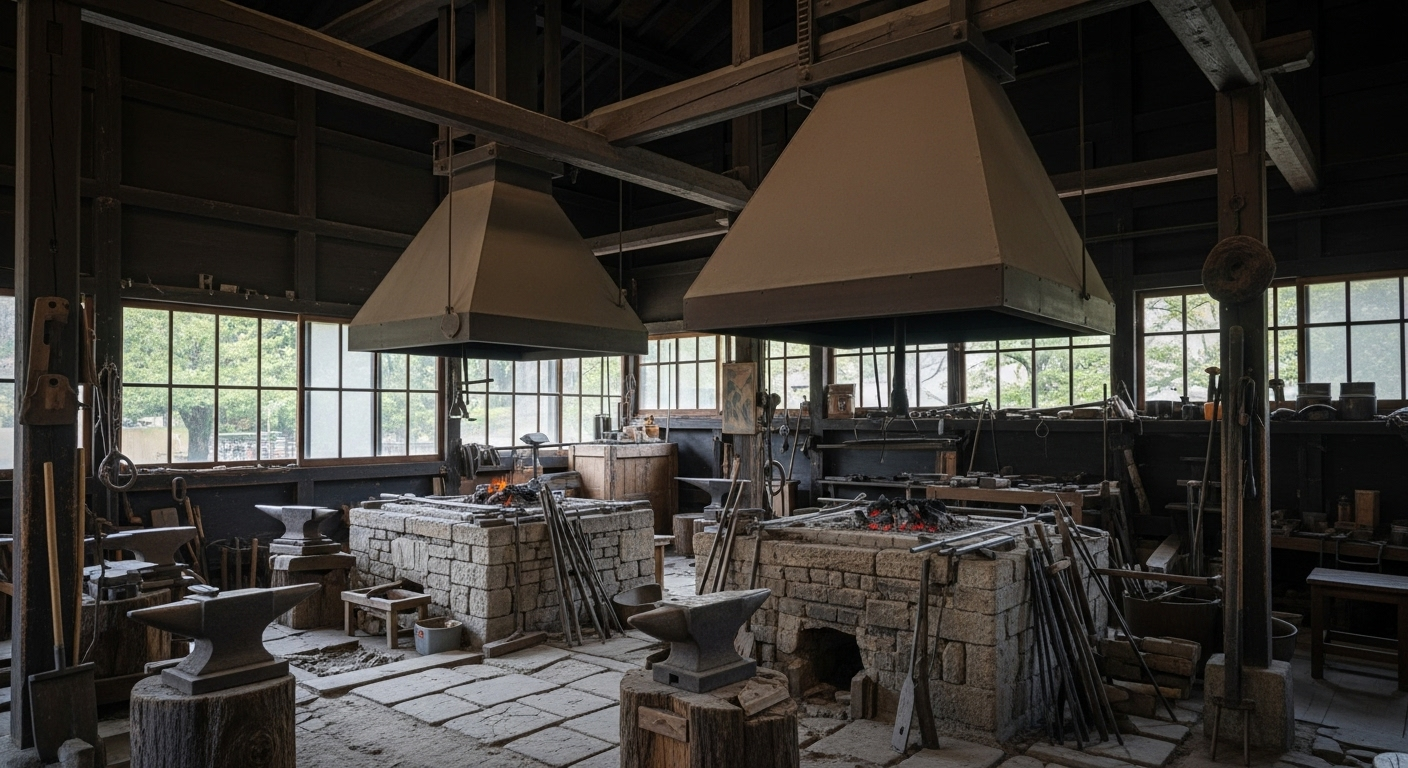
Forging, known as tanzō (鍛造) in Japanese, is a metalworking process in which heated steel is shaped through controlled deformation, often using hammers or presses.
In traditional Japanese knife making, a blacksmith heats the material and works it into the approximate form of a blade.
Depending on the knife's construction, the process may involve a single type of blade steel or a combination of different metals.
For example, an Awase knife commonly uses a hard cutting steel joined to softer cladding material.
The blacksmith must understand how these materials behave during heating and shaping.
Temperature is particularly important.
Steel becomes easier to deform when heated, but excessive temperatures or inappropriate handling can damage its properties.
The blacksmith therefore works within a suitable temperature range, repeatedly checking the shape and condition of the material.
Forging is not simply about applying force.
It is about shaping metal while managing the conditions that influence the finished blade.
-
2. What Happens to Steel During Forging?
One of the most common claims about forged knives is that hammering makes the steel denser and automatically produces a sharper blade.
The reality is more complex.
Modern knife steels are generally produced through controlled industrial processes before reaching the blacksmith.
They are not usually full of impurities that must be hammered out by hand.
During hot forging, deformation and temperature can influence the steel's internal microstructure.
Processes such as recrystallization and grain growth may occur depending on the material and working conditions.
Careful temperature control and subsequent heat treatment are essential to achieving the desired properties.
Simply striking steel more times does not guarantee a better knife.
Excessive heat or improper forging can even harm the material.
Likewise, forging alone does not determine sharpness.
A knife's cutting performance depends on its steel, heat treatment, blade geometry, sharpening, and intended use.
The blacksmith's skill lies in understanding how these factors work together, rather than relying on hammering as a guarantee of quality.
-
柱子
锻造与铸造:技术对比
-
柱子
锻造日本刀的威望
-
-
柱子
锻造刀具的特点
-
6. Why Heat Treatment Matters as Much as Forging
Forging gives the steel its initial blade shape, but heat treatment plays a critical role in determining how the finished knife behaves.
After shaping, the steel may undergo carefully controlled heating and cooling processes.
Hardening changes the steel's microstructure to achieve the desired hardness and other mechanical properties.
Tempering, where appropriate, helps adjust the balance between hardness and toughness.
These processes require an understanding of the specific steel being used.
Different steels respond differently to heat, cooling rates, and treatment conditions.
If heat treatment is poorly controlled, a blade may become too brittle, insufficiently hard, distorted, or otherwise unsuitable for its intended use.
This is why the value of a forged Japanese knife cannot be explained by hammering alone.
The blacksmith must make informed decisions throughout the process, from initial shaping to final heat treatment.
The quality of those decisions can have a lasting influence on the knife.
-
7. The Blacksmith and Sharpener: Two Essential Skills
One of the distinctive features of traditional Sakai knife making is the division of work among specialized craftspeople.
The blacksmith is responsible for forging and heat treatment.
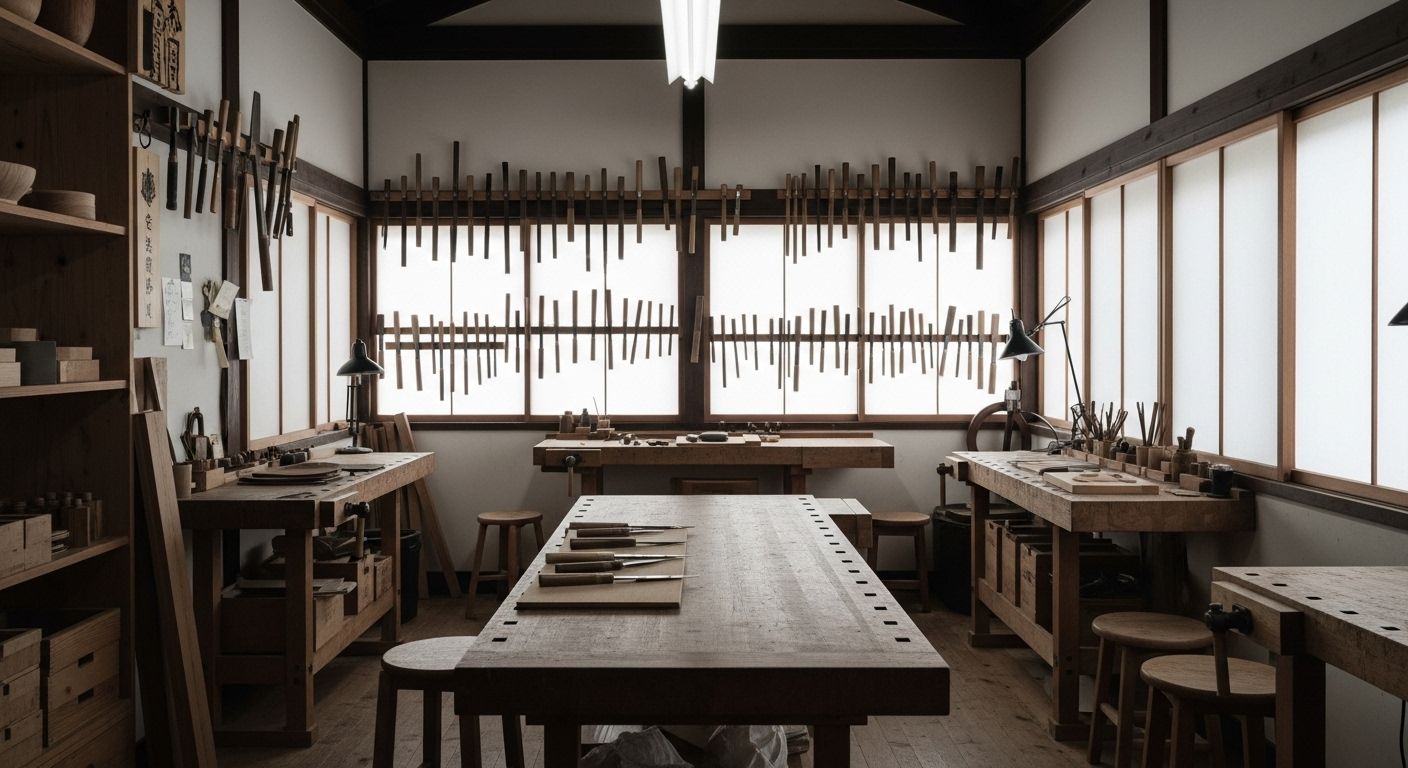
The sharpener develops the blade's cutting geometry, refines its surfaces, and establishes the cutting edge.
These roles require different forms of knowledge.
A blacksmith must understand the behaviour of steel under heat and deformation.
A sharpener must understand how blade thickness, bevel geometry, surface finish, and edge preparation affect cutting performance.
The handle also contributes to the finished knife's balance and comfort, with handle making and fitting forming another important part of production.
A beautifully forged blade is not necessarily a beautifully finished knife.
Its final quality depends on the work carried out after forging as well.
At KIREAJI, we believe recognizing these different skills is essential to understanding the craftsmanship behind Sakai Japanese knives.
The finished tool reflects the contributions of more than one specialist.
-
8. What Makes a Well-Forged Japanese Knife Worth Appreciating?
A well-forged knife is not defined only by visible hammer marks or the fact that it was made by hand.
Some forged knives have polished surfaces that reveal little about their production.
Others retain marks that reflect aspects of the forging and finishing process.
Neither appearance alone establishes quality.
What matters is whether the maker has successfully controlled the material and produced a blade suited to its intended purpose.
Material selection: The steel must be appropriate for the knife's intended use and construction.
Forging control: Temperature and deformation must be managed to establish the desired form without unnecessary damage to the material.
Heat treatment: The steel must be hardened and, where appropriate, tempered to achieve suitable properties.
Blade geometry: The finished shape and cutting edge must support the intended cutting tasks.
Finishing and assembly: Grinding, sharpening, surface finishing, and handle fitting must come together in a practical, well-balanced tool.
These qualities are not always immediately visible.
They are revealed through the knife's construction, the information provided by its maker, and how it performs in use.
-
-
柱子
结论:庆祝锻造之刃
刀刃之魂:日本锻造艺术
-
日本锻造是一项精细而历史悠久的工艺,可以将钢材锻造成品质卓越的刀刃。
通过反复加热、锤击和回火,钢材的结构得到精细化,从而打造出一把具有持久锋利度、强度和文化意义的刀具。
锻造刀具不仅仅是工具,更是工艺和传统的体现。 -
日本刀的制作
日本菜刀的制作方法是加热和锻造金属,然后将刀片粘合到较软的铁包层上。在磨刀过程中,首先对刀片进行粗磨,然后用更细的石头进行精磨,最后用抛光石进行抛光。在刀柄的制作过程中,将刀柄插入刀柄,并在刀包装前刻上品牌名称。这描述了日本菜刀的制造过程。
工艺的起源
-
风穿过心扉的瞬间
作为一名日本传统刀具工匠,就像看着一面镜子,照出真实的自我。在不懈追求完美的过程中,我常常发现很难原谅自己的缺点和失败。但有一天,我意识到一件深刻的事情:接受自己有缺陷的部分是至关重要的。
-
刀刃上的细小划痕、磨刀时细微的不一致之处(直面它们,必要时进行调整,有时则保持原样)教会了我一个重要的教训。正是在这些不完美之处,我开始感觉到一股宁静的风吹过我的心。
-
弱点和错误不是需要隐藏的东西;它们是工匠特质的一部分。就像一把刀,一个人不必完美无缺。正是个性和不完美,让一件工具适合某人的手中或在某人的心中产生共鸣。
-
当我终于告诉自己“做我自己就好”时,紧张感消失了,一种新的流畅感进入了我的工作。对于所有的读者,我鼓励你们对自己温柔一点。让风吹过你的心,你可能会在生活和手艺中发现一些美好的事物。
体验堺市的匠心工艺
通过我们与Shiroyama刀具工坊的合作,我们为全球客户带来了匠心打造的堺刀。每把刀都配有一个玉兰木刀鞘,经过精心挑选和制作。根据要求,我们还提供免费的“本刃付”服务,这是一种初始的手工开刃,旨在为刀具的实际使用做好准备。