



Shogo Yamatsuka
A master blacksmith famed for his skill in forging rare Ginsan steel. Certified as a Traditional Craftsman in 2012, he personally handles every step from forging to sharpening, earning the trust of professional chefs worldwide.
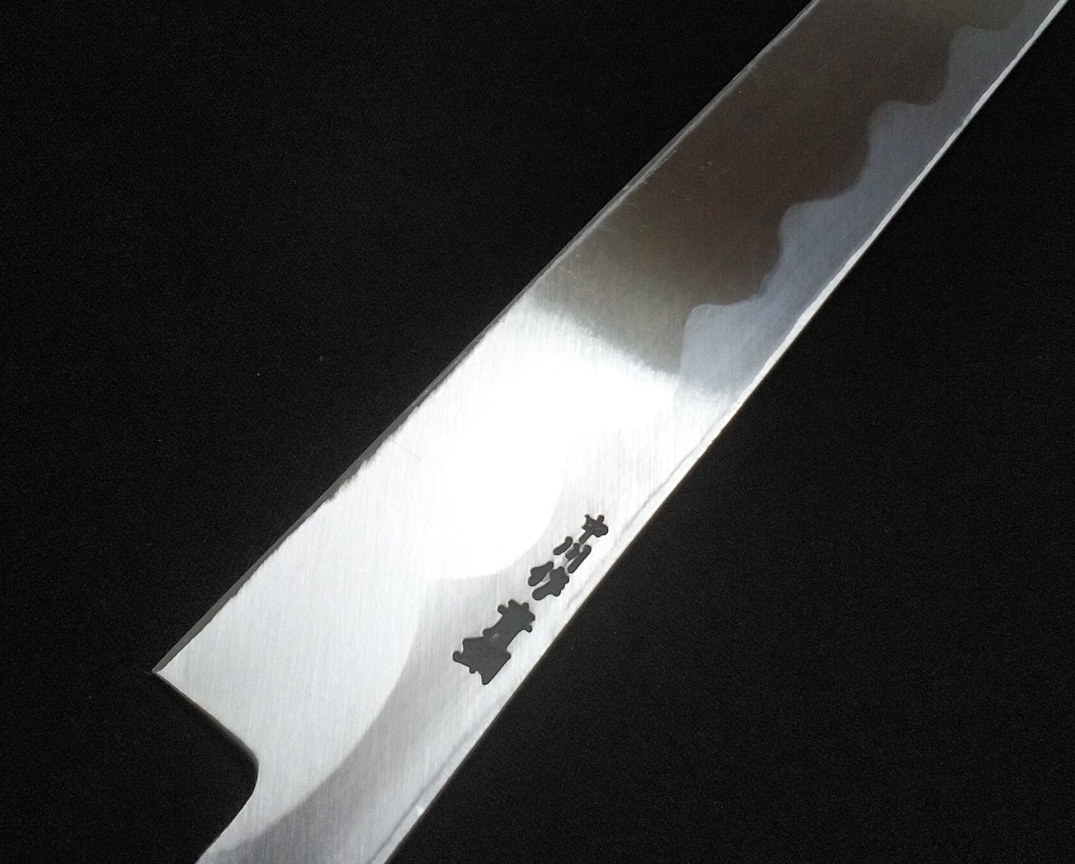
Satoshi Nakagawa
The youngest Traditional Craftsman in Sakai’s history, trained 16 years under master Kenichi Shiraki. Known for precision and artistry, he now leads Nakagawa Hamono, creating blades that blend tradition and innovation.
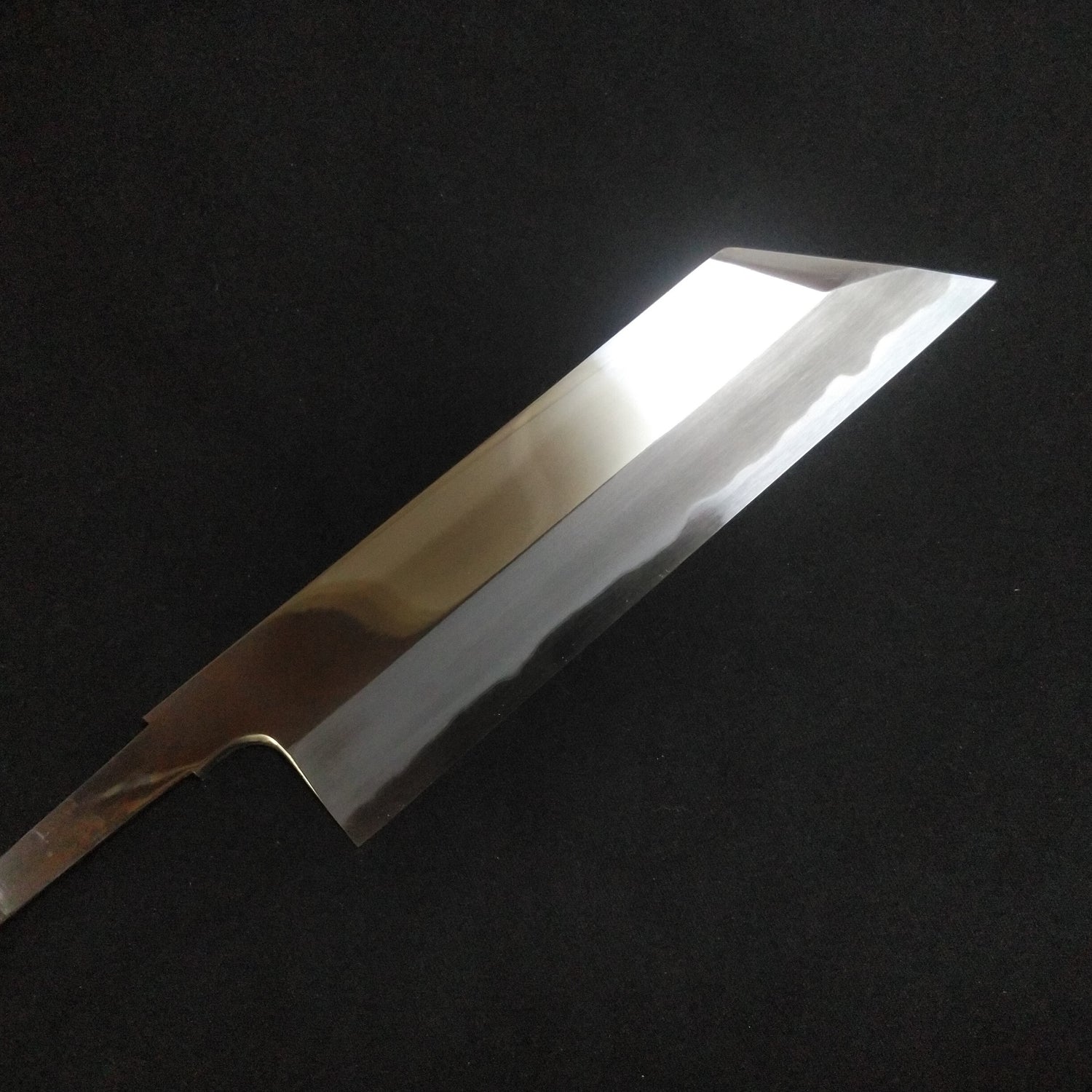
Keijiro Doi
Master of yanagiba and mukimono usuba knives, certified as a Traditional Craftsman in 1987. Awarded the Blue Kiriba Award in 1997, he retired in 2012 and passed away in 2017, leaving rare and highly valued works.
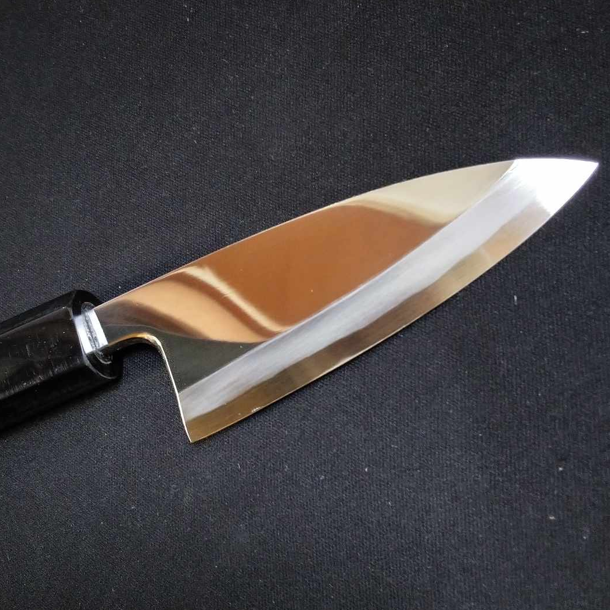
Tadashi Enami
A fifth-generation blacksmith preserving ancient fire-forging while embracing innovation. Certified in 2003 and honored as a Sakai City Meister in 2007, he is renowned for meticulous craftsmanship and made-to-order knives.
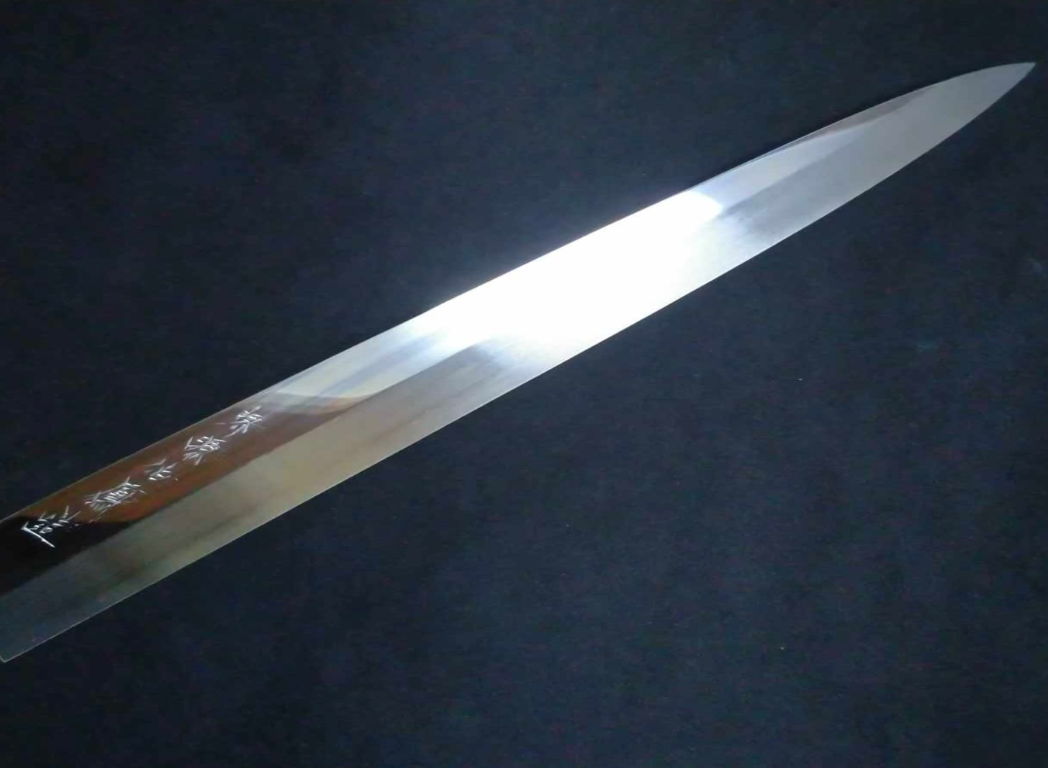
Yuzan
A legendary craftsman who mastered Mizuyaki Honyaki, among the most difficult forging techniques. His rare works are almost impossible to find, and his legacy lives on through his son, Shogo Yamatsuka.
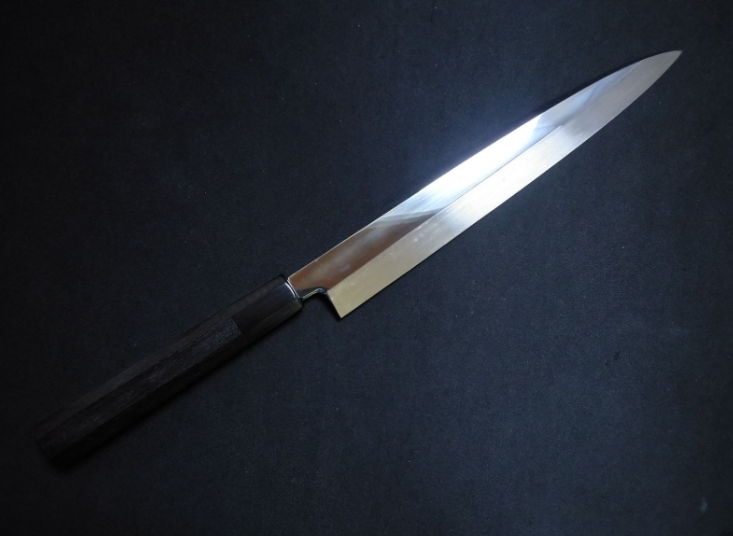
Kenichi Shiraki
Renowned for his mastery of Honyaki and water-quenching techniques, producing knives of unmatched sharpness. Now retired, his rare works are treasured, with his legacy carried on by apprentice Satoshi Nakagawa.
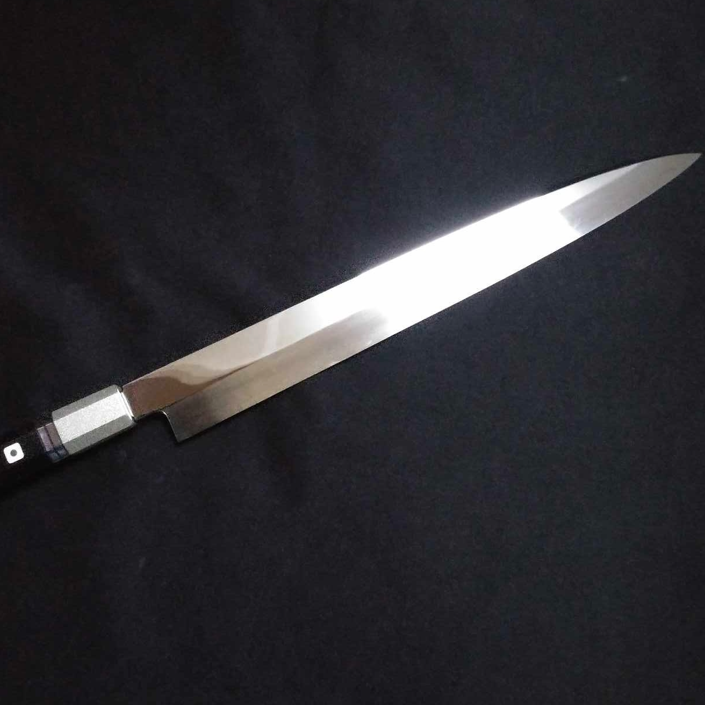
Tatsuo Ikeda
Third-generation head of Ikeda Cutlery, famed for Honyaki forging and the Fuji wave pattern. Honored with the Order of the Sacred Treasure in 2009, his works remain rare treasures since his passing in 2015.
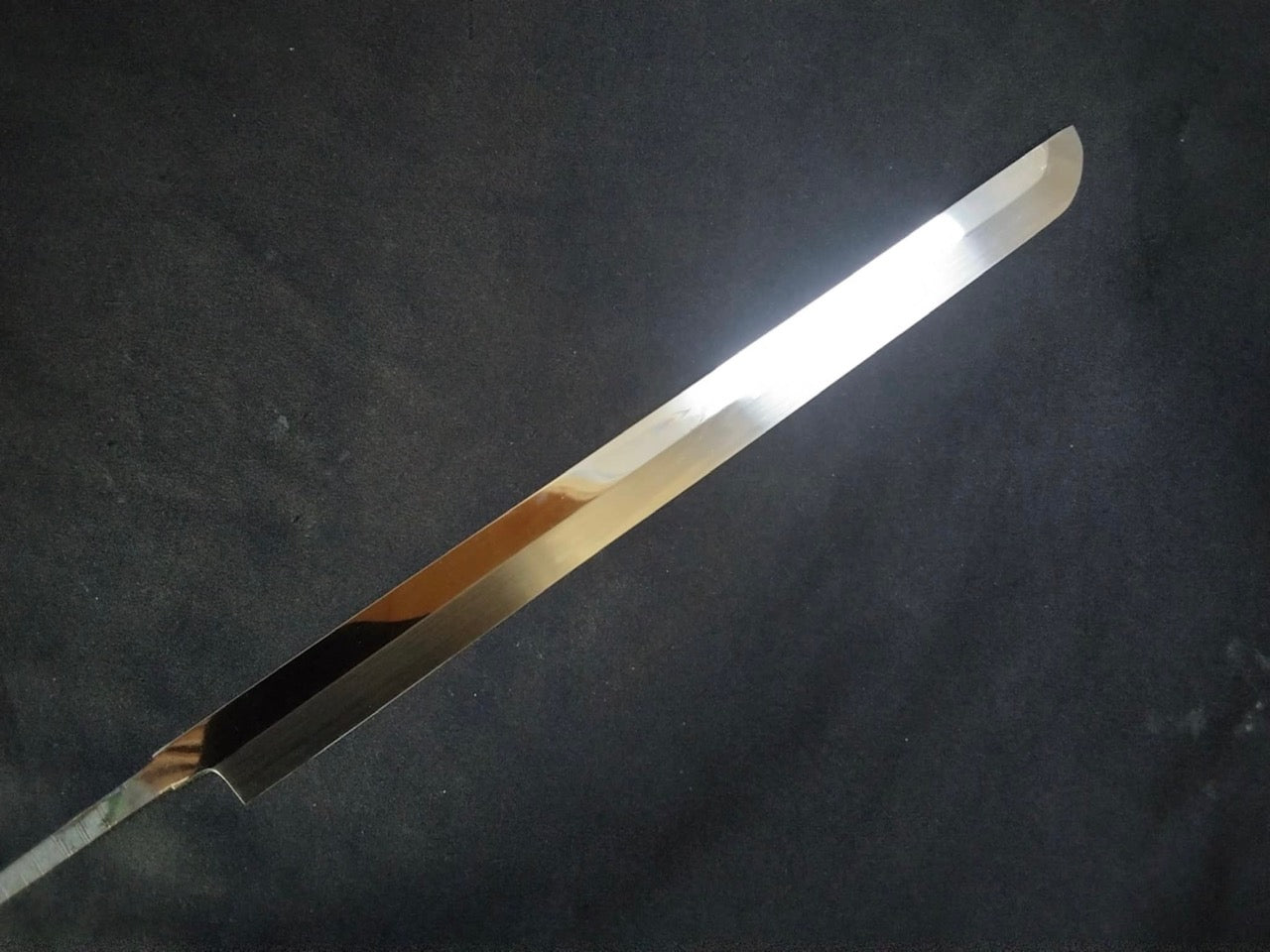
Yoshikazu Ikeda
President of the Sakai Uchihamono Traditional Craftsmen Association and co-founder of Ikeda Tanrenjo. Certified in 1988 and awarded Osaka’s Outstanding Artisan Award in 2014, he is known for his relentless pursuit of perfection.

Tadayoshi Yamatsuka
Certified as a Traditional Craftsman in 2022, he is renowned for exceptional mirror-polishing skills. His beautifully finished blades captivate chefs in Japan and around the world.
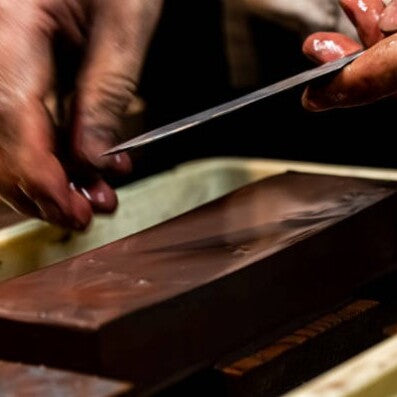
Shotaro Nomura
Certified as a Traditional Craftsman in 1988, he has over 60 years of sharpening experience. Trained under the legendary Mr. Ino, he is known for knives that grow more beautiful and perform better with each use.

Mitsuo Yamatsuka
Certified as a Traditional Craftsman in 1999, he is renowned for exceptional kasumi polishing, mirror finishes, and traditional single-edged sharpening. For over fifty years, Mitsuo Yamatsuka has pursued the ideal balance between sharpness, beauty, and harmony in every blade.

Hirotsugu Tosa
Certified as a Traditional Craftsman in 1990, he specialized in Honyaki sharpening and mirror polishing for professional chefs. Known for his uncompromising attention to detail and deep respect for the user, Hirotsugu Tosa devoted his life to refining blades that embodied the spirit of Sakai craftsmanship.
What It Means to Cook With a Knife Made by a Living National Tradition
-

What the Title Actually Means
The designation Dentō Kōgei-shi is not a marketing credential. It is not a guild membership or an industry association award. It is a formal certification issued by the Japanese national government, under legislation specifically designed to identify and protect craft traditions that the nation considers part of its living cultural heritage.
To receive this certification, a craftsman must meet requirements that are specific, demanding, and verifiable.
Twelve years of hands-on experience, at minimum — not years of employment in the knife industry, but years of direct practice in the specific techniques that the government has designated as the methods of the traditional craft. The twelve years is a floor, not an average. Many of those who hold the title have spent far longer reaching the standard that the examination tests.
The examination itself is two-part: written and practical. The written component tests knowledge of the materials, the history, the techniques, and the principles behind the craft. The practical component requires the craftsman to demonstrate, under examination conditions, the skills they have developed over their years of practice. The pass rate is low. The standard is not adjusted for how many people attempt it. It tests what it tests, and either you can do it or you cannot.
And the craftsman must live and work in Sakai — in the place where the tradition is rooted, where the history of the craft is present in the physical environment, where the community of practice has existed for generations and where the specific local knowledge that shapes the tradition is still alive. The certification is not just about individual skill. It is about individual skill situated in a specific place, a specific history, and a specific community.
-

Twelve Years, and Then a Lifetime
To understand what twelve years of apprenticeship in a traditional craft actually involves, it helps to think about what is being learned — and what kind of learning it is.
It is not the learning of information, which can be absorbed from books and demonstrations and accelerated through technology. It is the learning of embodied skill — knowledge that lives in the hands, the eyes, and the judgment, and that can only be acquired through the direct experience of doing the same thing, repeatedly, over years, in the presence of someone who already knows how.
A blacksmith apprentice in Sakai learns to read the color of heated steel — to know, from the specific shade of orange or yellow or white that the metal glows, what temperature it has reached and whether it is ready for the next stage of work. This is not a skill that can be learned from a thermometer. The thermometer tells you a number. The eye tells you what the steel is doing, and the eye learns this only through years of watching, and failing, and watching again.
A sharpener learns to feel, through the stone and the handle and the minute vibrations of the blade, what the edge is doing as it is refined — where it is forming correctly, where it is resisting, what the feedback of the steel against the abrasive is communicating about the progress of the work. This is not information. It is sensation, and sensation is learned through the body, not the mind.
Twelve years is the minimum time required for these kinds of knowledge to become reliable. Not perfect. Not complete — the traditional craftsmen who have spent forty years at their work will tell you that they are still learning, still discovering what their craft is capable of, still encountering situations that require judgment they have not yet fully developed. But reliable: capable of producing, day after day, work that meets the standard the title represents.
And then the certification is received, and the real work begins.
-

Guardians Who Are Also Innovators
There is a misconception about traditional crafts that deserves to be addressed directly: the idea that the traditional craftsman is a preserver — someone whose role is to keep things exactly as they were, to resist change, to hold the line against the modern world.
This is not what the Dentō Kōgei-shi of Sakai do. It is not what the tradition requires of them. It is not, in fact, what any living craft tradition has ever done, because a tradition that stops responding to the world stops being living and becomes a museum piece.
The traditional craftsmen of Sakai work with materials that did not exist when the tradition began. ZDP-189, the powder metallurgy steel that achieves hardness levels beyond what conventionally produced steels can reach, was developed in the twentieth century. The vacuum hardening and sub-zero treatment processes used for certain stainless and semi-stainless alloys are industrial innovations. The global market that brings Sakai knives to professional kitchens in forty countries is a twenty-first-century phenomenon.
The traditional craftsman's role is not to refuse these developments but to bring the judgment of deep traditional knowledge to bear on them — to assess a new material with the understanding of someone who knows what steel has done and what steel can do, to apply a new heat treatment process with the sensitivity of someone who has read heated metal by eye for decades, to make a knife for a cook in another country while holding the full weight of the tradition that makes the knife what it is.
This is not preservation. It is continuation. The tradition lives because the craftsmen bring it forward — not unchanged, but uncompromised. The values that define the tradition — the commitment to materials, the precision of heat treatment, the integrity of the cutting geometry — are held constant even as the specific expressions of those values evolve with the materials and markets of the contemporary world.
-

The Inheritance at Risk
The honesty that this subject requires means acknowledging what the tradition faces.
Fewer young people are entering the craft. The path to certification — twelve years of apprenticeship, followed by a demanding examination, followed by a lifetime of refinement in a physically demanding profession — is not a path that attracts the numbers it once did. The economic pressures on traditional craft production, the physical demands of forging and sharpening at professional standard, the years of low income during apprenticeship that precede any possibility of financial stability — these are real barriers that the tradition has not fully resolved.
The twenty-eight traditional craftsmen in Sakai are not all young. Some are in the later stages of careers that have spanned decades. When they retire, the knowledge they carry — specific, embodied, irreplaceable — goes with them unless it has been transmitted to someone who practiced alongside them long enough to receive it.
This is the specific nature of the loss that traditional craft faces: not the loss of a method that can be recorded and reconstructed, but the loss of a knowing that can only exist in a practiced body, and that dies when the last body that carries it stops working.
The formal training programs being developed, the subsidy programs that support young people entering the craft in Sakai, the documentation efforts that try to capture what can be captured — these matter. But they are not sufficient on their own. The transmission of this knowledge requires masters who are practicing, apprentices who are learning, and a long enough period of direct contact between them for the knowledge to pass.
-

What Happens When You Choose This Knife
We have arrived at the point where the practical meets the profound, and it is worth being direct about what is actually at stake in the choice.
When you purchase a knife made by a traditional craftsman of Sakai — when you bring it into your kitchen, learn to sharpen it, use it in the work of cooking that is the daily expression of caring about food — you are not simply acquiring a high-performance tool. You are becoming part of the system that makes the tradition viable.
The economics are real. A traditional craft that cannot sustain its practitioners cannot sustain itself. The craftsman who cannot earn a living from their work cannot afford to take on an apprentice. The apprentice who cannot earn a living from their training cannot afford to complete it. The tradition that cannot attract practitioners at scale will contract to a point where the knowledge it holds cannot be transmitted — and then, eventually, will not be transmitted.
A purchase is a vote for what continues to exist. When you choose a knife made by a certified traditional craftsman of Sakai, you are voting for the continuation of six centuries of accumulated knowledge about what a blade can be.
This is not an obligation. It is an opportunity — the opportunity to participate in something larger than a kitchen transaction, to be one of the links in a chain that connects the cook who sharpened a yanagiba in Osaka three hundred years ago to the cook who will do the same three hundred years from now.
-

If You Are Holding One Now
If you are holding a knife made by a traditional craftsman of Sakai, or if you are considering acquiring one, here is what we want you to know.
The person who made this knife devoted at minimum twelve years to being able to make it. They passed examinations that most people who attempted them did not pass. They live and work in the city where this tradition has been alive for six centuries, and they carry in their hands and their eyes and their judgment a form of knowledge that has no substitute and no shortcut.
When you sharpen this knife, you are engaging with that knowledge — feeling, through the resistance of the steel against the stone, something of what the craftsman felt when they brought this blade to its finished state. When you use it, you are extending the life of the work they did — the geometry they established, the heat treatment they applied, the edge they refined.
And when you care for it — when you dry it carefully, store it correctly, return it to the stone when it needs attention — you are doing what every owner of a traditional craftsman's knife has always done: keeping alive, for a little longer, the work of hands that made something worth keeping.
The tradition needs you. Not as a customer. As a participant. That is what owning one of these knives actually means.


-

A Community that Sustains the Craft
The survival of Sakai’s knife-making is supported not only by tradition but also by the community. Training programs, subsidies, and the prestigious Dento Kogeishi (Traditional Craftsman) certification help young artisans set goals and earn recognition.
-

Preserving Techniques That Time Cannot Replace
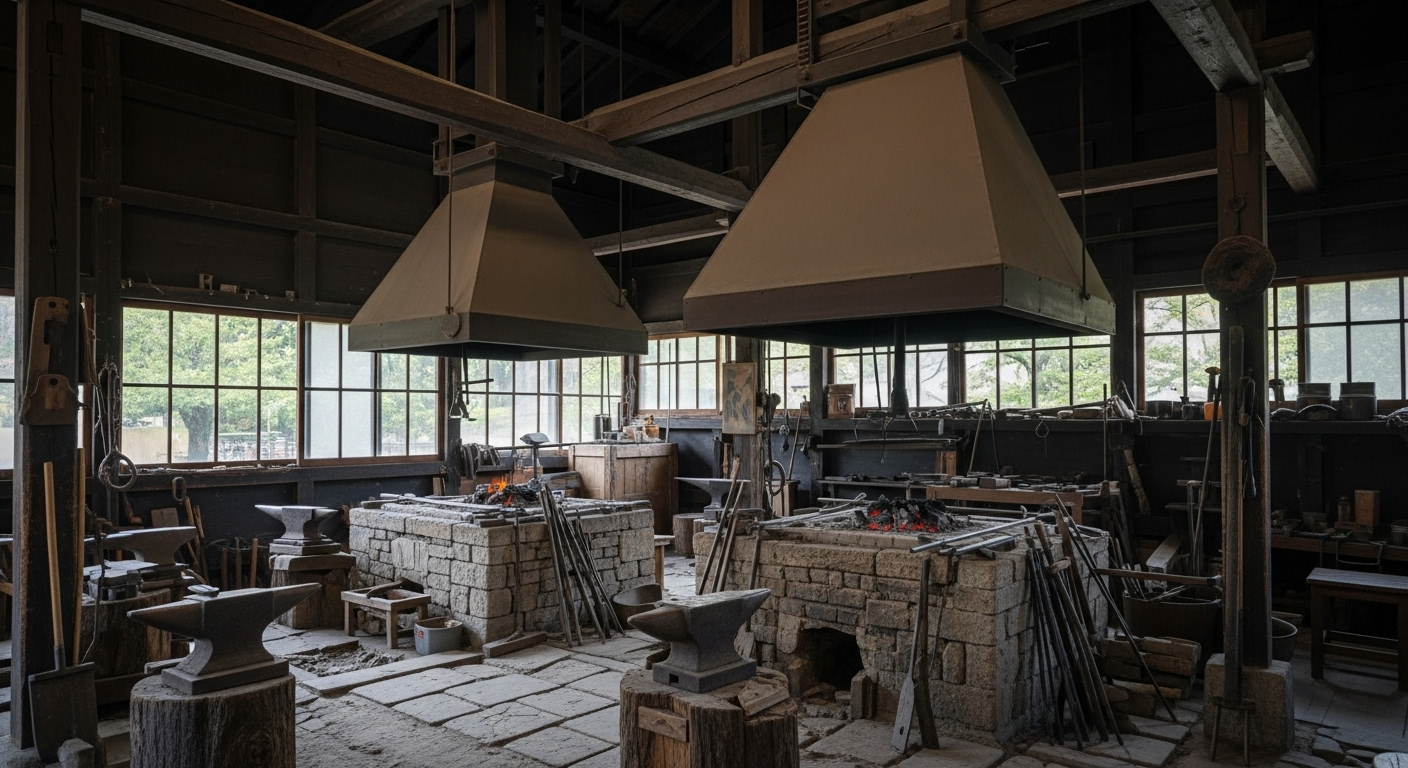
From hand-forging with pine charcoal to water quenching and natural whetstone sharpening, many processes remain unchanged. These methods endure not out of nostalgia, but because they create knives of unmatched quality—blades that carry the soul of their maker.


Passing the Flame: How Sakai’s Knife Heritage Lives Through Human Connection
-

Sakai’s knife-making tradition endures not through manuals but through direct human transmission, where apprentices learn by observing, imitating, and absorbing the master’s subtle techniques.
This deep, community-supported mentorship preserves skills that cannot be replaced, ensuring the unmatched quality of Sakai blades for generations to come.


Sakai Cultural Works
Extraordinary Japanese knives created at the highest level of Sakai craftsmanship.
Featuring a rare cultural work forged, sharpened, and completed by master artisans — selected as the championship prize for Japan’s national sushi competition scheduled for June 2026.
Available exclusively through KIREAJI.
Why Do 98% of Japan’s Chefs Trust Sakai Knives?
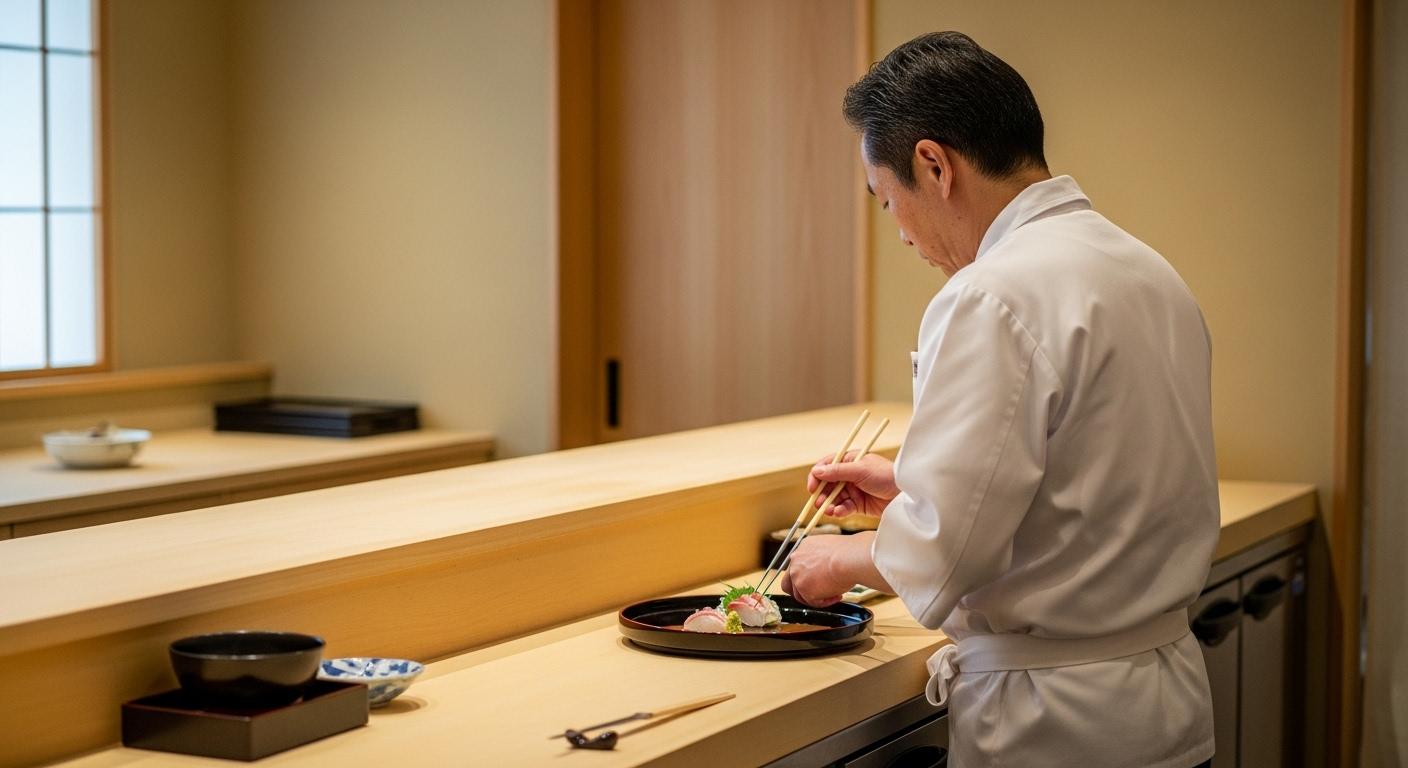
For over 600 years, Sakai has perfected a unique craft where each stage—forge, sharpen, finish—is mastered by specialists. This tradition makes Sakai the birthplace of Japan’s most trusted knives.
The 98% Statistic: More Than a Number
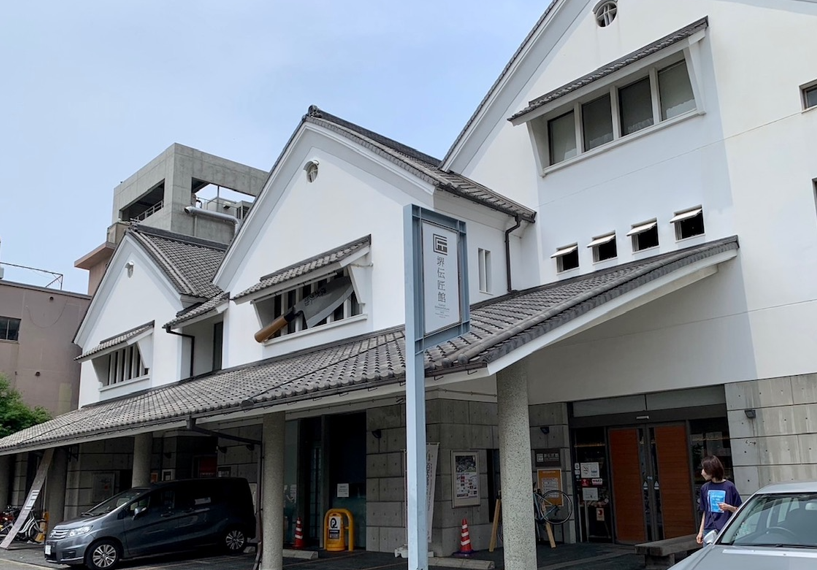
According to the Sakai Tourism Bureau, “98% of Japanese chefs use Sakai knives.” This figure isn’t just a claim—it reflects the deep trust chefs place in Sakai’s centuries-old craftsmanship.

Why are Sakai Japanese knives so sharp?
The answer is not one genius craftsman, but a system that makes compromise impossible.
This article explores how specialist masters, strict accountability, and a culture of focus create sharpness with meaning—one blade at a time.

The Master Craftsmen of Sakai Uchihamono
In Sakai, centuries-old techniques are carried forward by government-certified Traditional Craftsmen. Each knife is not just a tool but a living symbol of tradition, precision, and spirit—kept alive through their hands.

The Final Blades of a Retiring Blacksmith
A retiring blacksmith’s unfinished Blue Steel blades have arrived at KIREAJI.
Discover the quiet story of craftsmanship, legacy, and the continuation of Sakai knife culture.

Sakai’s Dwindling Masters: A Legacy at Risk
Once the heart of Japan’s finest cutlery, Sakai now has only a handful of blacksmiths left. With rising competition and fading interest among the young, new markets and fresh apprentices are vital to survival. Supporting these craftsmen means safeguarding a 600-year cultural legacy.