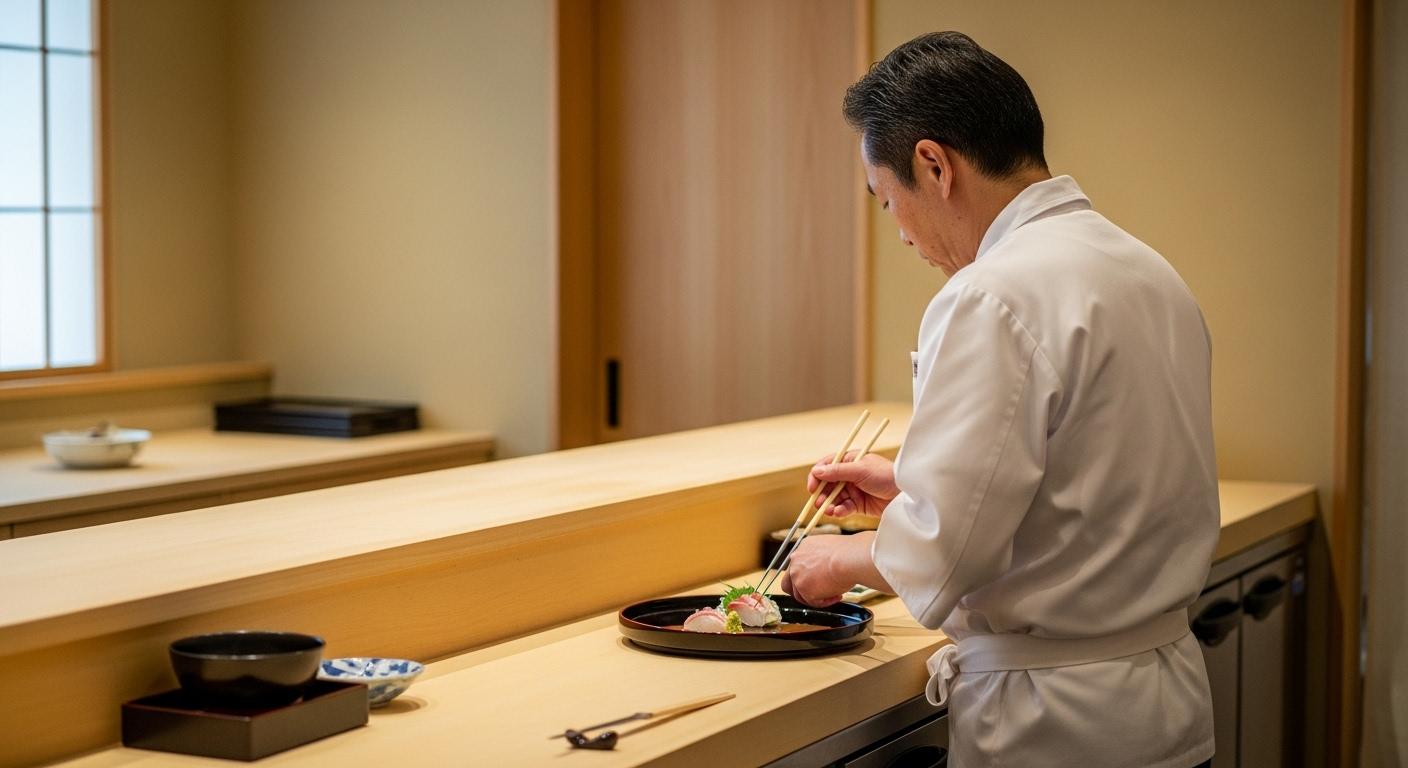
Yoshikazu Ikeda
-
Guardian of Tradition, Architect of the Future
In Sakai, Japan—where 600 years of knife-making tradition thrives—Yoshikazu Ikeda stands as both a master craftsman and a leader. As president of the Sakai Uchihamono Traditional Craftsmen Association, he forges blades of unmatched sharpness and beauty while guiding the next generation. From his family workshop to kitchens around the world, Ikeda’s knives embody the spirit of perseverance, the elegance of tradition, and the vision to shape the future of Japanese craftsmanship.
-
Sakai Traditional Craftsman Collection: Yoshikazu Ikeda
-
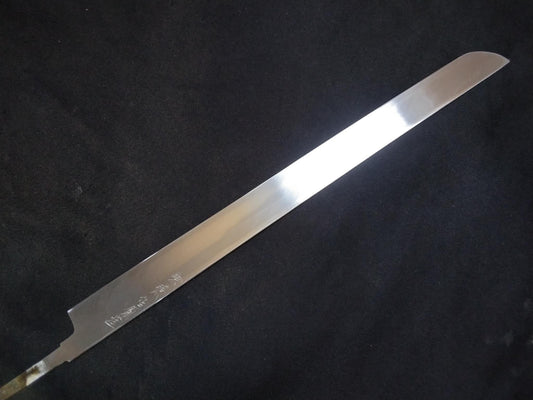
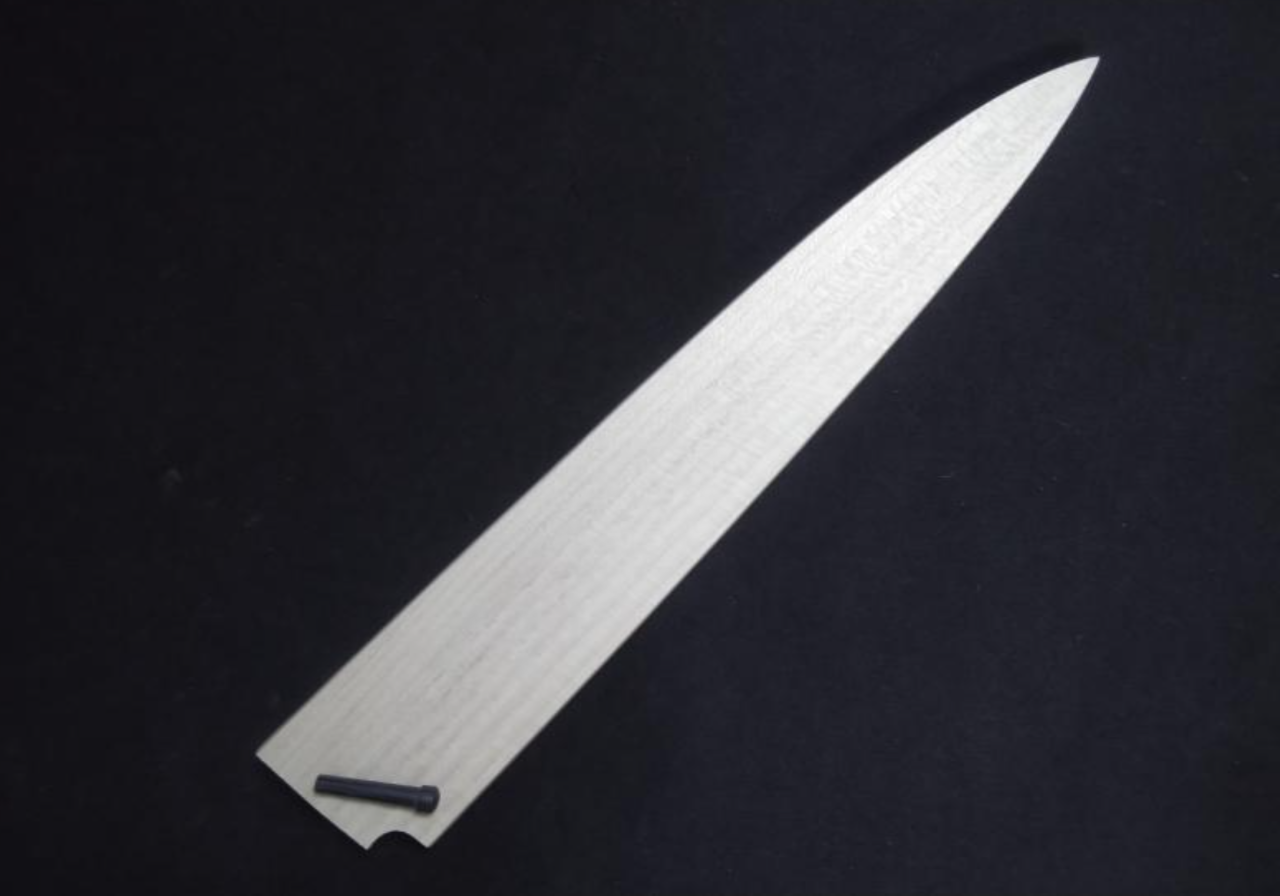
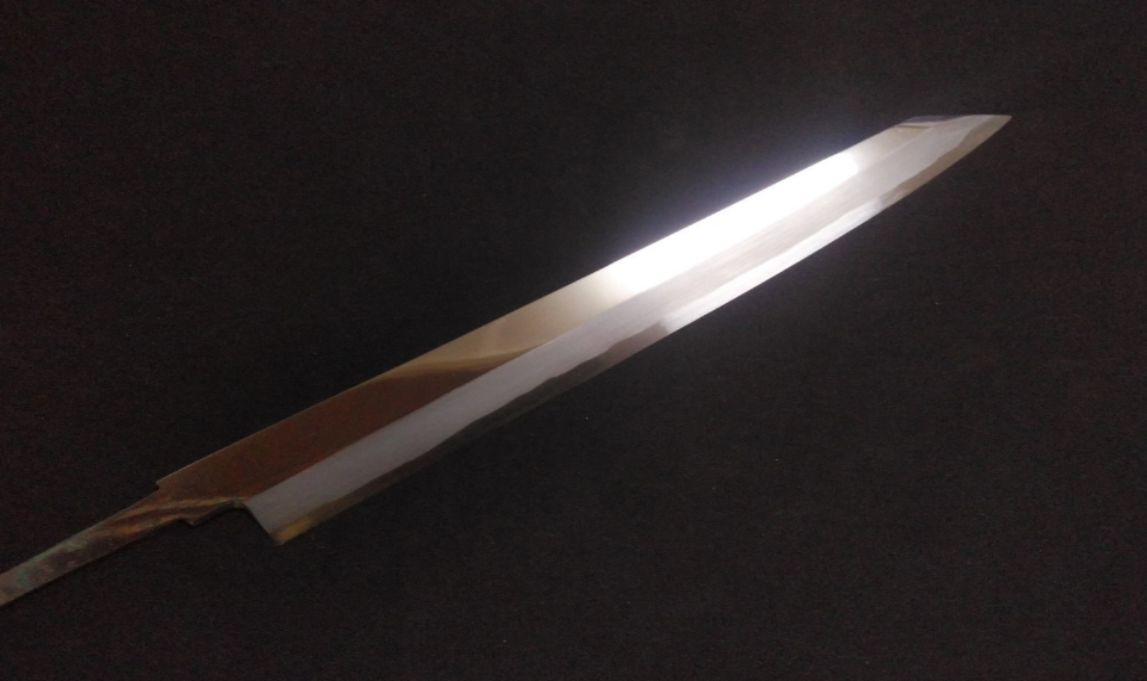
White Steel #2 (Honyaki) Yanagiba (Sakimaru) 330mm-Mirror Polished(one side)
Regular price $1,200.00 CADRegular priceUnit price / per$0.00 CADSale price $1,200.00 CADSold out
Yoshikazu Ikeda: A Master Preserving Tradition and Shaping the Future
-
Yoshikazu Ikeda, president of the Sakai Uchihamono Traditional Craftsmen Association, is a master bladesmith dedicated to preserving and advancing the 600-year-old tradition of Sakai forged knives.
-
From Apprentice to Master
Beginning his training in 1967 under his father, he co-founded Ikeda Tanrenjo with his elder brother, the late master craftsman Tatsuo Ikeda, in 1983.
-
Recognition and Awards
Recognized as a Traditional Craftsman in 1988, Ikeda has received numerous awards, including the Osaka Prefecture Outstanding Artisan Award in 2014.
-
Uncompromising Craftsmanship
Known for his unwavering “stubborn” pursuit of perfection, he produces knives of unmatched sharpness, balance, and beauty—treasured by chefs worldwide.
KIREAJI's Three Promises to You
-
1. Forged in the Legacy of Sakai
From Sakai City—Japan’s renowned birthplace of professional kitchen knives—each blade is crafted by master artisans with over six centuries of tradition. Perfectly balanced, enduringly sharp, and exquisitely finished, every cut carries the soul of true craftsmanship.
-
2. Thoughtful Care for Everyday Use
Every knife includes a hand-fitted magnolia saya for safe storage. Upon request, we offer a complimentary Honbazuke final hand sharpening—giving you a precise, ready-to-use edge from day one.
-
3. A Partnership for a Lifetime
A KIREAJI knife is more than a tool—it is a lifelong companion. With our bespoke paid aftercare services, we preserve its edge and beauty, ensuring it remains as precise and dependable as the day it first met your hand.
Why Many Product Photos Show Only the Blade
At KIREAJI, every knife is made to order in Sakai, Japan. Photos show the blade before the handle is attached, allowing artisans to perfect the balance and edge for your specific order. Your knife arrives fully finished — tailored just for you.
Global Delivery from Sakai
Across the world, discerning cooks seek authentic Japanese knives from Sakai — Japan’s legendary knife-making city with over 600 years of tradition.
At KIREAJI, we work alongside master artisans in Sakai to fulfill that desire, shipping genuine handcrafted knives directly from the workshop to kitchens worldwide.
Yoshikazu Ikeda: The Man Who Decided That "Just Making Things Well" Was Enough
-
He spent two years as a salaryman before deciding it wasn't for him. He has spent over fifty years since making knives. His philosophy fits in six words: just make things, quietly, well.
There is a particular kind of ambition that announces itself — that seeks recognition, that builds toward visible achievement, that measures itself against external markers of success. And there is another kind that simply shows up, every day, and does the work.
Yoshikazu Ikeda is the second kind.
The master of Ikeda Tanrenjo in Sakai — a craftsman who carries, by his own reckoning, six hundred years of accumulated technique in his hands — Ikeda has spent more than five decades refusing to be anything other than what he is: a maker of knives for professional cooks, done to the standard that professional cooking demands, without drama and without apology.
This is harder than it sounds. And the knives are extraordinary.
-
The Salaryman Who Found His Way Back
Not every path into craft begins at the forge. Ikeda's didn't.
Born into a blacksmith family with roots extending to the Meiji era — with an older brother, Tatsuo Ikeda, who would himself become a celebrated Traditional Craft Master — Yoshikazu Ikeda did not assume the craft was his destiny. After graduating from technical high school, he took a job at a general company. He worked there for approximately two years.
Then he decided it didn't suit him.
This is not an dramatic origin story. There was no crisis, no revelation, no moment of sudden clarity about his true calling. There was simply the honest recognition that the work he was doing did not fit the person doing it — and the equally honest decision to try something different.
In 1967, he began making knives under his father's guidance.
What is instructive about this beginning is not the decision itself but what it reveals about the man who made it. Ikeda did not arrive at knife-making as a romantic choice or a grand commitment. He arrived at it practically — as the work that, unlike the previous work, turned out to fit. The romance, if there is any, came later. First came the fitting.
-
Six Hundred Years in the Hands
Ikeda established Ikeda Tanrenjo as an independent workshop in 1983. In 1988, he was recognized as a Traditional Craft Master. He has since become the chairman of the Sakai Uchi Hamono Traditional Craft Master Association — the body that represents and oversees the practitioners of Sakai's knife-making tradition at the highest level.
These are significant achievements. Ikeda tends not to present them that way.
What he does present, with characteristic directness, is something more interesting: the belief that his hands carry six hundred years of accumulated knowledge. Not his knowledge — the tradition's knowledge, passed forward through generations of craftsmen who faced the same problems he faces, developed the same solutions, and passed them on in the same way they were passed to him. The techniques he uses are not his inventions. They are his inheritance. And the responsibility that inheritance places on him is not to innovate but to maintain — to ensure that what was given to him arrives, intact and functional, in the hands of the next generation.
This is a specific form of ambition. It asks not what you can add to the tradition but whether you are worthy of carrying it. Ikeda, by any external measure, is. But the measure he applies is internal — the daily question of whether the knife he made today is as good as the knife the tradition requires.
-
The Philosophy of Quiet Making
Ikeda's stated philosophy is so simple that it risks being misread as modest.
Tada, tants to futsu ni mono wo tsukuru. Just make things, quietly, normally.
This is not humility. It is a position — a deliberate rejection of the inflation of craft into something more theatrical than it needs to be. Making knives for professional cooks does not require soul or artistry or the language of creation. It requires a sharp edge, a durable body, and the reliability that allows the person using the tool to trust it completely and think about nothing but the food.
Ikeda is explicit about the distinction between what he makes and what art objects are. A knife made for display — for its visual beauty, its symbolic value, its collectible status — is a different object from a knife made for use. The former is judged by how it looks. The latter is judged by how it cuts, how it holds, and how it feels in the hand of someone who has used it through a full service every day for years.
Ikeda makes the latter. He does not apologize for making it simply, without the narrative of exceptional inspiration that has become common in the presentation of craft. The knife either cuts or it doesn't. The tradition either survives or it doesn't. The performance is in the result, not in the telling.
-
The Stubborn Hands
Ikeda describes his own hands as clumsy and stubborn.
This is not false modesty. It is a specific and carefully chosen self-description that reveals something important about the nature of his skill.
The hands that are good at repetition — that can perform the same motion, with the same precision, across thousands of repetitions without the restlessness that most people experience, without the need for novelty or variation to maintain engagement — are not necessarily the hands that produce the most innovative work. They are the hands that produce the most consistent work. And in a craft where consistency is the primary quality standard — where the knife made on a Tuesday must be as good as the knife made on a Monday, and the knife made in winter must be as good as the knife made in summer — consistency is not a secondary virtue. It is the virtue.
Ikeda's self-described stubbornness is the stubbornness of someone who has found the motion that produces the right result and sees no reason to change it. The hammer falls the same way because the same way produces the knife that professional cooks need. The heat treatment is done the same way because the same way produces the hardness and grain structure that makes the edge hold. The process is repeated because the repetition is the point — because the tradition was built by people who did the same thing, the same way, enough times to understand it completely, and passed that understanding forward in the form of the motion itself.
This is what six hundred years looks like in a pair of hands.
-
What He Actually Makes
The range of Ikeda's technical practice is wide — unusually so for a craftsman who presents himself as someone who simply makes things normally.
He works with diverse steel types, including the most demanding variants. His mizu-honkyaki — water-quench single-steel construction — places him among the small number of living craftsmen capable of this technique, joining the company of names like Genkai Masakuni and Kenichi Shiraki discussed elsewhere in this series. His suminagashi work — the layered Damascus-pattern construction that produces the wave-like visual patterns visible in high-end Japanese knives — demonstrates a different but equally exacting technical discipline.
The breadth of this technical range is not accidental. It is the result of fifty years of doing the work — of the accumulated encounter with different materials, different challenges, and different solutions that a craftsman accumulates over a career long enough and serious enough to reach the limits of each technique in turn.
Ikeda does not present this breadth as exceptional. It is, by his account, simply what happens when you show up every day and do the work. The techniques are learned the same way they were always learned: by doing them, failing at them, doing them again, and eventually doing them well enough that the material begins to cooperate.
This is the quiet version of mastery. Not the mastery that announces itself, but the mastery that accumulates without announcement and reveals itself only in the quality of what it produces.
-
The Honest Self-Assessment
There is a particular kind of craftsman who describes himself with the language of marketing — who has understood that the story of the work is part of the product, and who constructs that story with the same care he applies to the work itself.
Ikeda is not that craftsman.
He describes himself as bad at talking and shy with strangers. He notes, with what seems like genuine conviction, that if he were good at sales he would not have become a craftsman. The implication is not self-deprecation — it is an acknowledgment that different kinds of excellence exist, and that the excellence required for knife-making is not the excellence required for presenting knife-making.
This is an unusually honest position. Most craftsmen, when asked about their work, have learned to produce some version of the narrative that the world has come to expect: the dedication to tradition, the pursuit of perfection, the emotional investment in each blade. Ikeda produces, instead, something closer to a job description. He makes knives. He makes them the way the tradition requires. He has been doing it for fifty years. The knives are good.
The knives are, by all available evidence, extraordinary.
-
The Chairman and the Tradition
Ikeda's role as chairman of the Sakai Uchi Hamono Traditional Craft Master Association places him in an unusual position for a craftsman who describes his philosophy as simply making things quietly.
The role requires something different from the forge — visibility, communication, the ability to represent a tradition to the people and institutions whose support that tradition depends on. These are not, by Ikeda's own account, his natural strengths.
But the role exists because the tradition needs to be represented — needs someone who combines genuine technical mastery with the institutional standing to speak for the craft in contexts that individual craftsmen, working alone in their workshops, cannot reach. Ikeda occupies this position because he has earned it: through five decades of work, through the recognition of his peers, through the accumulated judgment of an industry that knows, better than any external observer, what genuine mastery looks like.
He carries this responsibility the way he carries the tradition itself: not loudly, not with the language of exceptional dedication, but with the same quiet consistency he brings to the forge.
-
What Fifty Years Looks Like
In 2014, Ikeda received the Naniwa no Meiko award — the Osaka Prefecture recognition for outstanding technical skill. He has also been designated a Monozukuri Meister by the city of Sakai. These are the external markers of a career that has, by any measure, been significant.
Ikeda, characteristically, does not appear to organize his sense of his own work around these markers.
What he appears to organize it around is simpler and more demanding: the daily question of whether the knife is good enough. Not good enough by the standard of the award or the recognition or the external validation — good enough by the standard of the tradition, by the standard of the professional cook who will use the knife, by the standard of the six hundred years of craftsmen whose work has accumulated in his hands and whose judgment he carries forward every time he picks up the hammer.
This is what fifty years of quiet making looks like. Not a monument to exceptional inspiration. A record of consistent presence — of showing up, doing the work, and making the knife that the tradition requires.
Yoshikazu Ikeda has been making knives for over fifty years. He describes this as simply doing things normally. The knives suggest he has a very high standard for normal.
The Master Craftsmen of Sakai Uchihamono
In Sakai, centuries-old techniques are carried forward by government-certified Traditional Craftsmen. Each knife is not just a tool but a living symbol of tradition, precision, and spirit—kept alive through their hands.
Why Do 98% of Japan’s Chefs Trust Sakai Knives?
For over 600 years, Sakai has perfected a unique craft where each stage—forge, sharpen, finish—is mastered by specialists. This tradition makes Sakai the birthplace of Japan’s most trusted knives.
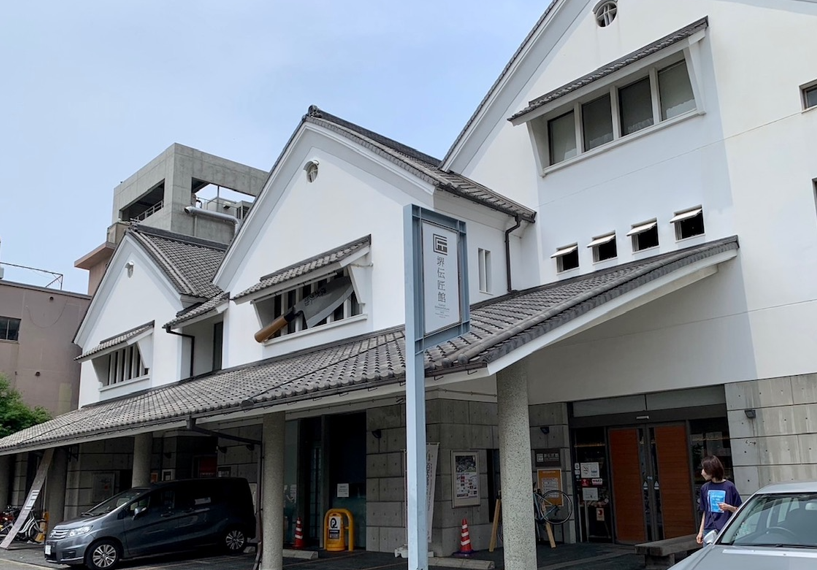
The 98% Statistic: More Than a Number
According to the Sakai Tourism Bureau, “98% of Japanese chefs use Sakai knives.” This figure isn’t just a claim—it reflects the deep trust chefs place in Sakai’s centuries-old craftsmanship.
Sakai’s Dwindling Masters: A Legacy at Risk
Once the heart of Japan’s finest cutlery, Sakai now has only a handful of blacksmiths left. With rising competition and fading interest among the young, new markets and fresh apprentices are vital to survival. Supporting these craftsmen means safeguarding a 600-year cultural legacy.
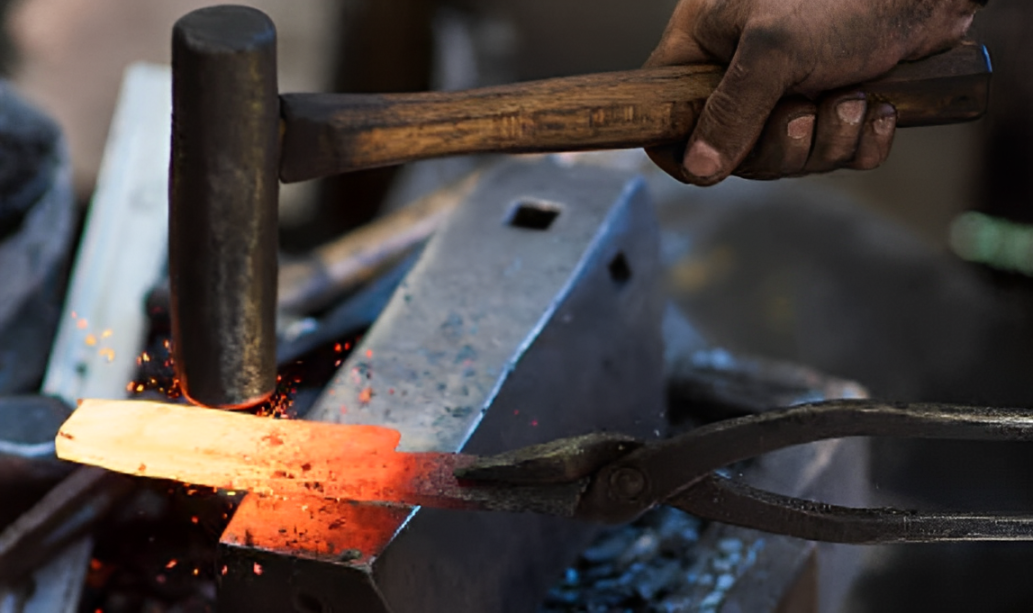
Tatsuo Ikeda
Tatsuo Ikeda, elder brother of master Yoshikazu Ikeda, has been vital in preserving their family’s legacy of craftsmanship. His knives embody skill and passion, prized by chefs worldwide for revealing the true essence of ingredients. Tatsuo’s achievements and spirit continue to inspire Yoshikazu, and together their techniques live on in the tradition of Sakai.
The Soul of Craftsmanship
-
The Art of Simply Creating – The Subtle Beauty of Craftsmanship
For me, true craftsmanship lies in simplicity. It is not about adding flair, nor about seeking recognition—it is about moving one’s hands steadily, with quiet focus, and letting the work speak for itself.
-
When I forge, I do not think of creating something “special.” Instead, I simply concentrate on each strike of the hammer, each adjustment of the fire, each moment with the steel. There is no need for pretense. The beauty of the blade emerges naturally when the craftsman and the tools move as one.
-
In our time, people often talk about art, expression, or individuality. But the heart of Sakai craftsmanship is different. It is in the plain act of creating with humility. The knives born from such a spirit carry no unnecessary decoration, yet they slip seamlessly into the user’s daily life—performing their role with quiet assurance and subtle joy.
-
I believe that this way of working—dedicating oneself to simplicity, free of distractions—holds meaning not only for craftsmen but for all people. In life as in forging, when we strip away what is unnecessary and focus only on the task before us, we find clarity, strength, and purpose.
-
This is the spirit I carry into my forge each day. To create plainly, to move forward steadily, and to let the blade itself embody the tradition I have inherited. That, to me, is the essence of the craft.
How Japanese Knives Are Made: The Sakai Tradition
VIDEO PROVIDED: JAPAN TRADITIONAL CRAFTS AOYAMA SQUARE (YOUTUBE)
-
Sakai Forged Blades — Six Centuries of Unrivaled Craftsmanship
Loved by chefs around the world and trusted by 98% of Japan’s top culinary professionals, Sakai knives are more than tools—they are the living legacy of over 600 years of master craftsmanship.
-
At KIREAJI, we work directly with the Shiroyama Knife Workshop in Sakai, Japan, ensuring every blade is hand-forged, finished to perfection, and shipped straight from the workshop to kitchens across the globe. No middlemen. No mass production. Only authentic, artisan-made knives, crafted to elevate your cooking for a lifetime.