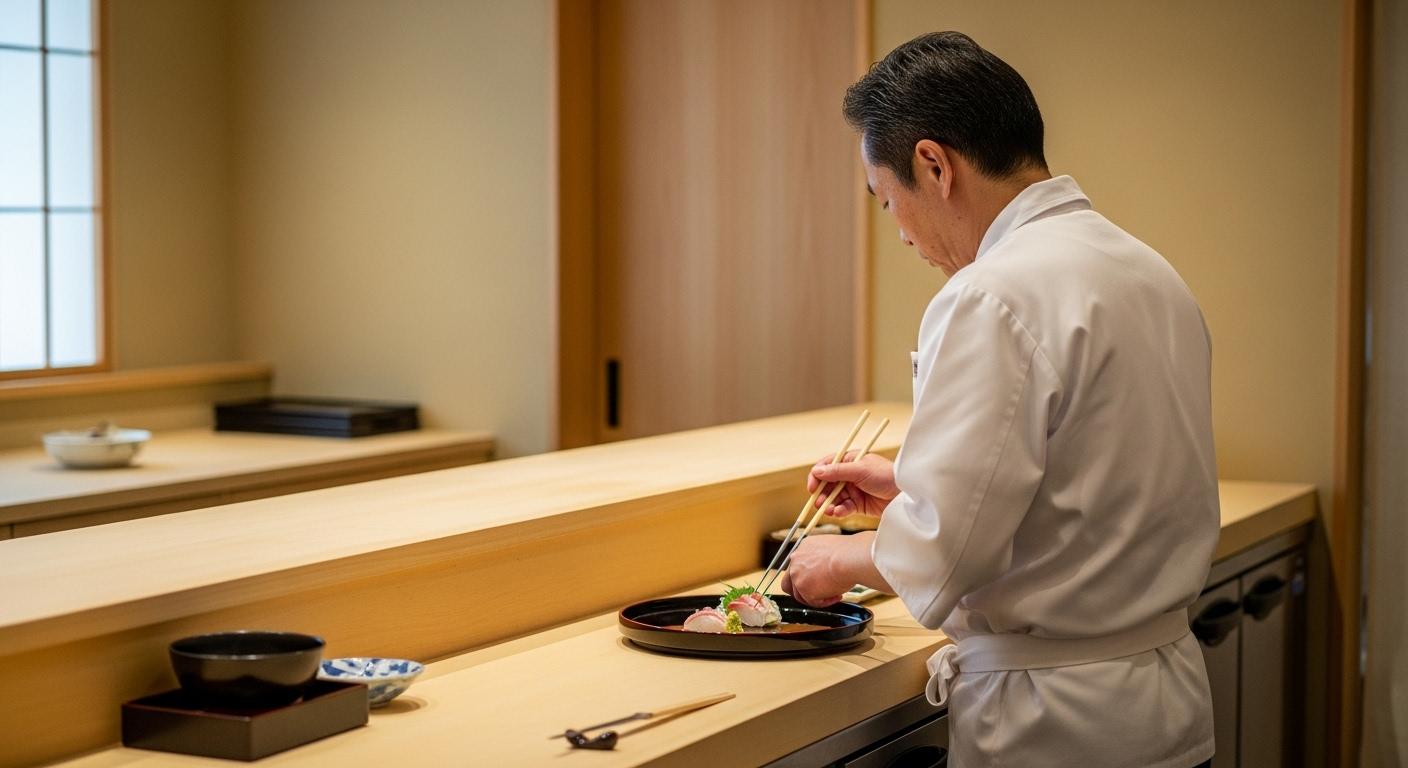
• In Sakai, where 600 years of knife-making tradition meets the spirit of innovation, Tadashi Enami stands as a fifth-generation master.

    Certified as a Traditional Craftsman in 2003 and recognized as a Sakai City Meister in 2007, he forges each blade by hand, blending time-honored fire-forging techniques with modern refinements to create knives that are as beautiful as they are functional.

Sakai Traditional Craftsman Collection: Tadashi Enami

  • A Fifth-Generation Master

    As the fifth-generation blacksmith in a lineage spanning over 600 years of Sakai knife-making, Tadashi Enami embodies both tradition and progress. Certified as a Traditional Craftsman in 2003 and recognized as a Sakai City Meister in 2007, he is celebrated for his exceptional skill and commitment to the art of Japanese knives.

  • Precision and Passion in Every Blade

    Enami’s knives are forged from meticulously selected materials using the ancient fire-forging technique. Each blade is crafted entirely by hand, blending historical methods with modern refinements to achieve perfect balance, beauty, and performance.

  • An Artisan Committed to the Future

    Beyond creating knives, Enami actively passes on his knowledge through workshops and hands-on programs, ensuring that Sakai’s craftsmanship thrives for generations to come. His work is a living bridge between the past and the future.

  • japanese_knife_made_in_Sakai

    1. Forged in the Legacy of Sakai

    From Sakai City—Japan’s renowned birthplace of professional kitchen knives—each blade is crafted by master artisans with over six centuries of tradition. Perfectly balanced, enduringly sharp, and exquisitely finished, every cut carries the soul of true craftsmanship.

  • 2. Thoughtful Care for Everyday Use

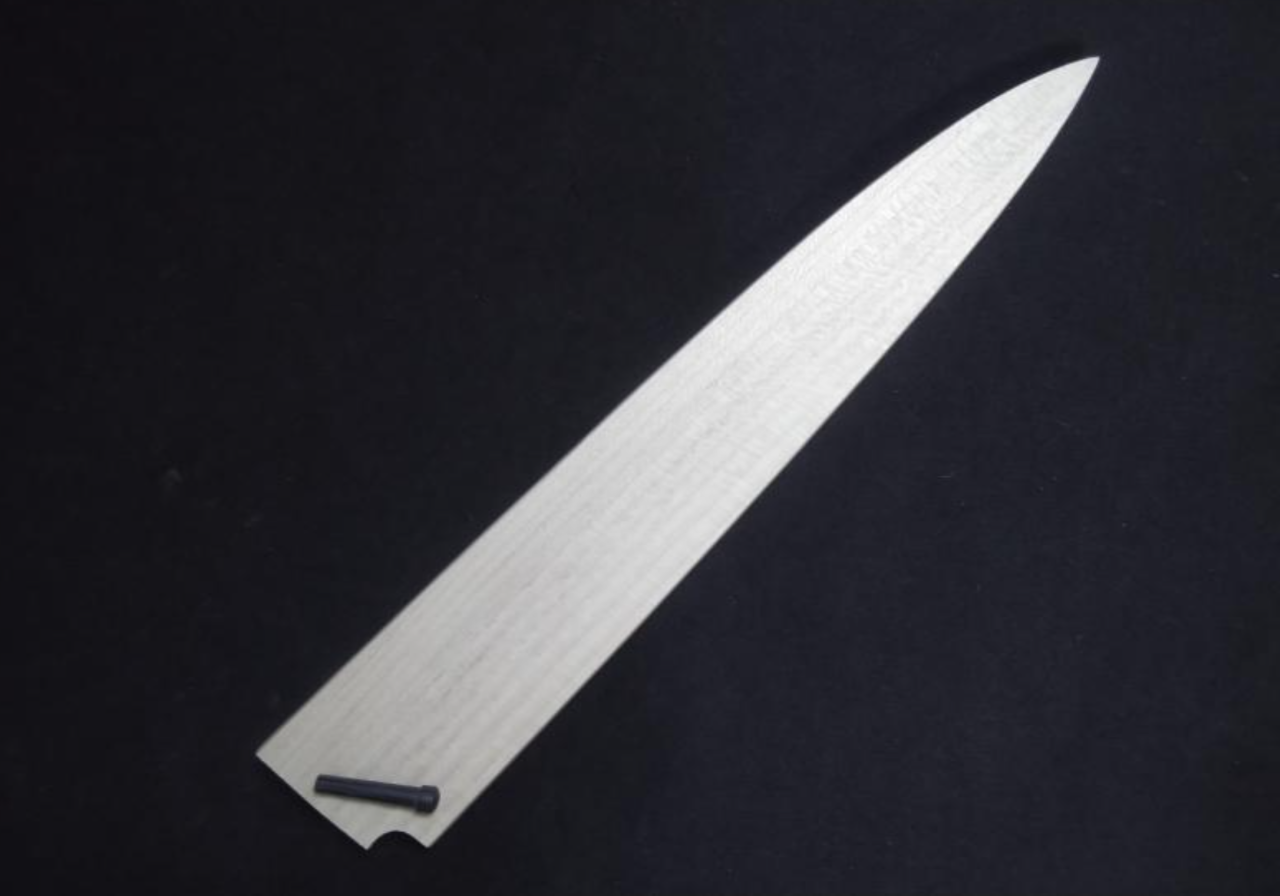
    Every knife includes a hand-fitted magnolia saya for safe storage. Upon request, we offer a complimentary Honbazuke final hand sharpening—giving you a precise, ready-to-use edge from day one.

  • 3. A Partnership for a Lifetime

    A KIREAJI knife is more than a tool—it is a lifelong companion. With our bespoke paid aftercare services, we preserve its edge and beauty, ensuring it remains as precise and dependable as the day it first met your hand.

Why Many Product Photos Show Only the Blade

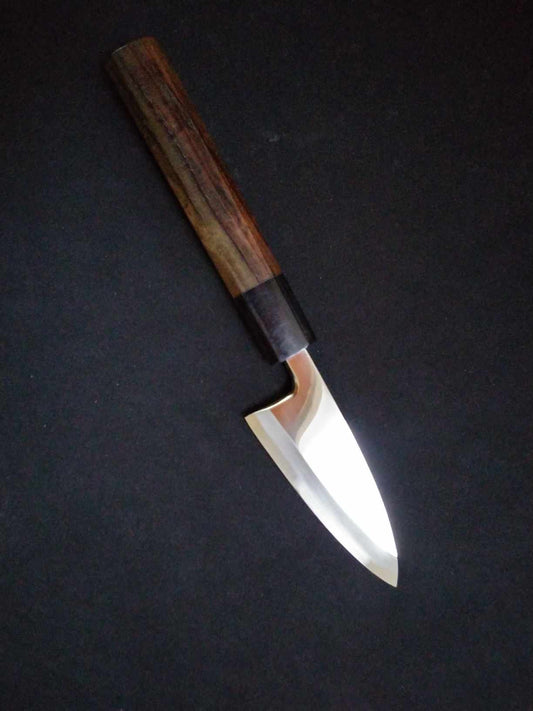
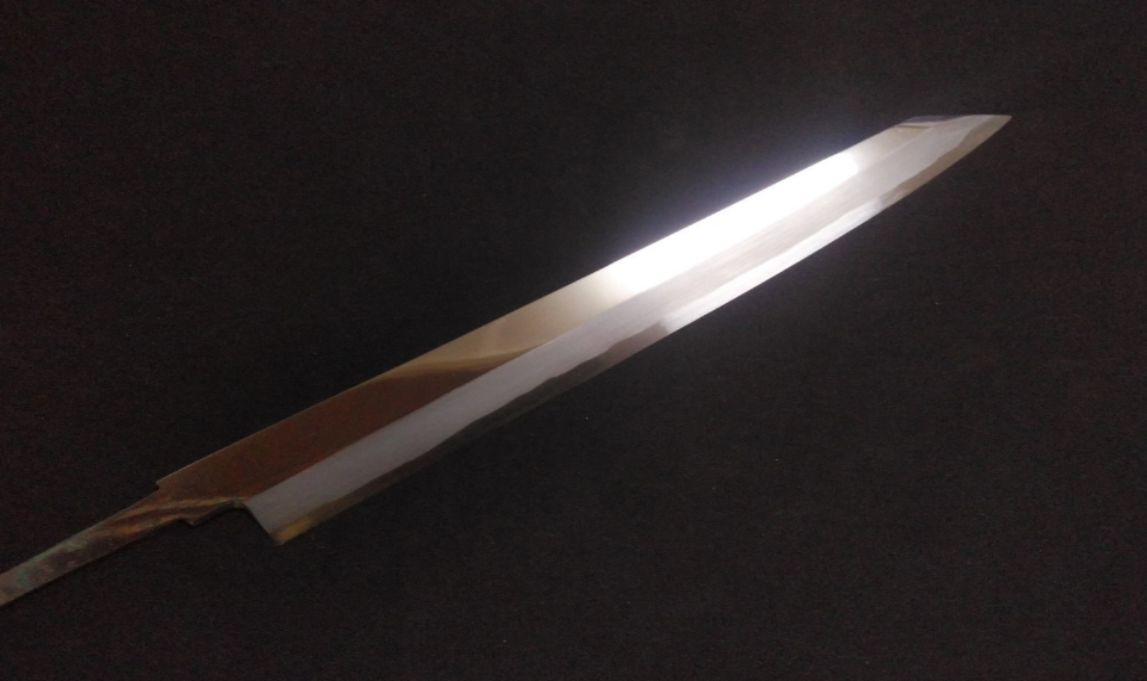
At KIREAJI, every knife is made to order in Sakai, Japan. Photos show the blade before the handle is attached, allowing artisans to perfect the balance and edge for your specific order. Your knife arrives fully finished — tailored just for you.

Made-to-order Japanese knives

Global Delivery from Sakai

Across the world, discerning cooks seek authentic Japanese knives from Sakai — Japan’s legendary knife-making city with over 600 years of tradition.
At KIREAJI, we work alongside master artisans in Sakai to fulfill that desire, shipping genuine handcrafted knives directly from the workshop to kitchens worldwide.

Global Delivery from Sakai
  • Six hundred years of tradition. Four generations before him. And a conviction that none of it would survive unless people could touch it with their own hands.

    There are craftsmen who guard their knowledge. And there are craftsmen who give it away — not because they don't value it, but because they understand that a tradition preserved in secrecy is a tradition already dying.

    Tadashi Enami is the second kind.

    The fifth-generation master of Enami Hamono Seisakusho in Sakai — a workshop whose lineage extends across more than six centuries of Japan's most storied knife-making tradition — Enami has spent over three decades not just making knives, but making sure that other people understand what making knives actually means. Not abstractly. Not through explanation alone. Through experience: through the heat of the forge, the weight of the hammer, and the moment when a piece of steel begins, under a visitor's own hands, to become something.

  • Six Hundred Years and a Fifth Generation

    The mathematics of five generations across six hundred years says something about the depth of the continuity Enami carries.

    Sakai's knife-making tradition is not a recent enthusiasm or a revived heritage. It has been the same city, the same craft, the same fundamental process — fire, hammer, steel, skill — for longer than most national institutions have existed. The craftsmen who came before Enami were not preserving something antique. They were practicing something alive, passing it forward because it was worth passing forward.

    Enami entered the craft in 1984, four decades ago. In 2003, he was recognized as a Traditional Craft Master by Japan's Ministry of Economy, Trade and Industry — a designation that reflects not just personal skill but the judgment that what a craftsman does is worth the formal recognition of the state.

    But the designation, significant as it is, tells only part of the story. The more revealing part is what Enami has done with the decades he has spent at the forge — and what he decided, at some point, that the forge alone was not enough.

  • The Program That Changed What Was Possible

    The most distinctive thing about Enami's practice — the thing that sets him apart from the vast majority of craftsmen working at his level — is not a technique. It is a decision.

    At some point in his career, Enami decided that making knives was not enough. That the knowledge he had accumulated — the physical knowledge, the embodied understanding of fire and steel and hammer — needed to go somewhere beyond the blades themselves. That the tradition he was carrying would be better served not just by the knives he produced but by the people who came to understand what those knives required to be made.

    The result is a program that is, as described by those familiar with it, genuinely rare in Japan: a full-experience course at Enami Hamono Seisakusho in which ordinary people — not apprentices, not aspiring craftsmen, but anyone who wants to understand — can participate in every stage of making a Sakai knife. The striking. The grinding. The heat treatment. The whole process, experienced in sequence, with Enami himself as the guide.

    This is not a demonstration. It is participation. The participant works the metal. They feel the resistance of the steel under the hammer. They experience the transformation of heat on the material — the way it moves differently at different temperatures, the way the color of the metal tells you something about what it is doing and what it needs. These are not things that can be learned from watching. They are things that can only be understood by doing.

  • Why He Talks

    Enami has said, with characteristic directness, that he likes to talk.

    In the context of Japanese craft culture — which has traditionally valued reticence, the self-contained master who demonstrates rather than explains, the knowledge that is transmitted through proximity and observation rather than instruction — this is a meaningful statement. It is not false modesty or an incidental personal trait. It is a position.

    Enami believes that knowledge shared is more powerful than knowledge withheld. That the person who understands why a Sakai knife is made the way it is — who has felt the fire and the hammer and the resistance of the steel — will be a better advocate for the tradition than someone who has simply been told that the tradition is worth respecting.

    During the workshop programs, he lectures. He explains. He answers questions with enthusiasm rather than with the guardedness that might be expected of someone sharing techniques developed across generations. The knowledge is not the secret. The knowledge is the gift.

    This approach is not naive. Enami is not unaware that techniques can be copied or that information shared can be used in ways that were not intended. His confidence in openness reflects something deeper: the belief that what cannot be copied is not the technique itself but the culture that produces the technique — the accumulated judgment, the physical instinct, the way of seeing steel that develops only through years of practice. Those things cannot be transmitted in a single workshop session, or in a hundred. They are what five generations and six centuries look like.

  • The Shrine Offering: Blades as Omens

    There is a dimension of Enami's work that connects it to something beyond the professional and the technical — to the ritual life of Japan and the belief systems that have always surrounded the making and use of blades.

    Enami's knives are offered at Sumiyoshi Taisha — one of Japan's oldest and most significant Shinto shrines, located in Osaka — as ceremonial objects with a specific meaning. The blade, in this context, is not just a cutting tool. It is a symbol: of the severing of bad connections, the clearing of what should not remain, the opening of the path forward.

    This is engimono — a charm, a lucky object, a thing that carries intention beyond its physical function. A knife offered at Sumiyoshi Taisha with this meaning is not a religious object in the Western sense. It is closer to what we might call a concentrated intention — the maker's skill and the shrine's tradition combined in an object that the recipient carries as evidence of their decision to cut away the past and move toward what comes next.

    For Enami, this is not a marketing exercise or a tourist accommodation. It is an expression of something he genuinely believes: that what he makes, at its best, is not just useful. It carries something. The blade made with care and intention, offered at a place of power and brought into the life of the person who receives it, has a meaning that the merely functional object does not.

    Whether or not the buyer shares this belief, the fact of it reveals something about how Enami understands his own work. The knife is not just the result of technique. It is the product of a person who cares — about the steel, about the person who will use it, and about the accumulated weight of what it means to be the fifth generation of a craft that has been practiced in this city for six centuries.

  • What the Hands Remember

    There is a particular kind of knowledge that lives in the hands — that is not accessible to the mind alone, that cannot be transmitted through description or demonstration, and that accumulates only through direct physical experience.

    This is what Enami is trying to give people in his workshop programs. Not information about how knives are made. Not an appreciation of the tradition in the abstract. The actual physical experience of what it feels like to work metal — to apply hammer to heated steel, to feel the material respond, to participate, however briefly and however incompletely, in the process that produces the tool.

    The person who has done this, even once, does not think about a knife the same way afterward. The weight of the blade is not just weight. The edge is not just sharpness. The object carries, for that person, a physical memory of what it required to exist — and that memory changes the relationship between the person and the thing.

    This is what Enami is building, one workshop at a time. Not a following, not a market, not even a reputation — though all of these have followed. He is building understanding: the kind that lives in the body, that persists after the intellectual content of the experience has faded, that makes a person pick up a knife differently because they once, for an afternoon, tried to make one.

  • The Tradition Is a Living Thing

    Six hundred years is a long time. It is long enough to create the impression that the tradition is stable, that it will persist regardless of what any individual within it does or fails to do, that the weight of history is its own protection.

    Enami does not believe this. The tradition he carries is not a monument. It is a practice — something that exists only as long as people are doing it, understanding it, and caring enough about it to pass it forward. The moment the understanding stops being transmitted is the moment the tradition begins to die, regardless of how many years it has already survived.

    This is why he talks. This is why he opens his workshop to strangers and lets them hold the hammer. This is why the knowledge he has spent decades acquiring is not hoarded but offered — because a tradition offered to the world is stronger than a tradition kept to itself.

    The fire is the same fire that Sakai's craftsmen have tended for six hundred years. Enami is making sure that someone knows what it feels like.

The Master Craftsmen of Sakai Uchihamono

In Sakai, centuries-old techniques are carried forward by government-certified Traditional Craftsmen. Each knife is not just a tool but a living symbol of tradition, precision, and spirit—kept alive through their hands.

Sakai’s Traditional Craftsmen

Why Do 98% of Japan’s Chefs Trust Sakai Knives?

For over 600 years, Sakai has perfected a unique craft where each stage—forge, sharpen, finish—is mastered by specialists. This tradition makes Sakai the birthplace of Japan’s most trusted knives.
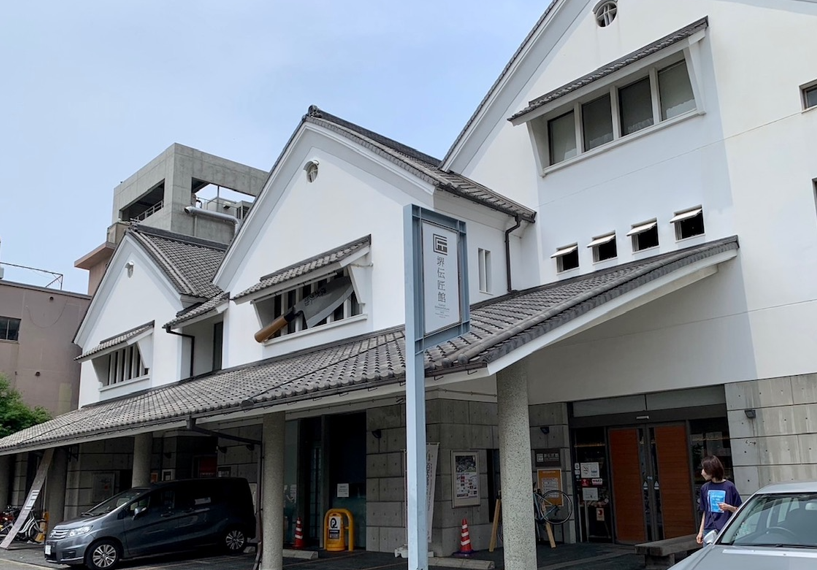
Why Do 98% of Japan’s Chefs Trust Sakai Knives?

The 98% Statistic: More Than a Number

According to the Sakai Tourism Bureau, “98% of Japanese chefs use Sakai knives.” This figure isn’t just a claim—it reflects the deep trust chefs place in Sakai’s centuries-old craftsmanship.

Sakai City Official English Site

Sakai’s Dwindling Masters: A Legacy at Risk

Once the heart of Japan’s finest cutlery, Sakai now has only a handful of blacksmiths left. With rising competition and fading interest among the young, new markets and fresh apprentices are vital to survival. Supporting these craftsmen means safeguarding a 600-year cultural legacy.
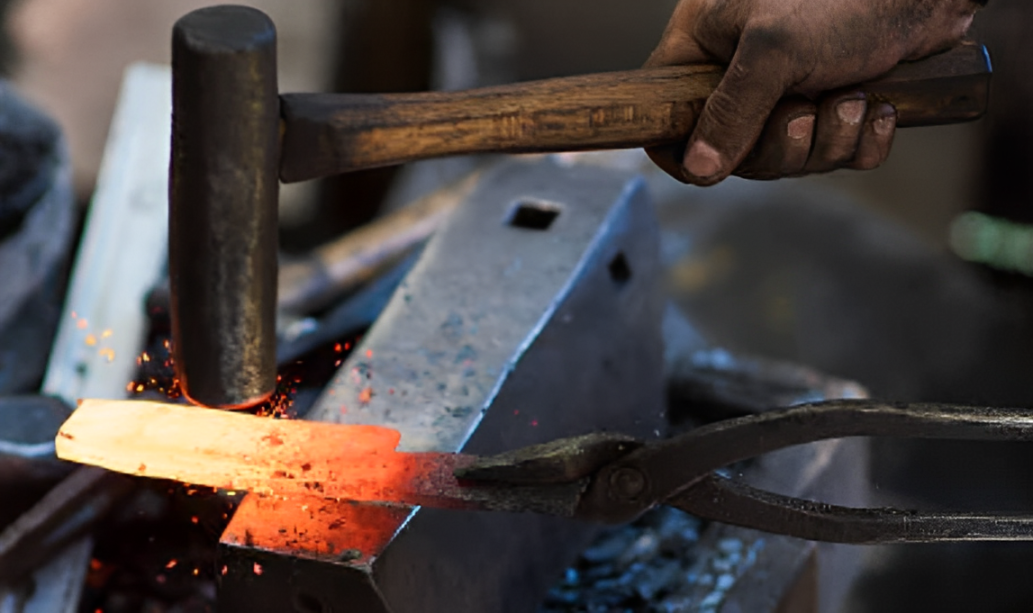
Sakai's Declining Japanese Knife Craftsmen
  • The Spirit and Craft of Sakai Blades

    For over 600 years, the people of Sakai have forged blades that embody not only strength, but also soul. This craft, passed down through countless generations, is a heritage I feel deeply responsible to preserve. A knife may look like just a tool, but when it is forged by human hands, it carries within it the dedication, skill, and spirit of its maker—qualities that no machine can ever replicate.

  • What makes a Sakai blade unique is not simply its sharpness. It is the feeling it gives when you hold it—the way the handle rests naturally in the palm, the effortless glide of the edge, the comfort that grows the more you use it. These qualities reveal themselves slowly, like a relationship built on trust, and they can only be experienced with a blade crafted by true artisans.

  • Each knife is born through the collaboration of many hands: blacksmiths who shape the steel, sharpeners who bring the edge to life, and craftsmen who ensure balance and harmony. Every step reflects pride, precision, and respect for tradition. This process is not about mass production, but about honoring the craft—one blade at a time

  • When you pick up a Sakai blade, you are holding more than steel. You are holding a story, a culture, and a piece of human spirit. My hope is that every cut you make with it deepens your connection to the generations of craftsmen who poured their hearts into keeping this tradition alive.

  • For me, forging is not just work—it is a vow. A vow to preserve the past, meet the needs of the present, and inspire the future. And it is my wish that, through each blade, you will feel the warmth of that vow in your own hands.

How Japanese Knives Are Made: The Sakai Tradition

VIDEO PROVIDED: JAPAN TRADITIONAL CRAFTS AOYAMA SQUARE (YOUTUBE)

  • Sakai Forged Blades — Six Centuries of Unrivaled Craftsmanship

    Loved by chefs around the world and trusted by 98% of Japan’s top culinary professionals, Sakai knives are more than tools—they are the living legacy of over 600 years of master craftsmanship.

  • At KIREAJI, we work directly with the Shiroyama Knife Workshop in Sakai, Japan, ensuring every blade is hand-forged, finished to perfection, and shipped straight from the workshop to kitchens across the globe. No middlemen. No mass production. Only authentic, artisan-made knives, crafted to elevate your cooking for a lifetime.