Vous n’achetez pas seulement un couteau Sakai — vous pouvez aider à finir le vôtre
-

Un couteau que vous avez aidé à terminer
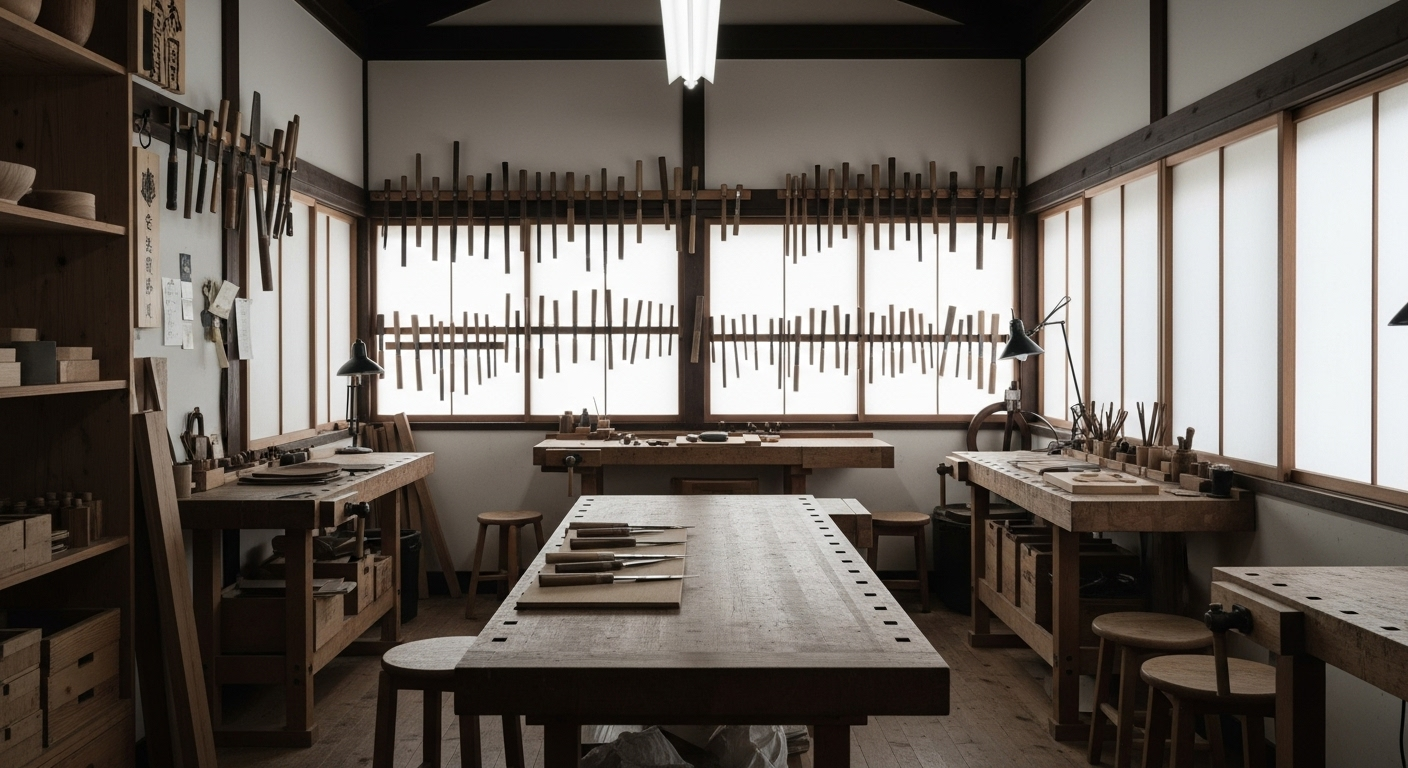
Une expérience actuellement promue par l'Office du tourisme et des congrès d'Osaka se déroule dans une coutellerie de Sakai, établie de longue date, dont l'histoire remonte à plus de deux siècles.
Les visiteurs apprennent directement des artisans et peuvent choisir parmi des expériences qui incluent l'observation de l'affûtage, l'essai de l'affûtage eux-mêmes, ou la participation au dressage de la lame et à l'ajustement du manche.
Dans un programme, un artisan grave également le nom choisi par le visiteur dans le cadre de la finition du couteau.
Pensez à la différence.
Vous pourriez entrer dans un magasin, choisir un couteau, le payer et partir.
Ou vous pourriez vous tenir à Sakai, apprendre pourquoi la lame doit être redressée, comprendre comment le manche fait partie de l'outil fini, regarder un artisan au travail — et ensuite ramener ce couteau à la maison.
L'objet peut être un couteau dans les deux cas.
La relation avec celui-ci est complètement différente.
-

Pourquoi est-ce important ?
Nous vivons à une époque où presque tout peut arriver à notre porte.
Cliquez.
Payez.
Expédiez.
Ouvrez la boîte.
Cette commodité est extraordinaire.
Mais quelque chose a aussi disparu de nombreux objets que nous possédons :
le lien entre la personne qui fabrique quelque chose et la personne qui l'utilise.
L'artisanat traditionnel offre une expérience différente.
Lorsque vous voyez les mains de quelqu'un travailler sur une lame, le couteau cesse d'être un produit anonyme.
Vous commencez à comprendre que sa géométrie n'est pas simplement apparue.
Son tranchant n'est pas simplement apparu.
Son équilibre n'est pas simplement apparu.
Quelqu'un a pris des décisions.
Quelqu'un a développé la sensibilité nécessaire pour prendre ces décisions.
Et quelqu'un a passé des années à apprendre comment.
L'artisanat devient plus facile à apprécier lorsque vous pouvez voir l'être humain qui se cache derrière.
-

À Sakai, « fabriquer un couteau » ne signifie pas forcément en forger un
Il y a une distinction importante ici.
Un visiteur participant à l'un de ces programmes ne devient pas subitement forgeron de Sakai.
La fabrication traditionnelle de couteaux de Sakai repose sur des compétences hautement spécialisées développées au fil de nombreuses années.
Au lieu de cela, ces expériences permettent aux visiteurs de participer à certaines étapes du processus sous la supervision de professionnels.
Par exemple, le programme officiel de tourisme d'Osaka comprend le redressage de la lame et l'ajustement du manche, tandis qu'un autre cours permet aux visiteurs d'observer l'affûtage professionnel puis d'essayer d'affûter eux-mêmes un petit couteau.
L'Association du tourisme et des congrès de Sakai promeut séparément une expérience de fabrication de couteaux japonais comprenant l'affûtage et l'ajustement du manche, les participants rapportant le couteau de Sakai terminé chez eux et en apprenant suffisamment sur l'affûtage pour commencer à l'entretenir eux-mêmes. Les informations publiées indiquent que les conditions sont à jour en janvier 2026.
Cette distinction rend l'expérience d'autant plus significative.
L'objectif n'est pas de prétendre que des siècles de savoir-faire peuvent être acquis en quatre-vingt-dix minutes.
L'objectif est de découvrir la quantité de connaissances cachées dans quelque chose qui semble d'une simplicité trompeuse.
-

La pierre à aiguiser change votre façon de voir le couteau
L'affûtage est particulièrement révélateur.
Pour quelqu'un qui n'a jamais affûté un couteau japonais, une pierre à aiguiser peut sembler simple.
L'acier glisse sur la pierre.
Le tranchant devient plus aiguisé.
Mais une fois que l'on essaie, des questions apparaissent immédiatement.
Quel angle faut-il tenir ?
Quelle pression faut-il exercer ?
Où le métal est-il réellement retiré ?
Comment savoir quand s'arrêter ?
Pourquoi une partie de la lame semble-t-elle différente d'une autre ?
Soudain, le tranchant parfaitement fini d'un couteau professionnel devient beaucoup moins ordinaire.
Le moment où vous avez du mal à faire quelque chose vous-même est souvent le moment où vous commencez à apprécier la personne qui peut le faire magnifiquement.
C'est peut-être l'une des choses les plus précieuses qu'une expérience artisanale puisse offrir.
Pas la maîtrise.
La perspective.
-

Et puis vous emportez le couteau à la maison
C’est là que l’expérience devient particulièrement intense.
Le couteau ne reste pas dans un musée.
Vous l’emportez chez vous.
Vous cuisinez avec.
Peut-être préparez-vous le dîner avec la semaine suivante.
Peut-être que dix ans plus tard, vous l’utilisez encore.
Et chaque fois que vous l’aiguisez, vous vous souvenez peut-être de la première fois où quelqu’un à Sakai vous a montré ce que la pierre faisait réellement au tranchant.
Un souvenir conventionnel vous rappelle un lieu lorsque vous le regardez.
Un couteau peut vous rappeler un lieu chaque fois que vous l’utilisez.
C’est une relation très différente avec un objet.


-

-

Ce qu'une page produit ne peut pas vous montrer
Le commerce en ligne est excellent pour répondre à certaines questions.
Quel est son acier ?
Quelle est la longueur de la lame ?
Combien pèse-t-il ?
Qui l'a fabriqué ?
Combien coûte-t-il ?
Mais il y a des questions auxquelles les spécifications ne peuvent pas répondre.
Quel est le son d'un atelier ?
Quelle sensation procure l'affûtage ?
À quelle vitesse un artisan expérimenté reconnaît-il quelque chose que vous ne pouvez même pas voir ?
Que se passe-t-il lorsque vous réalisez qu'un minuscule ajustement que vous avez à peine remarqué est évident pour quelqu'un qui a passé des décennies à faire le même travail ?
Ce ne sont pas des spécifications.
Ce sont des rencontres.
Et cela peut expliquer pourquoi le tourisme artisanal a un tel pouvoir.
-

Pour ceux qui ne peuvent pas voyager à Sakai
Bien sûr, la plupart des passionnés de couteaux japonais n'auront jamais l'occasion de se rendre à Sakai.
Pour quelqu'un au Canada, aux États-Unis, en Europe, en Australie ou ailleurs, le voyage peut impliquer des milliers de kilomètres.
Mais le désir sous-jacent est toujours important.
Les gens veulent de plus en plus savoir :
D'où cela vient-il ?
Qui en est à l'origine ?
Puis-je faire confiance à son origine ?
Y a-t-il un véritable atelier derrière le nom ?
Chez KIREAJI, ces questions nous tiennent profondément à cœur.
Les couteaux que nous présentons ne voyagent pas d'abord de Sakai à un entrepôt KIREAJI pour ensuite entamer un autre voyage vers le client.
Ils sont expédiés directement de l'atelier de couteaux Shiroyama à Sakai aux clients du monde entier.
L'itinéraire est remarquablement simple :
Sakai → Votre cuisine.
Vous ne pourrez peut-être pas visiter l'atelier vous-même.
Mais le lien avec le lieu ne doit pas disparaître.
-

C'est peut-être l'avenir de l'artisanat traditionnel
Pendant longtemps, préserver l'artisanat traditionnel signifiait souvent protéger les objets et les techniques.
Cela reste essentiel.
Mais la préservation peut aussi signifier autre chose :
aider les gens à comprendre pourquoi l'artisanat est important.
Une personne qui essaie d'aiguiser un couteau peut regarder un aiguiseur différemment.
Une personne qui voit l'ajustement du manche peut regarder le couteau fini différemment.
Une personne qui visite Sakai ne verra peut-être plus jamais « Fabriqué à Sakai » comme une simple étiquette géographique.
Et une personne qui ramène un couteau à la maison peut raconter l'histoire à quelqu'un d'autre.
C'est ainsi qu'un objet devient un lien.
Entre le fabricant et l'utilisateur.
Entre Sakai et un autre pays.
Entre les connaissances héritées du passé et un repas en préparation ce soir.
-

Un Couteau, Ce N'est Pas N'importe Quel Achat
C'est peut-être ce qui rend ces expériences si captivantes.
Vous arrivez en étant intéressé par les couteaux japonais.
Vous regardez.
Vous écoutez.
Vous essayez.
Vous découvrez à quel point des choses apparemment insignifiantes sont en réalité difficiles.
Et puis vous repartez avec quelque chose que vous utiliserez.
Le couteau reste un couteau.
Mais maintenant, vous savez quelque chose sur les mains, les décisions, les compétences et le lieu qui se cachent derrière.
Vous n'êtes pas devenu un artisan de Sakai.
Vous avez acquis quelque chose de plus réaliste — une compréhension de la raison pour laquelle leur travail mérite le respect.
Et peut-être, des années plus tard, lorsque ce couteau sera posé sur une planche à découper à des milliers de kilomètres du Japon, Sakai ne semblera plus si lointain.
Connaissez le lieu. Connaissez l'artisanat. Connaissez le couteau.


À propos de KIREAJI
KIREAJI relie la tradition séculaire de l'artisanat de Sakai aux cuisines du monde entier. Nous livrons des couteaux japonais authentiques, fabriqués à la main, directement par des maîtres artisans, alliant héritage, innovation et respect indéfectible du véritable artisanat.

À propos de l'atelier de couteaux Shiroyama
Découvrez la philosophie, l'histoire et l'approche directe au client qui définissent l'atelier de couteaux Shiroyama depuis près de quatre décennies.

Visitez l'atelier de couteaux Shiroyama à Sakai
Découvrez l'artisanat des couteaux Sakai. Voyez les couteaux à différentes étapes de leur création, examinez de près les lames fabriquées à la main et appréciez davantage la tradition qui les sous-tend.