• November 3, 2026

  • Why does a single Japanese knife pass through the hands of several master craftsmen instead of being made by just one?

    When we imagine a master craftsman, we often picture one person creating something extraordinary from beginning to end.

    Yet in Sakai, Osaka, one of Japan's most celebrated centers of traditional knife-making, a different philosophy has taken shape.

    A traditional Sakai knife is typically created through the combined efforts of several specialists. One craftsman forges the blade. Another sharpens and refines it. A third fits the handle.

    This approach is known as the division of labor.

    But why did Sakai develop this system? And why has it continued for generations?

    The answer reveals a fascinating principle of craftsmanship: excellence does not always come from one person mastering everything. Sometimes, it comes from bringing together people who have each mastered something extraordinary.

  • The Olympic Spirit of Specialization 

    Think of the Olympic Games.

    A 100-meter sprinter spends years perfecting speed. A javelin thrower devotes countless hours to mastering the art of throwing. A swimmer trains relentlessly to move through water with extraordinary efficiency.

    Then there are decathletes—remarkable athletes who compete across ten different events, combining speed, strength, endurance, and technique.

    Both paths demand exceptional dedication. Yet they represent different approaches to excellence: developing extraordinary versatility or concentrating on a particular discipline.

    Sakai's traditional knife-making follows the path of specialization.

    Imagine bringing together an exceptional sprinter, thrower, and swimmer—not to compete against one another, but to contribute their individual expertise toward one shared goal.

    That is the spirit behind Sakai's division of labor.

    The blacksmith, sharpener, and handle specialist each devote years to mastering a different craft. Rather than asking one person to perform every task, Sakai brings together people whose skills complement one another.

    The result is not simply the work of several hands. It is the combination of several forms of mastery.

  • Three Crafts, One Knife 

    Traditional Sakai knife-making is generally organized around three specialized stages.

    Forging (Kaji)

    The blacksmith shapes the steel through forging and heat treatment, establishing the blade's fundamental structure and properties.

    Working with fire, steel, and hammer requires years of experience. The blacksmith must understand how the material responds to heat and how to balance hardness with toughness.

    Sharpening (Togi)

    The sharpener transforms the forged blade into a precisely shaped cutting tool.

    Through careful grinding and sharpening, the craftsman refines the blade's thickness, geometry, cutting edge, and finish.

    Even subtle differences can influence how smoothly the knife moves through food.

    Handle Fitting (E-tsuke)

    The handle specialist completes the knife by fitting and aligning its handle.

    This work affects balance, comfort, and the connection between the blade and the person using it.

    Each stage requires a different kind of expertise.

    The blacksmith understands how to shape and treat steel. The sharpener understands how to refine its cutting performance. The handle specialist understands how to bring the finished blade into harmony with the hand.

    All three contribute to a single purpose: creating a knife that performs beautifully.

  • Why Not Have One Craftsman Do Everything? 

    A skilled craftsman can certainly learn to perform multiple stages of knife-making. Indeed, some Japanese knife-making traditions and modern workshops take a more integrated approach.

    Sakai's division of labor does not mean that one approach is inherently superior to every other.

    Its strength lies in the depth of specialization.

    Consider a blacksmith who has spent decades working with steel.

    Over time, the craftsman develops a remarkable sensitivity to temperature, hammering, and the behavior of the material.

    Now consider a sharpener who has spent those same decades refining blades.

    Through countless hours of practice, the sharpener develops an equally remarkable understanding of blade geometry, grinding pressure, and cutting-edge precision.

    Both craftsmen pursue excellence, but through different disciplines.

    The blacksmith creates the blade's potential. The sharpener brings its cutting performance into its final form.

    By concentrating on their respective crafts, each specialist can pursue a depth of expertise that would be difficult to achieve across every stage of production.

    And when those skills come together, the finished knife reflects the knowledge of more than one master.

  • How Sakai's History Shaped Its Division of Labor 

    Sakai's knife-making tradition did not develop in isolation.

    For centuries, Sakai was an important center of commerce and manufacturing, where skilled artisans and merchants worked within a thriving local economy.

    The city's blade-making heritage has roots in the production of tools and knives for different purposes.

    During the sixteenth century, the spread of tobacco cultivation in Japan increased demand for specialized knives used to cut tobacco leaves.

    Sakai became particularly well known for these blades. During the Edo period, Sakai tobacco knives gained official recognition under the name Sakai Kiwame.

    As the city's blade-making industry developed, its accumulated skills also supported the production of kitchen knives.

    Specialized workshops became part of an interconnected manufacturing community.

    Blacksmiths concentrated on forging. Sharpeners developed their own expertise. Handle makers contributed another essential craft.

    Rather than every workshop independently producing an entire knife, different specialists could contribute to a shared production system.

    Sakai's commercial environment helped support this arrangement.

    Over generations, the division of labor became more than a practical method of production. It became one of the defining characteristics of the city's knife-making culture.

  • The People Who Connect the Craftsmen 

    There is another important part of Sakai's story that is less visible than the work of the craftsmen themselves.

    The wholesalers, traditionally known as ton'ya.

    In a system built around specialized workshops, someone must connect the different stages of production.

    Historically, wholesalers played a central role in coordinating work among craftsmen, handling finished products, and connecting Sakai's knives with customers and markets.

    They helped make it possible for individual specialists to focus on their particular craft while participating in a wider production network.

    This reveals something important about Sakai's tradition.

    Its division of labor is not simply a collection of talented craftsmen working separately.

    It is a system of cooperation.

    The quality of a Sakai knife depends not only on the skill of each craftsman, but also on how those skills come together.

  • Why Does This Tradition Continue Today? 

    Modern technology has transformed many aspects of manufacturing, including knife-making.

    Some workshops and companies now combine multiple stages of production, while others continue to work with independent specialists.

    Yet the division of labor remains a distinctive feature of traditional Sakai knife-making.

    The reason is not simply that the system is old.

    Forging, sharpening, and handle fitting still demand different forms of knowledge, judgment, and practical experience.

    Machines and modern tools can assist with production, but the expertise of skilled craftsmen remains essential to traditional handmade knives.

    At the same time, maintaining this system presents challenges.

    As experienced craftsmen grow older, passing specialized knowledge to younger generations becomes increasingly important. The future of Sakai's tradition depends not only on preserving techniques, but also on sustaining the workshops and relationships that make cooperation possible.

    The division of labor is therefore both a legacy and a responsibility.

    It connects the accumulated knowledge of the past with the craftsmen who will carry it forward.

  • Super Steel (Honyaki) Yanagiba(Ultra thin) 270mm -Mirror Polished(both sides)
  • One Knife. Many Hands. One Shared Purpose. 

    A finished Japanese knife may appear to be a single, simple object.

    But behind its polished surface lies an extraordinary collaboration.

    The blacksmith's understanding of steel.

    The sharpener's sensitivity to the finest details of a blade.

    The handle specialist's careful attention to balance and comfort.

    And the people who connect these individual crafts into a shared tradition.

    Like Olympic specialists who devote their lives to perfecting their chosen disciplines, Sakai's craftsmen pursue excellence through dedication and focus.

    But there is one beautiful difference.

    Their achievements do not remain separate.

    They come together in a single knife.

    One knife. Many hands. One shared pursuit of excellence.

    Perhaps that is one of the most remarkable things about a traditional Sakai Japanese knife.

    Its quality is not simply the achievement of one individual.

    It is the expression of many craftsmen, each contributing a lifetime of knowledge toward something they could create together.

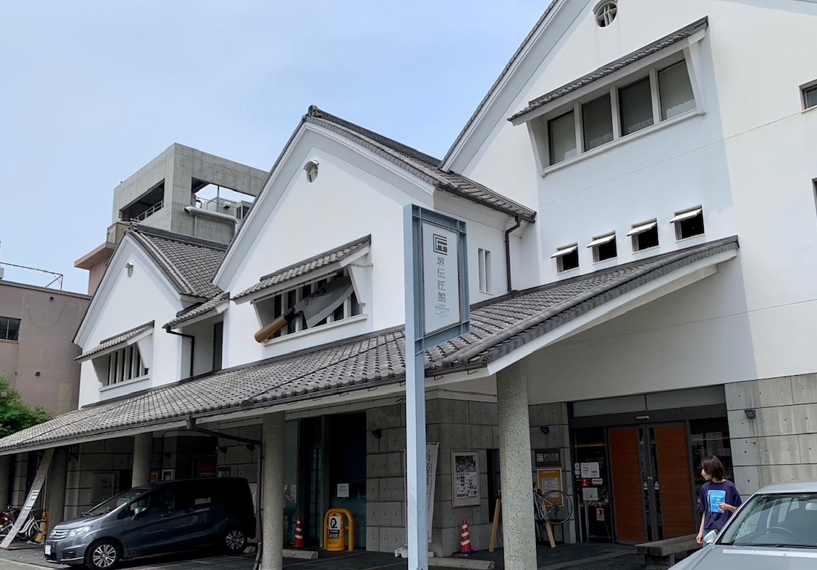
Why Do 98% of Japan’s Chefs Trust Sakai Knives?

For over 600 years, Sakai has perfected a unique craft where each stage—forge, sharpen, finish—is mastered by specialists. This tradition makes Sakai the birthplace of Japan’s most trusted knives.
Why Do 98% of Japan’s Chefs Trust Sakai Knives?

The 98% Statistic: More Than a Number

According to the Sakai Tourism Bureau, “98% of Japanese chefs use Sakai knives.” This figure isn’t just a claim—it reflects the deep trust chefs place in Sakai’s centuries-old craftsmanship.

Sakai City Official English Site