• November 20, 2027

  • Satoshi Nakagawa and the Future of Sakai's Blacksmithing Tradition 

    Every Japanese knife begins with someone's hands.

    Before a blade reaches a kitchen, a blacksmith must learn how to work with steel, control heat, and shape a tool that someone may use for decades.

    But where does that knowledge come from?

    And perhaps more importantly, who will carry it forward?

    In November 2026, a small announcement from a knife-making workshop in Sakai, Japan, offered a meaningful glimpse into these questions.

    The workshop belongs to Satoshi Nakagawa, a traditional craftsman whose hand-forged knives are also introduced through KIREAJI's Satoshi Nakagawa Collection.

    The announcement was not about a new knife, a special steel, or an award.

    It was about finding someone willing to learn.

  • 1. A New Invitation from a Sakai Workshop 

    On November 19, 2026, Nakagawa Uchihamono announced that it was recruiting new employees to work in knife production, including forging and finishing.

    Nakagawa Uchihamono — Employee Recruitment Announcement (November 19, 2026) 
  • The workshop welcomed applicants without previous experience, emphasizing an interest in making things, sincerity toward work, and a willingness to learn alongside experienced craftspeople.

    One message stood out: the workshop was looking for people who could help carry its skills and commitment into the next generation.

    At first glance, this might seem like an ordinary recruitment announcement.

    Workshops, like other businesses, need people to keep operating.

    But traditional knife-making presents a particular challenge.

    A person can be hired for a job. Becoming a skilled blacksmith, however, requires much more than employment.

    It requires time, repetition, judgment, and the gradual development of abilities that cannot be acquired simply by reading instructions.

    This is what makes the announcement worth noticing.

    It opens a door for someone who may one day help shape the future of Sakai knives.

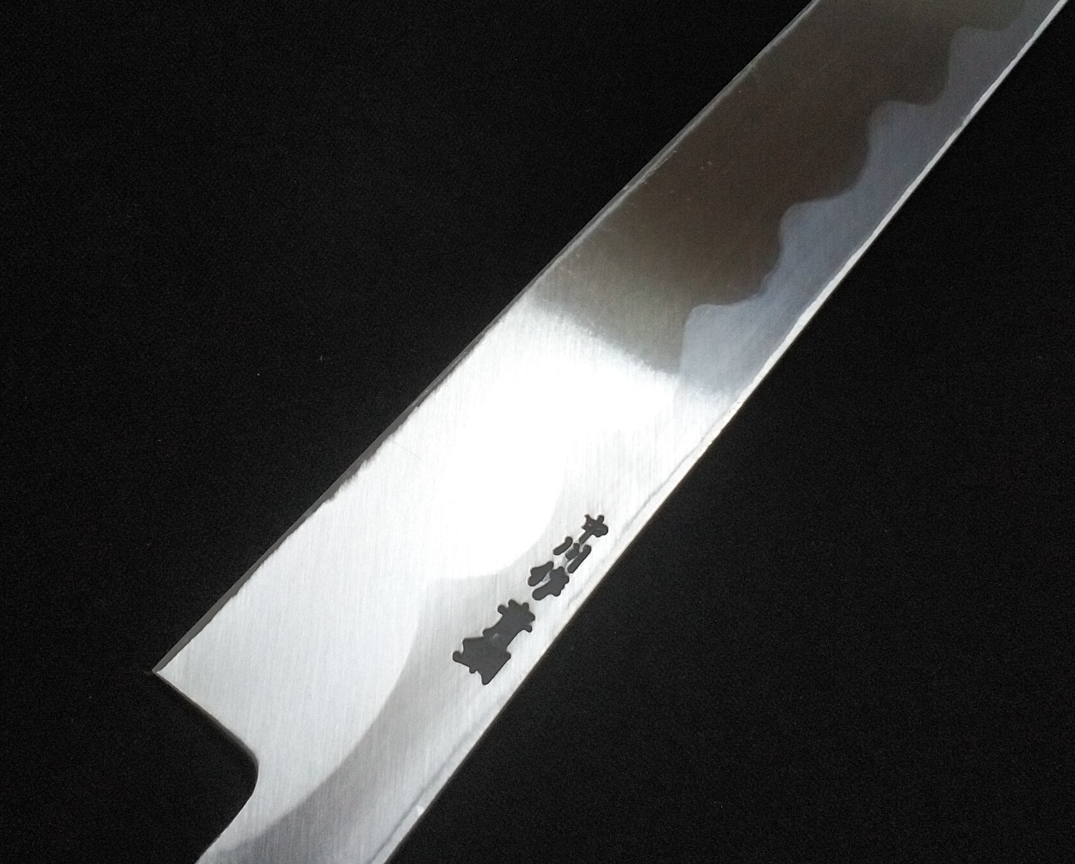
  • White-Steel-2-Yanagiba-Kiritsuke-300mm-Mirror-Polished-one-side

    2. The Craftsman Who Once Stood at the Beginning 

    There is something especially meaningful about this invitation coming from Satoshi Nakagawa.

    Nakagawa himself once entered the world of knife-making as a young apprentice.

    He trained under Kenichi Shiraki, an accomplished Sakai blacksmith, for 16 years before establishing his own workshop in 2021.

    Today, Nakagawa is recognized as a traditional craftsman and works with a wide range of steels and forging techniques.

    His journey from apprentice to independent blacksmith is already part of his story.

    But the recent recruitment announcement draws attention to a different possibility.

    The person who once learned under a master may now help create opportunities for others to learn.

    It is not yet known who will join the workshop or what path a new employee might follow.

    Still, the invitation itself is significant.

    It reminds us that the history of a craft does not end when an apprentice becomes a master.

    It continues whenever knowledge is shared with someone new.

  • 3. What Cannot Be Learned from a Finished Knife? 

    Imagine holding a beautifully made Japanese knife.

    You can examine its shape, admire the finish, and appreciate how it feels in your hand.

    You may learn which steel was used and which craftsman forged it.

    But the finished knife cannot tell you everything about how it was made.

    It cannot fully reveal how the blacksmith judged the temperature of the steel, adjusted a hammer strike, or responded when the material behaved differently than expected.

    These decisions are part of practical knowledge.

    Some can be explained through words, measurements, and demonstrations.

    Others become reliable only through repeated work and experience.

    An apprentice learns not merely by watching a skilled craftsperson, but by attempting the work, making corrections, and gradually developing judgment.

    A workshop is therefore more than a place where knives are produced.

    It can also be a place where knowledge moves from one generation of hands to another.

    And that process requires something a finished knife cannot provide on its own: a person willing to teach and another willing to learn.

  • 4. Tradition Is Not Something That Stands Still 

    When people hear the word tradition, they may imagine something preserved unchanged from the past.

    But a living craft is different from an object displayed in a museum.

    It continues through people who practice it.

    Every generation works with the knowledge it has inherited while responding to the tools, materials, customers, and circumstances of its own time.

    In Sakai, traditional knife production involves specialized craftspeople, including blacksmiths and sharpeners, whose work contributes to the finished blade.

    Preserving that system requires more than keeping old techniques documented.

    It requires people who understand how to perform them.

    This does not mean every new craftsperson must work in exactly the same way as their predecessor.

    Nor does it mean that every change represents a loss of tradition.

    The important question is whether the knowledge that gives the craft its character can remain understood, practiced, and passed forward.

    A new person entering a workshop may be one small part of that continuing process.

  • 5. The Future Depends on Someone Choosing to Begin 

    Learning a traditional craft takes commitment.

    The early stages may involve unfamiliar tools, repetitive tasks, and mistakes that require patience to correct.

    Progress is not always immediate or easy to measure.

    For someone considering this kind of work, the decision is not simply about learning how to make a product.

    It is also about choosing how to spend years developing a skill.

    That choice deserves attention.

    We often celebrate accomplished craftspeople after they have become well known.

    We admire the finished knives, the precision of their work, and the years of experience behind them.

    But every accomplished craftsperson was once a beginner.

    Before there was mastery, there was a first day.

    Before there was confidence, there was uncertainty.

    And before a technique could be passed on, someone had to decide it was worth learning.

    Nakagawa Uchihamono's announcement brings that often-overlooked beginning into view.

  • 6. What This Means to Someone Who Owns a Japanese Knife 

    For someone who enjoys cooking with a Japanese knife, the question of who makes the next generation of knives may seem distant.

    After all, the knife is already in the kitchen.

    It is used to prepare vegetables, slice fish, or cook a meal for family and friends.

    Yet the skills behind that knife did not appear overnight.

    They were developed through years of work and, in many cases, passed between craftspeople over generations.

    Understanding this can change how we see an everyday tool.

    A handmade knife is not valuable only because of its steel, appearance, or cutting performance.

    It also represents knowledge that someone took the time to acquire.

    And when that knowledge is taught to another person, its influence can extend beyond the original maker.

    At KIREAJI, we introduce knives forged by Satoshi Nakagawa because we believe the people and skills behind a knife are worth understanding.

    His workshop's latest announcement gives us another reason to look beyond the finished blade.

    It invites us to think about the people who may make such knives in the years ahead.

  • 7. The Next Name Is Still Unknown 

    Kenichi Shiraki taught Satoshi Nakagawa.

    Nakagawa went on to establish his own workshop and develop his career as a blacksmith.

    Now, his workshop is inviting new people to enter the craft.

    What happens next is not yet known.

    A new employee may join. Skills may be learned over many years. Someone may eventually develop a distinctive approach of their own.

    Or the future may unfold differently.

    Craftsmanship cannot be passed forward by an announcement alone.

    It requires the daily work that follows.

    That uncertainty is part of what makes this moment meaningful.

    Somewhere, there may be a person who has never forged a knife, never worked with heated steel, and never imagined becoming a Sakai blacksmith.

    For that person, a workshop invitation could become the beginning of a very different life.

    And for those of us who appreciate Japanese knives, it offers a simple reminder.

    The future of Japanese knives will not be shaped by tradition alone, but by the people willing to learn it.

  • Sources 

    Nakagawa Uchihamono — Employee Recruitment Announcement (November 19, 2026)
    https://nakagawa-knives.com/news/従業員募集-2/

    Nakagawa Uchihamono — Company Profile
    https://nakagawa-knives.com/company-profile/

Satoshi Nakagawa

The youngest Traditional Craftsman in Sakai’s history, trained 16 years under master Kenichi Shiraki. Known for precision and artistry, he now leads Nakagawa Hamono, creating blades that blend tradition and innovation.

Satoshi Nakagawa