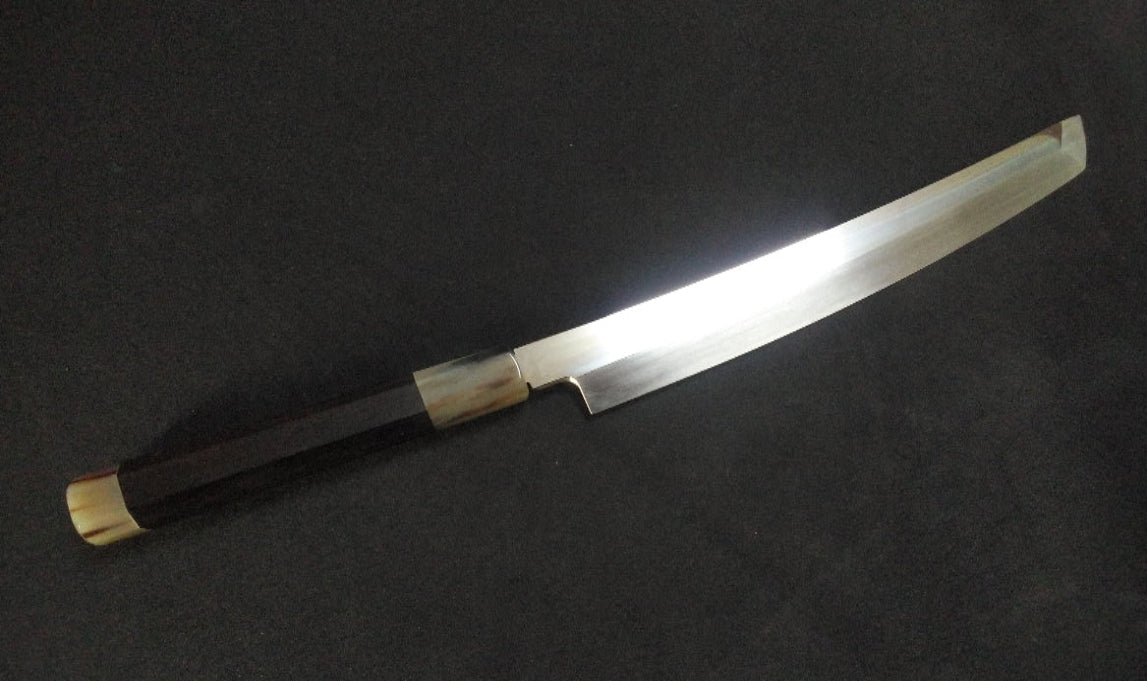
Discover the Soul of Sakai Craftsmanship
-

One Knife. Three Lifetimes of Mastery.
At KIREAJI, every knife is the result of a centuries-old division of labor — three specialists, each devoted to a single stage:
A bladesmith who forges the steel.
A sharpening master who defines the edge.
A handle craftsman who completes the balance.No shortcuts. No compromise. Each knife is shaped by skilled artisans, guided by traditions refined over centuries.

All Japanese Knives from Sakai Collection
-
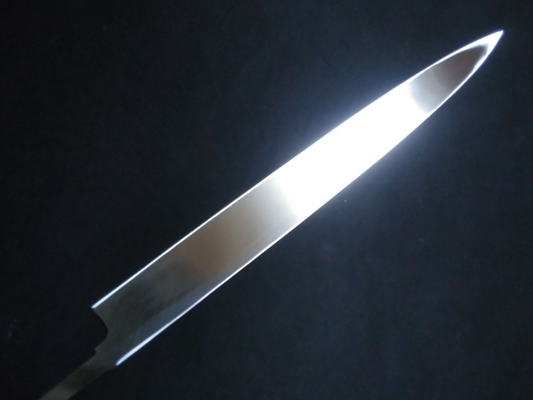
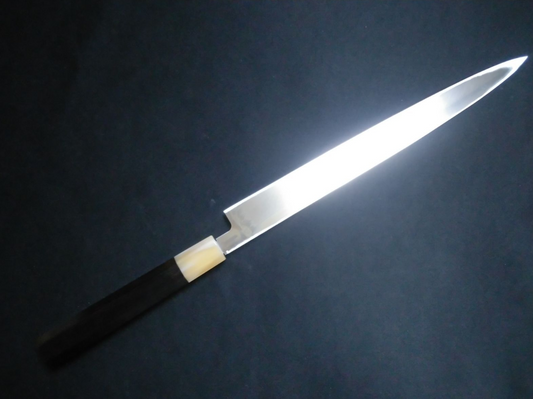
Blue Steel #2 Yanagiba 270mm- Kido Finishing
Regular price $350.00 CADRegular priceUnit price per$0.00 CADSale price $350.00 CAD -
Blue Steel #2 Yanagiba 210mm- Kido Finishing
Regular price $300.00 CADRegular priceUnit price per$0.00 CADSale price $300.00 CAD -
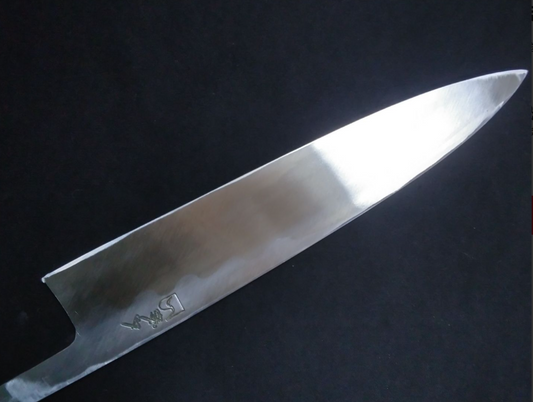
Ginsan Gyuto 240mm -Mirror Polished (both sides)
Regular price $490.00 CADRegular priceUnit price per$0.00 CADSale price $490.00 CAD -
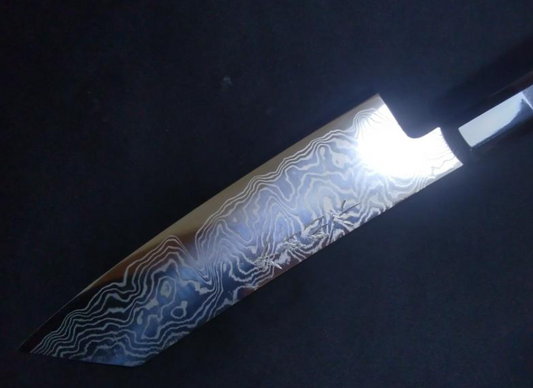
Blue Steel #2 Damascus Yanagiba 300mm- Mirror Polished Blur Finish
Regular price $660.00 CADRegular priceUnit price per$0.00 CADSale price $660.00 CAD -
White Steel #2 (Honyaki-Mizuyaki) Mukimono 180mm-Mirror Polished (one side)
Regular price $930.00 CADRegular priceUnit price per$380.00 CADSale price $930.00 CAD -
White Steel #2 (Honyaki-Mizuyaki) Deba 180mm-Mirror Polished (one side)
Regular price $750.00 CADRegular priceUnit price per$0.00 CADSale price $750.00 CADSold out -
Ginsan Damascus Yanagiba (Kiritsuke) 300mm -Mirror Polished (both sides)
Regular price $810.00 CADRegular priceUnit price per$0.00 CADSale price $810.00 CAD -
Blue Steel #2 Yanagiba 270mm- Mirror Polished (one side)
Regular price $385.00 CADRegular priceUnit price per$0.00 CADSale price $385.00 CAD -
Ginsan Damascus Santoku (Kiritsuke) 180mm-Mirror Polished (both sides)
Regular price $750.00 CADRegular priceUnit price per$0.00 CADSale price $750.00 CADSold out -
Blue Steel #2 Yanagiba 330mm -Mirror Polished (one side)
Regular price $460.00 CADRegular priceUnit price per$460.00 CADSale price $460.00 CADSold out -
Blue Steel #2 Deba 240mm- Mirror Polished (one side)
Regular price $500.00 CADRegular priceUnit price per$0.00 CADSale price $500.00 CADSold out -
Super Steel (Honyaki) Yanagiba 300mm-Kido Finishing
Regular price $640.00 CADRegular priceUnit price per$0.00 CADSale price $640.00 CADSold out












The KIREAJI Difference
KIREAJI Complimentary Services
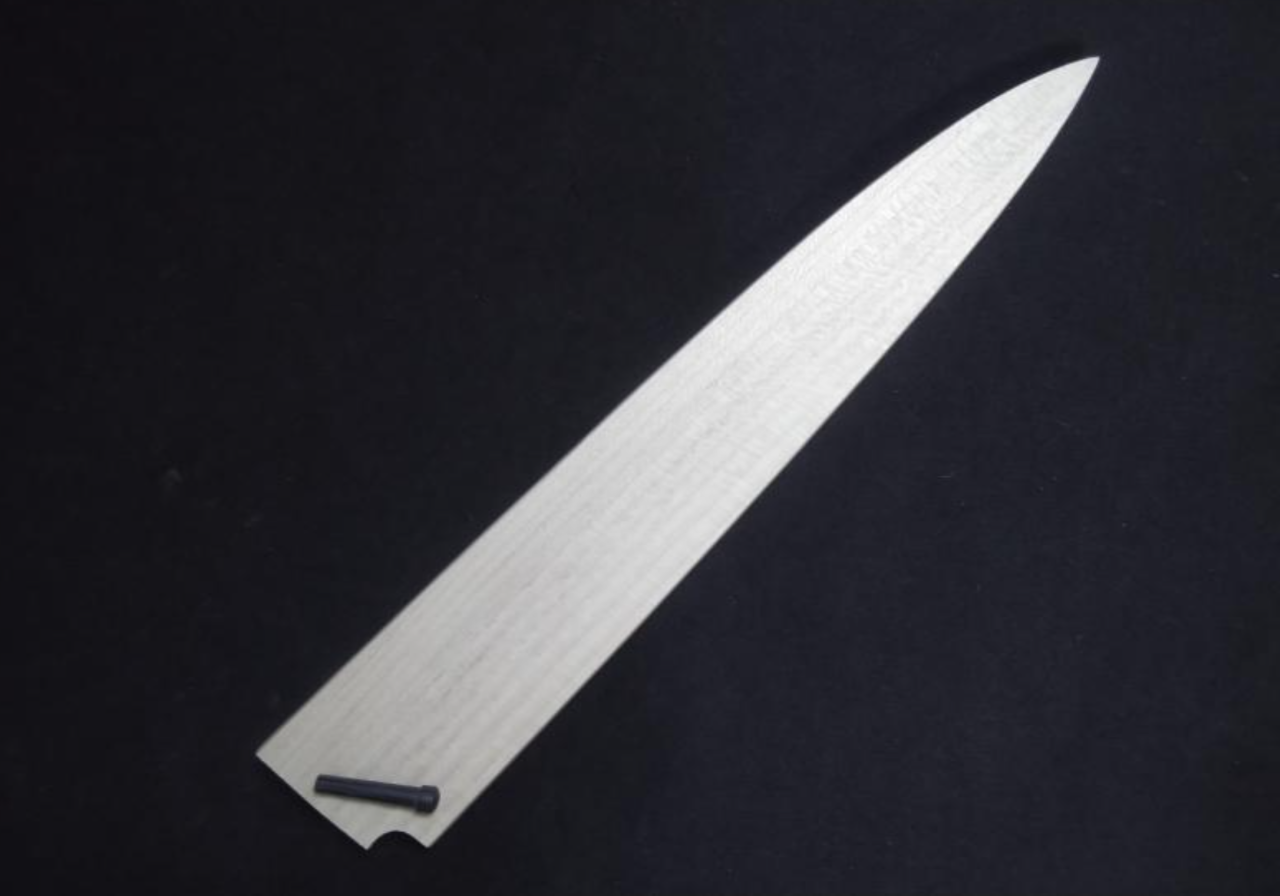
Every knife includes a magnolia wood saya, carefully selected and fitted to provide safe storage and protection. Upon request, we also provide complimentary Honbazuke, a practical initial hand-sharpening intended to prepare the knife for first use while allowing the owner to further refine the edge over time according to their own preferences.
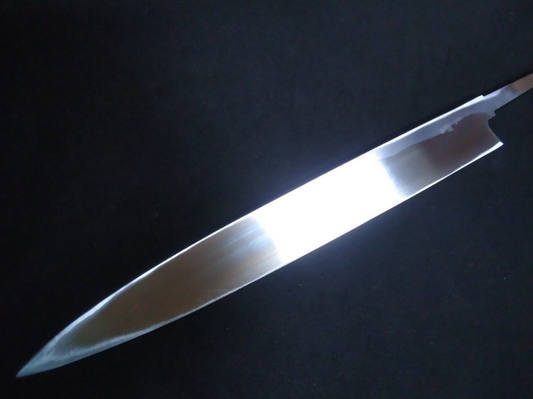
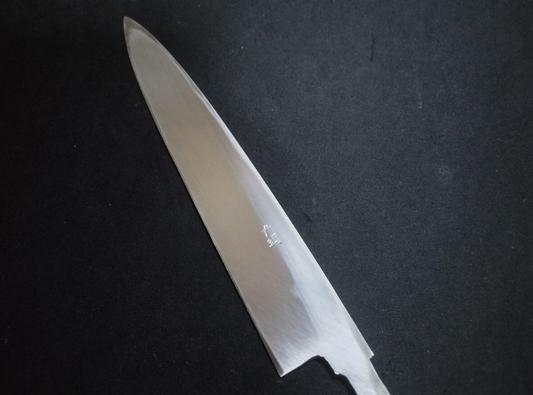
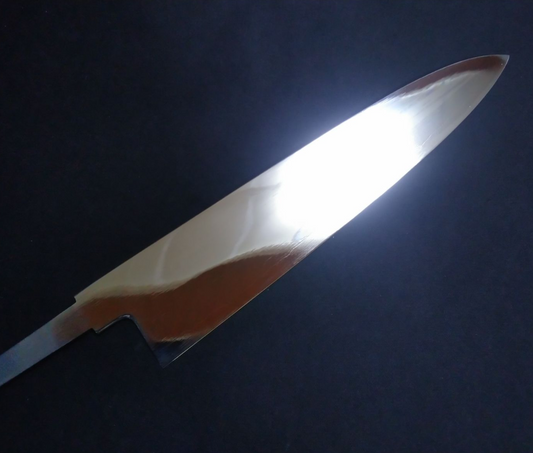
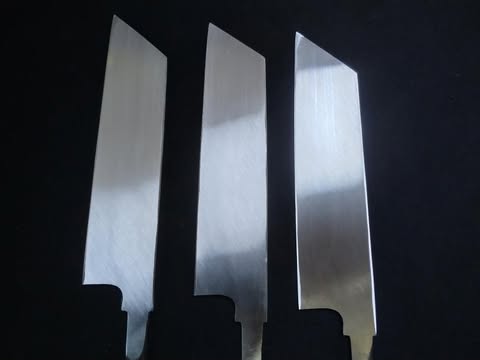
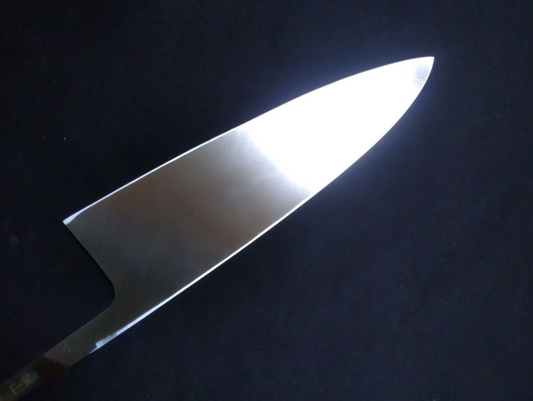
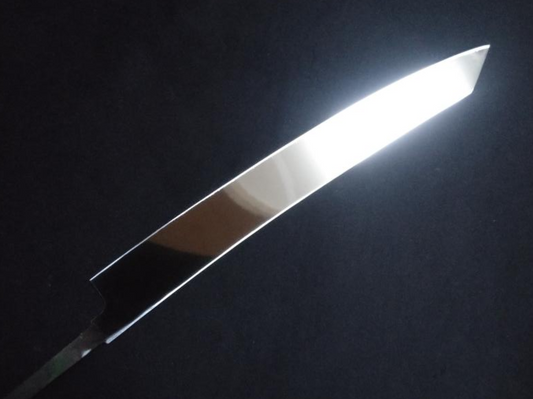
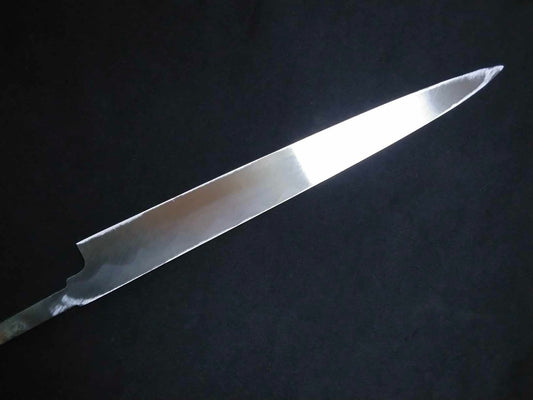
Why Many Product Photos Show Only the Blade
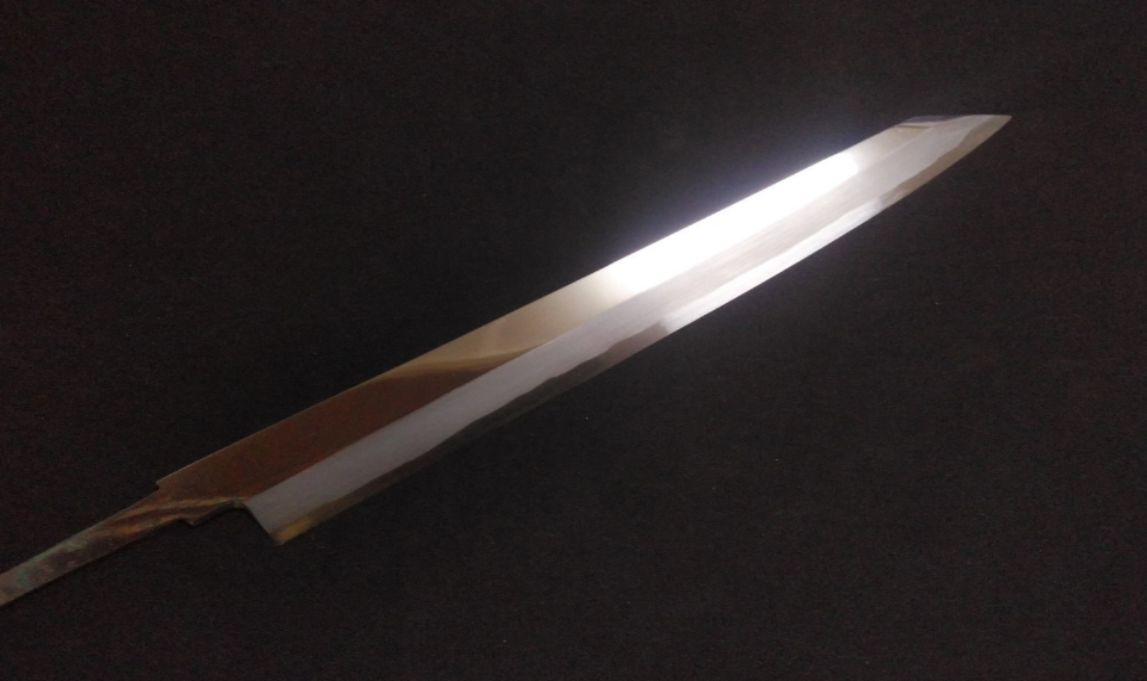
At KIREAJI, every knife is made to order in Sakai, Japan. Photos show the blade before the handle is attached, allowing artisans to perfect the balance and edge for your specific order. Your knife arrives fully finished — tailored just for you.

Global Delivery from Sakai
Across the world, discerning cooks seek authentic Japanese knives from Sakai — Japan’s legendary knife-making city with over 600 years of tradition.
At KIREAJI, we work alongside master artisans in Sakai to fulfill that desire, shipping genuine handcrafted knives directly from the workshop to kitchens worldwide.
-

1. Roots that shaped a craft
Sakai’s blade-making heritage reaches back to ironworking in the 5th century, when tools were forged for the massive Kofun burial mounds near the city. By the Edo period (1603–1868), Sakai had become famous for ultra-sharp tobacco knives that even received monopoly status under the Tokugawa shogunate—launching a national reputation.
-

2. A design made for precision
Sakai became a major center for the development and refinement of traditional single-bevel Japanese knives, often combining hard steel with softer iron and carefully shaped geometry designed for precise cutting.
The craft is recognized by Japan’s government as a Traditional Craft. -

4. Proven in professional kitchens
According to the Sakai Tourism Bureau, 98% of professional chefs in Japan use Sakai-made knives, reflecting the longstanding trust Sakai craftsmanship has earned in professional kitchens.


Sakai Knives: Six Centuries of Precision, Trusted by Professionals
-
 Source (98% data): Sakai Tourism Bureau
For over six centuries, Sakai has refined a craft where specialists work in perfect harmony—from forging to sharpening to handle-making. This tradition of precision is why 98% of Japan’s professional chefs trust blades born in Sakai, honoring a legacy that continues to shape the pinnacle of Japanese cutlery.

Ⅰ. Why We Choose Sakai — and Only Sakai
-

Six Hundred Years Is Not Just a Number
It is easy to encounter a figure like six hundred years and treat it as atmosphere — a piece of heritage language that adds weight to a product description without changing what the product actually is. We want to explain why, in Sakai's case, the number is not atmosphere. It is the explanation.
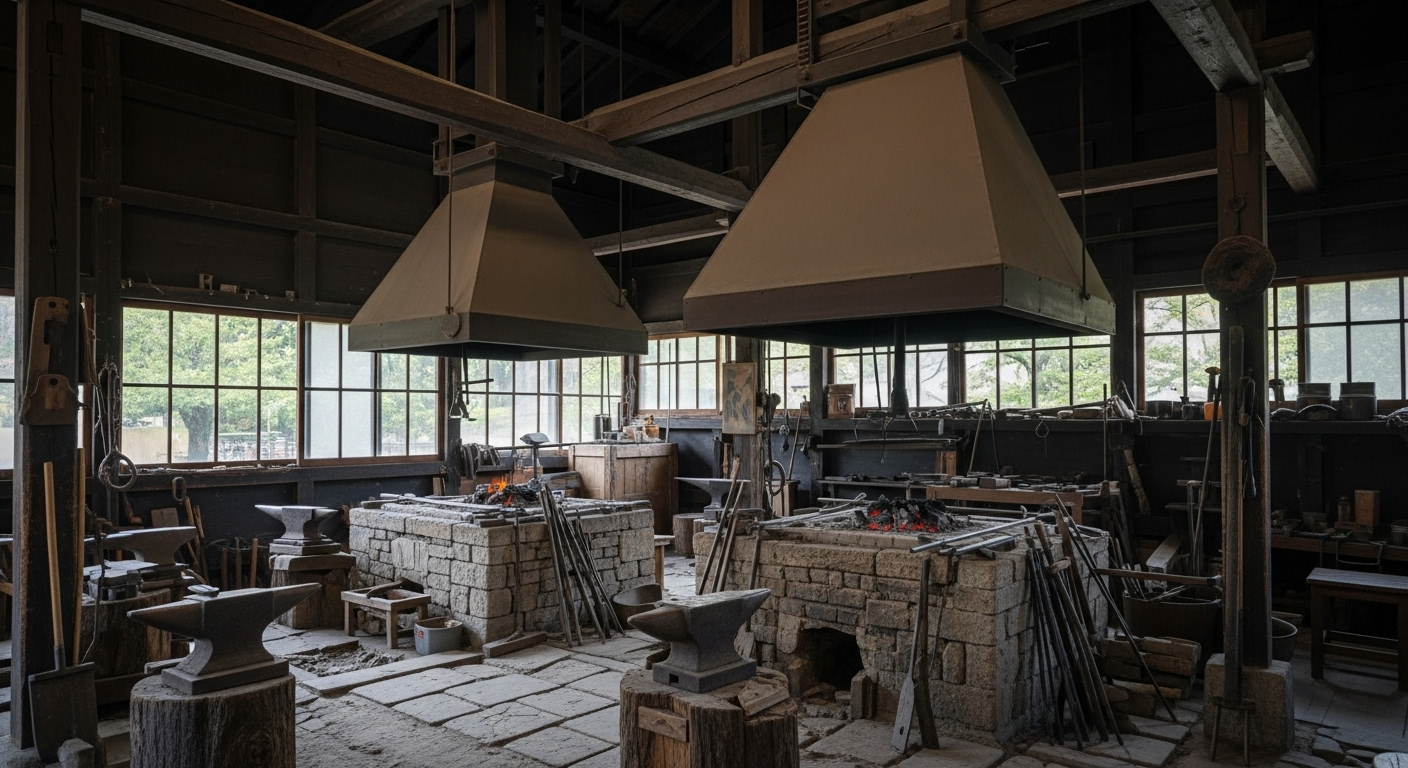
Sakai's connection to blade-making reaches back to ironworking in the fifth century, when tools were forged in service of the great Kofun burial mounds built near the city. By the Edo period, the city had become famous across Japan for the exceptional sharpness of its tobacco knives — blades so highly regarded that they received formal monopoly status under the Tokugawa shogunate. The city's reputation was not given. It was earned through accumulated excellence, recognized and protected by the governing authority of the era.
That excellence did not stop accumulating when the Edo period ended. Each generation of craftspeople in Sakai inherited not just the tools and techniques of the previous one, but the standards — the understanding of what a properly made blade required, and the willingness to maintain that requirement even when shortcuts were available.
This is what six hundred years actually means: the time it takes for a standard of craft to become so deeply embedded in a place and its people that it persists across generations, economic pressures, and cultural change. Sakai's knife-making tradition is officially recognized by the Japanese government as a Traditional Craft of Japan. That recognition is the institutional acknowledgment of something that professional chefs have known through daily use for centuries.
-

The Division of Labor: Why Specialization Produces Excellence
To understand why Sakai knives perform the way they do, it helps to understand how they are made — particularly the specialized division of labor that has long defined Sakai craftsmanship.
In many knife-making traditions, multiple stages may be carried out within a single workshop or by the same craftsperson. This approach can offer continuity and integrated decision-making throughout the process.
Sakai developed a different structure: key stages are entrusted to dedicated specialists, allowing each artisan to focus deeply on a particular discipline.
Sakai works through specialization — not because other approaches lack skill, but because generations of craftspeople have refined this system into one of the defining characteristics of Sakai knife-making.
The bladesmith forges and shapes the blade's profile and structure — the geometry that will define everything that follows. The sharpener takes that blade and creates the cutting edge, working through a progression of whetstones at a level of micro-precision that requires years of dedicated practice to develop. The handle maker fits, balances, and aligns the handle for lasting comfort and control.
Three specialists. Three lifetimes of focused practice. One knife.
The result of this division is that each stage of the process is performed by someone for whom that stage is the entirety of their craft. The sharpener is not also a smith. They have spent their career learning to feel what a whetstone requires, to judge by the sound and resistance and the light on the edge whether the angle is correct, to know through accumulated repetition what this particular steel needs at this particular moment. That depth of specialized knowledge is what produces edges of the quality that Sakai is known for — and it is what cannot be replicated by a generalist, however skilled, working alone.
-

Handcraft at Every Stage: What Manual Control Actually Means
The second defining feature of Sakai's knife-making is the degree to which every stage remains under human rather than mechanical control.
From the initial forging — hammer-welding steel and iron to create the laminated structure that gives a Sakai knife its combination of hardness and resilience — to the final edge work and handle fitting, the decisive judgments at every stage are made by a person, not a machine. This is not tradition for its own sake. It is the practical recognition that the variables involved in making an excellent knife are too fine, too interdependent, and too dependent on the specific material in front of you to be reliably managed by automated systems.
Heat treatment is a precise example. The hardness of the finished blade depends on the temperature at which the steel is quenched and the speed of that quenching. The correct temperature varies with the specific composition of the steel, the ambient conditions of the forge, and the judgment of the smith who has learned to read the color of heated metal as a reliable indicator of its state.
Automated systems can control many variables with precision, but an experienced craftsperson can also respond to subtle differences in the steel and working conditions through accumulated judgment and experience.The same principle applies at the sharpening stage. The angle, pressure, and movement across the whetstone that produces a correct edge on one blade will not produce the same result on another. The sharpener adjusts constantly — by feel, by sound, by the way light reflects off the developing edge — making micro-corrections that accumulate into the precision that gives a Sakai knife its final character.
These are not performances of craft. They are the actual conditions required to produce what Sakai produces.
-

What This Means for the Cook Who Uses It
All of this — the six centuries of accumulated standard, the specialization of the division of labor, the manual control at every stage — arrives in the hand of the cook as a particular quality of experience that is difficult to describe until you have felt it.
The edge of a Sakai knife behaves differently from most knives because it was made differently. It was made by someone for whom creating that edge was the whole of their professional life. The geometry is cleaner. The consistency is higher. The way it enters food and moves through it reflects a level of precision that changes how cooking feels.
Chefs in Japan's most demanding professional kitchens reach for Sakai knives not because of what they read about them, but because of what happens when they use them.
The 98% figure reflects the longstanding preference for Sakai knives among professional chefs in Japan.
A well-made Sakai knife, when properly used, sharpened, and cared for, can serve its owner for many years and, in some cases, for decades. In that time, it will be sharpened many times. The blade will narrow slightly with each sharpening. It will develop a character shaped by its use. And it will continue to perform, year after year, in a way that a lesser knife cannot sustain. -

Why Only Sakai
When people ask us why we work exclusively with knives from Sakai, the honest answer is that we don't know how to do what we are trying to do with anything less.
We are trying to send genuine Japanese knife-making culture to kitchens around the world. We are trying to close the distance between the craftspeople who have spent their lives building this standard and the cooks who want to benefit from it. We are trying to offer something whose quality is real, whose origin is transparent, and whose performance can be trusted over decades of daily use.
Sakai is where that standard exists at its most serious and most sustained. The division of labor. The handcraft. The six centuries of accumulated excellence. The government recognition. The 98% of professional chefs who have voted with their daily practice.
We choose Sakai because its combination of history, specialization, transparency, and professional trust represents the standard of Japanese knife-making that KIREAJI has chosen to stand behind without compromise.


Ⅱ. Why Sakai Knives Are Hard: The Stone That Shaped a City's Steel
-

The Hardness That Won on Aoto
The relationship between blade hardness and stone grit is not arbitrary. It is physical.
A softer blade, sharpened on a medium stone like aoto, develops an edge quickly — the stone removes material efficiently and a functional edge appears in relatively few strokes. But that edge also degrades relatively quickly in use. The softer steel wears faster under the friction of cutting, and the edge that was easy to establish is also easy to lose.
A harder blade takes longer to sharpen on the same medium stone — the stone removes material more slowly, and reaching a functional edge requires more work. But once established, the harder edge holds. It resists the wear of cutting more effectively. It sustains its sharpness through the kind of extended professional use — the full service, the long prep session — that defines the conditions in which Kansai professional cooks work.
Against aoto, hardness wins on performance. The harder blade is harder to restore, but it needs restoring less often. And in a professional kitchen, where the knife is in use for hours at a stretch and sharpening time is constrained, a blade that holds its edge longer is a blade that performs better in the actual conditions of the work.
This interaction between stone, steel, and professional use may have been one of the factors that encouraged the preference for harder blades in Sakai. Rather than reflecting style alone, blade hardness can also be understood as a practical response to the sharpening materials and working conditions available to generations of cooks and craftspeople. -

The Maintenance Paradox of Hard Steel
The hardness advantage of Sakai blades comes with a specific maintenance characteristic that is worth understanding precisely, because it is counterintuitive.
Hard steel is difficult to sharpen on coarse and medium stones. The stone removes material slowly. Correcting a damaged edge — a chip, a rolled tip, a geometry that has drifted from its intended profile — requires significant time and effort on the aoto or a comparable medium stone. This is the hardness penalty, and it is real. A craftsman who needs to restore a hard blade from scratch is facing a slow, effortful process.
But once the geometry has been established on the medium stone — once the blade has been brought to the stage where only the final refinement remains — the harder blade behaves differently. On fine finishing stones, hard steel responds well. The fine abrasive can reach the surface, refine the edge, and produce a level of polish and sharpness that the hard steel supports more effectively than a softer one would. The transition from difficult to pleasant happens at the finishing stage.
This is why experienced sharpeners who work with hard Sakai blades describe a characteristic rhythm to the process: the long, effortful work on the coarser stones, followed by the more responsive, more satisfying work on the fine finishers. The hard blade earns its performance on the coarse stone, and reveals it on the fine one.
-

What This Tells Us About Craft Knowledge
The relationship between the aoto and the hardness of Sakai blades is a small story about a large principle: in craft traditions, the tool is shaped by its environment in ways that are specific, rational, and not always visible to the outsider.
The hardness of a Sakai blade does not announce its origins. It does not carry a label that says "optimized for aoto." It simply performs in a particular way — holds its edge with a particular persistence, responds to the whetstone with a particular character — and to the uninformed buyer, that performance is simply "how Sakai knives are."
But the performance is the answer to a question. The question was asked by the aoto. The answer was given by generations of craftsmen who observed what worked and built it into their practice. The hard blade is the accumulated judgment of a tradition that found, through use, that against its local stone, harder steel served its cooks better.
Understanding this changes how you approach a Sakai knife. The hardness is not a feature to be accepted or overcome. It is a characteristic calibrated to specific conditions — conditions that, with the right stone and the right technique, produce performance that justifies the additional difficulty of maintenance.


Q1. What makes Sakai forged knives special?
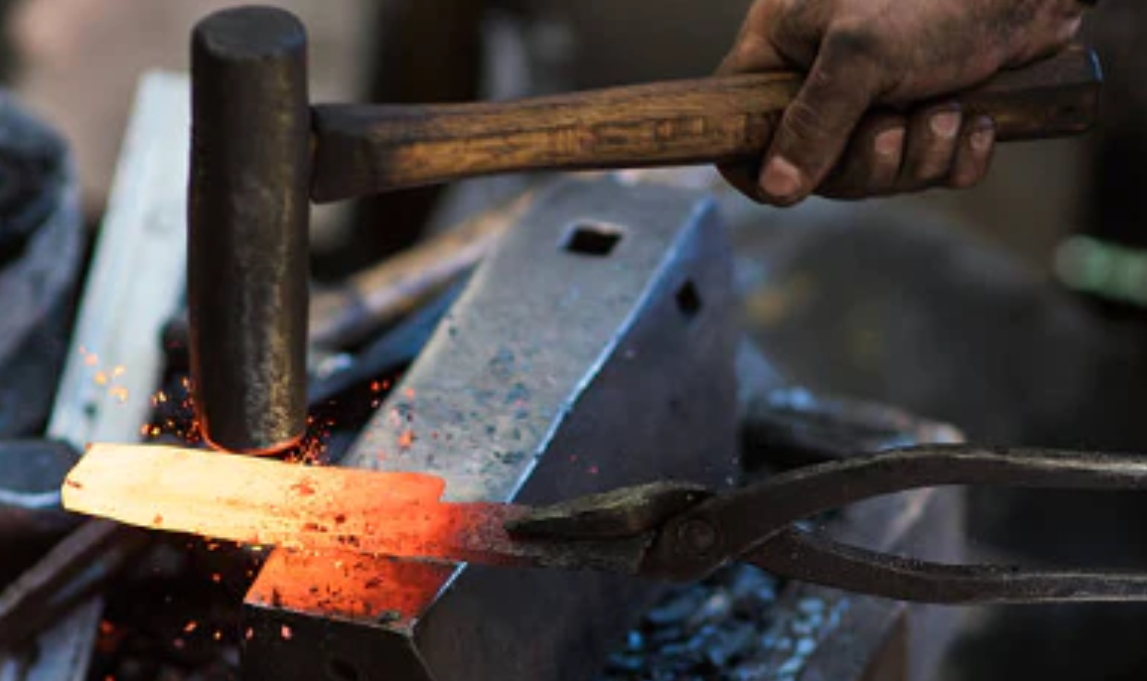
Sakai forged knives are renowned worldwide for their extraordinary sharpness, durability, and craftsmanship. Each blade is created through a traditional process that fuses hard steel for a keen cutting edge with soft iron for resilience, resulting in knives that are razor-sharp yet resistant to chipping. This artistry is rooted in over 600 years of history in Sakai City, where generations of master artisans have refined every step of the process—from forging and sharpening to the crafting of handles.
Q2. Why are Sakai knives so sharp?
The sharpness of Sakai knives comes from a combination of materials, design, and handcraft. By joining hagane (hard steel) with jigane (soft iron) and shaping the blade into a single-bevel edge, artisans create knives that cut with remarkable precision. This allows chefs to slice food cleanly, preserving delicate textures and enhancing flavor—an essential requirement in Japanese cuisine.
Q3. Why do professional chefs rely on Sakai knives?
In the world of Japanese cuisine, precision is essential. Professional chefs rely on Sakai knives for their unrivaled sharpness, perfect balance, and meticulous craftsmanship. Unlike mass-produced knives, each Sakai blade reflects the dedication of specialists: one artisan for forging, another for sharpening, and another for handle-fitting. This division of expertise ensures uncompromising quality.
Q4. What challenges does the Sakai knife industry face?
The Sakai knife industry carries centuries of tradition, but today it faces a shortage of new craftsmen. As fewer young people enter the trade, the future of these irreplaceable skills is at risk. Supporting Sakai knives is not only about owning an exceptional tool but also about helping preserve a cultural legacy.
Q5. How significant is Sakai’s presence in the knife market?
Sakai is one of Japan’s three major knife-producing regions and is particularly dominant in the professional chef market. It is estimated that about 90% of Japanese cuisine chefs in Japan use knives forged in Sakai. This overwhelming trust reflects both the historic reputation and the enduring excellence of Sakai Uchihamono.
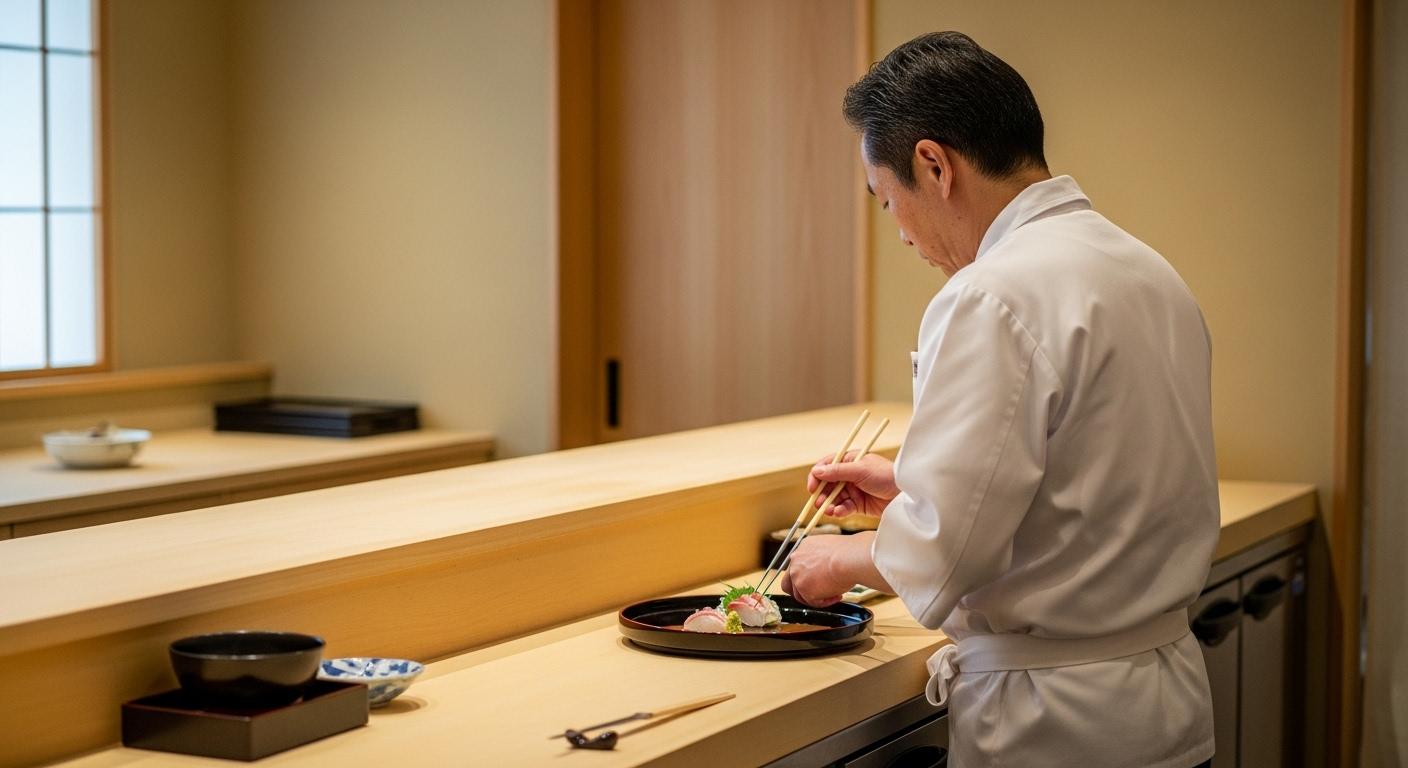
Why Do 98% of Japan’s Chefs Trust Sakai Knives?
For over 600 years, Sakai has perfected a unique craft where each stage—forge, sharpen, finish—is mastered by specialists. This tradition makes Sakai the birthplace of Japan’s most trusted knives.
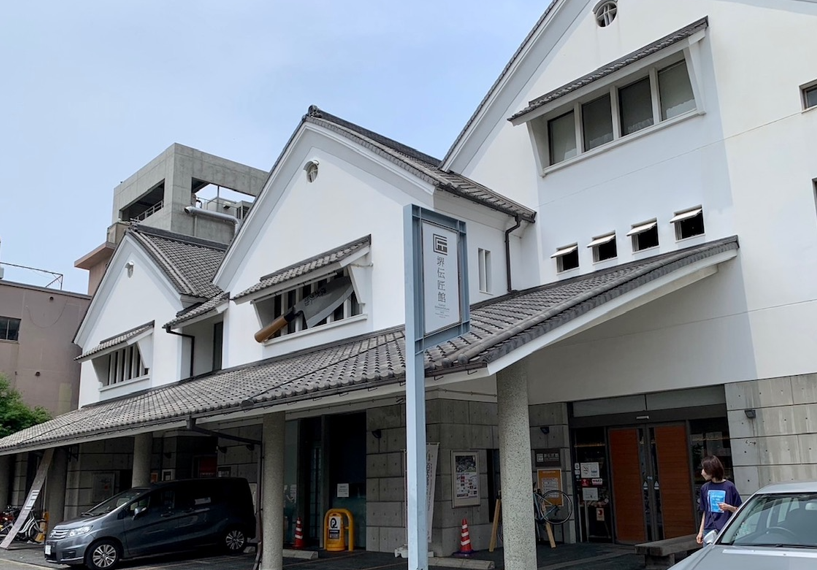
The 98% Statistic: More Than a Number
According to the Sakai Tourism Bureau, “98% of Japanese chefs use Sakai knives.” This figure isn’t just a claim—it reflects the deep trust chefs place in Sakai’s centuries-old craftsmanship.

Why are Sakai Japanese knives so sharp?
The answer is not one genius craftsman, but a system that makes compromise impossible.
This article explores how specialist masters, strict accountability, and a culture of focus create sharpness with meaning—one blade at a time.

The Master Craftsmen of Sakai Uchihamono
In Sakai, centuries-old techniques are carried forward by government-certified Traditional Craftsmen. Each knife is not just a tool but a living symbol of tradition, precision, and spirit—kept alive through their hands.

The Final Blades of a Retiring Blacksmith
A retiring blacksmith’s unfinished Blue Steel blades have arrived at KIREAJI.
Discover the quiet story of craftsmanship, legacy, and the continuation of Sakai knife culture.

Sakai’s Dwindling Masters: A Legacy at Risk
Once the heart of Japan’s finest cutlery, Sakai now has only a handful of blacksmiths left. With rising competition and fading interest among the young, new markets and fresh apprentices are vital to survival. Supporting these craftsmen means safeguarding a 600-year cultural legacy.