

Yanagiba(Kiritsuke) Japanese Knife Collection
-
Ginsan Yanagiba (Kiritsuke) 225mm -Mirror Polished (both sides)
Regular price $412.00 CADRegular priceUnit price per$0.00 CADSale price $412.00 CADSold out -
Super Steel (Honyaki) Yanagiba (Kiritsuke) 210mm-Kido Finishing
Regular price $420.00 CADRegular priceUnit price per$0.00 CADSale price $420.00 CADSold out -
Super Steel (Honyaki) Yanagiba (Kiritsuke) 210mm-Mirror Polished (one side)
Regular price $433.00 CADRegular priceUnit price per$0.00 CADSale price $433.00 CAD -
Super Steel (Honyaki) Yanagiba (Kiritsuke) 210mm-Mirror Polished (both sides)
Regular price $443.00 CADRegular priceUnit price per$0.00 CADSale price $443.00 CAD -
White Steel #2 Yanagiba (Kiritsuke) 300mm-Mirror Polished (one side)
Regular price $469.00 CADRegular priceUnit price per$0.00 CADSale price $469.00 CADSold out -
Super Steel (Honyaki) Yanagiba (Kiritsuke) 210mm-Mirror Polished (both sides)
Regular price $470.00 CADRegular priceUnit price per$0.00 CADSale price $470.00 CADSold out -
Ginsan Yanagiba (Kiritsuke) 270mm -Mirror Polished (both sides)
Regular price $480.00 CADRegular priceUnit price per$0.00 CADSale price $480.00 CAD -
Ginsan Yanagiba (Kiritsuke) 270mm -Mirror Polished (both sides) -Colored pistol-grip handle
Regular price $500.00 CADRegular priceUnit price per$0.00 CADSale price $500.00 CAD -
Blue Steel #2 Yanagiba (Kiritsuke) 270mm-Mirror Polished (one side)
Regular price $517.00 CADRegular priceUnit price per$0.00 CADSale price $517.00 CADSold out -
White Steel #2 Yanagiba (Kiritsuke) 330mm-Mirror Polished (one side)
Regular price $530.00 CADRegular priceUnit price per$0.00 CADSale price $530.00 CADSold out -
Super Steel (Honyaki) Yanagiba (Kiritsuke) -Ultra thin- 240mm -Kido Finishing
Regular price $530.00 CADRegular priceUnit price per$0.00 CADSale price $530.00 CAD -
Super Steel (Honyaki) Yanagiba (Kiritsuke) -Ultra thin- 240mm -Mirror Polished (one side)
Regular price $590.00 CADRegular priceUnit price per$0.00 CADSale price $590.00 CADSold out -
Blue Steel #2 Yanagiba (Kiritsuke) 330mm-Mirror Polished (one side)
Regular price $600.00 CADRegular priceUnit price per$0.00 CADSale price $600.00 CADSold out -
Wihte Steel #2 Damascus Yanagiba (Kiritsuke) 300mm- Mirror Polished Blur Finish
Regular price $660.00 CADRegular priceUnit price per -
Super Steel (Honyaki) Yanagiba (Kiritsuke) -Ultra thin- 270mm -Mirror Polished (one side)
Regular price $690.00 CADRegular priceUnit price per$0.00 CADSale price $690.00 CAD -
Blue Steel #2 Damascus Yanagiba (Kiritsuke) 270mm- Mirror Polished Blur Finish
Regular price $700.00 CADRegular priceUnit price per$460.00 CADSale price $700.00 CADSold out
















The KIREAJI Difference
KIREAJI Complimentary Services
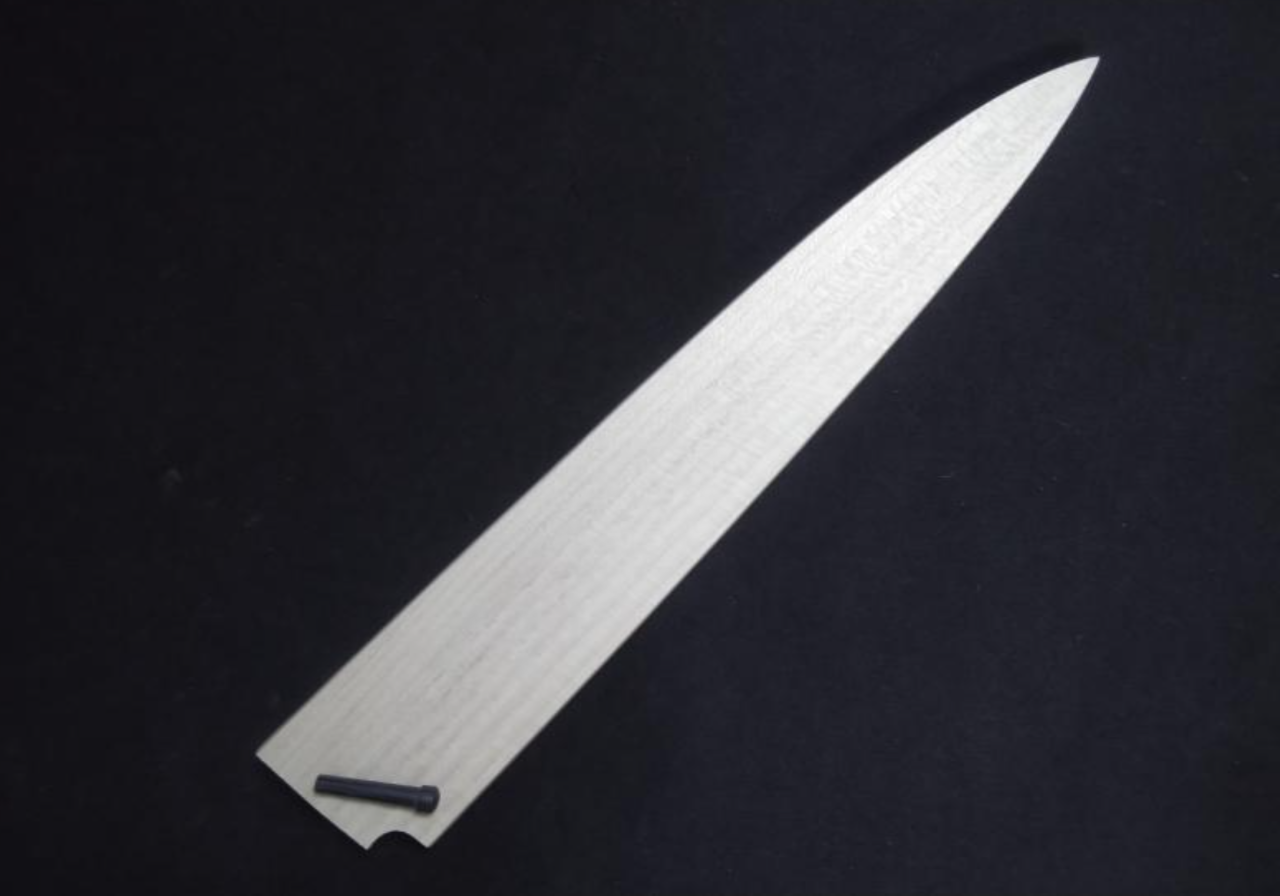
Every knife includes a magnolia wood saya, carefully selected and fitted to provide safe storage and protection. Upon request, we also provide complimentary Honbazuke, a practical initial hand-sharpening intended to prepare the knife for first use while allowing the owner to further refine the edge over time according to their own preferences.
Why Many Product Photos Show Only the Blade
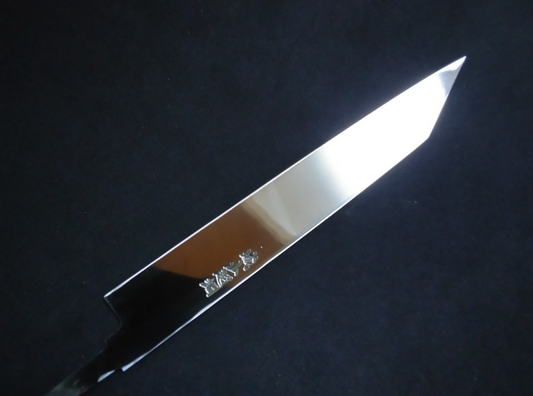
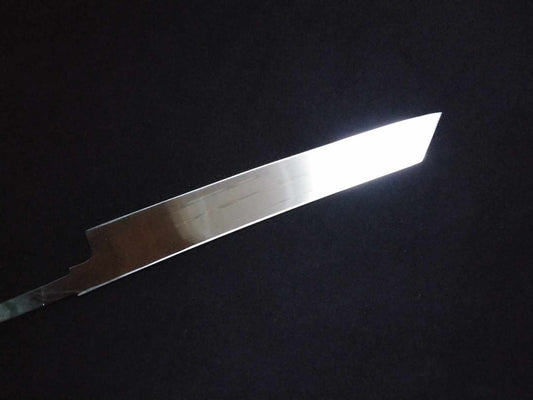
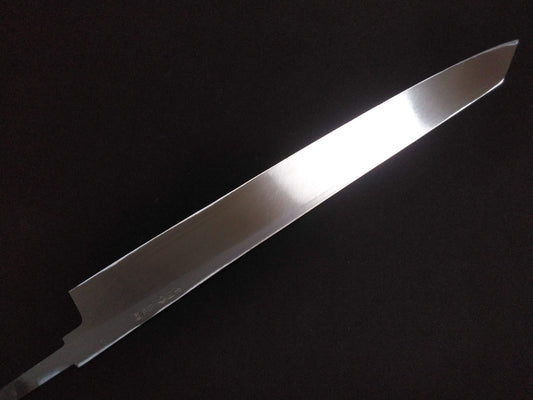
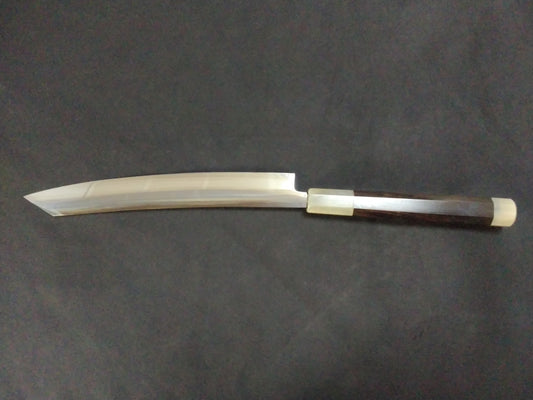
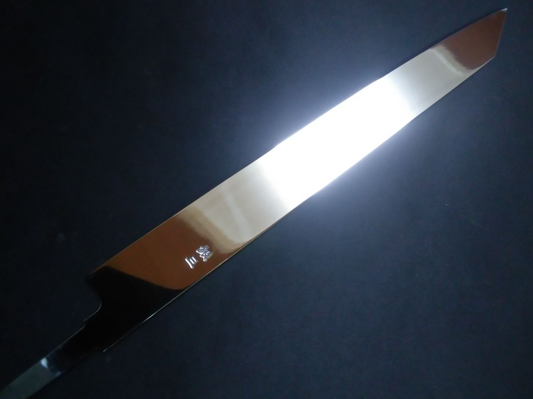
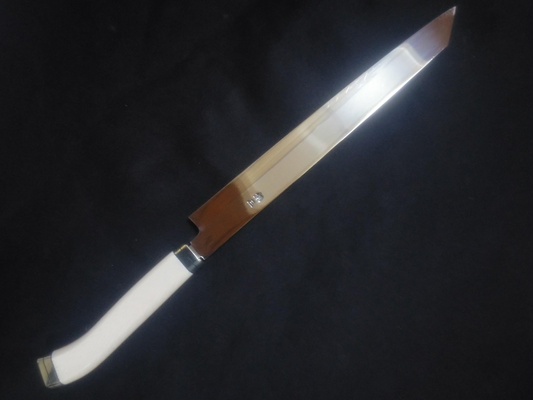
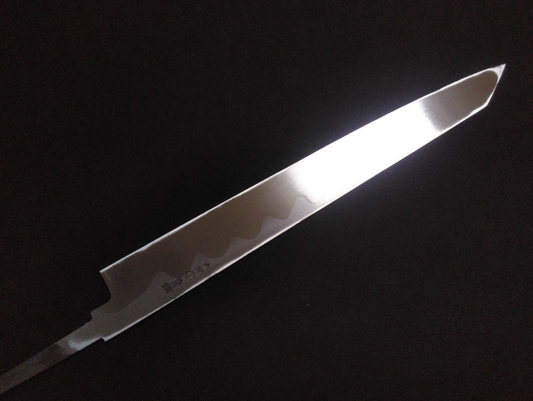
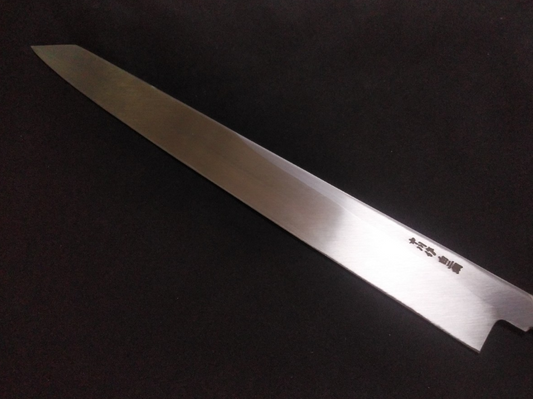
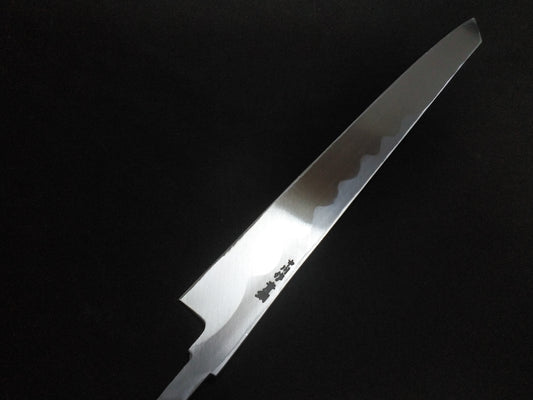
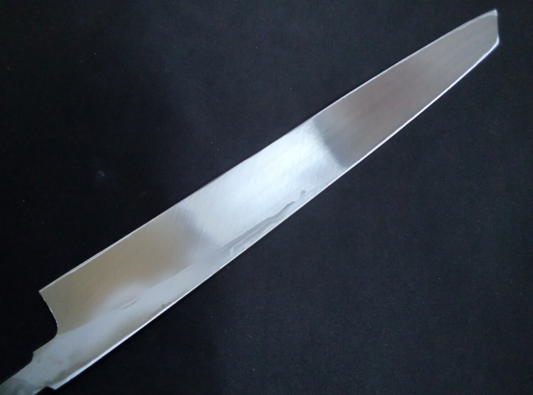
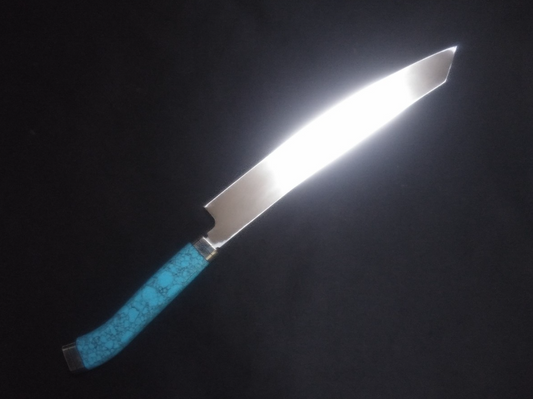
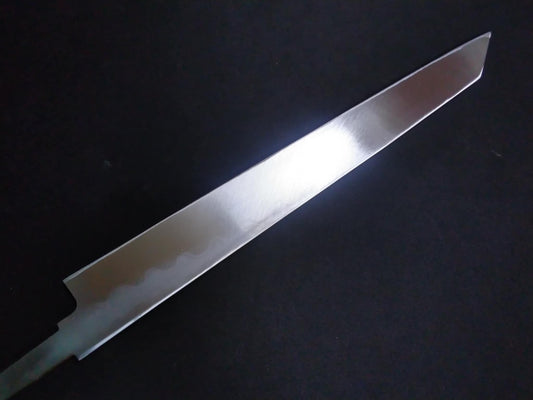
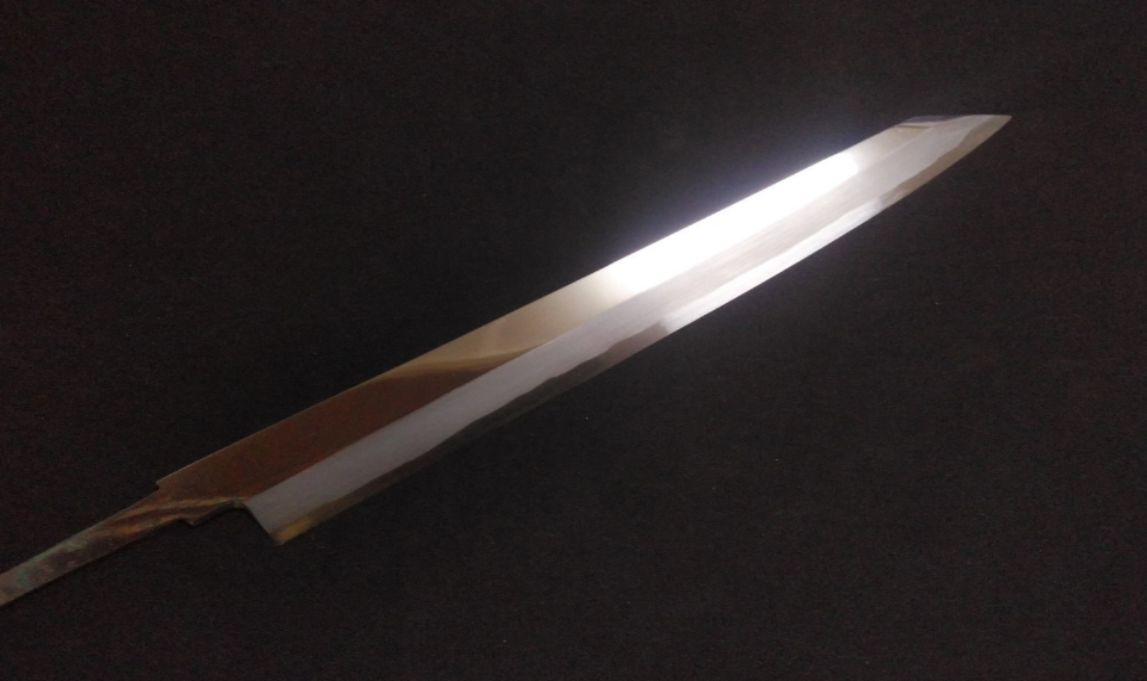
At KIREAJI, every knife is made to order in Sakai, Japan. Photos show the blade before the handle is attached, allowing artisans to perfect the balance and edge for your specific order. Your knife arrives fully finished — tailored just for you.

Global Delivery from Sakai
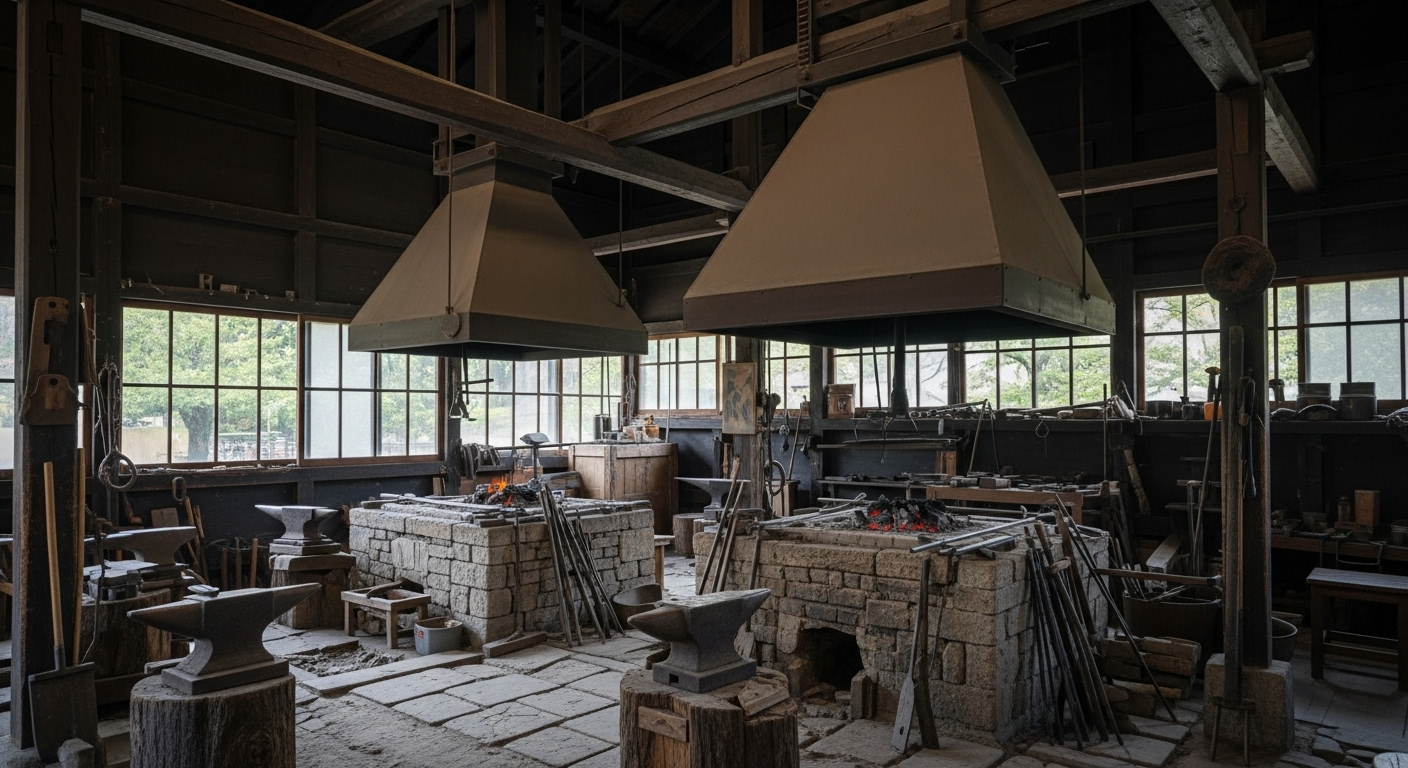
Across the world, discerning cooks seek authentic Japanese knives from Sakai — Japan’s legendary knife-making city with over 600 years of tradition.
At KIREAJI, we work alongside master artisans in Sakai to fulfill that desire, shipping genuine handcrafted knives directly from the workshop to kitchens worldwide.
Yanagiba (Kiritsuke)
-

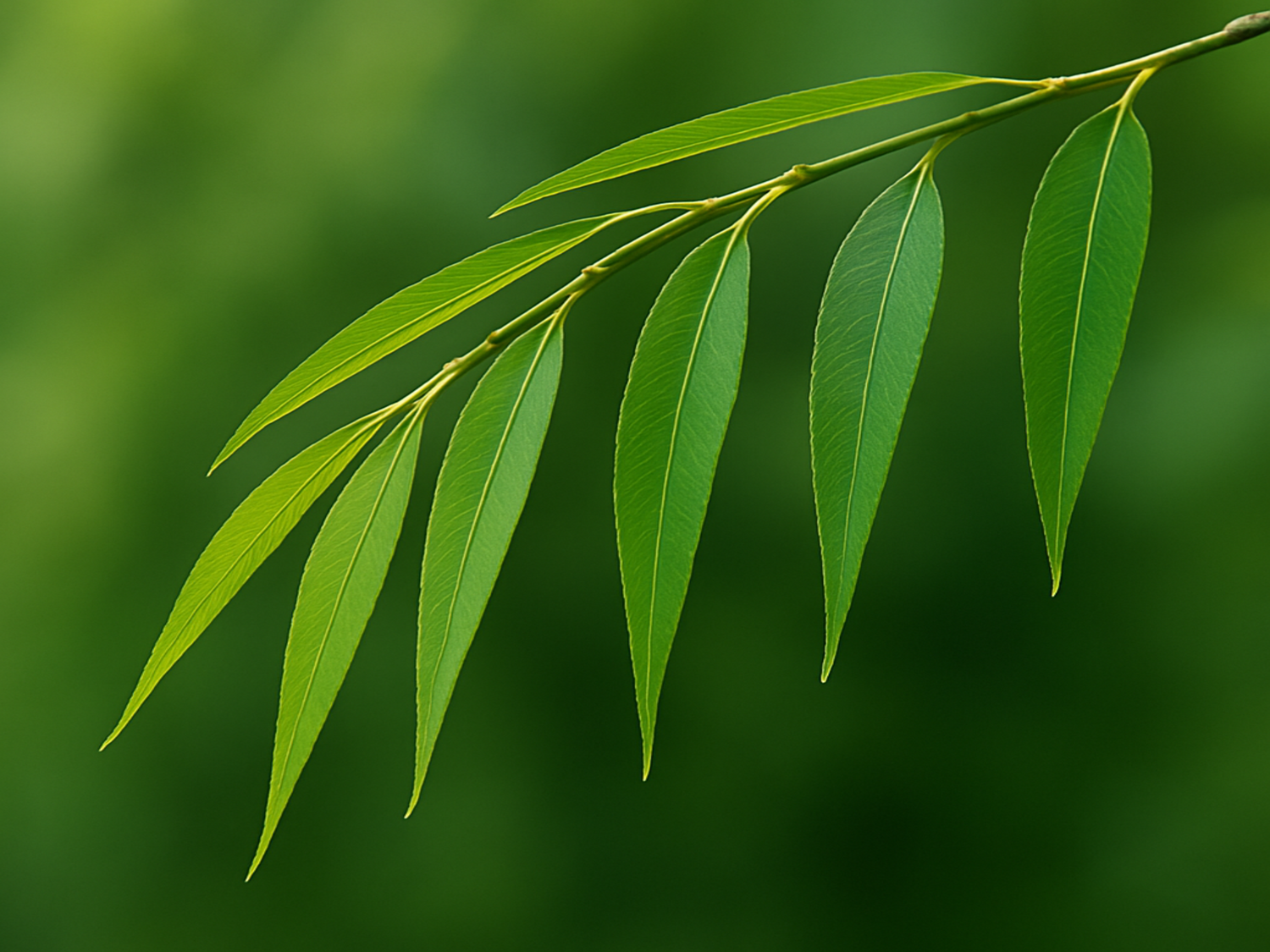
Shaped like a willow leaf, the Yanagiba’s long, slender blade features a gentle curve from heel to tip—perfect for the pull-cut technique that creates clean, glistening slices of sashimi. Its smooth glide through fish makes it a favorite for both professionals and serious home cooks. Easy to sharpen and balanced in hand, the Yanagiba embodies the elegance of Japanese precision.
-

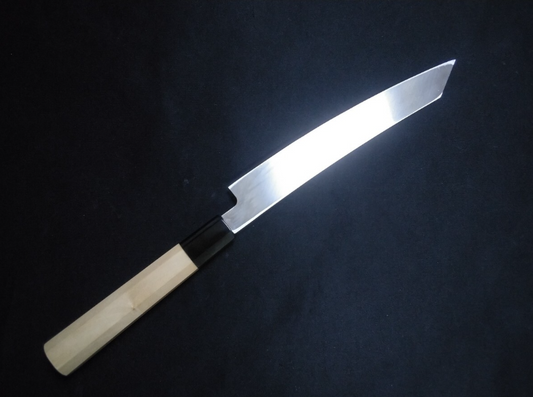
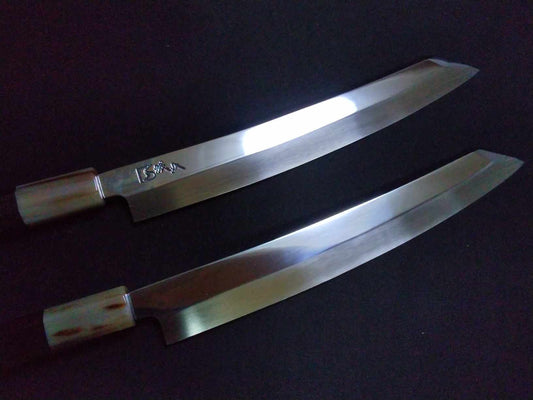
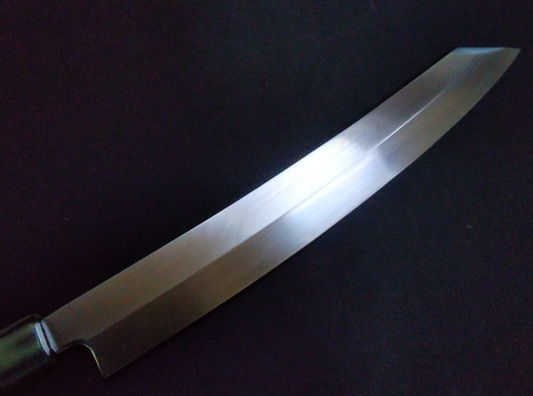
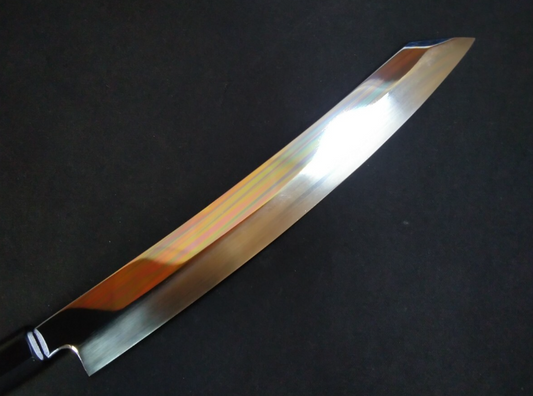
The Yanagiba (Kiritsuke) commands attention with its distinctive angled tip and thicker, heavier blade. This extra weight can add stability but also creates more resistance, demanding greater skill to master. Its straighter edge excels at certain slicing techniques, and the blade’s sharp tip—while visually striking—requires careful maintenance to preserve its shape.


Yanagiba (Kiritsuke): The Most Beautiful Problem in Japanese Knife Design
-

What the Straight Tip Actually Offers
The kiritsuke tip does offer a genuine functional advantage — in a specific context.
When breaking down large blocks of tuna or other substantial fish into saku — the rectangular portions that will eventually be sliced into individual pieces — the yanagiba's curve can become an obstacle. The stroke required to cut a large block cleanly, from one end to the other in a single pull, is a long, linear movement. The standard yanagiba's curve, which is an advantage in the final slicing, can create inconsistency in this initial portioning — the changing geometry of the blade as it travels through the cut means that different parts of the blade are making contact at slightly different angles.
A straighter blade profiles more consistently through a long linear cut of this kind. The kiritsuke tip — flatter, more even from heel to point — can produce a more uniform contact surface when the task is the initial portioning of large blocks rather than the final precision slicing.
This is a real advantage. It is also a narrow one — specific to a particular task, in a particular context, performed by cooks at a particular level of work. For everything else that a yanagiba is used for, the standard curve remains superior.
-

The Sharpener's Concern
The Yanagiba (Kiritsuke) presents a specific challenge that becomes clear when viewed from the sharpener's perspective.
The tip of a standard yanagiba — gently curved, tapering to a point — is relatively thin. This thinness is appropriate to its function: the tip does detailed work, and a thin tip is responsive and precise. It is also, because it is thin, relatively fragile. But the fragility is managed by the curve — the geometry distributes the stress of contact in a way that a straight tip does not.
The Yanagiba (Kiritsuke)'s tip appears more robust. It has more material at the point — more thickness, more mass. To the eye, and to the hand, it feels more durable than the standard yanagiba's delicate point.
The sharpener's assessment is different. The additional material at the tip means that when unusual force is applied — when the tip contacts the board at the wrong angle, or when lateral stress is applied that the geometry was not designed to absorb — the tip has more mass to transfer that stress to the blade itself. The result, in practice, is that the Yanagiba (Kiritsuke) tip can be more prone to bending, chipping, or in extreme cases, breaking, than its appearance suggests.
This is counterintuitive — the thing that looks stronger behaving, under certain stresses, in a more fragile way. It is also, for a knife at this price point and quality level, important to understand before the knife is in a working kitchen.


-

Who Should Use It
The practical conclusion from this analysis is straightforward, if nuanced.
The Yanagiba (Kiritsuke) is the right tool for a cook who regularly performs the specific task it was optimized for — the long linear portioning of large fish blocks — and who has the sharpening skill and technique adjustment time to manage its particular demands. In that context, it is a genuine specialist tool with a genuine advantage.
For cooks who primarily use a yanagiba for its core purpose — the final precision slicing of fish for sashimi and sushi — the standard yanagiba's geometry remains superior. The curve that feels less dramatic is doing more work than it appears to be doing. And the maintenance that the standard yanagiba allows — the predictable, forgiving sharpening process that translates effort directly into edge quality — is a practical advantage that compounds over years of professional use.
The Yanagiba (Kiritsuke) is not a better yanagiba. It is a different answer to a different question — one whose precise original formulation has been lost, and whose beauty may be part of the reason it has survived in the absence of a clearer functional justification.
In Japanese knife culture, this is called an interesting problem. The knife is beautiful. The origins are uncertain. The performance is specific. All three of these things are true simultaneously — and understanding all three is what it means to know the tool.

Q1. What is a Yanagiba (Kiritsuke)?
The Yanagiba (Kiritsuke) is a modern variation of the traditional Japanese Yanagiba, distinguished by its angled, chisel-like tip. While it retains the exceptional slicing ability of the classic Yanagiba for sashimi, its unique tip design also makes it suitable for decorative cuts and detailed knife work. This combination of precision and versatility has made it a popular choice among professional chefs.
Q2. How is it different from a traditional Yanagiba?
The main difference lies in the tip design. A traditional Yanagiba has a slender, slightly curved pointed tip, ideal for straightforward sashimi slicing. The Kiritsuke tip, however, is angular and robust, providing more stability and control for delicate garnishing, precise cuts, and even light chopping. This makes the Kiritsuke version more versatile, expanding its role beyond sashimi preparation.
Q3. Can I use a Yanagiba (Kiritsuke) to cut meat?
Yes, but with limitations. Like the standard Yanagiba, the Kiritsuke is primarily intended for slicing raw fish. It can handle thin slices of boneless, tender meat such as beef carpaccio, but it is not suited for tougher cuts, sinewy textures, or bone-in meat. For heavier meat preparation, a Western chef’s knife or a Japanese deba knife is more practical.
04. How is it different from a Yanagiba (Sakimaru)?
The Sakimaru Yanagiba has a rounded, upward-curved tip, favored in kaiseki and ceremonial cuisine for its graceful aesthetic. The Kiritsuke Yanagiba, by contrast, has a sharper, more angular tip that combines visual drama with functional versatility. This makes it particularly popular in open kitchens and chef’s counters, where performance and presentation go hand in hand.
Q5. Who should choose a Yanagiba (Kiritsuke)?
This knife is best suited for chefs and experienced users who want a Yanagiba with added versatility. It appeals to those who value both precision slicing for sashimi and the ability to perform detailed decorative cuts, while also appreciating the dramatic appearance of the blade.
Q6. Is the Kiritsuke Yanagiba difficult to master?
Yes. Like all single-bevel Japanese knives, it requires technique and practice to use effectively. The angled tip adds versatility but also demands precision in handling and sharpening. For beginners, it can feel challenging, but for dedicated users it offers a rewarding combination of function and artistry.

How Long Should Your Yanagiba Be?
Discover why the length of a yanagiba plays an important role in sashimi preparation. Learn how a 270mm blade supports smooth single-stroke cuts, helping preserve the texture, appearance, and delicate taste of each slice.

Why Sushi Is Taking Over the World
Discover why sushi became a global phenomenon and how Japanese knives shape the taste, texture, and philosophy behind every great piece. Explore the deep connection between sushi culture and traditional Japanese craftsmanship.

A Razor-Sharp Knife and the Birth of Sashimi
Sashimi is more than raw fish—it is tradition, art, and precision, a cuisine that could only have emerged in Japan. At its heart lies the Japanese knife, whose ultra-sharp edge made this culinary culture possible. This article explores how the evolution of these blades shaped sashimi, and why precision cutting remains its very foundation.
What is a Japanese fish knife called?
Learn about the Yanagiba, Japan’s traditional knife for preparing fish, and how its design supports precise slicing for sushi and sashimi.
Discover its distinctive features, essential care techniques, and why it remains an important tool in Japanese seafood preparation.
