Sharpening Knives
-
-
Why Does Only Japan Have a Culture of Sharpening Knives with Whetstones?
In this video, we explore how Japan’s blessed geography and geological layers produce rare natural whetstones, and how this has shaped the enduring tradition of sharpening with stones.
Why Does Only Japan Have a Culture of Sharpening Knives with Whetstones?
-
— A Unique Blend of Geology, Spirit, and Aesthetics That Forged a One-of-a-Kind Tradition
In many countries, when a kitchen knife becomes dull, the solution is simple: replace it.
But in Japan, knives are not thrown away — they are nurtured through sharpening.
This practice is more than maintenance. It is a centuries-old culture, born from geology, spirit, and aesthetics.So why did only Japan develop such a refined whetstone-sharpening tradition?
-
■ A Gift from the Earth: Japan, the Land of Natural Whetstones
Japan lies at the collision of four tectonic plates, creating unique geological conditions. Over millions of years, ancient sedimentary layers were pushed to the surface, producing rare, high-quality natural whetstones found almost nowhere else on Earth.
Kyoto became the center of this culture, with stones like Nakayama, Okudono, Maruoyama, and Aoto revered as treasures.
Among them, Kyoto’s finishing stones are legendary. They naturally release a fine slurry during sharpening, polishing the blade while refining its edge. The result is both razor-sharp performance and exquisite beauty. -
■ Why Other Countries Could Not Develop This Culture
Natural whetstones exist worldwide — Arkansas stones in the U.S., Ardennes Coticule in Belgium — but most are too hard, too coarse, or too limited to achieve the delicate finishes Japanese knives require.
Europe’s geologically stable environment also meant that ancient strata rarely surfaced, limiting access to suitable stones.
This scarcity fostered a culture of replacement and industrial maintenance, rather than the artisanal, hand-sharpening tradition that thrived in Japan. -
■ The Japanese Spirit: Tools as Partners
Sharpening in Japan is not just a technical act. It reflects a philosophy of respect for tools.
A knife is considered an extension of the chef’s hand — a trusted partner rather than a disposable object.
Sharpening becomes a ritual of gratitude and mindfulness, echoing the spirit of Zen meditation, the tea ceremony, and other Japanese arts. -
■ The Beauty and Philosophy of Sharpening
In Japanese culture, sharpness alone is not enough.
The subtle hamon (blade patterns), the polishing lines from the whetstone, and the mirror-like finish are all seen as expressions of the sharpener’s artistry.Through sharpening, a simple kitchen tool is transformed into a work of functional art, embodying both performance and beauty.
-
■ KIREAJI: Carrying This Tradition into Your Kitchen
The sharpness and durability of KIREAJI knives are the crystallization of Japan’s unique geology and its whetstone-sharpening culture.
Owning a KIREAJI knife is more than having a sharp blade.
It is an invitation to experience Japanese craftsmanship, mindfulness, and tradition in your own kitchen.For those who wish to refine their cooking, or simply enjoy the beauty of daily preparation, KIREAJI knives are far beyond tools — they are a way to connect with the soul of Japanese culture.
A journey of mastery begins at your cutting board.
With KIREAJI, discover the elegant art of sharpening and embrace the spirit of Japan.
The Roots of Japanese Sharpening: A Culture Born from Earth & Respect
-
Japanese sharpening is more than a maintenance task—it is a cultural tradition shaped by rare geology and deep respect for tools.
Japan’s unique natural stones create an unmatched polished edge, and sharpening is seen as a mindful ritual, not mere upkeep.
A knife is treated as a trusted partner, reflecting a philosophy where tools are valued, not discarded. -
Sharpening Is Where a Chef Truly Begins
-
-
Why Learning to Sharpen Changes Everything
There is a moment many young cooks remember clearly.
They are standing at the cutting board, struggling with katsuramuki — that slow, paper-thin spiral of daikon that seems impossible to get right. Their hands tense. The knife drags. The vegetable tears instead of yields. And quietly, a thought creeps in:
Maybe I don't have what it takes.
But here is what no one told them: the knife was dull.
This is where sharpening begins — not as a technical skill, but as a way of seeing. In Japanese culinary culture, togi, the act of sharpening, has never been treated as mere maintenance. It is considered a form of practice in itself. A daily conversation between the cook and the blade. A ritual that shapes not just the edge of a knife, but the character of the person holding it.
What follows are four truths about sharpening that most chefs only discover far too late.
-
1. A Dull Knife Lies to You About Your Talent
Before you question your ability, check your knife.
This sounds almost too simple. But it is one of the most common and most painful mistakes in a young cook's early years. A dull blade doesn't just underperform — it deceives. It makes you compensate with pressure, with awkward angles, with force that belongs nowhere near fine ingredients. Bad habits form quietly, invisibly, until they feel like second nature.
A sharp knife removes this interference. Suddenly, your actual skill has room to surface. Cuts become cleaner. Movements become lighter. What felt like a talent gap was often nothing more than a tool problem.
Sharpening, learned early, is an act of honesty. It strips away a hidden obstacle and shows you — and the knife — what you are actually capable of.
-
-
2. The Knife Cuts. The Flavor Follows
Ask an experienced chef why food tastes different when cut by someone who truly knows their knife, and they will not talk about seasoning. They will talk about the blade.
A dull knife does not cut. It crushes. Under pressure, cell walls collapse, moisture escapes, and the ingredient — before it ever reaches heat — has already begun to deteriorate. The texture softens where it should hold. The flavor disperses where it should concentrate.
A sharp knife separates cleanly. The cells stay intact. The structure holds. What reaches the pan, or the plate, is the ingredient as it was meant to be.
In Japanese cuisine, this is not a subtle distinction. It is foundational. The idea that how you cut determines what you cook is built into the vocabulary of the kitchen, into the design of every blade, into the silence required when you sharpen.
Precision is not only about appearance. It is about taste.
-
3. The Knife You Care For Becomes the Chef You Are
A beginner in a traditional Japanese kitchen is often handed a carbon steel knife.
It seems like a strange gift. Carbon steel rusts if left wet for minutes. It stains. It demands to be dried immediately, oiled carefully, stored with attention. Compared to stainless, it is unforgiving.
But that is precisely the point.
Caring for a difficult tool builds a particular kind of discipline — the kind that doesn't announce itself. You wipe the blade without thinking. You check the edge without being asked. You begin to understand the knife not as an object, but as something that responds to how you treat it.
Japanese knives carry this philosophy in their very shapes. The yanagiba, long and slender, built for the single drawing cut of sashimi. The deba, heavy and thick-spined, made to move through bone without flinching. The usuba, flat and precise, designed for the vegetable work that reveals everything about a cook's patience.
Each shape holds a purpose. But that purpose only becomes legible through sharpening. When you learn to restore an edge, you begin to understand why the edge was made that way. The knife starts to teach you — if you are willing to listen.
-
4. Start Before You Think You Are Ready
Here is something that surprises many people outside professional kitchens: a significant number of working chefs are not comfortable sharpening their own knives.
They cook daily. They are skilled. But sharpening — that slow, repetitive work on the stone — was never properly learned, and now it feels too late to begin without embarrassment.
It is never too late. But starting early changes everything.
The whetstone asks nothing glamorous of you. No audience. No immediate reward. You hold the angle, you feel the steel, you listen for the sound that tells you the edge is forming. Early attempts are inconsistent. The bevel is uneven. The results are humbling.
And that is where the real learning begins.
Over time, you develop something that cannot be taught directly: sensitivity. You feel the difference between a knife at seventy percent and one at its full edge. You understand steel the way a surgeon understands suture — not intellectually, but through the hands. This sensitivity moves with you through your entire career.
The chefs who sharpen well are rarely the loudest in the kitchen. But they are almost always the most precise.
-
The Quiet Path to a Sharper Self
There are textures only a truly sharp knife can produce. Cuts so clean the ingredient seems to open rather than separate. Flavors preserved because nothing was crushed, nothing was torn, nothing was lost on the way from board to bowl.
These things cannot be purchased. They cannot be rushed. They live on the other side of a practice that is slow, repetitive, and easy to dismiss — until the day you understand what it was building all along.
Sharpening is not preparation for cooking.
It is cooking. The first act of it. The one that determines everything that follows.
Begin there.
Ⅰ. The Story of Japanese Sharpening Stones
-
-
The Hidden Foundation Behind Japan’s Legendary Sharpness
When people talk about Japanese knives, they often focus on steel, craftsmanship, or tradition.
But behind every exceptional Japanese blade lies something just as important — the sharpening stone.
The history of Japanese sharpening stones is not simply the evolution of a tool.
It is the quiet foundation that shaped Japan’s knife culture, craftsmanship, and the pursuit of ultimate sharpness.
Let’s explore this fascinating journey through time. -
1. The Beginning of Sharpening
Polished Stone Age to Yayoi Period (Before 300 BCE – 300 CE)
The origin of sharpening in Japan dates back thousands of years.
During the Polished Stone Age, people began shaping tools by rubbing stones together.
This simple act became the earliest form of sharpening.
Archaeological discoveries from this period reveal clear abrasion marks, showing that sharpening stones were already essential tools.
By the Yayoi period, trade between regions began to develop.
Certain stones proved better for sharpening, and people started distinguishing between ordinary stones and sharpening stones.
Some of these stones were even exchanged like valuable goods.
This suggests that specialists and early distribution networks may already have existed.
From the very beginning, sharpening was not just practical — it was already becoming a craft. -
-
2. The Birth of Quality and Identity
Heian to Kamakura Period (794–1333)
During the Heian period (794–1185), people began recognizing differences in sharpening stone quality.
Famous stones such as Iyo-to from present-day Ehime Prefecture emerged and became early branded stones.
Then came a turning point.
During the Kamakura period (1185–1333), natural finishing stones were discovered in Kyoto.
This discovery changed everything.
These finishing stones allowed:
- Sharper Japanese swords
- Improved cutting performance
- The ability to polish blades for beauty
For the first time, blades could achieve both function and aesthetics.
The remarkable variety of Japanese finishing stones is still considered rare worldwide.
Some even call it a miracle unique to Japan. -
3. The Flourishing of Culture
Edo Period (1603–1868)
As Japan entered the peaceful Edo period, sharpening stones became more widely available.
Previously, finishing stones were tightly controlled due to their importance for weapons.
But as society stabilized, they spread to craftsmen and cooks.
This era saw the rise of:
- The philosophy of caring for tools
- The spirit of "mottainai" (avoid waste)
- The refinement of sharpening techniques
At the same time, Japanese food culture evolved.
Techniques such as pull-cutting for sashimi became common.
Knife shapes like Yanagiba and Deba were developed and refined.
Sharpening stones helped shape not only knives — but also Japanese cuisine itself. -
4. Modernization and Synthetic Stones
Meiji to Showa Period (1868–1989)
During the Meiji period, industrialization increased mining of natural stones.
This became the golden age of natural sharpening stones.
However, another revolution soon arrived.
In the early Showa period (1926–1940s), synthetic sharpening stones were developed using abrasives from the United States.
These stones offered:
- Consistent quality
- Controlled grit levels
- Reliable performance
Unlike natural stones, synthetic stones removed uncertainty and improved accessibility.
Later, in the late Showa to Heisei period (1970s–2000s), synthetic finishing stones improved significantly.
They made it possible to sharpen harder steels such as Blue Steel to their full potential.
This expanded what Japanese knives could achieve. -
5. The Modern Revolution
The Present Era
Today, we are living through another major transformation.
The introduction of diamond flattening plates has changed sharpening dramatically.
These tools allow anyone to keep sharpening stones perfectly flat — a critical factor for proper sharpening.
This innovation has:
- Improved sharpening accuracy
- Made sharpening easier to learn
- Enhanced the performance of both synthetic and natural stones
Modern chefs and knife enthusiasts now have unprecedented choices.
They can choose:
- Natural stones for feel and character
- Synthetic stones for precision and consistency
- Ultra-fine stones (30,000 grit and beyond) for ultimate sharpness
For the first time in history, sharpening can be adjusted based on the flavor and texture of ingredients.
This makes today the most exciting and luxurious era in sharpening history. -
The Quiet Partner Behind Japanese Knives
Japanese knives are often celebrated for their steel and craftsmanship.
But behind every great blade lies the quiet partner that makes it truly shine —
the Japanese sharpening stone.
Understanding sharpening stones means understanding Japanese knives.
And understanding Japanese knives means stepping into a deeper world of craftsmanship, culture, and care.
The next time you hold a Japanese knife, remember:
Its sharpness is not only forged —
it is refined through centuries of sharpening tradition.
Ⅱ. Before Sharpening Knives
-
-
Sharpening a knife is not just a technical task—it is an art that reflects centuries of Japanese craftsmanship.
Before picking up a whetstone, it is vital to understand several key principles. By keeping these in mind, you can sharpen more effectively, solve common issues, and avoid mistakes that could damage your blade. -
1. The Importance of the Backside on Single-Edged Knives
For single-edged knives, the role of the backside is critical. The back of the blade is shaped with a unique structure called “ura-suki”, a hollow that reduces cutting resistance and makes sharpening easier.
-
-
This design works only when the back edge remains extremely thin—ideally under 0.5 mm, known as a “thread back.”
- If over-sharpened, the back becomes too thick, increasing resistance and reducing sharpness.
- On knives like the Deba, however, leaving the back slightly thicker can help prevent chipping when cutting hard materials.
Maintaining the right balance is the key to performance.
-
-
2. The Chef’s Defense Lies in the Back Surface
The urasuki is a chef’s greatest ally in achieving sharpness. Light pressure is usually enough to maintain a clean backside, but over time:
- Excessive pressure may cause the back edge to spread and dull.
- Warping may prevent proper contact with the whetstone.
When this happens, specialized repair—not ordinary sharpening—is required.
Deep chips or distortions should always be handled by professional sharpeners. For chefs, it is wise to keep multiple knives of the same type, so work is never interrupted.
-
-
3. Setting the Right Sharpness Goals
While sharpness is essential, “too sharp” can sometimes be a disadvantage.
- Knives like Deba or Garasaki, used on hard materials, are more prone to chipping if the edge is overly thin.
- Over-sharpening can also alter the familiar feel of your knife, slowing down your efficiency.
The goal is not always to make a knife razor-sharp, but to achieve the level of sharpness that suits its intended purpose and your working style.
-
-
4. Understanding “Kaeri” (Burrs)
During sharpening, a thin metal burr—called “kaeri,” “ha-gaeri,” or “bari”— forms along the opposite side of the edge being sharpened.
This is a sign that the sharpening stage is complete.
However:- Excessive burrs mean unnecessary steel removal.
- Toward the end of sharpening, burrs should become progressively smaller.
A skilled sharpener watches closely for these subtle changes.
-
-
5. Managing the “Mud” from Sharpening
Sharpening produces a slurry of steel particles and whetstone abrasives, known as “mud.”
- This mud acts as an additional abrasive, helping the blade sharpen faster and polish more smoothly.
- However, too much mud can reduce control and unintentionally affect areas of the blade that should remain untouched.
Some sharpeners therefore use “running water sharpening,” rinsing away the mud to rely only on the stone’s surface.
Adjusting between muddy sharpening and water sharpening is the secret to optimal results.
Beyond Technique: Understanding the True Foundations of Sharpening
-
Sharpening excellence comes from understanding the blade itself.
Mastery begins with the ura-suki, the burr, and the slurry, not just the motion of sharpening -
Ⅲ. Selecting the Right Whetstone Grit
-
-
The journey to a truly sharp knife begins with choosing the correct whetstone. Each stone has a specific role, and understanding grit differences is the foundation of proper sharpening.
-
1. Rough Stones (240–600 Grit)
These are repair stones, used when a knife has chips, dents, or when you need to create a completely new edge.
- They remove metal quickly and efficiently.
- Best suited for major corrections, not for daily sharpening.
-
2. Medium Stones (800–2,000 Grit)
This is the workhorse of sharpening. Medium-grit stones refine the rough edge created by coarse stones and prepare the blade for polishing.
- Essential for regular maintenance.
- Provides a sharp, functional edge suitable for most kitchen tasks.
-
3. Finishing Stones (3,000–8,000 Grit)
These stones transform sharpness into artistry.
- They create a mirror-like polish and an edge fine enough for the most delicate and precise cuts.
- Especially valued for Japanese knives used in sushi or kaiseki, where presentation is as important as performance.
-
Important Note on Grit Numbers
Keep in mind that grit numbers are not globally standardized. They can vary slightly by manufacturer. Always refer to the guidelines for your specific whetstone brand.
Ⅳ. Step-by-Step Knife Sharpening with a Whetstone
-
-
-
1. Assess Your Blade
Before you begin, carefully inspect your knife for any chips, bends, or nicks. Identifying these imperfections beforehand helps you plan whether simple sharpening is enough or if professional repair is required.
-
2. Prepare the Whetstone
Water is essential for sharpening. It acts as a lubricant, reduces friction, and prevents heat build-up that could damage the blade.
- Soak water stones (about 10–15 minutes) until no bubbles appear.
- For splash-and-go stones, simply wet the surface before use.
-
3. Find and Maintain the Angle
The sharpening angle determines the knife’s sharpness and durability. For most Japanese knives, the ideal range is 10–15 degrees, while Western-style knives are usually 20 degrees or more.
The key is not just the angle itself, but consistency—maintaining the same angle throughout the process. -
4. Sharpening Motion
Place the blade on the stone and glide it back and forth with smooth, controlled strokes, applying gentle, even pressure. Work from the heel to the tip.
Remember: let the stone do the work—too much force will damage the edge. -
5. Check for the Burr (Kaeri)
As you sharpen, a small metal burr forms on the opposite side of the edge. This indicates progress. Flip the blade and repeat until the burr is removed, ensuring both sides are evenly sharpened.
-
6. Clean and Store
After sharpening, rinse both the knife and whetstone thoroughly, and dry them completely. Store your knife in a safe, dry place to maintain its edge.
Types of Whetstones
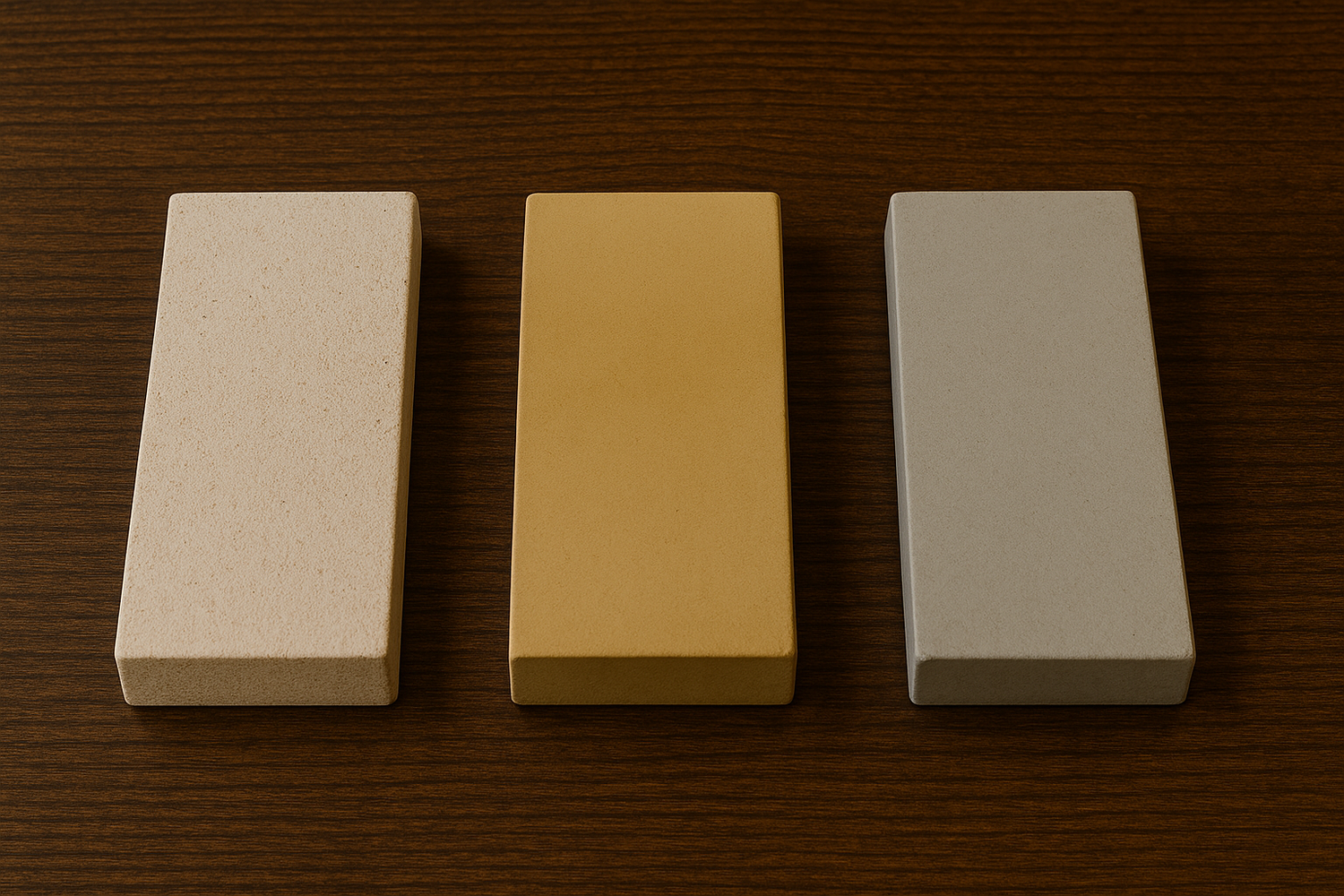
Owning a fine knife means choosing the right whetstone to care for it. From coarse to finishing stones, each plays a role in sharpening and maintenance. Understanding their differences helps you keep your blade at peak performance and know how often to use each one.
Daily Care of Whetstones
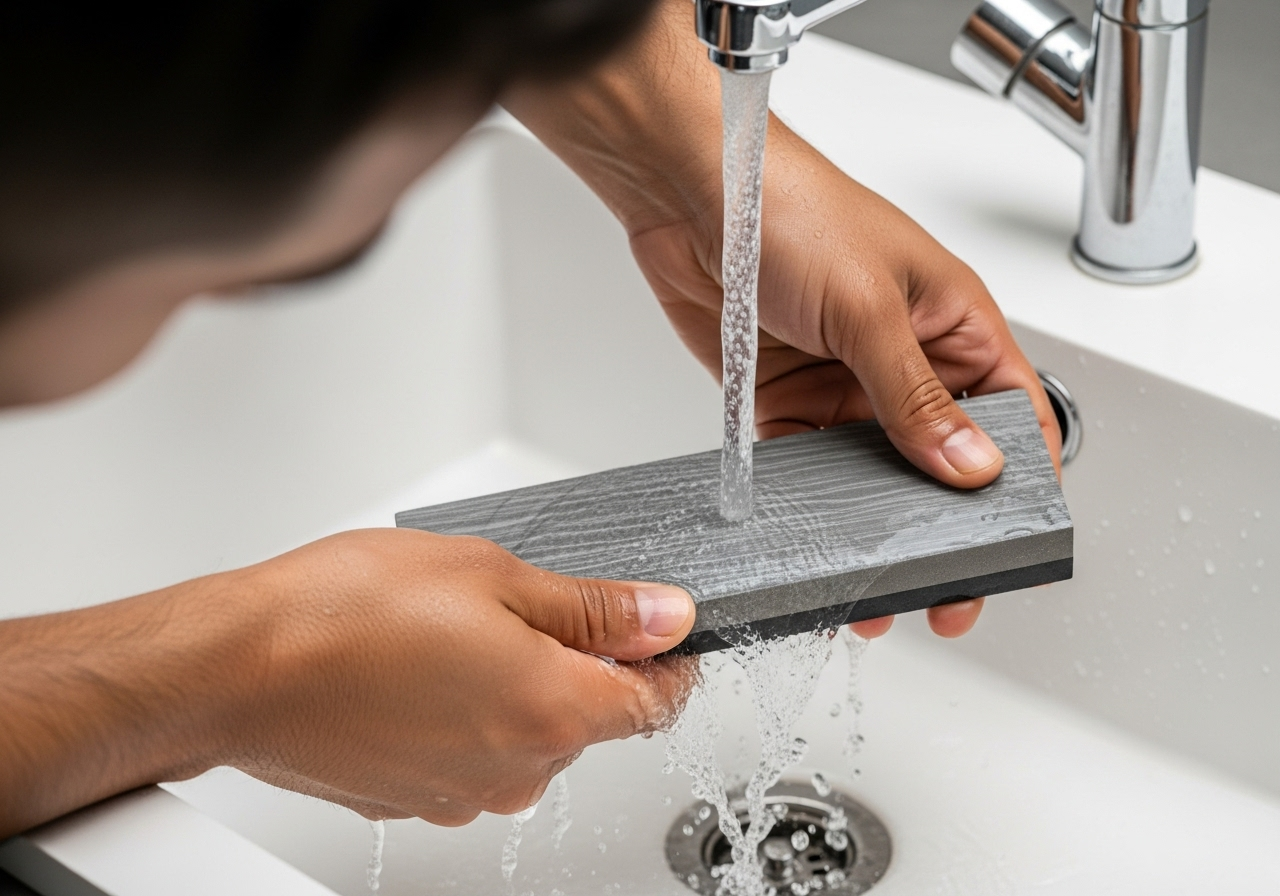
Whetstones need only minimal upkeep, yet issues like warping or denting can affect their performance. With proper care, your stone stays in top condition—ensuring precise, effective sharpening every time.
The Soul of Craftsmanship
-
Sharpening: The First Step Toward a Chef’s Future
Learning to sharpen knives is more than just maintaining a tool—it is the foundation of a chef’s growth. A knife that has been properly sharpened does not simply cut; it glides, it respects the ingredient, and it elevates the craft of cooking itself.
-
The sharpness of your blade reflects your discipline as a chef. A dull knife slows you down, bruises ingredients, and disrupts precision. In contrast, a sharp blade enhances freshness, presentation, and efficiency. The edge of your knife becomes the edge of your skill.
-
“To understand your tools is to understand yourself.” By learning sharpening early, you build harmony between hand and blade. Each stroke of the whetstone deepens your awareness, creating a rhythm where knife, ingredient, and chef move as one.
-
For aspiring chefs, sharpening is not just a chore—it is a rite of passage. It teaches patience, focus, and respect for the tools that shape your craft. Every time you sharpen, you are not only refining steel—you are refining yourself.
-
Start sharpening, and you start shaping your future.
Experience the sharpness trusted by 98% of Japan’s top chefs — handcrafted in Sakai City.
Through our exclusive partnership with Shiroyama Knife Workshop, we deliver exceptional Sakai knives worldwide. Each knife comes with free Honbazuke sharpening and a hand-crafted magnolia saya, with optional after-sales services for lasting confidence.
KIREAJI's Three Promises to You
-
1. Forged in the Legacy of Sakai
From Sakai City—Japan’s renowned birthplace of professional kitchen knives—each blade is crafted by master artisans with over six centuries of tradition. Perfectly balanced, enduringly sharp, and exquisitely finished, every cut carries the soul of true craftsmanship.
-
2. Thoughtful Care for Everyday Use
Every knife includes a hand-fitted magnolia saya for safe storage. Upon request, we offer a complimentary Honbazuke final hand sharpening—giving you a precise, ready-to-use edge from day one.
-
3. A Partnership for a Lifetime
A KIREAJI knife is more than a tool—it is a lifelong companion. With our bespoke paid aftercare services, we preserve its edge and beauty, ensuring it remains as precise and dependable as the day it first met your hand.