

Collection of Other Types of Japanese Knives
-
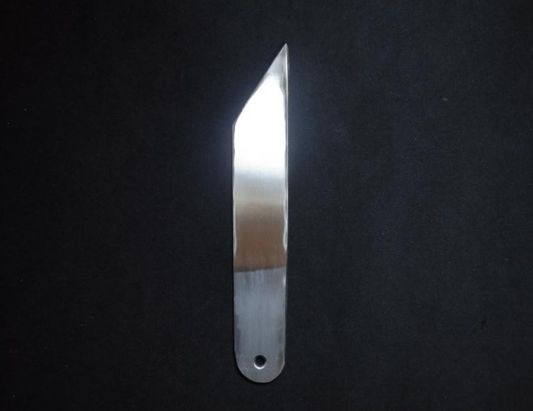
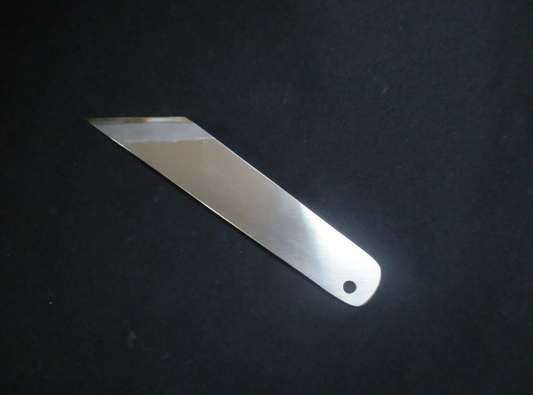
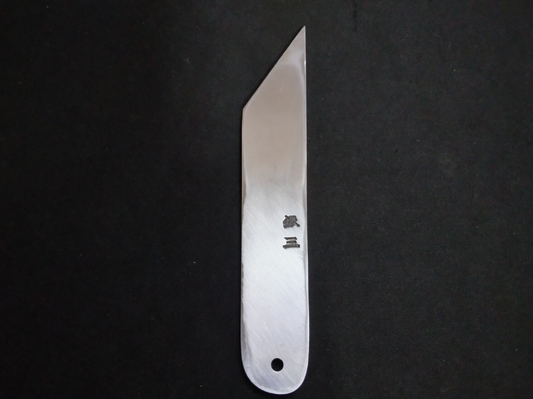
Blue Steel #2 Eel Knife 190mm
Regular price $240.00 CADRegular priceUnit price per$0.00 CADSale price $240.00 CAD -
Ginsan Eel Knife 150mm
Regular price $240.00 CADRegular priceUnit price per$0.00 CADSale price $240.00 CAD -

 Sold out
White Steel #2 Eel Knife 186mm
Regular price $250.00 CADRegular priceUnit price per$0.00 CADSale price $250.00 CADSold out -
White Steel #2 Santoku 180mm- Kurouchi Finish
Regular price $250.00 CADRegular priceUnit price per$0.00 CADSale price $250.00 CAD -
Ginsan Santoku 180mm-Kido Finishing
Regular price $320.00 CADRegular priceUnit price per$0.00 CADSale price $320.00 CAD -
Super Steel (Honyaki) Eel Knife 210mm
Regular price $320.00 CADRegular priceUnit price per$0.00 CADSale price $320.00 CAD -
White Steel #2 Takohiki 270mm-Kido Finishing
Regular price $350.00 CADRegular priceUnit price per -
Blue Steel #2 Fuguhiki 270mm-Kido Finishing
Regular price $360.00 CADRegular priceUnit price per$0.00 CADSale price $360.00 CADSold out -
Ginsan Santoku 180mm-Mirror Polished (both sides)
Regular price $380.00 CADRegular priceUnit price per$0.00 CADSale price $380.00 CAD -
Blue Steel #1 Damascus Santoku 180mm- Mirror Polished Blur Finish
Regular price $390.00 CADRegular priceUnit price per -
Ginsan Sujihiki 270mm -Kido Finishing
Regular price $440.00 CADRegular priceUnit price per$0.00 CADSale price $440.00 CAD -
Ginsan Kiritsuke Knife 230mm-Mirror Polished (one side)
Regular price $450.00 CADRegular priceUnit price per$0.00 CADSale price $450.00 CADSold out -
Blue Steel #2 Damascus Takohiki 240mm- Mirror Polished Blur Finish
Regular price $470.00 CADRegular priceUnit price per$0.00 CADSale price $470.00 CADSold out -
Super Steel (Honyaki) Root Vegetable Nakiri 180mm -Kido Finishing
Regular price $580.00 CADRegular priceUnit price per -
Super Steel (Honyaki) Sujihiki 240mm-Mirror Polished (both sides)
Regular price $590.00 CADRegular priceUnit price per$0.00 CADSale price $590.00 CADSold out -
Super Steel (Honyaki) Sakimaru (Double-Edged) 230mm-Mirror Polished (both sides)
Regular price $610.00 CADRegular priceUnit price per$0.00 CADSale price $610.00 CAD
















The KIREAJI Difference
KIREAJI Complimentary Services
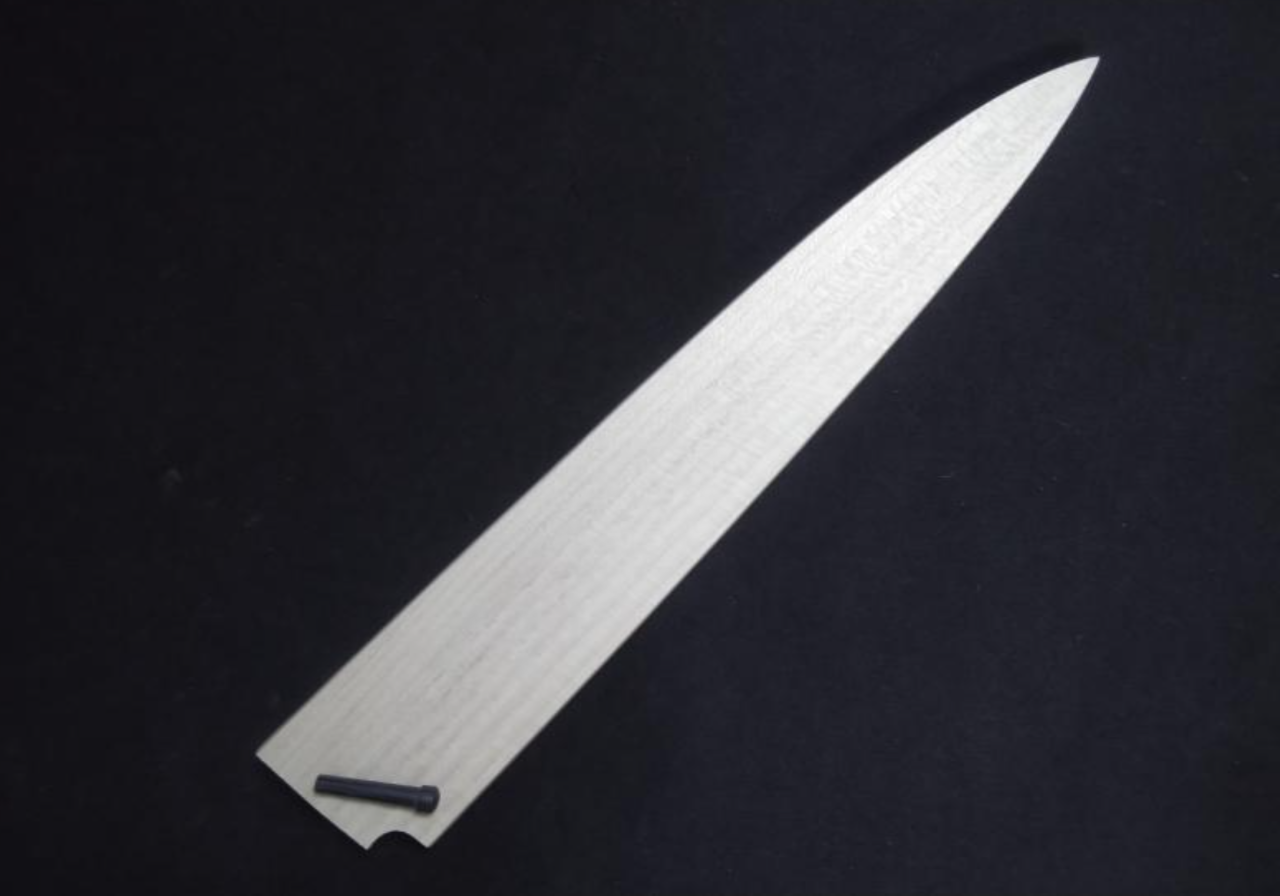
Every knife includes a magnolia wood saya, carefully selected and fitted to provide safe storage and protection. Upon request, we also provide complimentary Honbazuke, a practical initial hand-sharpening intended to prepare the knife for first use while allowing the owner to further refine the edge over time according to their own preferences.
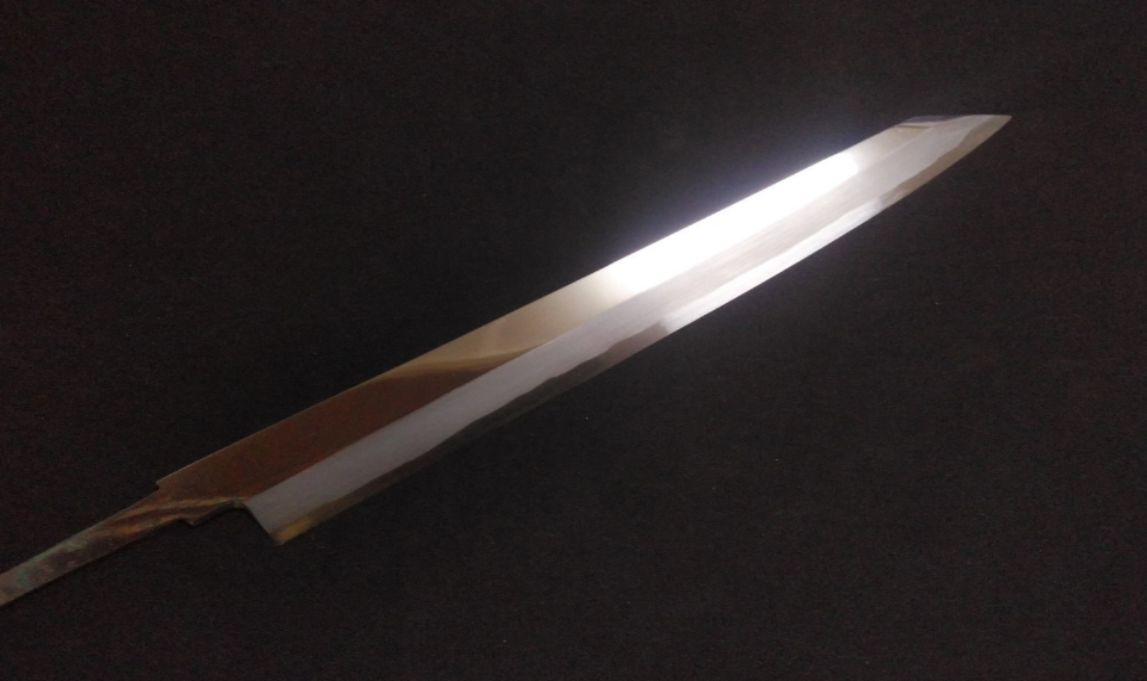
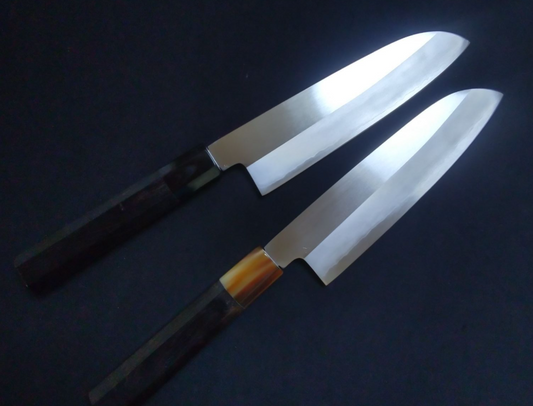
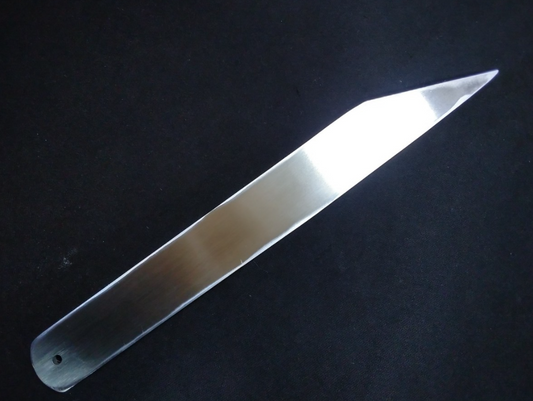
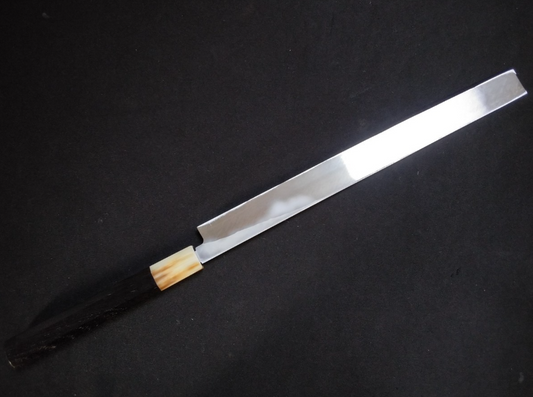
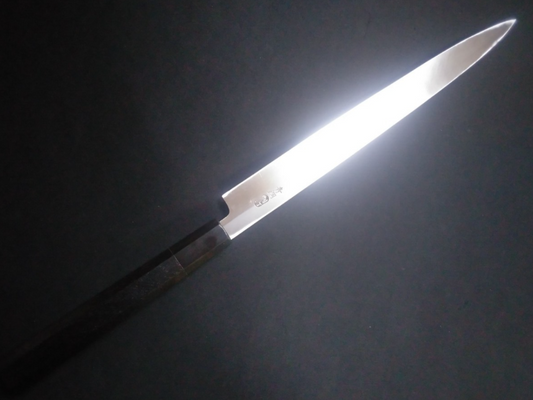
Why Many Product Photos Show Only the Blade
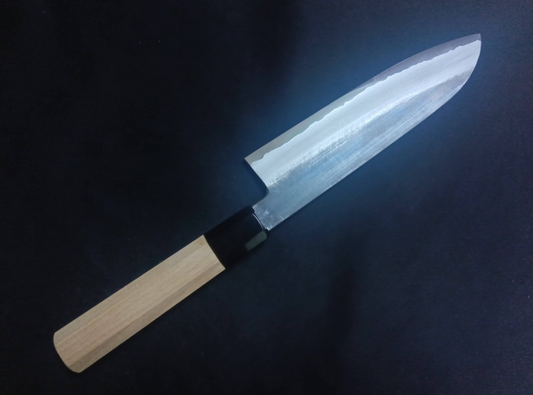
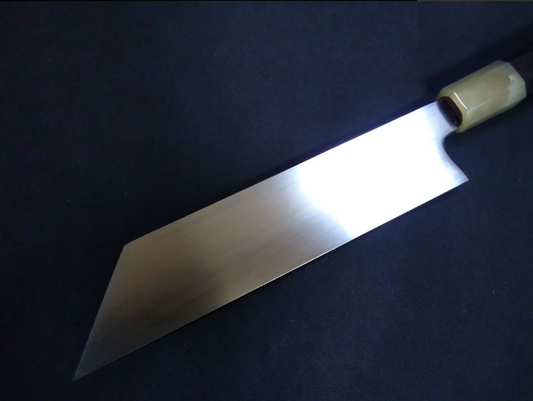
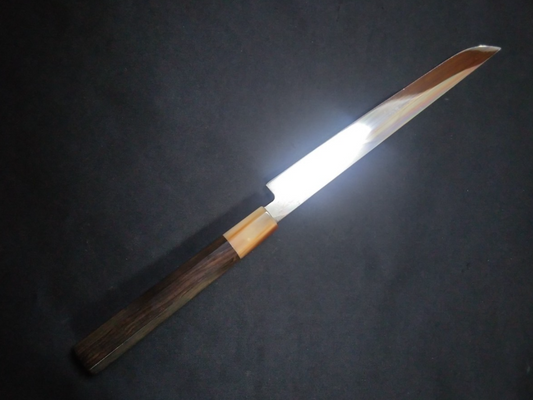
At KIREAJI, every knife is made to order in Sakai, Japan. Photos show the blade before the handle is attached, allowing artisans to perfect the balance and edge for your specific order. Your knife arrives fully finished — tailored just for you.

Global Delivery from Sakai
Across the world, discerning cooks seek authentic Japanese knives from Sakai — Japan’s legendary knife-making city with over 600 years of tradition.
At KIREAJI, we work alongside master artisans in Sakai to fulfill that desire, shipping genuine handcrafted knives directly from the workshop to kitchens worldwide.
-

Born from Tradition, Inspired by Change
Created in Japan in the 1940s, the Santoku blends the finesse of traditional Japanese knives with the versatility of Western chef’s knives. It emerged at a time when Japanese diets were evolving, becoming the ideal “first knife” for the modern kitchen—one that could handle meat, fish, and vegetables with equal skill.

-

The Santoku offers compact control, excelling in everyday chopping with an easy, agile feel. In contrast, the Gyuto delivers length and fluidity, making long, smooth slices effortless across larger ingredients. Understanding this balance—control vs. reach—helps you choose the knife that naturally extends your own cooking rhythm.

Ⅱ. Nakiri: The Heart of Japanese Vegetable Cooking
-

If there is one knife that defines everyday vegetable cooking in Japan, it is the Nakiri.
Quiet, rectangular, and deceptively simple, the Nakiri was created for a single purpose—and it fulfills that role with remarkable clarity.
This is not a multipurpose knife trying to do everything.
It is a vegetable knife, designed to make daily preparation smoother, cleaner, and more satisfying.

-

Usuba — The Precision Specialist
- Single-beveled blade, sharpened on one side only for extreme precision.
- Also rectangular, but designed for fine, delicate cuts—ideal for professional chefs.
- Excels in tasks like paper-thin vegetable slicing and decorative cuts, where presentation matters.
-


-

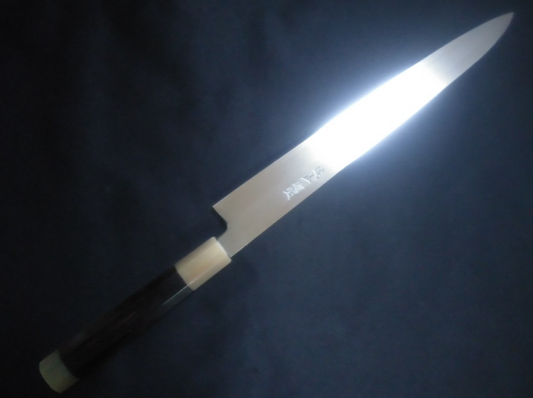
While the Kanto region embraced the Takohiki, the Kansai region developed the Yanagiba, a similar knife with a curved blade and pointed tip—better suited for intricate, decorative cuts.
-

The Mystery of Its Name
The exact origin is unclear, but one theory points to the Edo period, when Tokyo Bay teemed with octopus and locals consumed it regularly. Octopus’s slippery texture made it difficult to cut cleanly with a Deba, so the Takohiki became a natural choice. Its name may have stuck from that association, even though it’s now used for a variety of sashimi.
-

The Takohiki reflects precision, efficiency, and the spirit of Edomae sushi, offering long, clean slices with minimal wrist movement.


-

Key Features
- Long, Slender Blade – Ranging from 18 to 36 cm (most commonly ~27 cm), it enables a smooth, single draw cut—preventing damage to the fish’s delicate flesh.
- Extremely Thin Edge – Often under 3 mm thick, the blade glides effortlessly without crushing the meat, essential for achieving slices just 1–2 mm thin.
- Uncompromising Sharpness – The Fuguhiki demands meticulous care and precise sharpening. Its thinness makes it more delicate than other knives, but also more capable of delivering flawless cuts.
-

Why Sharpness Changes Flavor
A dull knife forces pressure, breaking the cell structure of the fish. This not only alters the texture but accelerates spoilage. The Fuguhiki’s ultra-sharp edge preserves each cell, ensuring the clean, elastic bite that defines great fugu sashimi.


Fuguhiki: The Precision Blade Born from Osaka’s Fugu Tradition
-

Engineered for extreme thin slicing, the Fuguhiki preserves texture, flavor, and visual beauty—reflecting the harmony between craftsmanship and culinary culture.

Ⅴ. Sujihiki: The Japanese Slicing Knife for Clean, Effortless Cuts
-

Key Features
Long, Narrow Blade
Typically ranging from 210mm to 300mm, with 240mm–270mm being the most common, the extended length enables long, uninterrupted slicing motions—ideal for roast meats, brisket, and delicate proteins.
Slim, Straight Profile
The narrow blade reduces surface contact, allowing smoother cuts and improved control.
Thin Blade Geometry
The thin blade minimizes pressure, preventing the crushing of meat fibers and preserving texture and moisture.
Double-Edged Versatility
Most Sujihiki knives are double-edged, making them suitable for both right- and left-handed users and familiar to chefs transitioning from Western knives. -

Sujihiki vs. Gyuto
While the Gyuto is designed as an all-purpose chef’s knife for meat, fish, and vegetables, the Sujihiki is specialized for slicing. The Sujihiki’s longer and narrower blade allows for smoother draw cuts and more refined presentation, particularly when working with large cuts of meat or delicate proteins.
-

Why Clean Slicing Matters
When slicing meat or fish, a dull or thick blade compresses fibers, causing juices to escape and texture to degrade. The Sujihiki’s thin, sharp edge minimizes pressure, preserving both flavor and presentation. The result is cleaner slices, better mouthfeel, and a more refined culinary experience.


Ⅵ. Eel Knife: The Specialized Blade for a Slippery Craft
-

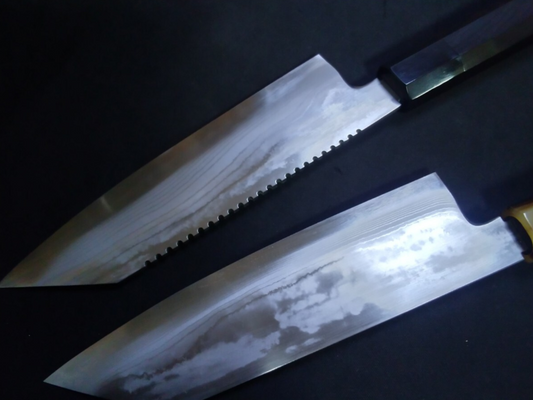
Preparing eel (unagi) is one of the most demanding tasks in Japanese cuisine. Slippery skin, firm bones, and a unique preparation method require a knife unlike any other. That is where the Eel Knife—also known as Unagi-saki or Osaka-saki—comes in: a blade designed exclusively for opening, splitting, and preparing eel with speed and precision.
-

A Quiet Backbone of Unagi Culture
Behind every perfectly grilled kabayaki eel is this humble, specialized knife. Rarely seen by diners, the Eel Knife is an indispensable backstage tool that supports one of Japan’s most beloved and technically challenging dishes. It is a reminder that Japanese knife culture is not only about beauty and sharpness—but also about respecting the ingredient and mastering the process.
-

-

In Kanto (Tokyo), chefs use the Edo-zaki, a knife with a sharply angled tip, designed to open the eel from the back. Its short handle and compact form make it feel almost like holding a brush, allowing extremely precise, controlled movements in tight spaces.
In Kansai (Osaka), the tradition is different. Here, the Osaka-zaki is used—a heavier, more robust knife with the steel extending deep into the handle. This design suits the Kansai method of splitting the eel from the belly, and prioritizes strength, stability, and decisive action.
In the Nagoya and Ise regions, you find the Nagoya-zaki, with its distinctive rounded rectangular shape. It is designed to avoid damaging the internal organs, and can be seen as a quiet fusion of Kanto and Kansai philosophies—a reflection of the region’s role as a cultural crossroads.
Kyoto, meanwhile, uses a form that resembles a small Chinese cleaver, versatile enough to handle eel and other fish alike—an expression of the city’s refined but practical culinary culture.
These differences are not accidents of design. They are the physical record of regional history, cooking methods, and values.
The Eel Knife shows us that in Japan, even when working with the same ingredient, tools evolve to match local wisdom—and that is what gives Japanese knife culture its extraordinary depth.


Ⅶ. Kiritsuke Knife: The Elegant Blade of Precision and Presence
-

Between Yanagiba and Usuba
The Kiritsuke is often associated with the roles of both the Yanagiba and the Usuba.
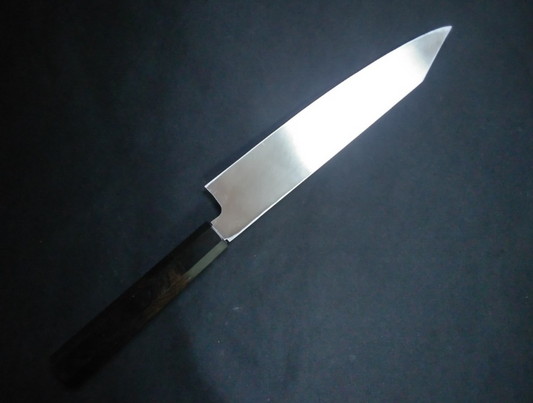
Its long, elegant shape makes it suitable for slicing sashimi with a clean draw cut, while its precise tip and refined geometry allow for careful vegetable work, including katsuramuki and decorative cutting.This makes the Kiritsuke a versatile yet demanding knife.
It is not a simple all-purpose blade like a Santoku. Rather, it is a knife that rewards skill, patience, and proper technique. -

For Sashimi, Vegetables, and Fine Finishing
The Kiritsuke excels in tasks where precision matters.
It can be used for drawing clean slices of sashimi, shaping vegetables, making fine decorative cuts, and refining the edges of ingredients before plating.This is a knife for moments when appearance and texture matter as much as taste.
From traditional Japanese cuisine to refined modern preparation, the Kiritsuke brings elegance to the cutting board and clarity to each movement. -

More Than Function—A Statement of Craft
The Kiritsuke is not merely a cooking tool.
With its striking profile, sharp tip, and refined presence, it represents the beauty of Japanese knife-making: form and function brought together through discipline.For those who value precision, tradition, and visual elegance, the Kiritsuke offers a deeply rewarding experience. It is a blade that asks for skill—and, in return, allows the cook’s sensitivity and technique to reach the ingredient with remarkable clarity.


