

Mirror Polished Japanese Knife Collection

Mirror Polished (Both Sides)
The "Mirror Polished (both sides)" collection showcases Japanese knives from Sakai with a dual-sided mirror finish, designed for exceptional sharpness and visual appeal, making them highly suitable for professional chefs.

Mirror Polished (One Side)
The "Mirror Polished (one side)" collection showcases Japanese knives with a single-sided mirror finish, tailored for professional chefs. Each knife is crafted in Sakai, known for its quality.
Mirror-Polished Japanese Knives — Where Beauty Meets Performance
-

A Legacy in Every Reflection
Mirror polishing is rooted in the art of Japanese sword-making. In the age of the samurai, a polished blade reflected not just light, but the warrior’s spirit. Today, this same philosophy lives on in Japanese kitchen knives.
Each mirror-polished knife is shaped through painstaking steps using ultra-fine whetstones and abrasives, producing a surface so smooth it reflects light like glass. This refinement is not vanity—it is a testament to precision, patience, and the relentless pursuit of perfection. -

Why Professionals Choose Mirror Polish
For world-class chefs, a mirror-polished knife is more than a tool—it is a trusted partner.
- Sharper, smoother cuts that preserve the texture, flavor, and visual integrity of delicate ingredients like sashimi and vegetables.
- Corrosion resistance, as the ultra-smooth surface prevents moisture and food from clinging, protecting especially high-carbon steels.
- Hygiene and easy maintenance, since food residue wipes away effortlessly.
- Prestige and artistry, as the mirror finish reflects not only light but also the chef’s dedication to quality.
While the finish requires more care—being prone to scratches and demanding regular upkeep—it rewards its owner with decades of unmatched performance. Over time, a mirror-polished knife becomes an extension of the chef’s hand, carrying both beauty and reliability. -

Caring for a Mirror-Polished Knife
To preserve its brilliance and performance:
- Dry completely after each use—never store a damp blade.
- Clean immediately with warm water and mild soap, avoiding harsh detergents.
- Use a soft cloth or sponge, never abrasives, to protect the surface.
- Store safely in a dry place, ideally with a saya or knife stand, to prevent scratches.
With this care, your knife will keep its razor-sharp edge, brilliant luster, and exceptional performance for years, even decades. -

More Than a Tool—An Heirloom
A mirror-polished Japanese knife is not only a kitchen instrument. It is art, heritage, and precision in one—a blade that embodies centuries of craftsmanship. Owning one is not just a purchase; it is an invitation to experience the joy of cooking at its highest level, and to pass forward a tradition worth preserving.


What a Mirror-Polished Knife Actually Is
-

Where This Comes From
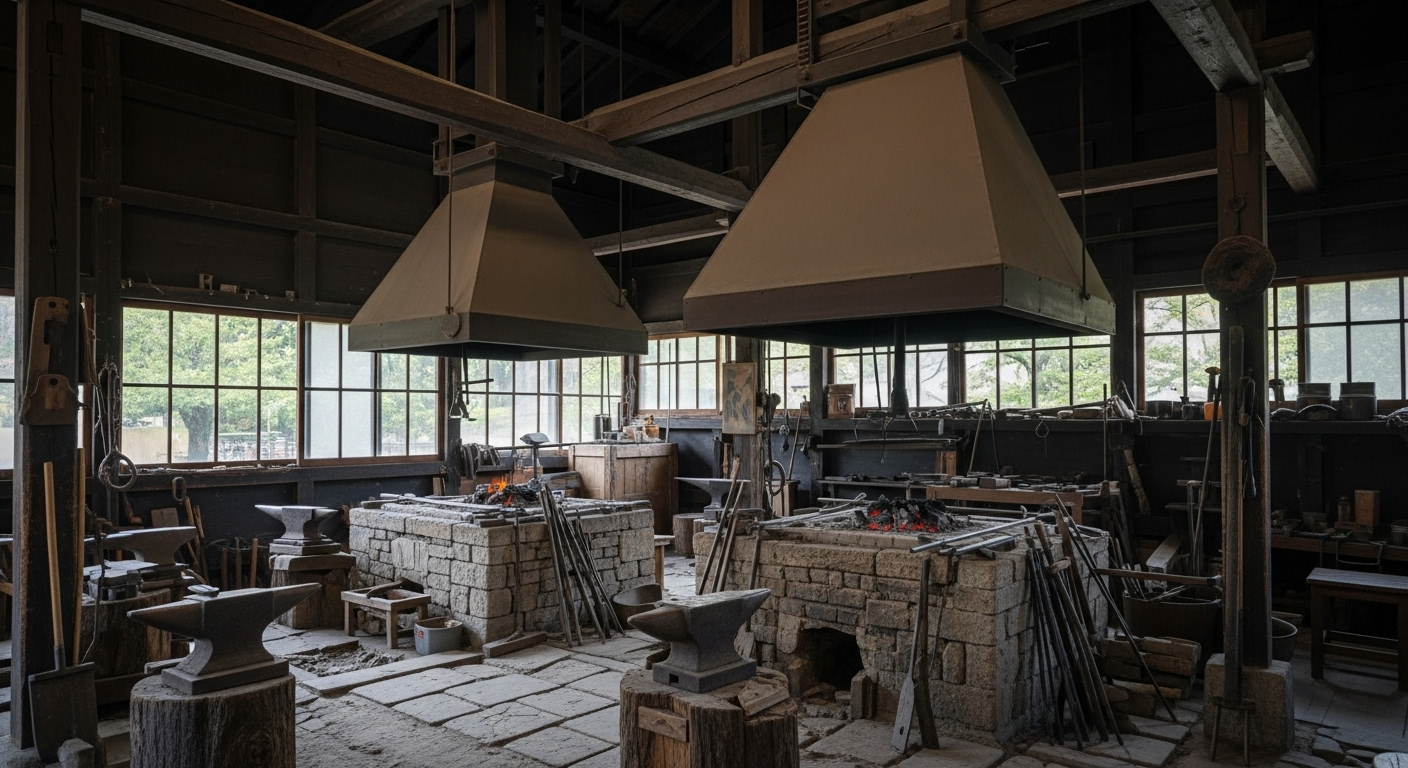
Mirror polishing did not begin in the kitchen. It began with the sword.
In the era of Japanese sword-making that reached its peak during the samurai period, a polished blade was understood to carry meaning beyond its function. The reflection was not vanity — it was evidence. Evidence that every imperfection in the steel had been found and resolved, that the surface had been refined to a degree that left nothing hidden. A blade that could not be polished to this level had not yet been finished.
The same philosophy, carried forward through centuries of Japanese metalworking, arrived eventually in the kitchen knife. The mirror finish on a Sakai knife is not decoration applied to a functional object. It is the final stage of a refinement process that began with the forging and has continued through every step of production. The polished surface is what the blade looks like when nothing remains to be done — when the craftsperson has brought the steel to a state of completion that has no more room for improvement.
Understanding this changes how you see the finish. It is not there to impress you. It is there because the work demanded it.
-

What the Polish Actually Does
The practical case for mirror polishing begins with surface physics, and it is worth understanding directly.
A blade polished to a mirror finish has had its surface refined to a degree that eliminates the microscopic irregularities present in a standard finish. Under magnification, an unpolished blade surface looks like a landscape — peaks, valleys, small ridges and depressions that are invisible to the naked eye but very much present to anything that comes into contact with them. Food particles settle into these irregularities. Moisture accumulates in them. Over time, they become sites of corrosion and contamination.
A mirror-polished surface, by contrast, is as close to geometrically smooth as a worked metal surface can be. There is nowhere for food to cling, nowhere for moisture to accumulate. The blade wipes clean with a single stroke. The ultra-smooth surface is also more resistant to corrosion — particularly important for high-carbon steels, which are more susceptible to rust than stainless alternatives but produce superior edge quality.
Then there is what the finish does at the moment of cutting. A polished blade passes through food with less friction than a standard finish. The surface does not drag against the ingredient — it separates it. This is not a marginal difference when cutting delicate ingredients like sashimi, where the texture of the fish, the integrity of the cell structure, the visual cleanness of the slice, are all affected by the quality of the blade's contact with the food. A mirror-polished knife does not compress what it cuts. It divides.
For this reason, mirror-polished knives have been the choice of Japan's finest sashimi chefs for generations. The finish is not about appearance in the professional kitchen. It is about what happens to the fish.
-

The Hours Behind the Reflection
The mirror finish does not arrive quickly. This is important to understand, because the time it takes is not separate from the value of what is produced — it is the explanation of it.
The polishing process moves through a sequence of increasingly fine abrasives, each one removing the scratches left by the previous stage and replacing them with finer ones, until the scratches become too small to scatter light and the surface begins to reflect. The final stages use abrasive compounds so fine that they are measured in microns — thousandths of a millimeter — and the polishing is done by hand, with a sensitivity to the surface that no machine can replicate.
A master artisan working at this level is not performing a mechanical operation. They are making continuous judgments: reading the surface, feeling the feedback through the polishing cloth, deciding when a stage is complete and the next can begin. The mirror that eventually emerges from this process is the physical record of those judgments — every hour of attention made visible in the surface of the steel.
When you see your reflection in a mirror-polished blade, you are seeing, in the most literal sense, the result of another person's sustained care. The clarity of the reflection is a direct measure of the precision of the work.
-

What It Requires of You
A mirror-polished knife rewards the care it is given and reveals the neglect it receives. This is not a criticism of the finish — it is a description of what honesty looks like in an object made to the highest standard.
The surface scratches more easily than a standard finish. This is inevitable — the very smoothness that produces the mirror effect is a smoothness that abrasive contact will disrupt. Using the knife on a glass or hard plastic cutting board, storing it loose in a drawer, cleaning it with abrasive cloths or harsh detergents: all of these will mark the finish in ways that accumulate over time.
The care required is not complicated. Dry the blade completely after every use — moisture left on high-carbon steel is the beginning of corrosion. Clean with warm water and mild soap using a soft cloth. Store in a saya or on a knife stand where the surface will not contact other objects. With this routine, maintained consistently, the mirror finish will remain as it arrived for years.
With proper care, something else also happens: the knife becomes more itself over time. A mirror-polished blade that has been used and cared for develops a character — a patina on high-carbon steel, a depth to the polish that a new blade does not yet have. The knife that has been in a kitchen for ten years, maintained with attention, is not a diminished version of the knife that arrived. It is a more realized one.
-

More Than Ownership
There is a reason that mirror-polished Japanese knives have been passed down through generations of professional chefs. Not as display pieces — as working tools, used daily, maintained carefully, carried from one kitchen to the next as irreplaceable companions.
The tradition they carry is not only the tradition of their making. It is the tradition of what they make possible: a quality of cooking that depends on the precision of the tool, a relationship between cook and knife that deepens with use rather than declining, a daily practice elevated by the presence of something made to the highest standard.
To own a mirror-polished knife is to accept an invitation. An invitation to cook at the level the knife is capable of supporting. To maintain it with the same intention that produced it. To understand, in the daily experience of using it, what centuries of refinement actually feel like in the hand.
That is not a small thing. It is, for the right person, a way of approaching the kitchen that changes cooking permanently — from a task performed with adequate tools to a practice pursued with the finest ones.
The reflection in the blade is where that journey begins.


Q1. What is a mirror finish on a knife?
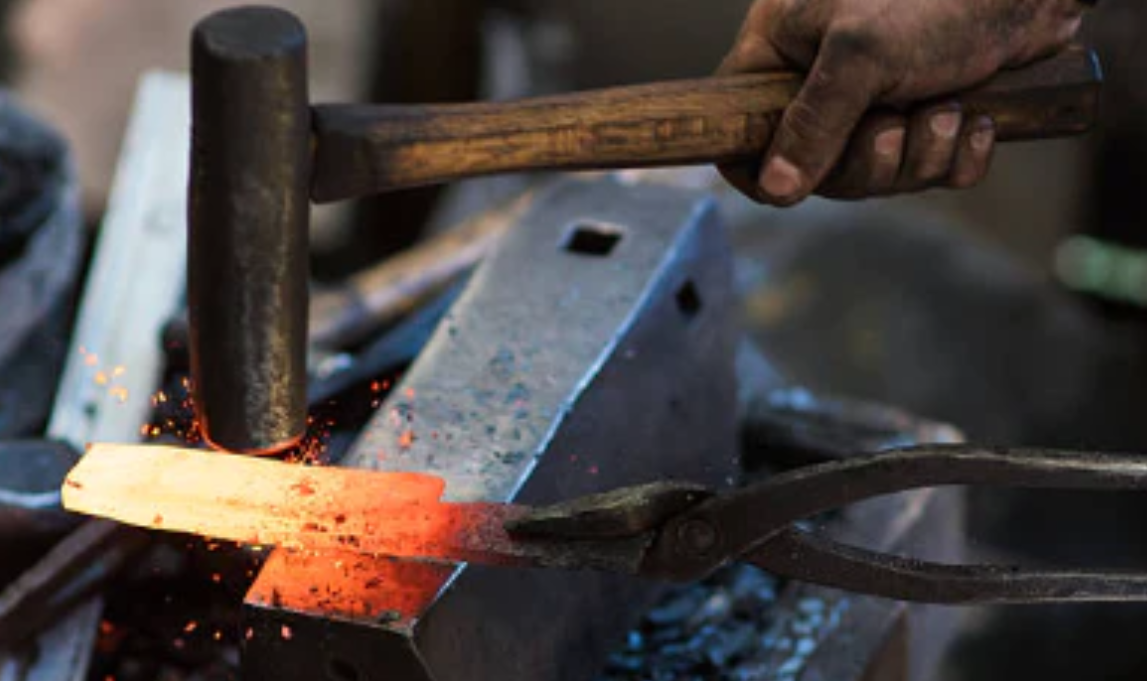
A mirror finish is the result of meticulously polishing a knife’s blade with increasingly fine abrasives until the surface becomes highly reflective, like a mirror. While it is admired for its elegant appearance, the finish also offers practical benefits valued by professional chefs, making it both beautiful and functional.
Q2. What are the advantages of a mirror-finished knife?
A mirror-polished knife offers more than just visual beauty. The ultra-smooth surface provides enhanced corrosion resistance by preventing moisture and food particles from clinging, which is especially valuable for high-carbon steel. It also ensures ease of cleaning and better hygiene, as residue washes away more easily. The glossy finish highlights meticulous craftsmanship and gives the knife a luxurious presence prized by both chefs and collectors. Finally, the polished blade glides effortlessly through delicate ingredients, preserving their texture and presentation.
Q3. Can I polish my knife to a mirror finish myself?
Technically, yes—but it requires significant skill, patience, and specialized tools. The process involves moving step by step from coarse abrasives to ultra-fine polishing compounds, all while maintaining the correct blade geometry. Even small mistakes can damage the knife or reduce its performance. Because of the risks, we recommend entrusting valuable or premium knives to professional craftsmen for polishing.
Q4. How do I care for a mirror-finished knife?
To maintain both appearance and performance, always wash and dry the knife immediately after use, as water spots are more visible on polished surfaces. Use only soft, non-abrasive cloths to avoid scratches, and wipe off fingerprints regularly to preserve the pristine look. After cutting acidic foods, rinse and dry promptly to prevent staining. For storage, keep the blade away from other metals by using a guard, block, or dedicated case. With proper care, a mirror-polished knife retains not only its brilliance but also its cutting edge for many years.
Q5. Does a mirror finish affect cutting performance?
Yes, in subtle but meaningful ways. The smooth, polished surface reduces friction, allowing the blade to glide more easily through delicate foods. This helps maintain the integrity of textures and minimizes damage to ingredients such as raw fish, herbs, or fine vegetables. While the cutting edge itself determines sharpness, the mirror finish enhances how the blade interacts with food, making each cut more refined.
Q6. Why are mirror-polished knives so expensive?
The cost reflects both the time and the skill required. Achieving a flawless mirror finish involves countless hours of careful hand-polishing, progressing through many grits of abrasive to reach a glass-like surface. Only highly experienced craftsmen can perform this work without compromising the blade’s geometry. As a result, mirror-polished knives are not only high-performing culinary tools but also collector’s items that embody the pinnacle of Japanese craftsmanship.
Mirror Polish: Beauty with Purpose
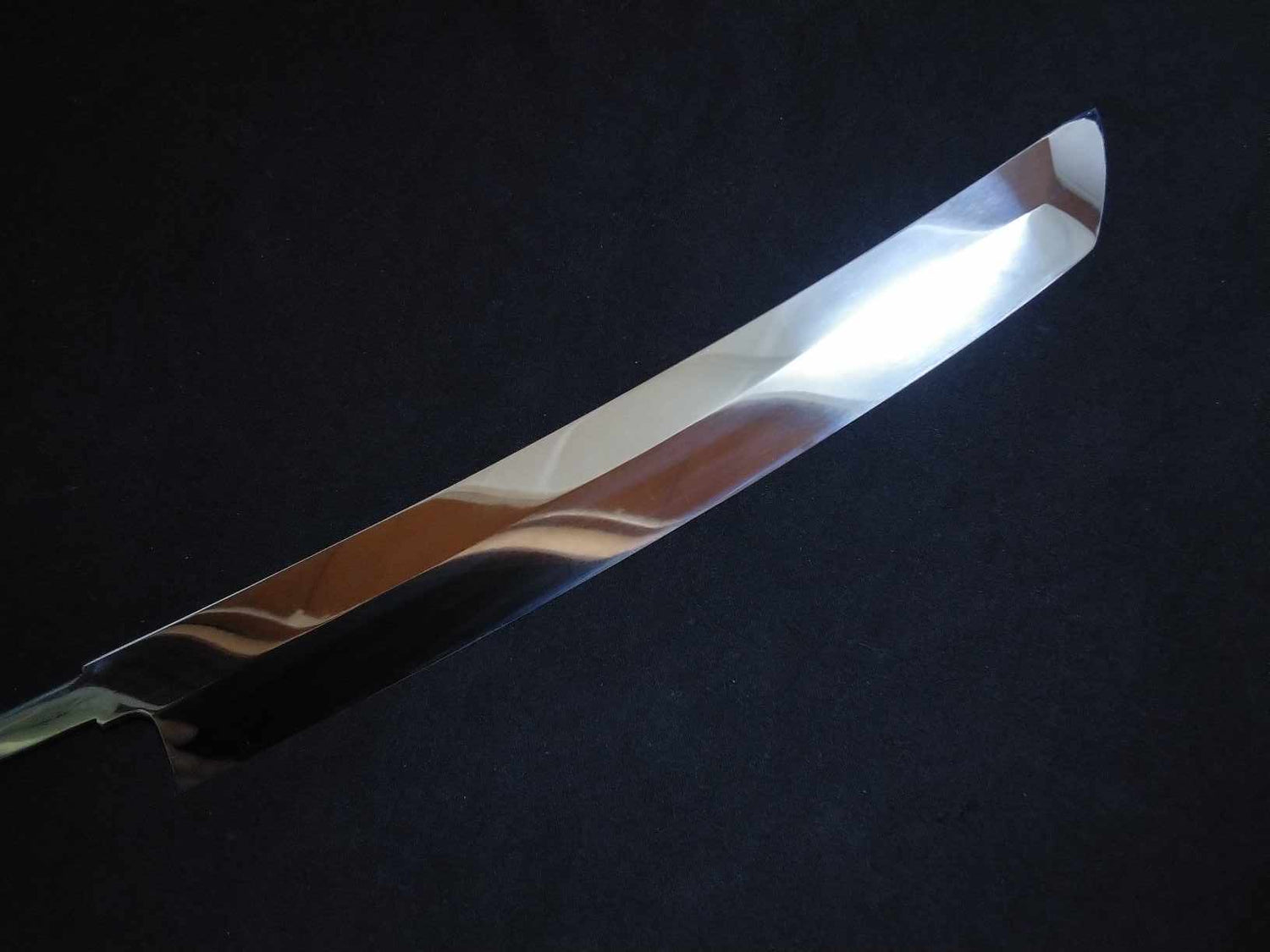
A mirror finish is more than shine—it protects the blade by reducing the risk of rust. Whether White, Blue, or stainless steel, each benefits from this technique, which enhances both durability and care. In Japanese knives, mirror polishing is not just decoration but a choice that unites performance with longevity.
