

A Japanese Knife Begins Its Journey Before the First Cut
-

2. Why Twisting or Hammering a Japanese Knife Is Dangerous
Have you ever used a knife to pry something open—like a frozen package or even a can lid? With Western knives, you might get away with it. But with a Japanese knife, that’s a recipe for disaster.
-

3. Why Washing Techniques Matter More Than You Think
One of the fastest ways to ruin a Japanese knife is to treat it like your Western ones—by throwing it in the dishwasher or leaving it soaking in water overnight.


Before the First Cut: Why Technique Protects Your Knife
-

Japanese knives reward precision. Their razor-thin edges deliver unmatched performance but demand the right habits from the very first cut. By choosing ingredients carefully, using a pure slicing motion, and cleaning the blade immediately after use, you preserve both sharpness and structure. These simple principles protect the knife’s integrity—and allow its true craftsmanship to shine for years.

A Note Before Your First Use: Protective Coating on New Japanese Knives
-

New Japanese knives purchased from KIREAJI are fully coated with a transparent liquid vinyl protective layer to prevent rust during storage and international shipping.
Especially on mirror-polished blades, this coating may appear as a faint rainbow-like film depending on the lighting. This is completely normal and does not indicate any issue with the steel or craftsmanship.
Before your first use, gently wash the blade with mild dish soap and lukewarm water, then dry it thoroughly.


Ⅰ. Kasshu Hōjū: The Japanese Philosophy That Places the Knife Above the Flame
-

The Subtraction Aesthetic: A Different Starting Point
Western culinary tradition — in its most characteristic form — is a cuisine of addition. The chef begins with raw ingredients and adds: heat, sauce, fat, acid, aromatics, technique. Layers of flavor are constructed. Complexity is built. The finished dish is something new — something that did not exist before the cook applied their skill, and that the ingredient alone could not have become.
This is a legitimate and magnificent way to cook. The finest French, Italian, and Spanish cuisines are extraordinary expressions of what addition can achieve. A great sauce is a creation. A great braise transforms an ingredient into something beyond what it was.
But it begins from an implicit premise: that the ingredient is the raw material, and the cook's creativity is what makes it valuable.
Japanese cuisine begins from a different premise entirely: that the ingredient is already complete. The fish pulled from cold water in October, at the height of its season, is already carrying within it the flavor that it is capable of offering. The bamboo shoot in spring, the matsutake mushroom in autumn, the young sardine at its peak — these are not raw materials waiting to become something. They are things that already are something, and the cook's task is to ensure that what they already are reaches the person who will eat them as fully intact as possible.
This is the aesthetic of subtraction. Not adding until the dish is ready, but removing what interferes — the smell that obscures the true flavor, the texture that disrupts the clean sensation, the element that stands between the ingredient and the person eating it — until what remains is the ingredient itself, at its most precise and most present.
If French cuisine is, as one description puts it, a masterwork of accumulated oil painting — layer upon layer of color and texture building toward a complex whole — then Japanese cuisine is ink painting: a few lines, areas of shadow and light, and in the space between them, the suggestion of everything that is not drawn. The art is not in what is added. It is in what is left.
-

Why the Knife Is Primary: The Science of the Undamaged Cell
The philosophical primacy of cutting over cooking is not only an aesthetic position. It is grounded in a biological reality that Japanese culinary tradition understood intuitively long before food science provided the language to describe it.
A raw ingredient — a piece of fish, a vegetable at its peak — is a living structure. It is made of cells. Those cells contain moisture, amino acids, compounds that express as flavor and aroma, structural proteins that determine texture. The ingredient is, in a quite literal sense, a container for everything that will eventually reach the palate.
What happens to those cells when a blade passes through them determines a significant portion of what the person eating the ingredient actually experiences.
A blade that is sharp enough, and used correctly — drawing through the ingredient in a pulling motion that separates cells by moving parallel to their structure rather than compressing them from above — passes through the cellular architecture without rupturing it. The cells on either side of the cut remain intact. The moisture stays where it is. The amino acids and flavor compounds remain within the structure where they belong. The cut face is smooth, because the cells have been separated rather than torn.
A blade that is not sharp enough, or used with too much downward pressure, compresses the ingredient before it separates it. Cells rupture. The contents — the moisture, the umami compounds, the delicate flavor elements — are released from the structure and begin to mix, to oxidize, to escape. The cut face is uneven, because cells have been torn rather than separated. The bitterness and astringency that were contained within the cellular structure are now present at the surface.
The difference is detectable. Not as a subtle variation that only experts can perceive, but as a straightforward difference in how the ingredient tastes. A piece of sashimi cut correctly — by a sharp blade in a skilled hand using a proper pulling motion — tastes different from a piece of the same fish cut carelessly. The flavor is cleaner. The texture is different under the tooth. The finish in the mouth is different.
This is why kasshu hōjū places the knife above the flame. The knife, used correctly, preserves what is already there. The flame, however skillfully applied, is always transforming — adding what was not, or removing what was. In a philosophy that begins from the premise that the ingredient is already complete, preservation takes precedence over transformation.
-

The Cut Face as Evidence
There is a visible test for whether a cut has been made correctly, and Japanese culinary culture uses it as a direct measure of a cook's skill: the appearance of the cut face.
A correctly cut piece of sashimi — separated by a sharp blade in a single pulling stroke — has a cut face that catches light evenly. The surface is smooth because the cellular architecture is intact. Moisture is present at the surface but has not escaped from it. The color is consistent and the edge of each piece is clean.
An incorrectly cut piece shows the evidence of cellular damage: the surface is uneven, light scatters rather than reflects, moisture has already begun to pool at the cut face and escape from the structure. The edge may be ragged. The color may already be changing.
These are not aesthetic differences. They are structural differences that directly correspond to differences in flavor. The luminous cut face that Japanese culinary culture prizes is not beautiful for its own sake. It is beautiful because beauty in this context is the visible evidence of an intact cellular structure — of a piece of fish that has been separated without being damaged.
This understanding extends beyond sashimi to every form of Japanese cutting technique. The katsuramuki sheet of daikon that unrolls without breaking is intact cellular structure made visible. The fine julienne of tsuma that stands upright rather than collapsing is the structural integrity of undamaged cells holding their form. The onion that can be minced without provoking tears — because the cells have been separated rather than ruptured, releasing none of the compounds that irritate the eyes — is the philosophy of the undamaged cut applied to the most everyday ingredient.
-

Heat as Servant: The Supporting Role of the Flame
In the hierarchy of kasshu hōjū, cooking with heat is not dismissed. It is repositioned.
Heat is not the creative act. It is the corrective and the enabling act. It removes what should not be there: the bacterial risk of raw protein, the bitterness of a vegetable that is more digestible cooked than raw, the structural toughness that prevents a root vegetable from being pleasurable to eat. It enables what the ingredient could not otherwise offer: the new textures of slow cooking, the Maillard compounds of a properly seared surface, the transformation of collagen into gelatin that makes a long-cooked braise both tender and rich.
But in all of this, the role of heat is defined relative to the ingredient, not relative to the cook's creative intention. The heat is serving what the ingredient needs, not expressing what the cook wants. This is the meaning of jū — subordinate, servant, follower.
For the Japanese cook, the question is not "what can I do with this ingredient?" but "what does this ingredient need from me?" The answer sometimes involves heat. It sometimes involves only the knife. The knife that reveals what is already there; the flame that removes what interferes with it.
-

What This Means for the Knife
Understanding kasshu hōjū makes clear why the Japanese knife is what it is — why it takes the form it takes, why the standards applied to its sharpness are the standards they are, and why the act of sharpening is understood in Japanese culinary culture as part of the cook's preparation rather than a maintenance chore.
The knife that serves kasshu hōjū must be sharp enough to pass through cellular structure without rupturing it. It must have the geometry — the single bevel, the urasuki hollow, the taper that reduces friction — that allows it to move through an ingredient with the minimum possible disturbance. It must be maintained to the standard that this philosophy requires, not the standard that mere functionality requires.
KIREAJI — the concept of sharpness that changes the flavor of food — is the embodiment of kasshu hōjū in a single word. Not sharpness as a property of the knife measured in a workshop, but sharpness as experienced in what the food tastes like to the person eating it. The philosophy and the measurement are the same thing, expressed from two different directions.
The knife is primary because the cut is primary. The cut is primary because the ingredient is complete. And the ingredient is complete because the season produced it, and the season is not to be improved upon — only received, with skill and with humility, and passed on.
This is what a Japanese knife is for. Not to create. To reveal.


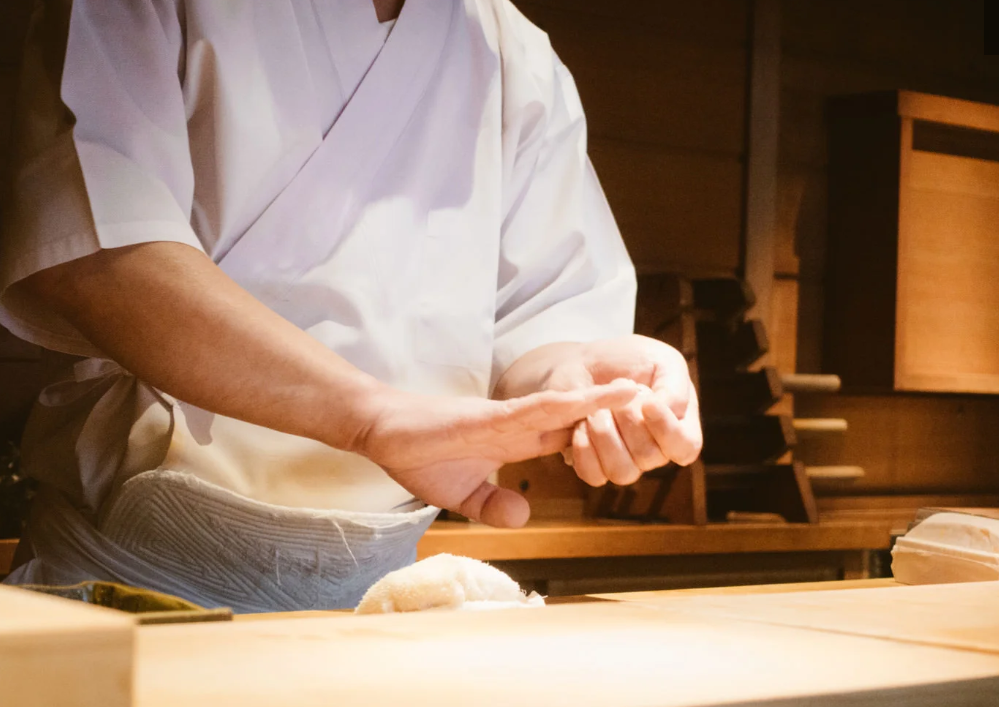
Things to Know to Become a Pro Knife User
A knife is made to slice, not strike. Professionals let the blade glide effortlessly through ingredients, protecting its edge and extending its life. With proper technique—like slicing onions cleanly instead of crushing—you bring precision, efficiency, and elegance to your cooking.

Why Do Kitchen Knives Go Dull So Quickly?
It’s not the food that wears your knives down—it’s the cutting board. Discover the hidden reason behind dull blades and how small daily habits can keep your knife razor-sharp.
