• November 23, 2026

  • A guest is coming.

    Before they arrive, you notice that the afternoon sun will fall directly on their seat, so you adjust the curtain.

    You place a glass of water within easy reach.

    You clear a little more space for their bag.

    Perhaps none of these things will be mentioned.

    Perhaps the guest will never even notice that someone thought about them in advance.

    And that may be exactly the point.

    In Japanese, there is a word for this kind of quiet attention:

    Kokorokubari(心配り).

    It is often translated as “thoughtfulness,” “consideration,” or “attentiveness.”

    But each translation captures only part of the idea.

    Kokorokubari is not simply being kind.

    It is allowing our attention to travel toward another person — noticing what might help them before they need to ask.

  • 1. The Japanese Word — Kokorokubari(心配り)

    Kokorokubari is written:

    心配り

    The first character,

    心(kokoro)

    means heart, mind, or feeling.

    The second part comes from:

    配る(kubaru)

    meaning to distribute, arrange, or direct something toward different places.

    Literally, the expression creates a beautiful image:

    to distribute one’s heart or attention.

    Of course, this does not mean dividing the heart into pieces.

    It suggests allowing our awareness to extend beyond ourselves.

    Who is here?

    What might they need?

    Is anyone uncomfortable?

    Is there something I can prepare now that will make things easier later?

    Kokorokubari often appears in small actions rather than grand gestures.

    And because good kokorokubari can prevent inconvenience before it occurs, its effect may be almost invisible.

    Sometimes, the most thoughtful action is the one that removes the need for someone to ask.

  • 2. Meaning & Background — Attention That Looks Ahead

    Kokorokubari begins with noticing.

    But noticing alone is not enough.

    Imagine seeing that someone is carrying several bags.

    You have noticed them.

    If you hold the door open before they reach it, your attention has become action.

    That small movement captures an important part of kokorokubari.

    It often involves three quiet steps:

    notice, imagine, prepare.

    First, we pay attention to what is happening.

    Then we imagine what another person may experience next.

    Finally, when appropriate, we make a small adjustment.

    This is why kokorokubari can feel slightly different from simple politeness.

    Politeness may follow a known form:

    greet someone,

    say thank you,

    use respectful language,

    follow proper manners.

    These things matter.

    But kokorokubari often responds to the particular person and situation in front of us.

    There is no single manual for it.

    At the same time, anticipating another person's needs has limits.

    We cannot know exactly what someone wants without asking.

    Too much attention can become intrusive.

    Too much preparation can become control.

    Good kokorokubari therefore requires something else:

    restraint.

    Notice without staring.

    Help without making someone feel incapable.

    Prepare without assuming too much.

    True attentiveness leaves room for the other person.

  • 3. In Everyday Life — Small Things Prepared Before They Are Needed

    Kokorokubari can appear almost anywhere.

    Before a guest arrives, we make space for their belongings.

    When serving tea, we place it where it can be reached comfortably.

    When walking with someone who moves more slowly, we quietly adjust our pace.

    When sharing food, we notice whether something may be difficult for another person to eat.

    When giving directions, we include the detail that will prevent confusion later.

    When finishing a shared task, we leave things ready for the next person.

    None of these actions needs to be impressive.

    That is part of their beauty.

    Consider an ordinary meal.

    Perhaps someone at the table is a child, an older person, or simply someone who would find a large piece of food awkward to eat.

    Before serving it, we cut it into a more comfortable size.

    The person may never know that the food could have been served differently.

    What they experience is simply:

    “This is easy to eat.”

    The thoughtfulness has disappeared into the experience.

    This connects kokorokubari with the previous expression in this series, tema o kakeru.

    Tema o kakeru is about being willing to give additional time and effort where it matters.

    Kokorokubari helps answer another question:

    “For whom, and for what need, should I give that effort?”

    One is about giving the extra effort.

    The other is about directing our attention toward the person who may receive it.

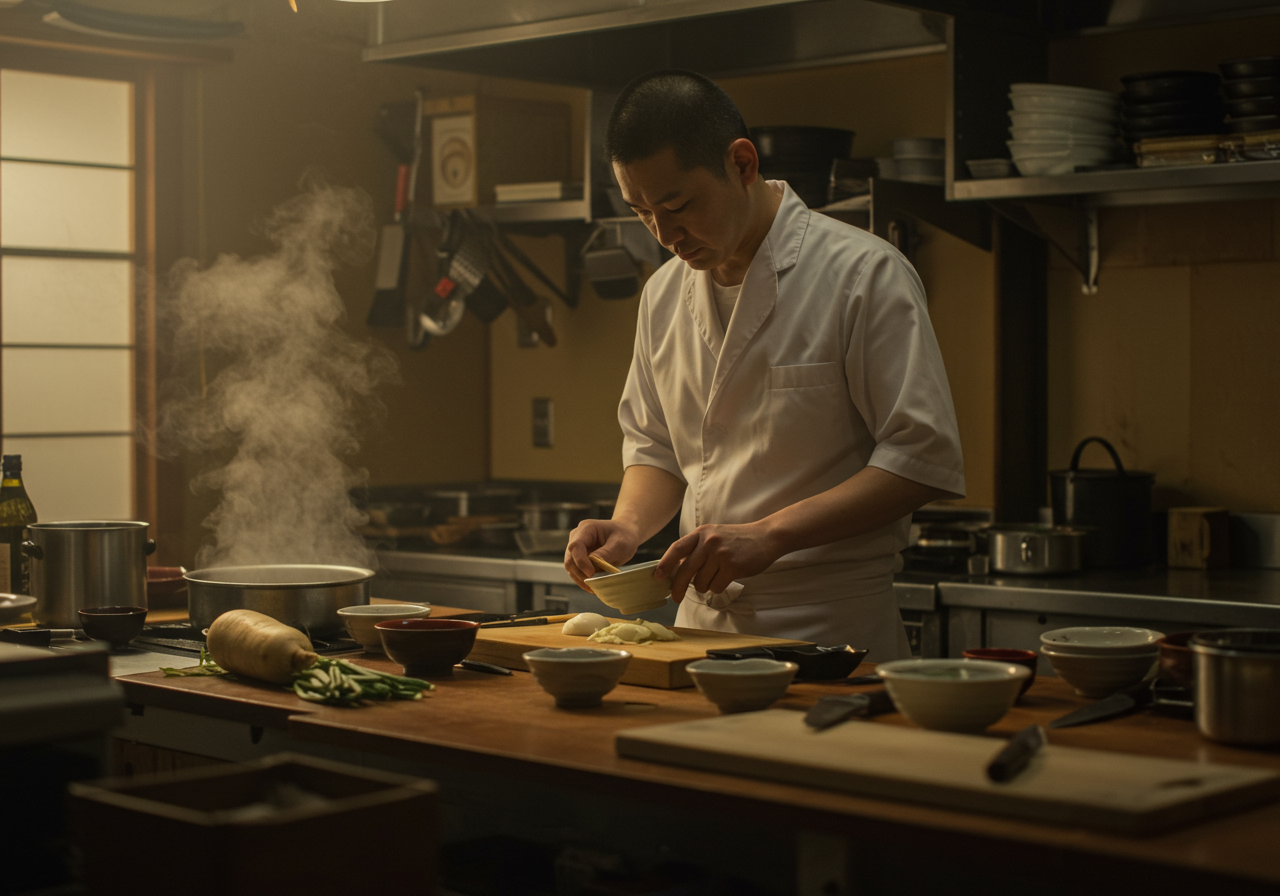
  • 4. Through the Japanese Knife — Preparing Food With Someone in Mind

    A Japanese knife is made to cut.

    But what we choose to cut, how we cut it, and whom we prepare it for belong to a much larger story.

    Imagine preparing a simple meal for someone else.

    A sharp knife can make precise work easier.

    But precision alone is not kokorokubari.

    The important question comes before the cut:

    “Who will eat this?”

    Perhaps vegetables should be cut smaller.

    Perhaps a tough part should be removed.

    Perhaps pieces should be made more even so they cook consistently.

    Perhaps presentation matters because this is a special occasion.

    Or perhaps simplicity is more appropriate because the person is tired and simply needs something easy to eat.

    The knife does not make these decisions.

    The person holding it does.

    This is an important distinction.

    Craftsmanship can give us a finely made tool.

    Skill can help us use that tool well.

    But kokorokubari gives our skill a direction beyond ourselves.

    The same knife can prepare food quickly for ourselves or carefully for someone we love.

    The physical action may look similar.

    The intention behind it can be different.

    And this idea can extend beyond cooking.

    A craftsperson may think about the person who will eventually use a tool.

    A cook may think about the person who will eat the food.

    A host may think about the person who will sit at the table.

    In each case, the work reaches beyond the hands doing it.

    Good work does not end with the object or the task. It continues into the experience of the person who receives it.

    This is one reason kokorokubari can be so quiet.

    When it is done well, we may notice not the effort itself, but how naturally everything seems to work.

    The chair is where we need it.

    The food is comfortable to eat.

    The tool feels ready to use.

    The next step has already been considered.

    Someone thought ahead.

  • 5. A Thought for This Week

    This week, choose one ordinary moment and look slightly ahead.

    Not far.

    Just one step.

    Before someone asks:

    What might make this easier?

    What might make them more comfortable?

    What small thing could I prepare now?

    Perhaps you hold a door.

    Move something out of the way.

    Prepare an extra glass of water.

    Leave clear instructions for the next person.

    Cut something into an easier size.

    Or simply give someone more space.

    Do not try to anticipate everything.

    You cannot.

    And do not help merely to show that you are helpful.

    Instead, practice one small movement of attention away from yourself and toward another person.

    Notice. Imagine. Prepare — and then leave room.

    Kokorokubari does not need applause.

    Often, its best result is simply that someone else's day becomes a little easier.

    Sometimes, care is felt most clearly when we hardly notice it was there.

Beautiful Japanese Words

Discover more Japanese words and the ideas, values, and ways of life behind them.

Beautiful Japanese Words

About KIREAJI

KIREAJI connects the 600-year tradition of Sakai craftsmanship with kitchens around the world. We deliver authentic, handcrafted Japanese knives directly from master artisans—uniting heritage, innovation, and a lifelong respect for true craftsmanship.
About KIREAJI

The Japanese Chef’s Way

The Japanese Chef’s Way is more than technique—it is a philosophy of character, mindset, and respect. Based on real experiences from the sushi counter, this series shares timeless lessons such as “Earn respect as a person first” and “Mastery is a lifelong journey.”

The Japanese Chef’s Way