• Septembaer 23, 2026

  • Some of the most meaningful work is found in details that others may never notice.

    A cook adjusts a dish one more time.

    A craftsman examines a surface from a different angle.

    Someone repeats the same movement, not because it was wrong, but because they believe it can be done a little better.

    In Japanese, there is a word often used to describe this kind of personal dedication:

    Kodawari(こだわり).

    It can mean being particular about something, but that translation alone can sound rigid or fussy.

    In many contexts, kodawari carries a more positive idea:

    a personal standard that makes someone care about the details, even when no one else is watching.

    It is not necessarily the pursuit of perfection.

    Sometimes, it is simply the decision not to become careless about what matters to you.

  • 1. The Japanese Word — Kodawari(こだわり)

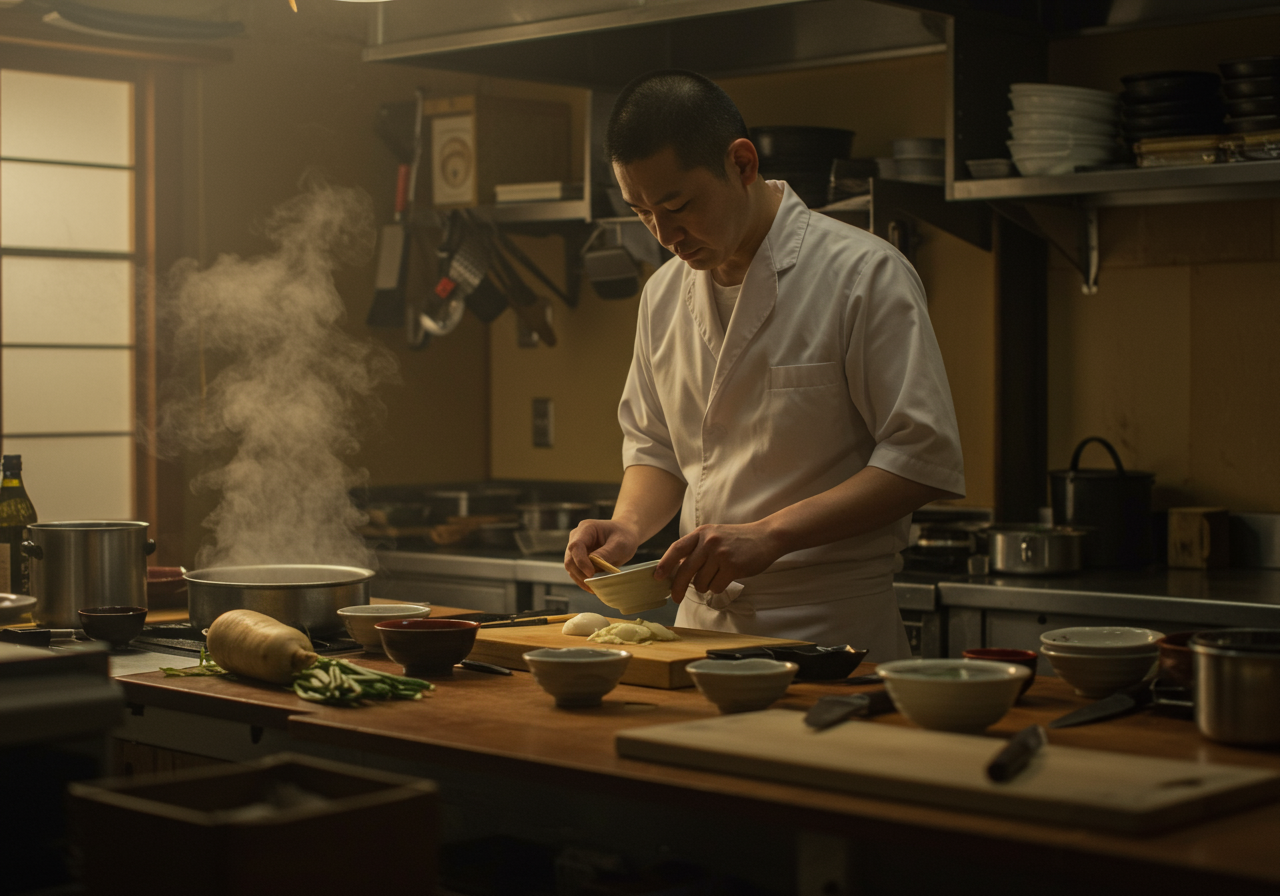
    Imagine walking into a small restaurant.

    The bowl is simple.

    The ingredients seem familiar.

    Nothing appears extravagant.

    But the owner has spent years deciding exactly how the broth should taste, where the ingredients should come from, how they should be prepared, and even which bowl best suits the food.

    A customer may never know about every one of those decisions.

    Yet together, they shape the experience.

    That is one way to understand kodawari.

    The word can describe a strong preference, attention to detail, or dedication to a particular way of doing something.

    You might hear it when talking about cooking, craftsmanship, coffee, design, tools, or countless other parts of everyday life.

    The important point is that kodawari usually comes from within.

    It is not simply about meeting someone else's expectations. It is about knowing what matters to you and refusing to treat it carelessly.

  • 2. Meaning & Background — More Than Being Particular

    Kodawari is an interesting word because its nuance depends heavily on context.

    Traditionally, kodawaru could carry a negative sense — becoming overly concerned with something minor or being unable to let something go.

    That meaning still exists.

    But in modern Japanese, kodawari is also widely used in a positive sense, especially when describing craftsmanship, food, design, or someone's approach to their work.

    In this sense, it suggests discernment.

    Someone has thought carefully about why one material is preferable to another.

    Why a certain process should take more time.

    Why one small detail changes the final result.

    This does not necessarily mean pursuing perfection at any cost.

    Kodawari is often less about being perfect and more about having reasons for the choices you make.

    Those reasons may not always be visible from the outside.

    That is precisely what makes the idea interesting.

    The finished object may look simple.

    The meal may appear effortless.

    But beneath that simplicity can be hundreds of small decisions.

  • 3. In Everyday Life — Knowing What Matters to You

    Kodawari does not belong only to master craftsmen.

    Most of us have our own small kodawari.

    Perhaps you prepare coffee in a particular way every morning because you have learned exactly how you like it.

    Perhaps there is one ingredient you will travel a little farther to buy.

    Perhaps you arrange your desk in a certain way because it helps you think.

    Or perhaps you take an extra minute to do something properly, even though no one else would notice the difference.

    These choices can look insignificant from the outside.

    But they reveal something about us.

    They show where we have decided that convenience is not the only measure of value.

    Of course, kodawari can become excessive. Attention to detail is not always useful, and insisting on one way of doing everything can make life unnecessarily difficult.

    The value lies in knowing which details truly matter.

    We cannot care deeply about everything. Kodawari begins when we choose what deserves our attention.

    That makes it surprisingly personal.

    Your kodawari does not have to be someone else's.

    What matters is that there is thought behind it.

  • 4. Through the Japanese Knife — Details That Shape the Whole

    Traditional Japanese knife making offers a particularly clear way to see kodawari in practice.

    At first glance, a knife can appear simple.

    A blade.

    An edge.

    A handle.

    But the performance and character of that knife are shaped by countless decisions.

    For a blacksmith, there are decisions about the steel, heat, timing, shaping, and how the blade responds during the forging process.

    For a sharpener, there are different questions.

    How should the blade geometry be developed?

    Where should more material be removed?

    How should the surface transition toward the edge?

    How should the final cutting edge feel?

    Some of these differences can be measured.

    Others are understood through experience — through the hands, eyes, sound, and accumulated judgment of the craftsman.

    The person who eventually uses the knife may never see every decision that went into it.

    But those decisions can still be felt in the finished tool.

    What looks like a simple blade is the result of many small choices made by people who decided that those details mattered.

    This is where kodawari becomes particularly meaningful.

    A craftsman does not necessarily spend more time on something because someone will praise that particular detail.

    Sometimes the detail may never be noticed at all.

    But the craftsman knows it is there.

    And that knowledge matters.

    The same principle continues after the knife reaches the kitchen.

    A cook may develop a preferred way of holding it.

    A particular sharpening method.

    A certain cutting motion for a particular ingredient.

    Over time, craftsmanship and personal practice meet.

    Kodawari can exist on both sides — in the person who makes the tool and in the person who learns to use it well.

    True attention to detail is often quiet. Its purpose is not to be noticed, but to make the whole better.

  • 5. A Thought for This Week

    This week, think about one thing you do regularly.

    Cooking.

    Making coffee.

    Writing.

    Working with your hands.

    Organizing your space.

    Ask yourself:

    Is there one detail that genuinely matters to me?

    Not because someone told me it should.

    Not because it looks impressive.

    But because experience has taught me that it makes a difference.

    Give that one detail a little more attention this week.

    You do not need to do everything perfectly. Choose one thing worth doing with care.

    Perhaps that is where your own kodawari begins.

Beautiful Japanese Words

Discover more Japanese words and the ideas, values, and ways of life behind them.

Beautiful Japanese Words

About KIREAJI

KIREAJI connects the 600-year tradition of Sakai craftsmanship with kitchens around the world. We deliver authentic, handcrafted Japanese knives directly from master artisans—uniting heritage, innovation, and a lifelong respect for true craftsmanship.
About KIREAJI

The Japanese Chef’s Way

The Japanese Chef’s Way is more than technique—it is a philosophy of character, mindset, and respect. Based on real experiences from the sushi counter, this series shares timeless lessons such as “Earn respect as a person first” and “Mastery is a lifelong journey.”

The Japanese Chef’s Way