• The Art of Honyaki Knives: Mastery in Steel

  • APRIL 4, 2023

  • Honyaki knives, known for their exceptional sharpness retention and beauty, are highly regarded in culinary circles, reflecting the pinnacle of traditional craftsmanship and exclusivity.

  • Introduction to Honyaki Knives

  • Honyaki knives, celebrated for their unparalleled sharpness and aesthetic beauty, are crafted from a single piece of steel. This traditional method highlights the pinnacle of Japanese knife-making, where the skill of the blacksmith plays a crucial role in the knife's quality.

  • Craftsmanship and Rarity

  • The creation of Honyaki knives involves a complex process with a high risk of failure, making them scarce and highly sought after. Due to these challenges, only a handful of blacksmiths possess the expertise to craft these exquisite pieces, contributing to their premium pricing, typically ranging from 100,000 to 300,000 yen.

  • Honyaki vs. Awase Knives

  • While Honyaki knives boast superior sharpness and elegance, they are often contrasted with Awase knives, which are constructed from multiple layers of steel. Despite the practicality of Awase knives, they are perceived to fall short of Honyaki's cutting precision and visual allure.

  • The Honyaki Experience

  • The sharpness of a Honyaki knife is such that slicing through sashimi leaves no perceptible trace, embodying the zenith of cutting performance. The choice of steel, whether it be Blue 2, White 1, or White 2, along with the meticulous quenching process, influences the knife's sharpness and cutting characteristics.

  • Advantages and Challenges

  • Honyaki knives offer exceptional cutting efficiency, with significantly reduced drag compared to Awase knives. They also boast superior resistance to warping and bending. However, their high cost, potential for chipping, and the demanding sharpening process highlight the careful balance between performance and maintenance.

  • The Craftsmen Behind Honyaki

  • The production of Honyaki knives is an art form in itself, entrusted to seasoned craftsmen with over 30 years of experience. From forging to hardening and sharpening, each step is performed with meticulous attention to detail, ensuring the highest quality.

  • Embracing Honyaki Knives

  • Despite their premium price, Honyaki knives represent a dream for many chefs and culinary enthusiasts. Their exceptional sharpness and craftsmanship make them a worthy investment for those passionate about cooking.

    To hold a Honyaki knife is to hold the soul of Japanese craftsmanship itself — a blade forged with decades of mastery, patience, and tradition.
    Even if only once in a lifetime, experiencing the effortless cut of a Honyaki is to understand why these knives are not just tools, but living works of art that connect the chef’s hand to centuries of history.

The Price of Perfection: Why Honyaki Knives Are So Expensive

  • The Price of Perfection: Why Honyaki Knives Are So Expensive

    Honyaki knives are forged from a single piece of steel, demanding unrivaled skill, pure materials, and mastery of fire and water. With few craftsmen able to create them, their rarity—and the risk behind each blade—explains why these masterpieces command such a high price.

Honyaki

Honyaki knives are the pinnacle of traditional Japanese craftsmanship, forged from a single piece of steel using the demanding tsuchioki clay-tempering method. Requiring extraordinary skill, they embody purity and precision—blades of breathtaking sharpness and beauty, treasured by chefs who seek nothing less than perfection.
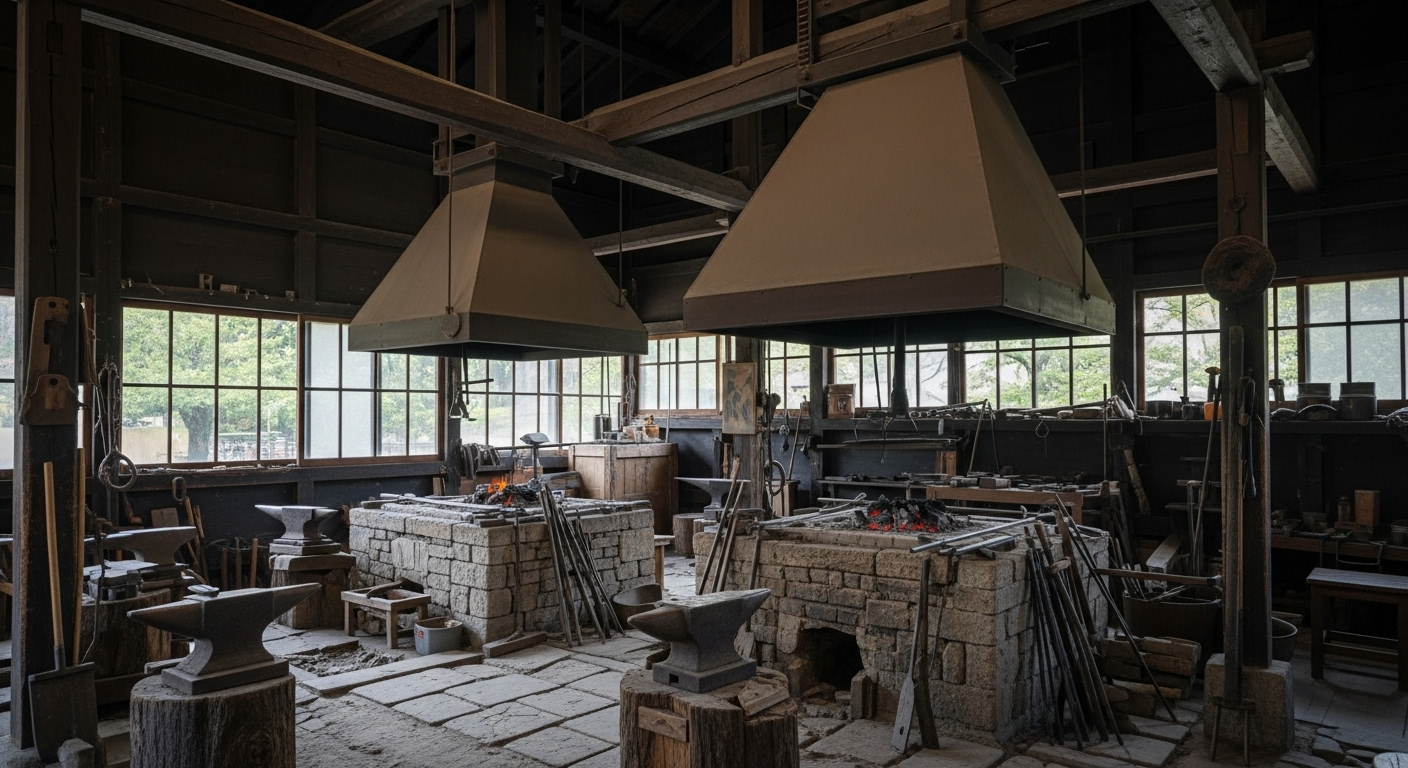
Honyaki
  • The Art of Letting Go: Lessons from a Master Japanese Knife Craftsman

    “Never cut corners, but release your tension.” This phrase embodies a truth we craftsmen have come to understand after years at the forge. At first glance, forging a knife may seem like hammering down with brute force, bending raw steel to our will. But true mastery lies in the opposite. Too much force distorts the blade, destroying the delicate curves and balance that define perfection.

  • When you let go of excessive tension, the material begins to “speak.” The steel itself tells you where to press, how firmly to strike, and when to stop. This dialogue with the blade is priceless. Chefs experience the same when holding a knife—it is never about cutting with strength alone, but about sensing the knife’s weight, feeling the ingredient’s texture, and allowing both to guide the hand. This is how true flavors and textures are revealed.

  • The same principle applies beyond the workshop. Dedication is vital, but so is the courage to release. Strangely enough, it is often in letting go that the path clears, and work flows more naturally. Releasing tension does not weaken—it creates a new kind of strength. This belief is what fuels my craft each day.

  • So to all readers: try carrying this spirit into your own life. Learn the art of letting go—and watch how new possibilities begin to unfold.

  • japanese_knife_made_in_Sakai

    1. Forged in the Legacy of Sakai

    From Sakai City—Japan’s renowned birthplace of professional kitchen knives—each blade is crafted by master artisans with over six centuries of tradition. Perfectly balanced, enduringly sharp, and exquisitely finished, every cut carries the soul of true craftsmanship.

  • 2. Thoughtful Care for Everyday Use

    Every knife includes a hand-fitted magnolia saya for safe storage. Upon request, we offer a complimentary Honbazuke final hand sharpening—giving you a precise, ready-to-use edge from day one.

  • 3. A Partnership for a Lifetime

    A KIREAJI knife is more than a tool—it is a lifelong companion. With our bespoke paid aftercare services, we preserve its edge and beauty, ensuring it remains as precise and dependable as the day it first met your hand.