

Unveiling the Excellence of ZDP189 Steel in Knife Making
-
-
APRIL 23, 2023
-
ZDP189 is known for its unusually high hardness and wear resistance. But what do these properties mean for a Japanese kitchen knife, and what should you know before choosing one?
Some Japanese kitchen knives are made from steels that emphasize ease of sharpening. Others are designed to offer a balance of corrosion resistance, toughness, and everyday practicality.
ZDP189 takes a different approach.
Developed using powder metallurgy technology, this steel is known for its ability to achieve very high hardness and substantial wear resistance.
These characteristics make it interesting to knife makers and enthusiasts who value long-lasting cutting performance.
But hardness alone does not tell the whole story.
To understand ZDP189, we need to look at how the steel is made, what its properties offer, and the compromises that come with them.
-
1. What Is ZDP189 Steel?
ZDP189, also written ZDP-189, is a high-carbon, high-chromium powder metallurgy steel developed by Hitachi Metals, now part of Proterial.
It was designed for applications requiring high hardness and wear resistance.
Unlike conventional steel production methods, powder metallurgy involves producing metal powder and consolidating it into a solid material through controlled industrial processes.
This approach allows the manufacturer to produce steels with compositions and microstructures that can be difficult to achieve through conventional processing.
ZDP189 contains unusually high amounts of carbon and chromium compared with many familiar kitchen knife steels.
Its approximate nominal composition includes 3% carbon and 20% chromium, although exact specifications should be checked against the manufacturer's technical information.
These elements contribute to the formation of hard carbides within the steel.
Carbides play an important role in wear resistance, but their presence also influences sharpening behaviour and the balance of mechanical properties.
ZDP189 is therefore best understood as a specialized high-performance steel rather than a universally superior material.
-
2. Why Is ZDP189 So Hard?
One of the best-known characteristics of ZDP189 is its ability to reach very high hardness after suitable heat treatment.
Kitchen knives made from this steel are often described with hardness values around HRC 65–67, although the actual hardness depends on the maker and the heat treatment used.
HRC refers to the Rockwell C hardness scale.
A higher value indicates greater resistance to indentation under the specified test conditions.
In knife making, hardness can influence how well an edge resists certain types of deformation during cutting.
However, hardness is not the same as sharpness.
Sharpness depends on the geometry and condition of the cutting edge.
A softer steel can be sharpened to a very fine edge, while a harder steel can still cut poorly if the blade geometry or sharpening is inadequate.
High hardness also introduces trade-offs.
Depending on the steel's microstructure, heat treatment, and edge geometry, a very hard blade may be less tolerant of twisting, impact, or lateral stress.
This is why the hardness number should never be considered in isolation.
-
3. Edge Retention and Wear Resistance
ZDP189 is especially valued for its wear resistance.
During cutting, the edge is exposed to repeated contact with food and cutting surfaces.
Over time, this contact can contribute to edge wear and a gradual reduction in cutting performance.
ZDP189's composition and carbide structure can help resist abrasive wear, potentially allowing a properly made blade to retain useful cutting performance for an extended period.
This is one reason some knife enthusiasts choose ZDP189.
However, edge retention is not determined by steel composition alone.
Heat treatment, edge angle, blade geometry, sharpening finish, cutting technique, and the materials being cut all influence how long an edge remains effective.
A very thin edge may perform beautifully on suitable ingredients but become damaged if used carelessly.
A more robust edge may sacrifice some cutting ease in exchange for greater resistance to damage.
The important question is not simply how long the steel stays sharp.
It is whether the knife's overall design suits the way it will be used.
-

-
4. Is ZDP189 Stainless?
ZDP189 contains a high percentage of chromium and is commonly described as a stainless or corrosion-resistant knife steel.
However, its corrosion behaviour requires some explanation.
A significant portion of the chromium in this steel can be associated with carbide formation rather than remaining available in the steel matrix to support corrosion resistance.
As a result, a high total chromium percentage does not automatically mean that ZDP189 offers better rust resistance than more conventional stainless kitchen knife steels.
Its actual corrosion performance depends on the steel's microstructure, heat treatment, surface condition, and environment.
For everyday use, it is sensible to treat a ZDP189 knife as corrosion-resistant rather than rust-proof.
Wash it after use, avoid prolonged contact with moisture or acidic food residue, and dry it thoroughly before storage.
These habits are straightforward and help protect both the blade and its finish.
-
5. Why Can ZDP189 Be Difficult to Sharpen?
The same properties that contribute to ZDP189's wear resistance can make sharpening more demanding.
Sharpening works by removing material to establish and refine the cutting edge.
When a steel contains a substantial amount of hard, wear-resistant carbides, material removal may be slower than with more easily sharpened steels.
This can require more time, suitable abrasive materials, and careful technique.
Appropriate whetstones or diamond abrasives may be useful, depending on the sharpening task and the condition of the blade.
The goal is not to apply more force.
It is to use a controlled process that maintains the intended edge geometry.
For users accustomed to sharpening relatively simple carbon steels, ZDP189 may feel noticeably different.
This does not mean that a ZDP189 knife cannot be sharpened at home.
It means that the owner should understand the material and use an appropriate sharpening method.
If significant chips or other damage occur, professional assessment may be advisable.
-
6. Understanding the Risk of Edge Chipping
A very hard cutting edge can offer excellent resistance to wear, but it may also be vulnerable to certain forms of damage.
Chipping occurs when a small piece of material breaks away from the cutting edge.
The likelihood of chipping depends on several factors, including steel composition, heat treatment, edge geometry, and how the knife is used.
ZDP189 knives should generally be used with particular care around hard materials and side-loading forces.
Avoid cutting bones, frozen foods, or other materials beyond the knife's intended purpose.
Do not twist the blade while it is embedded in food.
Avoid scraping ingredients sideways with the cutting edge against the board.
Use a suitable cutting board and maintain controlled cutting movements.
These precautions are useful for many high-hardness Japanese knives, not only ZDP189.
The purpose is to preserve a carefully prepared edge rather than test how much abuse it can withstand.
-
7. How Does ZDP189 Compare with Other Japanese Knife Steels?
ZDP189 is one of several steels available to Japanese knife makers.
Each offers a different balance of properties.
White Steel (Shirogami): A relatively simple carbon steel valued for its sharpening characteristics and ability to take a fine edge. It requires careful protection against corrosion.
Blue Steel (Aogami): A family of alloyed carbon steels that can offer increased wear resistance compared with some simpler carbon steels, depending on grade and heat treatment. It also requires attention to rust prevention.
Ginsan (Silver #3): A stainless knife steel often appreciated for combining corrosion resistance with relatively approachable sharpening characteristics.
ZDP189: A high-carbon, high-chromium powder metallurgy steel capable of very high hardness and wear resistance, but potentially more demanding to sharpen and less forgiving of inappropriate cutting techniques.
These are broad comparisons rather than guarantees about individual knives.
A well-made knife from one steel may outperform a poorly designed or improperly treated knife made from a more expensive material.
The blacksmith's or manufacturer's heat treatment, the sharpener's work, and the blade's geometry remain essential.
Choosing a steel is therefore about priorities, not simply selecting the highest hardness value.
-
8. Who Might Benefit from a ZDP189 Knife?
ZDP189 may appeal to cooks and knife enthusiasts who value wear resistance and are comfortable maintaining a high-hardness blade.
It can be particularly interesting for controlled slicing and other cutting tasks suited to a finely prepared edge.
However, it may not be the most convenient choice for every kitchen.
Someone who prefers easy sharpening, low-maintenance handling, or a knife that tolerates a wide variety of demanding tasks may find another steel more practical.
Before choosing a ZDP189 knife, consider how often you sharpen, what ingredients you prepare, and whether you are comfortable taking extra care to avoid edge damage.
It is also important to consider the actual knife rather than the steel name alone.
Blade geometry, construction, handle balance, and the quality of heat treatment and sharpening can make a substantial difference to the finished tool.
At KIREAJI, we believe understanding these characteristics is more valuable than choosing a knife solely because its steel is considered rare or technically impressive.

-

Conclusion: High Performance Requires Understanding
ZDP189 demonstrates what specialized steel design and powder metallurgy can contribute to modern knife making.
Its high hardness and wear resistance can offer meaningful advantages in the right knife and for the right user.
At the same time, these properties bring responsibilities.
Sharpening may require additional patience, and a hard, finely prepared edge should be protected from inappropriate cutting tasks and lateral stress.
Corrosion resistance should not be confused with immunity to rust.
The value of ZDP189 is not that it is automatically better than every other Japanese knife steel.
It is that it offers a particular combination of characteristics that some cooks and collectors may appreciate.
At KIREAJI, we believe the best choice begins with understanding both the strengths and limitations of the material.
A remarkable steel becomes a useful kitchen knife only when its properties, design, craftsmanship, and intended use work together.
-

ZDP189
-
Unmatched Hardness & Edge Retention
In a world of handcrafted blades and centuries-old traditions, ZDP-189 represents a new frontier — born not from the forge, but from advanced powder metallurgy.
With unmatched hardness, extraordinary edge retention, and the corrosion resistance of stainless steel, it redefines what a knife can be.
This is the steel for chefs who demand a blade that cuts flawlessly — and keeps cutting long after others have dulled. -

ZDP189
The cutting edge of innovation.
Created through advanced powder metallurgy by Proterial (formerly Hitachi Metals), ZDP189 achieves extreme hardness, exceptional edge retention, and rust resistance. A next-generation steel, it is trusted by leading chefs worldwide.
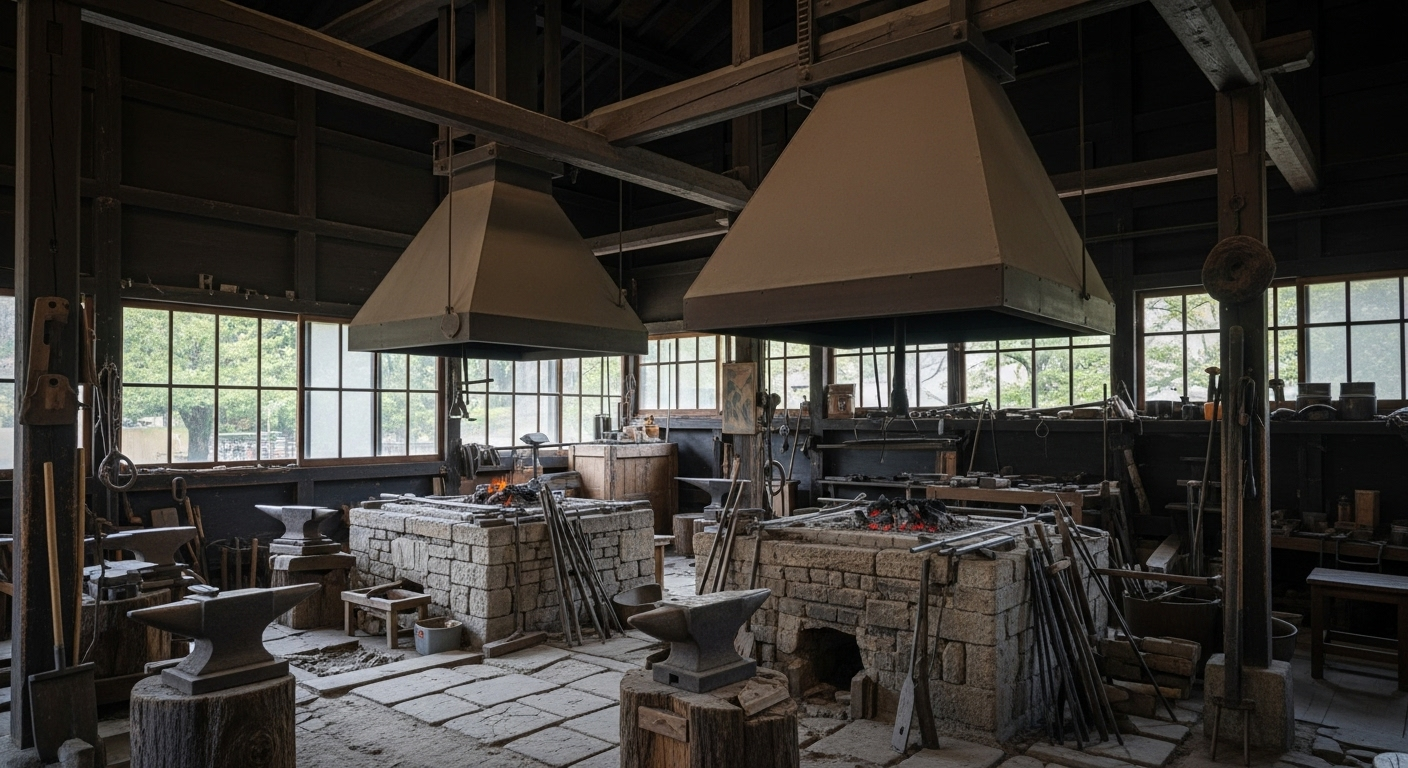
The Soul of Craftsmanship
-
The Path of a Craftsman — Doing What We Can, One Step at a Time
The Japanese knives we create carry the heart and soul of every craftsman who touches them. Our work is never glamorous, and it is never something finished in haste. To walk this path means to do what we can, one step at a time, with all our heart.
-
We sharpen the blades again and again, refine their forms, and take the time needed to bring each one closer to perfection. Through this repetition, we create something of true value—something that cannot be found anywhere else. No task is too small; nothing is overlooked. Every detail receives our full attention, and in that devotion, the knife comes alive when it finally rests in the hands of its user.
-
The pride we feel as craftsmen isn’t just in the final result. It’s in the journey—where we work with our hands, pour our hearts into our craft, and slowly but surely improve our skills. I believe that the only way to create something great is through the dedication to constantly build it, little by little.


Experience the Craftsmanship of Sakai City
Through our partnership with Shiroyama Knife Workshop, we bring artisan-crafted Sakai knives to customers around the world. Each knife includes a magnolia wood saya, carefully selected and prepared for the knife. Upon request, complimentary Honbazuke is also available as an initial hand-sharpening intended to prepare the knife for practical use.